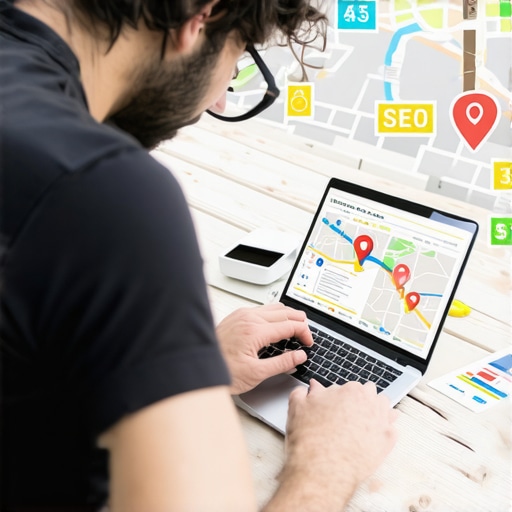
How to Build Local SEO Traffic Without a Massive Marketing Budget (2026 Guide)
Let’s be blunt: the days of buying your way to the top of Google with a bottomless ad spend are coming to a close for the average small business. As we move into 2026, the cost-per-click for high-intent keywords in industries like plumbing, legal services, and roofing has skyrocketed to unsustainable levels. If you are a small business owner or a marketing agency still relying solely on “pay-to-play” models, you’re building your house on rented land. I’m Kevin Pauls, a Local SEO Consultant and Google Business Profile (GBP) Product Expert, and I’ve spent years helping businesses dominate the map pack by treating Local SEO as infrastructure, not just a line item in a marketing budget.
Building sustainable local traffic requires a shift in mindset. You don’t need a $10,000-a-month retainer to outrank the national franchises. You need a strategy built on real-world signals, technical precision, and hyperlocal relevance. In this guide, I’m going to strip away the fluff and show you exactly how to execute google business profile seo to capture high-value leads without hemorrhaging cash on Google Ads. We aren’t just looking for “vanity metrics” like impressions; we are looking for the phone calls and direction requests that drive revenue.
The “Infrastructure” First Approach: Optimizing Your Google Business Profile
Your Google Business Profile is the digital front door to your business. Most owners treat it like a static yellow pages listing – they set it and forget it. That is a massive mistake. In the current landscape, google business profile optimization is the bedrock of your entire local search presence. If your infrastructure is cracked, no amount of content or backlinks will save you. You need to ensure that Google views your business as the most relevant entity for a specific search query.
The first step is a surgical approach to categories. Your primary category carries about 75% of the weight in the ranking algorithm. However, many businesses choose a category that is too broad or, worse, one that doesn’t match their highest-margin services. If you’re a plumber who specializes in water heaters, but your primary category is “Handyman,” you’ve already lost. Use a google business profile audit tool to see what categories the top three competitors in your city are using. Often, a “Service Category Adjustment” – adding or refining secondary categories based on seasonal demand – can end a ranking slump overnight.
Beyond categories, you must treat your profile as a living entity. This means utilizing google business profile seo tactics like uploading high-resolution, geo-tagged photos of your work and responding to every single Q&A. Google’s algorithm is increasingly prioritizing “prominence” and “relevance” over simple proximity. By providing a rich, data-heavy profile, you give the algorithm the confidence it needs to place you in the top 3 of the map pack. If you aren’t sure where you stand, using a google business profile seo strategy that involves consistent posting and attribute updates is non-negotiable.
Navigating the 2026 Local Algorithm: Beyond Proximity
For years, “proximity” was the king of local search. If you were closest to the searcher, you won. But as we head into 2026, Google’s AI-driven filters have become far more sophisticated. Proximity is no longer enough because Google now accounts for real-time foot traffic, crowd-density heatmaps, and even “wearable pings” from smartwatches to determine if a business is actually popular and active. This shift means a business three miles away can outrank a business three blocks away if the further business has stronger “real-world” signals.
One of the biggest hurdles I see businesses face is “signal drift.” This happens when your digital signals (your website, your social profiles, and your mentions) don’t align with your physical location. Google’s AI filters are designed to weed out “ghost offices” and “lead gen spam.” If your profile isn’t showing up, you might be caught in a “shadow-filter” where Google doubts the legitimacy of your physical presence. To understand how to break through these barriers, you should read our deep dive on Unlocking Map Pack Visibility: Strategies for Local Businesses.
In 2026, the algorithm also heavily weights “entity association.” Google wants to see that your business is connected to other local entities. Are you mentioned on the local chamber of commerce site? Is your business name appearing in local news snippets? These are the signals that prove you are a pillar of the community, not just a digital placeholder. If you’ve been hit by a filter or a manual action, the recovery process is grueling. We’ve documented The Exact Steps We Used to Reverse a Google Business Profile Suspension, which highlights just how sensitive the 2026 algorithm has become to inconsistent data.
Hyperlocal Content: Why Your Website is Your Secret Weapon
While the GBP is the front door, your website is the engine that drives local search optimization. Most local businesses make the mistake of creating generic service pages. A “Leaky Pipe Repair” page might rank in a small town, but in a competitive market, you need hyperlocal content. This means creating pages that are specifically tuned to the neighborhoods and landmarks your customers actually care about.
City landing pages and Service Area Pages (SAPs) are the most underutilized assets in the local SEO arsenal. However, most businesses do them wrong by simply swapping out the city name in a template. This is “thin content,” and Google’s AI filters will ignore it. To truly rank google business profile listings higher, your website must provide local context. Mention the local high school, the historic district, or the specific challenges of the local climate (e.g., “How the [City Name] humidity affects your HVAC system”). This creates a “Geo-relevance” bridge between your site and your GBP.
If you find that your rankings are stagnant despite having these pages, it’s likely a technical or relevance issue. I often see businesses wonder Why Your Service Area Pages Never Appear for High-Value Local Searches. Usually, it’s because the pages lack unique local data or fail to link back to the Google Business Profile in a way that creates a closed loop of authority. Hyperlocal SEO is about being the “big fish in a small pond” for every specific neighborhood you serve.
The Budget-Friendly Link Building Playbook
Traditional link building is expensive and often ineffective for local businesses. Buying a $500 guest post on a generic tech blog will do absolutely nothing to help you improve google maps ranking. Why? Because that link has no “local intent.” In the eyes of the local algorithm, a link from a local Little League team or a neighborhood blog is worth more than a dozen links from high-DR national sites.
The goal is to build “Real-World Signals.” This is the ultimate low-budget hack. Sponsoring a local event, joining a local business association, or even getting listed on a “Best of [City]” list provides the geographic relevance Google craves. These links are often cheaper to acquire and carry a much higher trust factor. For example, Why Sponsoring Local Teams Builds Better Backlinks Than Most SEO Packages is a concept I preach constantly. It’s a win-win: you support the community, and you get a high-authority, geographically relevant backlink that your competitors can’t easily replicate.
Avoid “cheap local SEO services” that promise 1,000 citations for $50. These are usually automated, low-quality, and can actually confuse Google if the NAP (Name, Address, Phone) data is inconsistent. Instead, focus on a few high-quality local mentions and use local seo tools to track how these links impact your map pack position. Quality over quantity is the mantra for link building in 2026.
Review Strategy: Quality and Keywords Over Quantity
Everyone knows reviews are important, but most people are chasing the wrong metric. Having 500 five-star reviews that all say “Great job!” is less effective than having 50 reviews that say, “Great job fixing my clogged drain in Downtown Seattle.” Google uses the text within reviews to understand what services you provide and where you provide them. This is a core component of google maps lead generation.
To maximize your review impact, you need a system. You should be encouraging customers to mention the specific service they received and their location. But how do you do this without being annoying? It’s all in the framing. Using a structured approach like The Review Request Script That Lands 5-Star Ratings Without Annoying Customers can dramatically increase your conversion rate from “happy customer” to “keyword-rich reviewer.”
Furthermore, your responses to reviews are an opportunity for local map pack seo. Don’t just say “Thank you.” Say, “Thank you for choosing us for your emergency roof repair in North Austin! We’re glad we could get there quickly.” This reinforces your service and location keywords to Google’s crawlers every time you interact with a customer. It’s free, it’s easy, and it’s incredibly powerful for building local search visibility.
Essential Free and Affordable Local SEO Tools
You don’t need a massive software stack to win at local SEO. In fact, most of the data you need is available for free if you know where to look. Google Search Console and GA4 are mandatory for tracking how users find your website, but for the map pack, you need specialized local seo software that can track “grid rankings.” Since map rankings change block-by-block, a traditional rank tracker won’t give you the full picture.
I recommend using a google maps rank tracker to see exactly where your “ranking bubble” begins and ends. This allows you to identify areas where you are just outside the top 3 and target them with hyperlocal content or local backlinks. Additionally, you should be looking for the “hidden” opportunities your competitors are missing. There are 3 Free Tools That Find the Hidden Keywords Your Competitors Use to Dominate the Map Pack that every small business owner should have in their bookmark bar.
By combining these free resources with targeted local seo tools, you can build a data-driven strategy that rivals any big-budget agency. The key is to stop guessing and start measuring the specific signals that move the needle in your local market.
Conclusion: Your Roadmap to Local Dominance
Dominating the local map pack in 2026 isn’t about having the deepest pockets; it’s about having the most robust infrastructure. By focusing on google business profile seo, creating hyperlocal content, and building real-world community signals, you can outpace competitors who are wasting thousands on inefficient ad campaigns. Remember, local SEO is a marathon, not a sprint. Consistency in your profile updates, review management, and technical optimization will yield a much higher ROI over time than any short-term marketing “hack.”
Start today by auditing your current profile and identifying your “signal gaps.” If you’re ready to take the next step and truly own your local market, I encourage you to begin by Unlocking Map Pack Visibility: Strategies for Local Businesses. The traffic is out there – you just need to build the infrastructure to capture it.