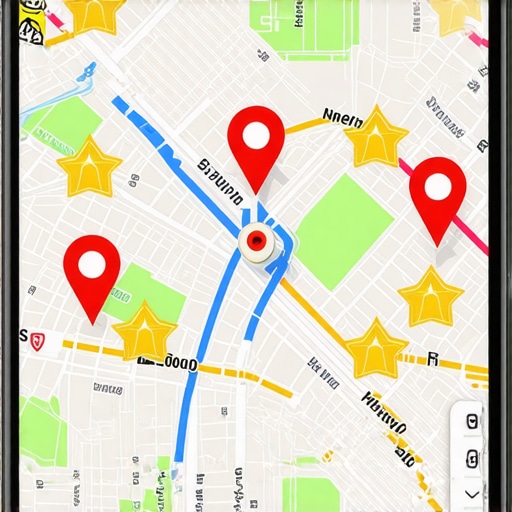
I’ll never forget the morning I had to explain to a local bakery owner why her 500-review profile was buried beneath a shop that opened six months ago. We both sat there, staring at the screen, nursing lukewarm coffees, and feeling completely baffled. I had spent years telling people that reviews were the golden ticket to a local pack entry, but that morning, the data didn’t care about my theories. It was a wake-up call that changed how I look at local SEO forever. We think we are winning because the customers are happy, but the algorithm is looking for something entirely different these days.
Why Your Pile of Five-Star Ratings is Failing You
It’s frustrating to watch competitors with thin profiles and half the reputation steal your map pack placement. You’ve done the hard work of asking every customer for feedback, yet the needle won’t move. The truth is, Google’s algorithm has evolved far beyond a simple popularity contest. While reviews still matter for conversion, they are no longer the primary engine that helps you rank business maps in a crowded market. I used to think more was always better, but I’ve learned that quality signals and technical relevance now carry much more weight than just a high average rating. I wasted months chasing 1,000 reviews for a client only to realize their NAP data was a mess, which was the real anchor holding them back.
Is chasing more reviews actually worth your time?
You might be wondering if you should even bother asking for reviews anymore if they aren’t the magic bullet. The answer is yes, but your strategy has to shift. I made the massive mistake early on of ignoring ‘entity signals’—the way Google connects your business to a specific location and service—and focusing entirely on the ‘star count.’ According to research by Search Engine Journal, factors like proximity and on-site local signals are increasingly dominant, often outweighing pure review volume. This is exactly why your store’s proximity is no longer enough to guarantee a top spot. Have you noticed your rankings stalling despite getting fresh feedback every week? Today, I’m going to show you why the ‘review wall’ exists and how to break through it by focusing on the hidden levers of the business map pack.
Flip the Script on How Google Sees Your Business
I used to treat my Google Business Profile like a static business card. That was mistake number one. Think of your profile instead as a lighthouse. If the light is powerful (lots of reviews) but it’s pointing toward the woods instead of the ocean, the ships—your customers—are never going to find the harbor. I learned this the hard way with a plumbing client who had 4.9 stars but was nowhere to be found. We discovered that their primary category choice was actually killing their local reach because it was too broad. They were listed as ‘Contractor’ instead of ‘Plumber,’ and that tiny distinction meant Google didn’t know which ‘shelf’ to put them on.
Pick the Category That Actually Matches Search Intent
Google isn’t just looking for a business; it’s looking for a solution. Many businesses pick the most obvious category and stop there, but you need to look at what the current top three are using. This service category adjustment finally ends your ranking slump by aligning your ‘entity’ with the actual search demand in your city. I spent three weeks chasing local links for an HVAC contractor in Austin. We had 200 reviews, but we were stuck on page two. The breakthrough didn’t come from a new review; it came when we realized their NAP (Name, Address, Phone) was listed differently on three major local directories. It felt like trying to find someone who uses three different aliases. Once we performed the data cleanup move that fixes inconsistent business listing details, the profile shot up to the top three in 48 hours.
Stop Relying on Your Address Alone
I’ve seen businesses located right next door to a searcher lose out to a shop three miles away. Why? Because your proximity to the searcher is only half the ranking story. Google looks for ‘prominence’—how much the internet talks about you in relation to that specific neighborhood. If a local blogger mentions your shop or you sponsor a little league team, you create a geo-signal that reviews can’t touch. This is how local brand mentions can help you rank business maps better than a dozen generic ‘Great service!’ comments. Prominence is the muscle that pushes your map pack placement through the ceiling.
Sync Your Site with Your Map Listing
Your website and your map profile must speak the same language. I once worked with a med spa that had beautiful photos but zero local keywords on their homepage. Google couldn’t bridge the gap between their office and the services they offered. By using local service pages to support your map pack placement, you provide the technical ‘proof’ the algorithm needs to trust your location data.  This connection tells the algorithm that you aren’t just a point on a map, but an active authority in the community.
Fix the Broken Links in Your Digital Chain
Consistency is the boring, unsexy part of SEO, but it’s the foundation of every successful business map pack strategy. If your business is listed as ‘Main St. Heating’ on Yelp and ‘Main Street Heating & Cooling’ on Google, you’re splitting your authority in half. It’s a tiny detail, but it’s the one NAP discrepancy that stealthily devalues your business listing every month. You need to audit your presence to ensure that every mention of your name is a perfect mirror image of your official profile.
I used to believe that the more places your business was mentioned, the better. I spent thousands of dollars on directory listings for my early clients, thinking I was building an ironclad reputation. But I quickly realized that quality beats quantity every single time, and honestly, why buying 100 generic citations is actually hurting your local rankings was one of the toughest lessons I had to learn. Google isn’t impressed by a link on a dying directory in a different time zone; it wants to see that you are a relevant, living part of your specific community. If you’ve ever felt like you’re doing everything right but still seeing no movement, it’s likely because you’ve focused on the noise instead of the signal.
Stop Chasing Every Directory Under the Sun
Everyone tells you to get listed everywhere, but in my experience, a handful of high-authority, hyper-local mentions work better than five hundred generic ones. I’ve seen businesses plummet because their ‘citation cleanup’ actually created more confusion by adding outdated data to the mix. This is why citation volume alone wont help you outrank local competitors who have focused their efforts on local sponsorships and regional news mentions. You need to stop thinking like a global marketer and start thinking like a neighborhood shop owner. If a local sports team or a neighborhood blog mentions you, that ‘geo-relevance’ is worth its weight in gold.
Why are your competitors with fewer reviews still outranking you?
It’s the question that keeps most business owners up at night. You have 300 reviews, they have 45, yet they’ve secured the top map pack placement. This happens because Google is prioritizing behavioral signals. According to the 2024 Local Search Ranking Factors study by Whitespark, things like ‘click-to-call’ rates, direction requests, and even how long a user stays on your profile after clicking are massive drivers of a mappack listing success. If your profile is boring or your photos are outdated, people won’t interact with it, and Google will eventually stop showing it, regardless of your star count.  This is exactly why your competitors grab the local pack entry with minimal reviews—they are simply generating more engagement per view than you are.
Don’t Get Stuck in the Proximity Trap
One of the biggest ‘oops’ factors I see is what I call the ‘Proximity Trap.’ Business owners think that if they aren’t physically located in the dead center of the city, they can’t rank business maps effectively for that area. This is a myth that leads to desperate (and dangerous) tactics like using UPS store addresses or fake offices. Instead of cheating the system, you should be focusing on expanding your ‘relevance radius.’ I’ve helped businesses three miles outside the city center dominate the local pack by fixing the proximity trap keeping you out of the map pack through better geo-targeted content on their website. If your site doesn’t mention the specific neighborhoods you serve, Google won’t give you credit for being ‘near’ them.
The Interaction Mistake You Didn’t Know You Were Making
Are you replying to reviews just to say ‘Thank you’? If so, you’re missing a massive opportunity. I used to do this too, until I noticed that my responses weren’t doing anything for my visibility. There is a specific review response mistake that stops Google from showing your profile to new callers. You need to naturally weave in keywords and service locations into your replies. Instead of ‘Thanks for the review,’ try ‘Thanks for letting us handle your water heater repair in Austin!’ It sounds simple, but it’s a powerful way to reinforce your entity to the algorithm. The small review tweak that proves your business is actually active is often the difference between a stalling profile and one that generates daily leads. Have you ever fallen into this trap of generic responses? Let me know in the comments, and let’s talk about how to fix it.
I’ve spent way too many nights refreshing a browser window, hoping to see a client’s name in that top three spot. But manual checking is a fool’s errand because Google shows different results to a guy standing on the corner than the lady sitting in the cafe two blocks over. If you aren’t looking at the map from a bird’s-eye view, you’re flying blind. This is exactly where I see most businesses fail; they get into the top three and then stop doing the very things that got them there, assuming the spot is theirs forever. Local SEO isn’t a trophy you win once; it’s a lease you have to renew every single month.
Your Rankings Are Not as Solid as You Think
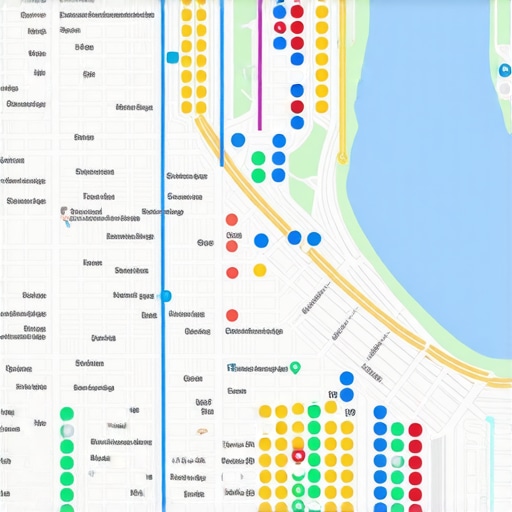
I personally swear by local grid trackers because they reveal the ‘ranking bleed’ that a single-point search misses. When I first started using them, I realized a law firm I worked with was #1 at their office but dropped to #10 just four blocks away. By learning how to use a google maps rank tracker to find competitor weak spots, we identified where our relevance dropped off and adjusted our local content to bridge that gap. I don’t use these tools because they look cool; I use them because they provide the only honest data in a world of personalized search results. If you aren’t checking a 13×13 grid at least once a month, you are guessing, and guessing is expensive.
How do I maintain my map pack position for the long haul?
Consistency is your only defense against aggressive competitors. I’ve found that following a simple checklist for moving up in the business map pack every month prevents the slow decay of your profile’s authority. This includes updating your photos, auditing your NAP data, and responding to the latest Q&A. According to technical insights from BrightLocal, consumer behavior is shifting toward ‘recency’—meaning Google prioritizes businesses that show active, fresh engagement. If your last photo was uploaded in 2022, the algorithm assumes you’ve gone stale. I make it a point to upload at least three geo-tagged photos every week for every location I manage to keep that activity signal screaming.
Scale Your Business Without Losing Your Profile
As you grow, the temptation to take shortcuts with new locations is huge. I’ve seen businesses get their entire network nuked because they tried to set up five ‘virtual offices’ in a weekend. You have to understand the best way to handle multiple locations without risking suspension if you want to scale. Each location needs its own unique footprint, its own local phone number, and its own real-world evidence of existence. I once had to help a franchise owner recover 12 profiles at once because they used the same utility bill for every location. It was a nightmare that could have been avoided with a bit of patience and proper documentation.
Prepare for the Shift Toward Real-Time Data
Looking ahead, I predict that ‘availability’ and ‘real-time inventory’ will become the next major ranking factors. We are already seeing the core shifts in google maps seo for 2026 moving toward a ‘live’ map experience. Google wants to know not just that you are a plumber, but that you are a plumber with a technician available *right now* in a specific zip code. If you want to stay ahead, start looking into ways to integrate your booking software or inventory directly with your profile. This is how to turn your business map pack into a 24-7 lead generator that survives the next algorithm update. Don’t wait for your rankings to drop before you start looking at your data; go audit your primary category right now and make sure it’s a perfect match for what you actually do today.
Lessons I Learned When My Best Clients Suddenly Disappeared
For a long time, I operated under the delusion that if I just kept the star rating high, the phone would keep ringing. But I quickly realized that why good reviews aren’t enough to rank business maps anymore is the most important lesson any local owner can learn. I’ve seen 4.9-star profiles vanish overnight because they ignored their ‘entity health.’ Here are the three truths I had to learn the hard way: First, Google rewards activity over history; a fresh photo today is worth more than a five-star review from three years ago. Second, your ‘relevance’ isn’t just about what you say you do, but what your website proves you do. Finally, I learned that why good reviews aren’t enough to rank business maps anymore is often down to technical gaps like broken local schema or category dilution. If you feel stuck, remember that a move that recovers a mappack listing after a sudden ranking drop usually involves fixing the foundation, not just asking for more favors from customers.
My Personal Toolkit for Winning the Local Game
I don’t believe in guessing when it comes to your livelihood. To consistently rank business maps, I rely on a few specific resources that go deeper than the standard dashboard. I always suggest checking out 5 local seo tools that reveal why your competitors are still outranking you to get a clear picture of the landscape. For citation audits, Whitespark is my gold standard because it finds the ‘ghost’ listings that confuse Google. For tracking your progress across different neighborhoods, a local grid tracker is non-negotiable. I also keep a close eye on the mastering business map pack keys to ensure my clients stay ahead of the curve as Google changes its mind about what ‘local’ really means.
Start Turning Those Digital Views Into Real Foot Traffic
Navigating the world of local SEO can feel like trying to hit a moving target while blindfolded, but it doesn’t have to be that way. The most successful businesses I’ve worked with aren’t the ones with the biggest budgets; they are the ones that stay consistent with the small, technical details. When you focus on your increasing Google profile clicks without buying new reviews, you create a sustainable engine for growth that doesn’t rely on luck. You have the tools, the data, and the strategy to claim your local pack entry and keep it. Don’t let the technical jargon intimidate you—take it one category adjustment and one geo-tagged photo at a time. Have you noticed a sudden drop in your map pack placement recently, or are you just starting to build your presence? Let me know in the comments below, and let’s figure out your next move together!