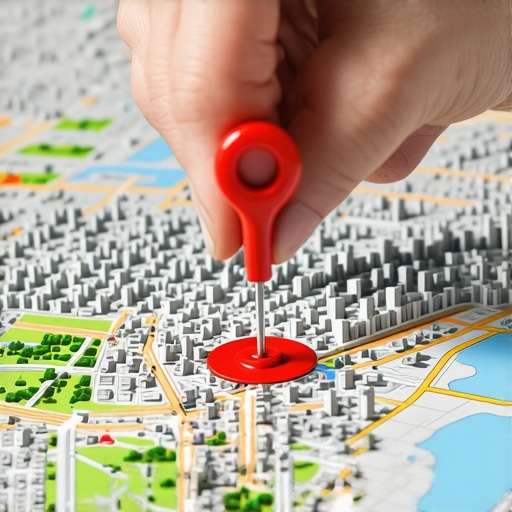
I remember sitting in my home office three years ago, staring at a screen that refused to show my business in the top results. I had done everything the “gurus” told me. I bought the citations. I filled out every field. I even begged my aunt to leave a review. But when I searched for my services, I was buried on page three, right next to businesses that hadn’t updated their hours since the flip-phone era. It was humiliating. I felt like I was shouting into a void while my competitors—most of whom had worse websites and fewer reviews—were reaping all the phone calls. That was my lightbulb moment. I realized that to rank business maps effectively, it is not just about static data; it is about the signals of life your profile sends to the algorithm. Today, I am going to show you exactly how to stop being a ghost and start being the local authority that Google cannot ignore. We are diving into the specific behavioral triggers that actually shift your position. Have you ever felt like you are doing everything right but still getting outranked by a guy with a broken website? Drop a comment or reach out via my contact page because I have been there, and it is a frustrating place to be.
Stop Waiting for the Algorithm to Notice You
Early on, I made the classic blunder of thinking volume was king. I paid for a “package” of 100 generic citations, thinking it would catapult me to the top. It did not. In fact, learning why citation volume alone won’t help you was a painful lesson that cost me both time and money. It actually muddied my data and did zero for my visibility. Real growth happened when I shifted my focus to how users interacted with my listing. According to industry research from Moz, behavioral signals like click-through rate and mobile “click-to-call” are now among the most critical factors for map pack placement success. It is about proving you are relevant to the person searching right now. Using these 5 interaction tactics that actually move your business up the map pack isn’t just about gaming a system; it is about providing the best experience for your neighbors. When you treat your profile like a living storefront rather than a static yellow page ad, the results follow.
Is fighting for a local pack entry actually worth the hype?
I get the skepticism. You might think that organic search or paid ads are a safer bet. But here is the reality: the map pack is the first thing people see on mobile, and mobile is where local intent lives. If you are not in those top three spots, you are effectively invisible to about 70% of local searchers. I have seen businesses recover from a mappack listing that disappeared just by cleaning up their interaction data. It is not just hype; it is the lifeblood of modern local lead generation. By mastering these map pack listing secrets, you stop guessing and start growing. Let’s look at the first tactic that changed everything for me.
Stop Sending Mixed Signals to the Algorithm
It starts with making Google believe people actually want to talk to you. I remember a plumber I worked with who had perfect five-star reviews but was not getting a single call from his profile. We were baffled until we looked at his interaction data. Nobody was clicking the ‘Call’ or ‘Directions’ buttons because his profile look abandoned. To rank business maps effectively, you need to prove you are an active entity. We implemented 5 interaction tactics that actually move your business up the map pack, starting with driving real, local traffic to the listing through social media posts that actually requested a click. The result? Within three weeks, his map pack placement jumped four spots simply because the algorithm saw him as a high-demand resource.
Fix Your Photos Before They Cost You More Leads
Images are not just for decoration; they are data points. Most people just dump a grainy photo of their truck and call it a day. That is a mistake. I once saw a med spa lose its map pack placement success because their photos were tagged at a location three towns over. You have to ensure your visual content is geotagged and relevant. In fact, there is one photo adjustment that increases google profile views instantly: using real-time shots of your team in action rather than stock photos. This builds trust with the user and satisfies Google’s appetite for fresh, relevant content. If you are struggling with visibility, the simple photo metadata error that stops your profile from showing up is likely the culprit hiding in plain sight.
The Category Shift That Ends Your Ranking Slump
The most painful mistake I see is category confusion. Last summer, I helped a local landscaper who was stuck behind a massive national franchise. He was technically a landscape designer, but nobody in his town was searching for that. They were searching for ‘lawn care.’ We performed a service category adjustment that finally ends your ranking slump and he reclaimed his top map pack placement almost overnight. It is not about what you think you do; it is about how your customers describe your services. If you choose the wrong primary category, you are fighting an uphill battle against the proximity filter. This is a common reason why your stores proximity is no longer enough to win the map pack. You need to align your profile’s identity with the specific local intent of your neighbors.
Let’s pull back the curtain on a lie most SEO agencies sell: the idea that review volume is the ultimate shield for your business map pack position. I see business owners frantically chasing hundreds of reviews while their actual map pack placement remains stagnant. Here is the contrarian truth: Google cares more about who is reviewing you and the specific keywords they use than the raw number. If you are a plumber but all your reviews just say ‘great service’ without mentioning ’emergency pipe repair’ or your specific neighborhood, you’re missing the relevance signal. In fact, understanding why good reviews aren’t enough to rank business maps anymore is a conversation I have almost weekly with frustrated entrepreneurs. According to a comprehensive study by BrightLocal, keyword relevance within the review text is a high-impact factor that often outweighs the star count alone.
Don’t Fall for the Review Volume Myth
Another common mistake is obsessing over your business description. I have seen owners spend hours crafting the perfect 750-character bio, thinking it will move the needle. It won’t. I’ve documented why your google business description doesn’t actually affect your ranking, yet people still treat it like it’s a magic wand. Focus your energy on things that actually trigger the algorithm, like high-quality local backlinks and interaction data. Have you ever fallen into this trap of over-optimizing things that don’t matter? Let me know in the comments because identifying these time-wasters is the first step to rank business maps effectively without burning out.
Why do competitors with fewer reviews still win the local pack entry?
It drives people crazy. You have 200 reviews; they have 12, yet they’re sitting in the top spot. Usually, it’s because of the proximity trap keeping you out of the map pack. Google is prioritizing the searcher’s physical distance over your reputation. But here is the advanced nuance: why your proximity to the searcher is only half the ranking story. If your website’s local authority—built through local news mentions or regional sponsorships—is high enough, you can actually ‘stretch’ your proximity radius and outrank the guy next door even from several miles away. This is how the ‘big players’ maintain a top map pack placement across entire cities rather than just their immediate block.
The Silent Data Leak Killing Your Visibility
The biggest ‘oops’ I encounter is a silent killer called NAP drift. You might think changing your phone number on a random business directory doesn’t matter, but the one nap discrepancy that stealthily devalues your business listing every month is a real threat. It creates a ‘trust leak’ in Google’s internal database. If the algorithm sees three different addresses or phone numbers for your brand across the web, it loses confidence in your location data and pushes you down. Before you buy another ‘SEO package,’ run a scan for how outdated citations stealthily damage your map pack placement. Cleaning up these legacy errors is often the fastest way to see a jump in your map pack listing secrets and overall local reach. Consistency isn’t just a virtue; it’s a ranking signal.
Maintaining a mappack listing isn’t a set it and forget it project. I have seen businesses hit number one and then vanish in a month because they stopped feeding the beast. If you want to rank business maps for the long haul, you need a system that doesn’t eat up your entire week. I personally rely on 3 minimalist tools that find the ranking gaps your seo agency missed to keep an eye on things without getting overwhelmed. One of my favorites is a hyper-local grid tracker. Instead of just seeing an average rank, I can see exactly where my profile drops to position four on the other side of the highway. Learning how to use a google maps rank tracker to find competitor weak spots changed the way I prioritize my tasks—now I only fix what is actually slipping. Joy Hawkins, a leading voice at Sterling Sky, recently highlighted how openness and real-time signals are becoming heavier weights in the algorithm. This means if you are not updating your hours or responding to Q&As, Google assumes you are less open to customers than the guy down the street. To combat this, I follow a simple checklist for moving up in the business map pack every month, which includes refreshing my interior photos and purging old, duplicate citations.
How do I keep my map pack spot from sliding when new competitors pop up?
The secret isn’t just more reviews; it is more specific relevance. When a new competitor enters the business map pack, they usually come in with a clean profile but zero local history. You win by being the local veteran. I recommend using proven tactics to boost your map pack visibility today, like posting local-specific updates about community events you are involved in. This signals to Google that you are not just a business; you are a landmark. If you find yourself sliding, do not panic. There is usually a specific reason, and knowing how to reclaim your map pack spot without paying for expensive lead gen is about auditing your interaction data before you start buying more ads. Looking ahead, I predict that how real-time foot traffic data changes google maps seo in 2026 will be the biggest disruptor. Google is already getting better at using anonymized mobile phone data to see who actually visits your store after clicking your listing. This means your digital map pack placement will eventually have to match physical reality perfectly. Start today by checking your metadata. Go into your phone, find a recent photo of your storefront, and make sure the location services were on when you took it. Uploading that single, geotagged image is one of those map pack listing secrets that takes thirty seconds but tells the algorithm you are exactly where you say you are. If you are stuck on a specific technical error, hit me up via my contact page—I would love to take a look at your grid and see where the leak is.
Hard-Won Truths from Three Years in the Ranking Trenches
Looking back at my journey from page three to the top spot, the biggest shift wasn’t a technical hack, but a mindset change. First, I learned that silence is the enemy of a mappack listing. A profile that isn’t generating fresh photos, new reviews, or updated Q&As is a profile that Google views as dying. Second, I realized that relevance is localized; what works for a plumber in Chicago won’t necessarily work for one in a small suburb. You have to speak the language of your specific neighborhood to rank business maps effectively. Finally, I discovered that the algorithm is remarkably human-centric. It wants to recommend the business that people are actually talking to and visiting. When I stopped treating my profile like a digital trophy and started treating it like a community hub, the map pack placement followed naturally. I found that using the review strategy that actually triggers a local pack entry faster was the final piece of the puzzle that turned my efforts into a predictable system.
The Tools That Keep My Sanity Intact
Managing a local pack entry shouldn’t be a full-time job. Over the years, I have narrowed my toolkit down to a few essential resources that provide the most value without the clutter. I rely heavily on local grid trackers to see how my visibility fluctuates block by block, which is much more accurate than a single city-wide rank. To keep things lean, I use these 3 minimalist tools that find the ranking gaps your seo agency missed to audit my own progress. For deeper research, I look at 5 local seo tools that reveal why your competitors are still outranking you to understand what high-authority backlinks I might be missing. These resources allow me to focus on the 20% of actions that drive 80% of the results, ensuring that I can how to build local seo traffic without a massive marketing budget while still outperforming the big national franchises.
#IMAGE_PLACEHOLDER_E#
Take Your Place in the Local Pack
You no longer have to be a ghost in your own city. The path from being invisible to becoming the top-clicked authority is paved with consistent, small actions rather than one-time ‘SEO packages.’ By focusing on the signals of life—real interactions, geotagged photos, and keyword-rich feedback—you can move from zero to top dominating business map pack rankings. It is about proving to Google, and more importantly to your neighbors, that you are the most active and reliable choice in the area. Your journey to a permanent map pack placement starts with a single update today. Whether you are fixing a small metadata error or requesting a fresh review from a happy client, every move counts. Have you ever felt like your business is stuck in a ‘proximity trap’ where you only show up if the customer is standing in your parking lot? Let me know in the comments below, and let’s figure out how to stretch your reach together.