
I will never forget that Tuesday morning. I sat down with my coffee, opened my laptop, and felt my stomach drop into my shoes. My business, which had been sitting comfortably in the top three for months, was nowhere to be found. I refreshed the page. I tried incognito mode. I even walked across the street to see if it was a proximity issue. Nothing. My map pack placement had vanished, and with it, the steady stream of calls I had come to rely on. If you are staring at a blank screen right now wondering where your customers went, I know that panic. It is visceral. But I also know that you can fight back. I spent weeks trial-and-erroring my way back to the top, and today I want to share exactly how I fixed it.
Stop the Bleeding and Find Out Where Your Customers Went
The first thing I did was blame the algorithm. It is easy to point fingers at Google, but often, the culprit is much closer to home. Early in my journey, I made a massive mistake: I thought more was always better. I went on a spree of adding categories that didn’t really fit my business, thinking I would show up for everything. Instead, I confused the system and ended up with a ranking slump that felt impossible to escape. Your business map pack presence depends on a delicate balance of signals. When those signals get crossed, Google simply stops showing you to local searchers. It’s not necessarily a penalty; it’s often just a loss of trust. According to data from Moz, while proximity is a major factor, the combination of on-site signals and profile health accounts for over 50% of how Google determines your local pack entry. If you have recently seen a dip, have you checked your dashboard for any subtle warnings or ‘suggested edits’ that might be wreaking havoc?
Is chasing the top three still the holy grail for your business?
You might be wondering if it is even worth the headache to keep fighting for that spot. The reality is that the map pack is the front door of your business in 2024. When we saw our listing disappear overnight, our lead volume didn’t just dip—it fell off a cliff. We had to act fast. I started by looking at the small things, like NAP errors that I had ignored for years. I realized that a successful map pack listing is not a ‘set it and forget it’ project; it’s a living part of your shop. Have you ever experienced a sudden drop in calls even when you thought your SEO was perfect? I’d love to hear if you’ve faced this same wall. In the next few sections, I’m going to walk you through the technical fixes that finally brought my business back to life.To get your map pack placement back, you have to think like a digital detective. Google is essentially a suspicious neighbor who won’t recommend a contractor unless they have seen his truck parked on the street with a consistent logo. If your digital footprint is messy, that neighbor stays quiet. One of the biggest trust killers I see is category confusion. If you are a plumber but you have also listed yourself as a hardware store and a kitchen remodeler thinking you will get more leads, you are actually diluting your authority. I have found that why your primary category choice might be killing your local reach is often the first thing people overlook when they see their ranking dip. It is always better to be the king of one specific service than a ghost for ten.
Audit Your Profile Like a Skeptic
I remember helping a local HVAC business that had been stuck on page two for months. We did a deep dive and found they had three different phone numbers listed across the web—one on their site, one on an old Yelp page, and another on their business map pack profile. To the algorithm, this looked like three different companies fighting for one spot. We performed the data cleanup move that fixes inconsistent business listing details and within two weeks, their phone started ringing again. This consistency is the foundation of any successful mappack listing. You need to verify that every single mention of your name, address, and phone number matches exactly, down to the way you abbreviate ‘Street’ or ‘Avenue’.
High-Resolution Proof That You Actually Exist
Photos are not just for aesthetics; they are geo-tagged evidence. When I was fighting to recover my own ranking, I realized my photos were old and generic. I started uploading weekly shots of our team actually working in the local neighborhood. This signal tells Google that you are active and physically present where you claim to be. A simple change like the simple photo tweak that boosts clicks from the business map pack can drastically change your click-through rate, which in turn signals to Google that your local pack entry is worth keeping at the top.
How to Build Relevance Without Leaving Your Desk
Interaction is the fuel that keeps your business map pack alive. I used to think reviews were just about the star rating, but I was wrong. It is about the keywords inside the reviews and how you respond to them. I started using the review strategy that actually triggers a local pack entry faster by encouraging customers to mention specific services and neighborhoods in their feedback. This creates a hyper-local web of relevance that is hard for competitors to beat. If you are trying to rank business maps in a competitive city, these small human interactions often carry more weight than expensive technical SEO tricks. If you have faced a sudden drop, look at your recent interaction levels—did you stop posting updates or responding to questions? Often, the engine just needs a little bit of fresh oil to start turning again.
Stop obsessing over citation volume
Everyone in the local SEO world tells you that if you just get more mentions, your mappack listing will skyrocket. It is a common belief, but in my experience, it is mostly wrong. In fact, why buying 100 generic citations is actually hurting your local rankings is a lesson I learned the hard way after spending hundreds on a package that did nothing but clutter my data. It isn’t about the quantity anymore; it is about localized authority. A recent Whitespark Local Search Ranking Factors study suggests that citation volume is actually decreasing in importance compared to real-world behavioral signals. If you are just a name on a generic list, you are not providing the trust signals Google actually wants to see. 
Why do competitors with fewer reviews still grab the local pack entry?
I see business owners panicking because a competitor has 500 reviews while they only have 50, yet the smaller guy is winning. This happens because why your competitors with fewer reviews still win the map pack placement usually comes down to review velocity and semantic richness. If your competitor’s customers are consistently mentioning specific services and local neighborhood names in their feedback, they are providing a hyper-local relevance that triggers a local pack entry much faster than a thousand generic “great service” comments. Have you ever fallen into this trap? Let me know in the comments. If you are trying to rank business maps effectively, you have to stop playing the numbers game and start playing the relevance game. I have found that fixing the service area page error making your business invisible is often more effective than a dozen new reviews. Most people think they are stuck in a proximity trap, but why your proximity to the searcher is only half the ranking story is a concept you must master if you want a dominant map pack placement. Focus on your local brand mentions and high-quality photos instead of chasing ghosts in a spreadsheet.
Stay in the Top Three Without Obsessing Every Hour
Once you finally secure that coveted spot, the real work shifts from climbing to defending. I used to think I had to check my phone every thirty minutes to make sure we hadn’t slipped. It was exhausting and, frankly, unnecessary. What I learned is that stability comes from a predictable routine, not frantic refreshes. I now rely on a tight simple checklist for moving up in the business map pack every month that keeps our signals fresh without burning me out. The secret isn’t more work; it’s more precise work. I focus heavily on ‘suggested edits.’ Competitors or even well-meaning users can suggest changes to your hours or services that can knock you out of the running instantly. By checking these once a week, I’ve caught errors before they could lead to a ranking drop.
How do I maintain my map pack placement over the long haul?
Maintenance is about proving to Google that you are still the most relevant answer for a local searcher. This means keeping your interaction levels high. I personally make it a point to use interaction tactics that actually move your business up the map pack, such as answering every single question in the Q&A section—even the ones that seem silly. According to local search expert Joy Hawkins from Sterling Sky, the ‘openness’ of a business—specifically whether they are actually open at the time of the search—has become a massive ranking factor. If your hours are wrong or inconsistent across the web, you are essentially invisible during your most profitable times. This is why I am so militant about auditing our details. I also suggest using minimalist tools that find the ranking gaps your seo agency missed to see where your competitors are sneaking in.
The Toolset That Actually Moves the Needle
I don’t believe in buying every shiny new SEO software that hits the market. Most of them are just overpriced spreadsheets. However, I do swear by a few specific methods. First, I use a dedicated google maps rank tracker to see our performance geographically. A single point of data doesn’t tell the whole story; you need to see how your map pack placement holds up five miles away versus two blocks away. This geo-grid view allowed me to see that we were losing ground in the northern suburbs, which prompted me to create more hyper-local content for those specific areas. 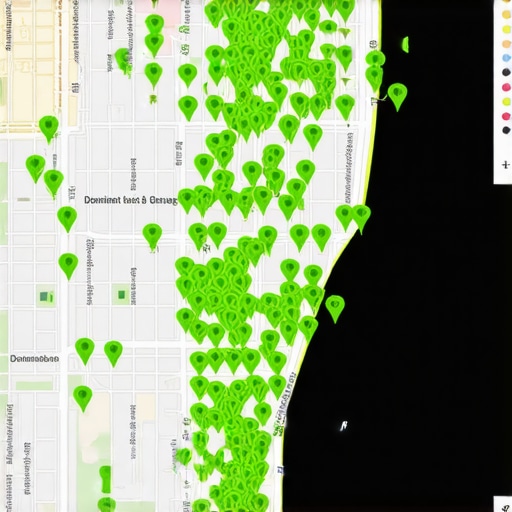 Looking ahead, I predict that the core shifts in google maps seo for 2026 will lean heavily into real-time behavioral data, like how many people actually click ‘Directions’ and then follow through with the drive. Google is getting better at spotting fake engagement, so your focus must remain on genuine customer satisfaction. If you can turn your business map pack into a 24-7 lead generator, you won’t just be chasing rankings; you’ll be building a moat around your business. My challenge to you today: open your rank tracker, find one ‘cold’ spot on your map, and upload three new photos from that specific neighborhood this afternoon.
What Most SEO Agencies Won’t Reveal About Your Google Ranking
I used to believe that more reviews equaled a better map pack placement, but I was wrong. The real secret is ‘velocity’—how consistently you get them. If you get 50 reviews in a week and then nothing for a year, Google might think you’ve gone out of business. Also, stop stressing about your physical distance from the searcher. I found that fixing the proximity trap keeping you out of the map pack is more about building local brand mentions than moving your office location. Lastly, never ignore your ‘suggested edits’ in the dashboard; they are the silent killers of a healthy local pack entry.
The High-Performance Toolkit I Use Every Day
I don’t waste money on complex software that generates reports nobody reads. I stick to three things: Google Search Console for understanding intent, a reliable Google Maps rank tracker to see my real-world coverage, and my smartphone camera. I’ve learned that leveraging local photos to secure a local pack entry is the fastest way to prove your physical relevance to an algorithm that values visual proof. These simple tools form the foundation of any successful business map pack strategy. #IMAGE_PLACE_HOLDER_E#
Take the First Step to Reclaim Your Local Authority
Winning the local SEO game isn’t about being a technical genius; it’s about being the most helpful, consistent presence in your neighborhood. When you focus on mastering business map pack placement, you aren’t just chasing a ranking—you are building a bridge between your services and the people who need them most. Be patient, stay diligent with your weekly updates, and remember that every small technical tweak brings you closer to that top spot. Have you ever fixed a tiny error in your business listing and seen an almost instant jump in your lead volume? Let me know your experience in the comments below!