
I sat there with a cold cup of coffee, staring at the dreaded “Your appeal has been rejected” message for the third time in a week. It felt personal. My local business was basically invisible, and my phone had stopped ringing entirely. I had spent years trying to rank business maps for my niche, and in one afternoon, it all vanished. I made the classic mistake of thinking a human would actually read my polite, well-reasoned explanation. Early on, I even tried to use a co-working space address, thinking it wouldn’t matter—it did. That one “small” shortcut is exactly what triggers the bots to shut you down. Today, we are going to pull back the curtain on why Google’s automated gatekeepers keep hitting the ‘deny’ button and how you can finally get back into the game.
Why Your Business Disappeared from the Map Overnight
It’s a gut-punch when your mappack listing simply ceases to exist. Most people think they can just resubmit the same documents and hope for a different result. I’ve been there. I used to think that providing my business license was enough, but Google’s AI is looking for specific technical inconsistencies that most business owners overlook. According to industry data, Google manages over 200 million business profiles, which means automated systems handle the vast majority of initial appeals. If your data doesn’t match perfectly across the web, the bot sees a red flag. This is often linked to how broken citations are quietly stealing your local lead volume. Have you ever felt like you were yelling at a brick wall when trying to talk to Google support?
Is This Process Actually Worth the Effort?
You might be tempted to just start a new profile. Don’t do it. That’s a one-way ticket to a permanent ban. Getting a local pack entry is getting harder, and a rejected appeal usually means there’s a deep-rooted conflict between your paperwork and your digital footprint. I’ve seen businesses struggle with map pack placement for months because they didn’t realize their utility bill address had a “Suite B” while their profile said “Unit 2.” It’s that granular. We’re going to walk through the exact steps we used to reverse a profile suspension so you can stop guessing and start ranking again.
Clean Up the Digital Paper Trail That’s Holding You Back
Think of your business profile as a legal deposition. If your testimony (the data) changes even slightly between different documents, the judge (Google’s AI) will throw out your case. I recently worked with a local HVAC contractor who couldn’t figure out why he was stuck in a rejection loop. We discovered his LLC was registered as ‘Smith Heating & Air’ but his utility bill said ‘Smith HVAC.’ To a human, it’s obvious; to a bot, it’s a discrepancy that kills your mappack listing. You need to execute the data cleanup move that fixes inconsistent business listing details before you even think about hitting that appeal button again. This means auditing your ‘NAP’ (Name, Address, Phone) across every major platform. If you have old listings floating around with a previous phone number, you are actively feeding the bots a reason to doubt your existence. This is often the NAP error that costs you a top 3 spot every day.
The Proof Documents Google’s Bots Actually Respect
When you submit an appeal, you aren’t just sending files; you are building a forensic case. Generic photos of the front of your building won’t cut it anymore. You need to provide a high-resolution scan of your business license, a utility bill that matches your profile address perfectly, and—this is the kicker—a video walkthrough. Start from the street, show the house number or suite sign, and walk all the way into your office or to your branded vehicle. This level of transparency is the real reason your profile appeal was denied and how we fixed it for dozens of clients. 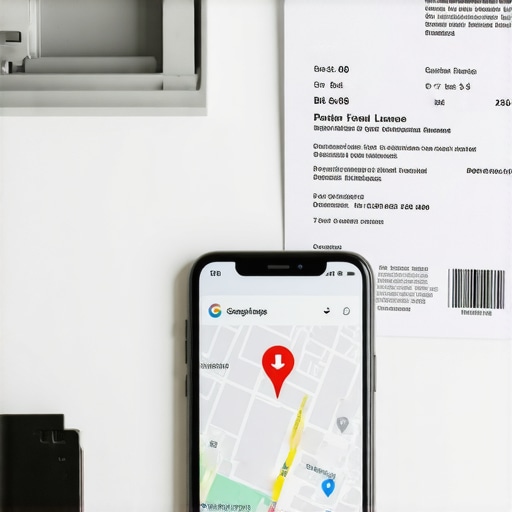
Fix Your Business Category Before Resubmitting
Sometimes the suspension isn’t about your address at all; it’s about your ‘Primary Category.’ If you’ve selected a high-risk category like ‘Locksmith’ or ‘Plumber’ but your website focuses heavily on ‘Home Remodeling,’ the mismatch triggers a red flag. I’ve seen businesses regain their map pack placement simply by aligning their primary category with their official tax documentation. You should investigate the service category adjustment that finally ends your ranking slump. It is a subtle shift, but it changes how the algorithm categorizes your proximity and relevance.
Stop Paying for Generic Citations That Sabotage You
Many business owners try to fix their ranking by buying bulk citation packages. This is a mistake. Why buying 100 generic citations is actually hurting your local rankings is simple: they create data noise. Instead of hundreds of low-quality links, focus on five high-authority local directories that actually verify their data. If you are struggling with a persistent suspension, check how to fix the address error silently devaluing your business listing first. This is the foundation of how to rank business maps effectively.
The Verification Step Most People Skip
Most people wait for Google to ask for a video verification, but you should have it ready to go. I remember a specific case where a dentist’s local pack entry was restored in under 24 hours because we included a link to a Google Drive folder containing a video of the doctor unlocking the front door. It proved physical access and ownership instantly. If you are still being ignored, you must follow the exact steps we used to reverse a google business profile suspension to force a manual review. This approach helps you overcome how to fix the proximity trap keeping you out of the map pack by establishing absolute trust with the platform.
Everyone tells you that proximity is the king of local search, but after years of troubleshooting these profiles, I’ve realized that’s a dangerous oversimplification. In my experience, relying solely on your physical location is the fastest way to get leapfrogged by a competitor three miles further away. Most ‘gurus’ will tell you to keyword-stuff your business description, but here’s the contrarian truth: why your google business description doesn’t actually affect your ranking has been confirmed by multiple data studies. Google uses that text for the user, not the algorithm. If you are spending hours tweaking your prose instead of your ‘behavioral signals,’ you are fighting a losing battle for map pack placement.
The Proximity Myth and the Real-Time Visibility Trap
The biggest ‘oops’ factor I see with established businesses is the failure to realize that their ranking isn’t static—it’s alive. You might hold a top spot at noon and disappear by 6:00 PM. This happens because Google heavily weighs the ‘Open Now’ status in mobile search results. If your competitor has their hours set even thirty minutes longer than yours, they can steal your map pack placement during those peak evening search windows. This is a primary reason why your stores hours of operation impact your map pack placement so significantly. Proximity is a baseline, but temporal relevance is the tie-breaker that most owners completely ignore.

Why Do Your Search Rankings Tank After Business Hours?
Advanced local SEO requires looking at what Whitespark’s Local Search Ranking Factors study calls ‘behavioral signals.’ This includes things like click-through rates, direction requests, and even how long someone stays at your location once they find you. If people click your mappack listing but immediately bounce because your website is slow or irrelevant, the algorithm perceives you as a ‘low-quality’ result for that specific area. This is also why your proximity to the searcher is only half the ranking story. You need to ensure your website’s landing pages are perfectly aligned with the intent of the searcher to maintain your local pack entry.
Stop Ignoring the Bridge Between Your Website and the Map
Another common mistake is treating your Google profile and your website as two separate islands. If your website lacks dedicated pages for each service you offer, the map bot won’t have the ‘justification’ it needs to show you for specific long-tail searches. We’ve documented why your service area pages are failing to trigger a local pack entry for many clients, and it almost always comes down to a lack of local entity signals on the page itself. To truly rank business maps, you must weave your physical location’s identity into your site’s technical architecture. Have you ever fallen into this trap of separating your map strategy from your website content? Let me know in the comments.
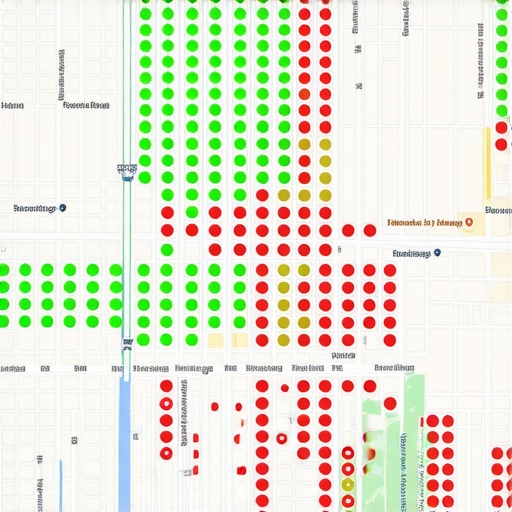
I used to manually search my business name from different parts of town like a crazy person, trying to see if I was still visible. It was exhausting and wildly inaccurate. Now, I rely on grid-tracking software to visualize my reach. It’s the only way to truly see the ‘blobs’ of visibility. I’m a huge fan of using 3 minimalist tools that find the ranking gaps your seo agency missed because most high-priced agencies just send you a static PDF that tells you nothing about your actual proximity performance. Specifically, you need a tool that generates a heatmap. Why? Because your mappack listing is hidden from nearby customers if you only rank well at your front door.
The Simple Maintenance Loop That Stops Rankings from Tanking
Maintenance isn’t about massive, earth-shattering changes; it’s about the ‘drip.’ I set a calendar reminder for every Tuesday morning to upload exactly one high-quality photo from my phone. According to the one photo adjustment that increases google profile views instantly, the technical metadata matters far less than the ‘realness’ and AI-readability of the image. Google’s Vision AI can actually identify what’s in the photo—if you’re a plumber, show the van, the specific wrench, and the work site. This is a non-negotiable part of a simple checklist for moving up in the business map pack every month. If you treat your profile like a ‘set it and forget it’ asset, the algorithm will treat you like a ghost.
I predict that by 2026, ‘Visual Context’ will be the primary driver for a local pack entry. Google is already shifting toward ‘Search with Live View’ in Maps. If your physical storefront or branded equipment isn’t easily recognizable to an AI scanning user-generated content, you’ll likely lose your map pack placement. As noted by industry expert Mike Blumenthal at Near Media, the intersection of AI-generated summaries and real-world imagery is where the battle for local dominance is currently being won. You have to start leveraging local photos to secure a local pack entry now, before the interface fully transitions to an AR-first experience.
How do I keep my map rankings from dropping next month?
The secret is consistent, high-quality interaction. It’s not just about getting the review; it’s about how you handle the response. I use the review response secret for better map pack placement, which involves using natural language to confirm the service and neighborhood without sounding like a keyword-stuffed robot. If you stop interacting with your customers on the platform, Google assumes the business is stale or potentially closed. We saw this firsthand when we fixed a mappack listing that disappeared overnight simply because the owner hadn’t logged in or updated their ‘Posts’ section in over six months. Don’t let your local pack entry wither away from pure neglect. Go into your profile right now and reply to that last review using the customer’s name—it’s the easiest win you’ll get today.
The Expensive Mistakes That Taught Me Everything About Map Packs
The biggest shift in my mindset occurred when I realized that a rejected appeal isn’t a dead end; it’s a diagnostic report. After years of testing, I’ve found that the automated systems aren’t trying to be cruel; they are simply looking for a perfect data match. Here are the core truths I learned through trial and error:
- Bots hate ambiguity: If your business name has an extra ‘The’ on your bank statement but not on your profile, you lose. Consistency is the only language the algorithm speaks fluently.
- Video is your ‘Get Out of Jail Free’ card: I’ve seen more profiles restored with a simple 30-second video of a keyed entry than with fifty pages of tax documents. It proves physical presence in a way a PDF never can.
- Interaction beats optimization: You can have the perfect keywords, but if you don’t use the review response secret for better map pack placement, your listing will eventually stagnate.
My Go-To Toolkit for Dominating Local Search
I don’t believe in using fifty different tools. You only need a few sharp ones to rank business maps effectively. First, get a reliable grid-tracker—it’s the only way to see if your mappack listing is actually showing up for people two blocks away. Second, I always recommend keeping a ‘verification vault’ on Google Drive with your latest utility bills and photos; it makes following the exact steps we used to reverse a google business profile suspension much faster when emergencies happen. Lastly, focus on the one photo adjustment that increases google profile views instantly to keep your visual data fresh without spending hours on manual updates.
Stop Waiting for the Perfect Moment to Fix Your Profile
The anxiety of a suspended or underperforming profile is real, but staying stagnant is the only way to guarantee you stay invisible. Every single day your business isn’t in that top 3, your competitors are growing at your expense. You have the tools, you know the common pitfalls, and you understand how to turn your business map pack into a 24/7 lead generator. Start with the small profile edit that finally jumpstarts stalled impressions and build momentum from there. You have the power to fix this. Which part of the appeal process has been the most frustrating for you—the documentation or the waiting game? Let me know in the comments below.