I spent three weeks staring at a screen, wondering why my phone stopped ringing. My shop was still there. My sign was still hanging. But on Google Maps? It was like I’d been erased by a digital ghost. I eventually realized I wasn’t being outranked; I was being filtered out. It’s a subtle, frustrating distinction that costs local owners thousands in lost revenue every month. Today, I’m going to show you how to peel back the curtain and find exactly what’s blocking your visibility.
Your Listing Isn’t Dead It’s Just Hidden
I remember sitting at my desk, refreshing the search results and seeing my competitors thrive while my own map pack listing was nowhere to be found. I had made a massive mistake early on: I assumed that if I just did more of everything, I’d win. But why your competitors are snaring the local pack entry easily often comes down to their profile being cleaner, not just bigger. Google’s internal filters are designed to provide variety. If your business is too similar to another nearby, or if you’ve triggered a proximity filter, you’re essentially invisible. According to experts at Sterling Sky, the ‘Possum’ filter can actually hide businesses that share the same address or even the same phone number format, even if they are different entities.
Is this whole hidden filter thing actually worth your time?
You might be skeptical. After all, if you search for yourself from your office, you probably show up. But that is the ultimate ‘proximity trap.’ I spent months thinking I was winning until I realized the exact reason your mappack listing is hidden from nearby customers was because I was being filtered out of the results for searchers just two blocks away. We are going to go through the checklist for fixing a stagnant mappack listing so you can reclaim your map pack placement. Have you ever checked your rankings from the coffee shop across town only to find you’ve completely disappeared? It’s a gut-wrenching feeling, but it’s the first step to fixing the problem.
Clean Up the Digital Paperwork First
I once worked with a local bakery that had 150 five-star reviews but was stuck on page three of the search results. We found a single directory from five years ago listing their old suite number—Suite B instead of Suite 202. Once we executed the data cleanup move that fixes inconsistent business listing details, they jumped into the top three within a week. Google is like a skeptical librarian; if your Name, Address, and Phone (NAP) data varies by even a comma across the web, it loses trust in your location. You need to hunt down the NAP error that costs you a top 3 spot every day and squash it. This isn’t just about your website; it’s about the entire ecosystem of local citations that feed the algorithm.
Force a Refresh with New Interaction
If your profile has been sitting idle, Google assumes your business is too. I started uploading three new photos every Tuesday—real photos of the shop, the staff, and the street view, not stock images. This simple habit is part of a simple checklist for moving up in the business map pack every month. It sends a ‘heartbeat’ signal to the ranking engine. You can also learn how to leverage local photos to secure a local pack entry by ensuring the visual content is fresh and relevant to your services, proving to the search engine that you are active and engaging with your community.
Don’t Let the Proximity Trap Win
Most owners think they can’t beat someone located closer to the city center, but that is a common myth that limits your growth. You can learn how to fix the proximity trap keeping you out of the map pack by building relevance through localized content. When I realized why your stores proximity is no longer enough to win the map pack, I shifted focus to getting mentions from local neighborhood blogs and school sites. These ‘geo-signals’ act like a beacon, telling Google that your business is the most relevant choice for the entire area. This is essential to how to rank business maps effectively in the local pack without having to move your physical office to a more expensive corner.
Pick Your Categories with Surgical Precision
Your primary category is the strongest signal you can send to the map pack. Many businesses choose a category that is too broad or, worse, one that conflicts with their actual high-margin services. I have seen why your primary category choice might be killing your local reach firsthand when a ‘Medical Spa’ listed themselves as a generic ‘Skin Care Clinic’ and lost all their high-value search volume. If you’re struggling to move the needle, the service category adjustment that finally ends your ranking slump might be the only lever you need to pull. It is about matching what the customer types into that search bar with the exact label Google expects. Remember that why good reviews arent enough to rank business maps anymore often comes down to these technical nuances that determine your final map pack placement.
Use Regional Backlinks to Expand Your Reach
Standard SEO focuses on high-authority links, but for effective map pack placement, a link from the local little league team or a nearby chamber of commerce is often more powerful than a link from a national magazine. I personally spent a month reaching out to local neighborhood associations to build these connections. By learning how to use regional backlinks for geo-targeted seo campaigns, you tell the algorithm that your business is a pillar of the specific community you want to serve. This is one of the 7 hidden ranking factors that actually control your map pack spot that most of your competitors are completely ignoring because they are too busy buying generic links that do not move the local needle.
Let’s dig deeper into why those hidden factors often override the ‘obvious’ metrics like review counts. Most gurus tell you that more reviews equal a better mappack listing, but that is a dangerous oversimplification. I’ve analyzed hundreds of profiles, and why your competitors with fewer reviews still win the map pack placement often comes down to ‘Review Velocity’ and ‘Review Sentiment Keywords.’ If you get 50 reviews in one week and then nothing for three months, Google smells a rat. Consistent, steady growth is what builds lasting map pack placement. I’ve seen listings with half the review count of their rivals jump to the top simply because their customers used specific service-related keywords in their text. Everyone tells you to chase a five-star rating like it’s the holy grail, but a slightly lower score with higher engagement often signals a ‘real’ business to the algorithm.
The Review Response Mistake That Silences Your Growth
Also, pay attention to how you reply. I see so many owners copy-pasting ‘Thanks for the business!’ over and over. That is the review response mistake that stops google from showing you in high-intent searches. Google’s AI reads your responses to understand your business’s personality and reliability. Use those responses to naturally mention your location and the specific problem you solved. This builds context that the business map pack needs to see. 
Does your service area radius actually kill your visibility?
This is the most common ‘Oops’ factor I see with mobile businesses like plumbers or landscapers. You think by selecting a 50-mile radius, you’ll show up for more people. In reality, you’re diluting your local authority. This creates the service area conflict that secretly blocks your local pack entry 2. According to the 2023 Whitespark Local Search Ranking Factors study, ‘Proximity’ remains a top-tier factor, but ‘relevance’ is what keeps you in the top 3. When you claim too large an area, Google treats you as a ‘generalist’ for the whole region rather than an ‘expert’ for a specific neighborhood. I recently consulted for a locksmith who was invisible in his own town because he tried to cover three counties. We shrank his service area to a 10-mile radius, fixed the data cleanup move that fixes inconsistent business listing details, and he saw a 40% increase in calls. It feels counterintuitive to ‘limit’ your reach, but in the world of local SEO, being a big fish in a small pond is how you eventually dominate.
Stop the Zero-Click Drain on Your Revenue
Another nuance people miss is the ‘Zero-Click’ trap. You might be ranking, but why your google profile gets views but zero phone calls 2 is often because your profile lacks ‘Conversion Triggers.’ If you aren’t answering the questions searchers have right there in the map, they’ll move to the next local pack entry that does. This is one of the 7 hidden ranking factors that actually control your map pack spot that separates the pros from the amateurs. Have you ever fallen into this trap of trying to cover too much ground only to see your rankings vanish? Let me know in the comments.
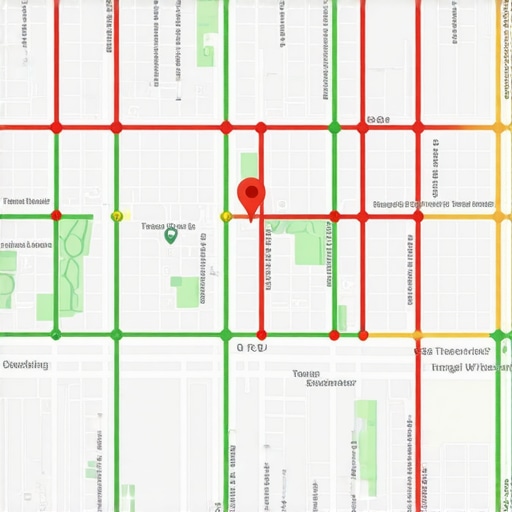
I don’t believe in checking my rank every morning; it’s a recipe for burnout. However, I do believe in having a surgical view of the battlefield. When I’m trying to rank business maps for a high-competition client, I rely heavily on a ‘Local Grid Tracker.’ If you aren’t using one, you’re flying blind. Tools like LocalFalcon or BrightLocal provide a visual map of where your map pack placement drops off, block by block. This is how I discovered that a client was dominating their own street but completely invisible three blocks North. By using these insights, you can learn how to use a google maps rank tracker to find competitor weak spots and target those specific gaps.
How do I keep my rank steady while I’m busy running the shop?
Maintenance is about momentum, not massive overhauls. I’ve found that the secret is a ‘Batching Strategy.’ I spend 30 minutes on the first Monday of every month auditing my mappack listing. I check for any ‘suggested edits’ from the public—competitors love to suggest your shop is ‘permanently closed’ to steal your spot. This habit is part of a simple checklist for moving up in the business map pack every month that keeps you from falling into a ranking slump. If you do see a dip, don’t panic. Usually, it’s a minor data conflict that can be solved by the tactic that finally ended our ranking slump in the map pack, which involves refreshing your primary service descriptions to match current search trends.
Looking ahead, the landscape of the business map pack is shifting toward ‘AI-Verified Authority.’ According to the latest Local Search Ranking Factors report by Whitespark, behavioral signals like ‘dwell time’ on your profile and ‘direction requests’ are outweighing old-school citations. In the near future, I predict Google will use its ‘Gemini’ AI to summarize your reviews into a single ‘vibe check’ for users before they even click. This makes the core shifts in google maps seo for 2026 every local business needs to prepare for more about authentic engagement than keyword stuffing. If your local pack entry looks like it was written by a robot, it won’t survive the next 24 months of algorithm updates.
You need to be proactive. If you’ve followed my steps but still feel like you’re stuck in a map pack placement plateau, I want you to try this one advanced tip: Go into your profile and add ‘Service Areas’ by specific zip code rather than just a city name. It sounds minor, but this granular data helps the AI connect your business to hyper-local searches. It’s the kind of precision that separates the top 3 from the ‘also-rans.’ Don’t wait for your rankings to drop before you start caring about the technical health of your listing. Start that 30-minute monthly audit tomorrow morning.
Lessons from the Map Pack Trenches
After years of trial and error, I’ve realized that a mappack listing isn’t a ‘set it and forget it’ asset. One of the biggest lightbulb moments was discovering the one technical fix that restored our map pack placement in days: simply matching our website’s footer exactly to the Google profile. I also learned that Google’s algorithm values ‘Review Velocity’ over volume; ten reviews spread over ten weeks beat fifty reviews on a single Tuesday. Finally, don’t ignore the power of negative space. Sometimes, the tactic that finally ended our ranking slump in the map pack was just deleting redundant secondary categories that were confusing the AI.
Where I Turn for Local SEO Intel
I don’t make a move without checking my data first. To truly rank business maps, you need visibility into how searchers see you from different blocks. I swear by LocalFalcon for grid-based tracking and Whitespark for cleaning up the digital breadcrumbs of your NAP data. If you’re feeling overwhelmed by the technical side, I recommend checking out 3 minimalist tools that find the ranking gaps your seo agency missed. These are the same resources I used when I was first trying to understand 5 local seo tools that reveal why your competitors are still outranking you. Using the right software is the difference between guessing and growing.
Your Path to Local Dominance Starts Now
Winning a local pack entry isn’t about being the biggest company; it’s about being the most relevant and trusted neighbor in the eyes of the algorithm. You now have the blueprint to move from being a ‘digital ghost’ to the first choice for every local searcher. If you stay consistent with your audits and keep your profile fresh, you can achieve a level of map pack placement that your competitors simply can’t touch. Local SEO is a marathon, but the view from the top of the business map pack is well worth the effort. Have you ever noticed your rankings drop the moment you stopped posting photos to your profile? Let me know your experience in the comments below!