I still remember the Tuesday morning I lost my cool over a cup of lukewarm coffee. I opened my laptop, typed in my client’s most lucrative keyword, and stared at a search result that didn’t include them. They weren’t in the top three. They weren’t in the top twenty. They were just… gone. My heart hit the floor. This wasn’t a slow slide down the rankings; it was a total mappack listing blackout. If you’ve ever felt that pit in your stomach when your business suddenly becomes invisible to your neighbors, you’re not alone. I’ve been in those trenches, and I know exactly how much is at stake when the calls stop coming.
My Business Vanished Over Breakfast
It’s a nightmare scenario for any local shop. One day you’re dominating the search results, and the next, a “Suspended” red badge is staring you in the face. When I first started helping folks with their map pack placement, I made a massive blunder. I thought I could outsmart the system by just creating a brand-new profile while the old one was in “jail.” Big mistake. That move actually flagged the business for “deceptive content” and turned a three-day fix into a three-week headache. I learned the hard way that you can’t just fix a mappack listing that disappeared without warning by clicking random buttons in the dashboard.
Does Google actually care about small business owners?
It’s a fair question to ask when you’re staring at an automated rejection email. It feels like you’re shouting into a void. You might even suspect that your local pack entry was flagged by a competitor playing dirty. The truth is, Google’s AI is aggressive, and it often shoots first and asks questions later. According to data from Search Engine Journal, nearly 50% of local businesses rely on GMB for their primary lead source, which makes a suspension more than just an “IT issue”—it’s a financial emergency. Have you ever logged in only to find your hard-earned reputation has been pulled offline? I’d love to hear your story in the comments because I’ve likely seen your specific error code before.
Why You Need to Act Before the Phone Stops Ringing
We’re going to get you back on the map today. I’m not just talking about getting the status to say “Verified” again; I’m talking about protecting your business map pack presence so this never happens twice. Often, the hidden reason your profile suspension appeal got rejected is something as small as a mismatched suite number or an outdated utility bill. We’re going to walk through the exact steps we used to reverse a profile suspension for a local contractor who was losing thousands of dollars a day in potential jobs. If your reinstatement request is being ignored, don’t lose hope. There is a specific rhythm to how you communicate with support that gets results, and I’m ready to show you the ropes.
Look for the Small Mistakes That Kill Your Rankings
The first thing I do when a mappack listing goes dark isn’t some high-level technical wizardry; it’s a data audit. Think of your Google Profile as a digital birth certificate. If your address says ‘Street’ on your website but ‘St.’ in your dashboard, the algorithm gets a little nervous. I once worked with a plumber in Chicago who was pulling his hair out because his map pack placement had vanished overnight. We spent hours digging through his citations only to find that his ‘Suite B’ was missing on exactly three minor directory sites. Fixing the NAP error that costs you a top 3 spot every day is often the fastest way to see a pulse again.
Stop Confusing the Algorithm with Too Many Categories
Google wants to know exactly what you do, not everything you’ve ever thought about doing. A common mistake I see is business owners selecting ten different categories thinking it helps them rank business maps for everything. It doesn’t. It dilutes your authority. If you’re a Roofer, make ‘Roofing Contractor’ your primary and leave it at that. I’ve seen cases where why your primary category choice might be killing your local reach becomes the main roadblock. Stick to the core of your business. When we trimmed that Chicago plumber’s categories down from six to two, his profile didn’t just reappear; it jumped to the top spot because the ‘relevance’ signal became razor-sharp.
Use Photos to Prove You Actually Exist
Google loves ‘proof of life.’ A stagnant business map pack entry is a dead entry. You need to be uploading photos of your team, your trucks, and your actual work environment regularly. This isn’t just for the customers; it’s for the AI that scans your images for metadata and visual cues. If you want to know how to leverage local photos to secure a local pack entry, start by taking photos with your phone’s GPS location turned on. This geotags the image, giving Google undeniable proof that you are physically operating in the area you claim. It’s a simple move, but it’s the one technical fix that restored our map pack placement in days for a struggling landscaping crew I advised last summer.
Talk Back to Your Customers
Every review you receive is a golden opportunity to inject more relevance into your local pack entry. Don’t just say ‘Thanks!’ when someone leaves a five-star comment. Use your response to naturally mention your service and your city. For example, ‘We’re so glad we could help with your emergency drain cleaning in downtown Chicago!’ This tells Google exactly what you did and where you did it. Understanding the review response secret for better map pack placement isn’t about gaming the system; it’s about providing the context the algorithm is hungry for. When that plumber started doing this, his engagement rates tripled because people saw a business that was active and communicative.
Why 500 reviews won’t save a broken profile
Common wisdom suggests that the business with the highest star count always wins the map pack placement. I am here to tell you that is a dangerous oversimplification. In fact, if you focus solely on volume, you are missing the forest for the trees. According to the Whitespark Local Search Ranking Factors study, review velocity—the steadiness of new reviews—and the specific keywords within those reviews carry significantly more weight than a stagnant pile of 500 ratings from three years ago. I have seen businesses with only 50 reviews outrank local giants with 1,000 because their engagement was current and contextually rich. This is why good reviews aren’t enough to rank business maps anymore if you aren’t stimulating active, fresh conversations that signal to Google you are still relevant in the present moment.

Can you outrank a competitor who is closer to the searcher?
The biggest trap I see advanced users fall into is the proximity filter. You might assume that because your shop is physically closer to a searcher, you will naturally dominate the business map pack. However, Google uses a proximity filter that often hides redundant businesses in the same category if they are located too close to a stronger competitor. If you find your business is invisible, it might not be a penalty; it might be because the algorithm thinks you are a duplicate ‘entity’ of your neighbor. Learning how to fix the proximity trap keeping you out of the map pack involves building prominence through external signals that outweigh mere distance. Have you ever fallen into this trap where your profile disappears the moment you drive two blocks away? Let me know in the comments, because that is a classic case of the proximity filter at work.
The behavioral signals that most agencies ignore
Let’s talk about the sophisticated local pack entry drivers: clicks, calls, and driving direction requests. Google tracks how people interact with your listing in real-time to gauge user satisfaction. If twenty people search for a plumber and ten of them click your profile specifically to call you, that interaction signal tells Google you are the most relevant result, even if your technical SEO is weaker than the competitor in spot #1. This is the real impact of foot traffic on your local pack entry that many digital-only agencies completely overlook. To truly win, you must optimize for 7 hidden ranking factors that actually control your map pack spot, including how often users save your location or share your profile. These are the nuances that separate the amateurs from the experts who truly know how to rank business maps for long-term stability.
I’ve seen it a hundred times: a business finally hits that coveted top spot in the business map pack, celebrates with a team lunch, and then assumes the job is done. Six months later, they’re back on page two, wondering where the leads went. The hard truth is that a mappack listing isn’t a trophy you keep on a shelf; it’s an engine that needs constant oil changes. If you stop feeding the beast with fresh data and engagement, the algorithm will find someone else who’s more hungry for the attention. I’ve learned to treat my rankings like a garden—neglect it for a week, and the weeds of your competitors will start to choke out your visibility.
Stop Guessing and Start Tracking Your Progress
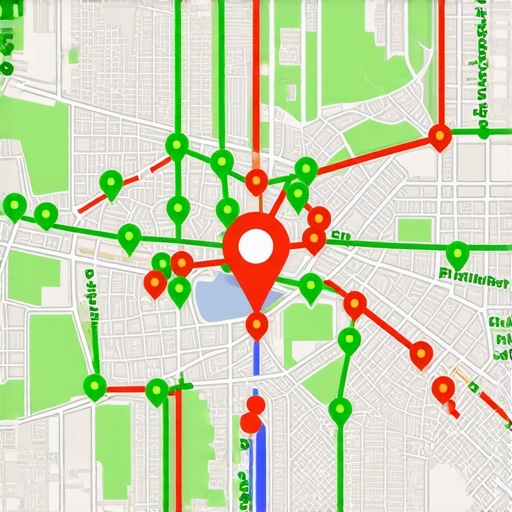
You can’t fix what you can’t see. For years, I relied on manual searches from my office, but that’s a rookie mistake because of the proximity filter. Now, I swear by grid-based tracking. Tools like Local Falcon or BrightLocal are non-negotiable for me because they show you exactly where your map pack placement drops off. I use them to find the literal street corners where my clients lose visibility. This is how to use a google maps rank tracker to find competitor weak spots before they even realize they’re gaining on you. By seeing a 13×13 grid of your rankings, you can spot if a competitor’s new service-area update is eating into your territory.
How do I maintain my map pack position without burning out?
The secret isn’t doing more work; it’s doing the right work consistently. I recommend setting aside exactly twenty minutes every Friday morning. During this time, look at your dashboard for any suggested edits from the public—competitors love to ‘suggest’ that your hours have changed or that you’ve moved. Use this window to follow a simple checklist for moving up in the business map pack every month. Consistency beats intensity every single time in local SEO. As Joy Hawkins from Sterling Sky often points out, Google’s ‘Openness’ signal—whether your business is actually open at the moment of the search—is now a massive ranking factor. If your hours are wrong, you are literally invisible to customers searching after-hours.
The Tech Stack That Saves My Sanity
I don’t believe in bloated SEO packages. I prefer 3 minimalist tools that find the ranking gaps your seo agency missed. My ‘must-have’ list includes a solid citation monitor like Whitespark to ensure no new data discrepancies creep in. I once saw a local pack entry drop five spots because a new payroll software accidentally updated the business’s phone number to a corporate billing line on a random directory. If you aren’t monitoring your NAP (Name, Address, Phone) data, you’re leaving your map pack placement up to chance. You need to be proactive about the data cleanup move that fixes inconsistent business listing details before the algorithm flags you for being unreliable.
What the Future Holds for Local Search
If I had to place a bet on 2026, I’d say that ‘Video Verification’ and ‘AI-generated summaries’ of reviews will be the new battleground. We are already seeing Google ask for video walk-throughs of office spaces to prove a mappack listing is legitimate. I predict that within eighteen months, your ability to rank business maps will depend heavily on the video content you upload directly to your profile. It’s time to start thinking like a creator, not just a business owner. Don’t wait for the update to hit; try recording a 30-second tour of your shop today and uploading it. It’s a small move that signals high authority to the current algorithm while preparing you for the future of search.
The Brutal Reality of Staying on Top of the Map
After years of managing dozens of profiles, I’ve realized that mappack listing success is 90% psychology and 10% technical settings. Here are the hard truths I had to learn the hard way:
- Velocity is more important than volume: A business that gets one review every week will eventually crush the business that bought 100 reviews in a single day and then went silent.
- The algorithm is a visual learner: It doesn’t just read your text; it looks for your logo on your truck in your photos to confirm you are a real entity.
- Your website still matters: If your landing page is slow, your local pack entry will suffer, no matter how good your profile looks.
My Personal Toolbox for Dominating Local Search
I don’t believe in overcomplicating things. To stay ahead, I rely on 3 minimalist tools that find the ranking gaps your seo agency missed. Specifically, I use Whitespark for cleaning up citations because their accuracy is unmatched. For tracking, I use grid tools to see exactly where my map pack placement starts to fade out at the neighborhood level. Lastly, I keep a close eye on map pack listing secrets every local business should know to stay one step ahead of the next major Google core update.
#IMAGE_PLACEHOLDER_E#
Go Claim Your Spot in the Neighborhood
Don’t let the fear of a red suspension badge or a sudden drop in phone calls keep you from taking action. The local search landscape is constantly shifting, and those who adapt the fastest are the ones who thrive. You now have the blueprint to rank business maps effectively in the local pack and protect your hard-earned reputation. The future belongs to the businesses that are proactive, transparent, and ready for the core shifts in google maps seo for 2026. Have you ever noticed your rankings drop specifically on the weekends or after business hours? Let me know in the comments so we can troubleshoot it together!