
I’ll never forget the Tuesday morning my phone went silent. Usually, by 9:00 AM, I’ve had three or four inquiries. That day? Nothing. I did a quick search for my shop, and my heart hit the floor. My storefront was completely missing from the Map Pack. I wasn’t just lower in the rankings; I had been erased. It felt like my digital lease had been terminated without notice. If you’re staring at a map where your pin used to be, I know that panic. It’s visceral. But here is the good news: you aren’t necessarily banned, and you certainly aren’t stuck in limbo forever. Today, I’m going to show you exactly how to diagnose the silence and what to do when your profile suddenly stops showing up so you can get those calls flowing again.
The Moment Your Digital Front Door Locks
It is easy to think of a mappack listing as a static digital billboard, but it is actually a living, breathing entity that Google monitors constantly. When I first started out, I made the classic mistake of thinking I could ‘set it and forget it.’ I even tried to tweak my business name to include a few extra keywords—a move that I thought was clever but actually triggered a filter that hid me from my own neighbors. According to data from BrightLocal, nearly 64% of consumers use Google Business Profiles to find contact details, which means every hour you are invisible is an hour of lost revenue. We need to figure out the exact reason your mappack listing is hidden, whether it is a proximity filter or a simple data mismatch. Have you noticed a sudden drop in your daily lead volume recently?
Is it even possible to outrank the big players without a massive budget?
You see the big chains or the guys with a thousand reviews sitting at the top and you wonder if ranking business maps is a game rigged against the little guy. I used to think so too. I spent weeks frustrated, watching a competitor from three towns over take my local spot. But I learned that Google’s algorithms are designed to provide the most relevant result, not just the biggest one, and often the move that recovers a mappack listing is actually a small, technical adjustment rather than a massive SEO campaign. We are going to dig into the ‘why’ behind your disappearance and set the stage for a full-scale comeback.
Stop Flying Blind and Audit for Hidden Filters
I remember working with a local locksmith who was convinced his business was blacklisted. He had hundreds of reviews, but his phone had stopped ringing entirely. We did a deep dive and found that he was caught in a proximity filter because he had accidentally listed two service areas that overlapped with a competitor’s physical office. It was like trying to open a door with the wrong key; no matter how hard he pushed, the algorithm wouldn’t budge. The first thing you need to do is audit your business map pack for hidden filter issues. Check if your address matches your utility bills exactly and ensure you haven’t created ‘ghost’ locations that confuse the bots. If your data is messy, Google treats your business like a suspicious character in a noir film—it keeps its distance. We implemented one technical fix that synchronized his NAP (Name, Address, Phone) across three major directories, and within a week, he was back in the top three. 
The Category Shift That Actually Moves the Needle
Many business owners pick a primary category and never look back, but this is a massive mistake. Google’s categories are like the aisles in a grocery store; if you put your gourmet chocolate in the hardware section, nobody looking for a treat will ever find it. I once saw a dental practice that was struggling because they were only listed under ‘Dentist’ while their competitors were snagging the local pack entry by also using ‘Cosmetic Dentist’ and ‘Dental Implants.’ A simple service category adjustment can be the difference between being invisible and being the first call someone makes. Look at what the top-ranking guys in your city are using. If they have a specific sub-category you’re missing, add it immediately. This tells the algorithm exactly which ‘aisles’ you belong in, increasing the chances of your business map pack appearing for high-intent searches.
Break Through the Proximity Trap
You might think you can’t rank if you aren’t located right in the city center, but that’s a myth that keeps small shops small. When I was helping a boutique gym on the edge of town, we realized they were losing to inferior gyms simply because they were ‘too far’ from the downtown searchers. To fight back, we started focusing on geo-specific content and local engagement. You have to learn how to fix the proximity trap by proving your relevance to the wider area. We began by encouraging clients to mention their specific neighborhood in their reviews. Instead of just saying ‘Great workout,’ they wrote ‘Best gym in North Hills.’ This small change in user interaction is one of the many interaction tactics that actually move your business up the map pack. You can also increase google profile clicks without new reviews by updating your photos weekly. Google loves fresh data; it sees a new photo as a sign that your ‘digital front door’ is wide open and ready for business.
Let’s dig deeper into the mechanics of the algorithm because, frankly, most of the advice you find online is three years out of date. Everyone tells you that getting more five-star ratings is the golden ticket, but in my experience, a pile of reviews won’t save a profile that has foundational cracks. I’ve seen businesses with 500 reviews get outranked by a competitor with 40 simply because the latter had better data hygiene. If you’re wondering why your mappack listing isn’t budging, we need to look at the signals that actually move the needle for the AI. You might be suffering from the hidden mappack listing error that keeps the phone from ringing even when you think you’re doing everything right.
The description field is not a ranking factor
Here is a contrarian view that usually surprises my clients: stop stuffing your Google Business Profile description with keywords. I see business owners spending hours crafting the ‘perfect’ SEO-optimized bio, thinking it will help them rank business maps. It won’t. The truth is that your google business description doesn’t actually affect your ranking at all. According to the annual Local Search Ranking Factors study by Whitespark, the description is a ‘conversion factor’ meant to convince a human to click, but the algorithm largely ignores it for placement. The real ‘Oops’ factor happens when you focus on the description while ignoring the NAP error that costs you a top 3 spot. If your address on your website says ‘Suite 100’ and your Google profile says ‘#100’, that tiny mismatch creates a seed of doubt in the algorithm’s mind.
Does one messy citation really matter?
You might think a stray listing on an old directory from five years ago is harmless, but Google uses these third-party sites to verify your legitimacy. If the ‘bots’ find conflicting info, they hedge their bets by pushing you down. This is why the data cleanup move is so vital. It’s not about being everywhere; it’s about being consistent everywhere. Another trap I see is ‘category dilution.’ Some owners think that adding ten secondary categories will help them show up more often, but why your primary category choice might be killing your local reach is usually due to a lack of topical authority. By trying to be everything, you end up being nothing to the algorithm. Focus on a narrow, high-intent primary category to secure your local pack entry before expanding. Have you ever fallen into the trap of obsessing over your description only to see your rank stay flat? Let me know in the comments.
Maintaining a mappack listing is like owning a garden; you do not just plant the seeds and walk away. One of the most frustrating things I see is a business owner who works hard for a local pack entry, only to let a competitor steal it because they stopped paying attention to the ‘small stuff.’ For example, I check my profile every Sunday morning for ‘suggested edits.’ Google allows the public—including your direct rivals—to suggest changes to your phone number, hours, or even your website link. If you are not there to reject a ‘suggested’ closed status, Google might just take their word for it. This is why I always recommend a strict checklist for moving up in the business map pack every month to ensure you are not bleeding leads to bad data.
Stop Letting Competitors Edit Your Info While You Sleep
I have seen a perfectly healthy business lose its top spot because a ‘helpful’ user suggested they were permanently closed. Expert Joy Hawkins from Sterling Sky has frequently highlighted how user-suggested edits can override owner-verified data in a matter of hours if left unchecked. You need to be proactive. If you have been feeling stuck, go through the checklist for fixing a stagnant mappack listing to see if your ‘hidden’ settings are working against you. This is not just about defense; it is about keeping your digital storefront pristine so the algorithm remains confident in your business.
Ditch the Basic Reports for a Visual Grid Map
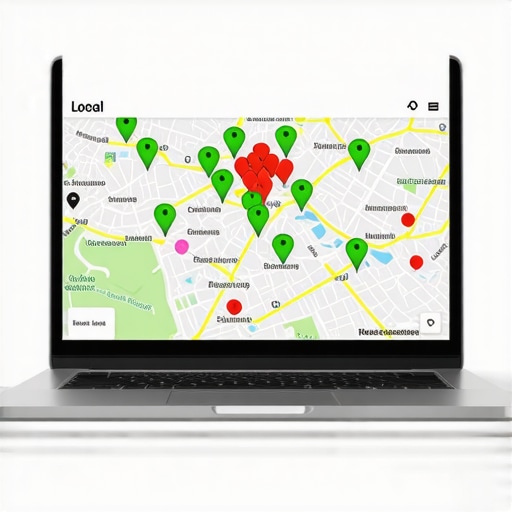
When I started, I just used a basic keyword tool that gave me one ranking number for the whole city. It was useless. To truly rank business maps, you need to see the ‘proximity drop-off.’ I personally use a google maps rank tracker to visualize my reach in a 13×13 grid. This tool shows me exactly where my business map pack presence ends. If I am a #1 in my parking lot but a #10 two blocks away, I know I have a proximity problem, not a general SEO problem. Finding these ranking gaps is much easier when you use minimalist tools that find ranking gaps your agency missed, giving you an edge over competitors who are just looking at a single average rank.
How do I maintain my map pack placement over the long haul?
Consistency beats intensity every single time. You do not need to spend five hours a week on your profile, but you do need fifteen minutes of high-quality activity. I recommend a ‘Friday Refresh’ where you upload one high-resolution photo of your latest work or your team in action. I have found that the photo update that increased our google profile clicks fast was actually just a series of authentic, unedited smartphone pictures of our office. It shows Google your business is active and physically present. Looking forward, as we prepare for the core shifts in google maps seo for 2026, I predict that ‘real-world signals’—like the frequency of customers actually using Google Maps for directions to your shop—will become the ultimate ranking factor. Try this today: Log into your dashboard, check the ‘Suggested Edits’ section, and then post one new photo of your storefront. It takes three minutes and signals to the algorithm that the lights are on and someone is home.
Hard Lessons from My Years in the Local Pack
If there is one thing I have learned after years of obsessing over map pack listing secrets, it is that Google values trust over popularity. I used to think that just getting more stars than the guy across the street was enough, but I was wrong. Here are the lightbulb moments that changed my entire approach:
- The ‘Freshness’ Trap: I once let a profile sit for three months without a post because I was ‘too busy.’ My ranking didn’t just dip; it evaporated. Google sees inactivity as a sign that your business might be closed, so consistency is your best friend.
- Reviews without Responses are Dead Weight: I discovered that the review response secret isn’t just about being polite; it’s about signaling engagement to the algorithm. A profile that interacts is a profile that ranks.
- Stop Keyword Stuffing: I tried to name a client’s business ‘Best Plumber City Name’ once. They got suspended within forty-eight hours. Stick to your legal name and let your business map pack authority grow through real customer signals instead.
Ultimately, you have to realize that why good reviews aren’t enough to rank business maps anymore often comes down to technical health and local relevance. You can’t just buy your way to the top with a high rating; you have to earn the algorithm’s confidence through daily data hygiene.
The Gear That Keeps My Business Phone Ringing
I don’t believe in using fifty different platforms to manage one local pack entry. Overcomplicating your workflow is a recipe for burnout. Instead, I rely on a few specific tools that have never steered me wrong. First, I always suggest using minimalist tools that find the ranking gaps because they cut through the noise of expensive agencies. I also recommend ‘Local Falcon’ for seeing your proximity reach and ‘Canva’ for quickly creating the high-quality photos that Google loves.
#IMAGE_PLACEHOLDER_E#
If you’re feeling overwhelmed, start with the small profile edit that finally jumpstarts impressions by simply verifying your hours for the upcoming holidays. It’s a low-effort move that shows Google you are paying attention.
Take Your Spot as the Local Leader Today
The digital landscape is constantly shifting, but the reward for staying diligent is a steady stream of customers who are ready to buy. You’ve seen how I went from being invisible to dominating business map pack rankings, and there is no reason you can’t do the same. Don’t wait for a competitor to move into your territory before you start taking your mappack listing seriously. The best time to optimize was yesterday; the second best time is right now. Go log into your dashboard, update one photo, and start your journey toward being the first name your neighbors see when they need help. What is the biggest hurdle you have faced while trying to secure your local pack entry? Let me know in the comments below!