I remember sitting in my home office three years ago, staring at a Google Business dashboard that felt like a ghost town. I had plenty of reviews—mostly five-star ones from happy customers—but I hadn’t replied to a single one. I told myself I was too busy with ‘real’ work to engage in digital small talk. Then, almost overnight, my phone stopped ringing. I searched for my own services and realized my business had vanished from the top three results. I had fallen victim to the review response mistake that stops Google from showing you. It was a painful, expensive lesson that changed how I look at local search forever. Today, I’m going to show you how that simple act of talking back to your customers is the most overlooked strategy to rank business maps effectively in your neighborhood.
Your Silence is Drowning Your Visibility
The algorithm isn’t just looking for stars; it’s looking for life. When you ignore your reviews, you aren’t just snubbing your customers—you’re signaling to Google that your business is dormant. I used to think that a mappack listing was a ‘set it and forget it’ project. I was dead wrong. Every time you respond, you are providing fresh content and activity signals that the search engine craves. Early in my journey, I focused entirely on backlink building and ignored the ‘social’ side of the map. My local pack entry suffered because I wasn’t treating my profile like the community hub it’s meant to be.
Is answering every single person actually worth the effort?
You might feel that a simple ‘Great service!’ doesn’t require a formal thank you, but the data says otherwise. According to research from BrightLocal, 88% of consumers are likely to use a business if they see the owner responding to all reviews—both the glowing ones and the ones that make you want to hide under your desk. It’s a massive trust signal. If you want to secure a map pack placement success, you have to realize that good reviews aren’t enough to rank business maps anymore if they aren’t met with a human touch. Have you ever felt that sinking feeling in your stomach when a negative review pops up, and you just wanted to close the tab and hope it went away? I’ve been there, and I promise you, that silence is the biggest obstacle standing between you and the top spot. We’re going to fix that today by diving into the review response secret for better map pack placement.
Stop Acting Like a Bot and Start Writing Like a Neighbor
The first thing you need to realize is that a ‘Thank you’ is a wasted opportunity. When I first started managing my own mappack listing, I would just copy-paste ‘Thanks for the review!’ over and over. I thought I was being efficient. In reality, I was invisible. Last year, I worked with a local bakery that was stuck on page two. We changed one thing: we started naming the specific treats mentioned in the reviews and the neighborhood the customer lived in. We weren’t just being friendly; we were feeding the algorithm highly relevant local data. This simple change that gets your business map pack placement back worked because it proved the business was active and hyper-local. 
How to Sneak in Your Services Without Annoying Google
Think of your review response like seasoning a steak. If you dump a pound of salt on it, it’s inedible. If you use just enough, it brings out the flavor. You want to weave your primary keywords into the conversation naturally. Instead of saying ‘We provide the best plumbing,’ try ‘I’m so glad we could help with your emergency drain repair in downtown Chicago.’ This approach is one of the most proven tactics to boost your map pack visibility today. You are confirming to Google that you do exactly what the user searched for. When you are rank business maps effectively, you’re basically acting as a secondary editor for your own profile. You are adding context that the customer might have missed.
Turn Your Negative Feedback Into a Search Signal
Most people ignore negative reviews or get defensive. I once had a client who got a scathing one-star review because their parking lot was under construction. Instead of hiding, we responded by apologizing and mentioning that the new paving was part of their ‘expanded service center for European cars.’ By naming the specialty, we turned a complaint into a keyword-rich signal for a high-value service. This is how you master 5 interaction tactics that actually move your business up the map. It’s about taking control of the narrative. If you want to see map pack placement success, you have to treat every negative comment as a stage where you can demonstrate your expertise and reliability to everyone else watching.
The Speed of Your Response is a Trust Signal
Google keeps track of how long it takes you to engage. Think of it like a hot lead. If you wait three weeks to reply, the momentum is dead. I make it a habit to check my dashboard every Tuesday and Thursday morning. By keeping the conversation fresh, you are optimizing your map pack entry for better local search rankings through sheer consistency. It signals to the system that the lights are on and someone is home. When your competitors are sleeping, your quick, thoughtful replies are what will help you dominating business map pack rankings in a crowded market.Let’s dig deeper into a hard truth: many ‘experts’ are still teaching local SEO like it’s 2015. I see business owners obsessing over the number of citations they have, thinking that a massive directory list is the ticket to a top spot. In reality, why your citations alone won’t improve your map pack placement has become a common theme in my audits. According to the 2023 Local Search Ranking Factors survey by Whitespark, ‘Citations’ have seen a massive decline in importance relative to factors like on-page signals and user behavior. If you’re spending hundreds on basic directory blasts, you’re likely flushing money down the drain while your mappack listing remains stagnant.
Citations Aren’t the Silver Bullet You Were Promised
The ‘Oops’ factor I see most often is the ‘Set it and Forget it’ citation trap. People build a bunch of listings and then wonder the hidden reason your business map pack spot keeps fluctuating. Often, it’s because those citations contain old phone numbers or slight variations in your address that confuse Google’s trust signals. You are better off with ten perfect, high-authority mentions than two hundred messy ones that conflict with your local pack entry data.
Why Does Your Rank Drop When You Leave the Building?
This is the proximity trap, and it’s a nuance that drives people crazy. You check your ranking at the office, and you’re #1. You drive three blocks away, and you’ve vanished. This happens because Google prioritizes the user’s physical location above almost everything else. If you want to know how to fix the proximity trap keeping you out of the map pack, you need to stop relying on proximity alone and start building ‘brand authority’ that extends beyond your front door. 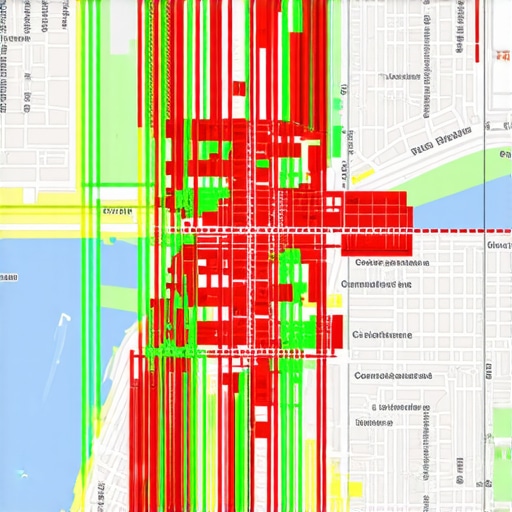
The Category Conflict That Silently Kills Conversions
Another advanced mistake is ‘category greed.’ I’ve seen contractors select fifteen different categories because they want to show up for everything. This actually dilutes your relevance. If your primary category doesn’t perfectly match your most profitable service, you’re fighting an uphill battle. I’ve documented the exact steps to fix a mappack listing with conflicting categories because choosing ‘Plumber’ versus ‘Drainage Service’ can be the difference between a rank business maps effectively strategy and total obscurity. Have you ever fallen into this trap? Let me know in the comments. We need to be surgical with our data, not broad. When you focus on map pack placement success, remember that Google values precision over volume. If your profile is sending mixed signals, the algorithm will simply choose a competitor who looks like a specialist. Success in 2024 requires dominating business map pack rankings by being the most relevant answer, not just the closest one.Once you have cleared the clutter of bad categories and fixed your conflicting data, the real battle begins: the grind of staying relevant. I have seen countless business owners reach the top only to fall off because they stopped the very habits that got them there. This is why most local pack entry strategies fail after three months. They treat SEO as a destination rather than a pulse. Personally, I rely on a strictly scheduled audit. You do not need a massive team or a thousand-dollar budget; you just need to know how to audit your business map pack for hidden filter issues once a month to ensure no competitors have ‘suggested an edit’ to your phone number or business hours that you didn’t notice.
How can I keep my profile at the top without it becoming a full-time job?
The answer lies in automation and precision tools. I do not check my rankings by driving around town with my phone; I use grid trackers. Tools like Local Falcon or BrightLocal show you exactly where your ‘bubble’ of influence ends. This is vital because why most local keyword tracking tools give a false sense of security is that they usually only check from one fixed point. By seeing the heat map of your mappack listing, you can identify exactly which neighborhoods need more geo-tagged content or specific geo-targeted SEO campaigns to steal competitor traffic. It allows you to be surgical with your marketing spend. 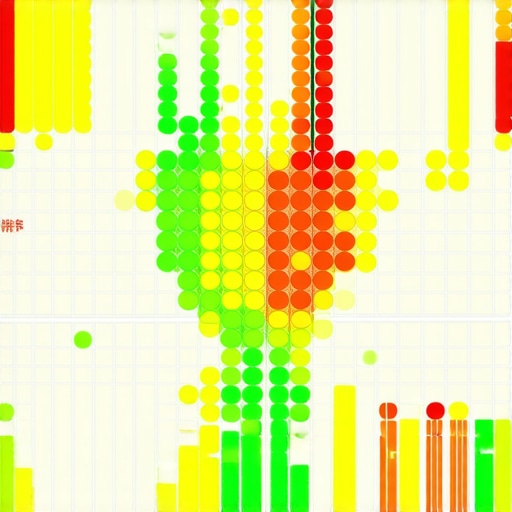 Joy Hawkins, a renowned local SEO expert and founder of Sterling Sky, recently highlighted in her research that while ‘keywords in the business name’ still carry weight, Google’s AI is getting significantly better at filtering out over-optimized, spammy names in favor of real brand authority. This means your long-term map pack placement success depends on actual user signals. If people click your profile but never hit the call button, you will eventually drop. That is often why your google business profile views dont match foot traffic—you are being seen, but you are not being chosen because your profile looks stagnant. Looking ahead, I predict that visual AI will become the primary way Google sorts the local pack. They are already scanning your uploaded photos for specific objects to verify your services. If you are a landscaper, Google’s Vision AI knows if there is a lawnmower, a patio, or a retaining wall in your pictures. This makes the move to stop chasing citations and focus on your business map pack photos the best advice I can give for the coming year. Do not let a simple photo metadata error that stops your profile showing ruin your hard-earned authority. My big tip for you this week: Open your profile right now, find your three best-performing photos, and update the captions to include a specific service and neighborhood name. It takes five minutes and confirms to the algorithm exactly where you belong.
Lessons from the Trenches of Local Map Dominance
Over the years, I have realized that the most common mistake is thinking you can ever truly ‘finish’ your local pack entry. It is an ongoing conversation with your community, not a static billboard. I used to spend hours every week submitting to obscure directories, only to find out that why your citations alone won’t improve your map pack placement is a reality every business owner eventually hits. The algorithm has evolved to prioritize quality interactions over raw directory volume.
The biggest ‘lightbulb moment’ for me was realizing that the role of user behavior in map pack placement success is the real needle-mover for long-term growth. If people click your listing, browse your photos, and then hit the call button, Google sees that as the ultimate endorsement. It is not just about the technical backend; it is about being the most helpful and engaging option in the business map pack.
Lastly, do not panic when your ranking shifts. If you see a dip, use it as a signal to perform a mappack listing audit rather than making drastic changes. Often, it is just a competitor being temporarily more active or a hidden reason your business map pack spot keeps fluctuating like a proximity-based algorithm update. Stay the course, keep your data clean, and keep your photos fresh.
My Go-To Toolkit for Crushing the Local Pack
You do not need a massive agency budget to rank business maps effectively. I personally rely on a few specific resources that have never steered me wrong. First, check out 7 local SEO tools and resources that actually show your real ranking; specifically, I love using Local Falcon for its grid-based heat maps because it is the only way to see exactly where your visibility drops off in real-time.
For keyword discovery, I highly recommend looking into 3 free tools that find hidden keywords competitors use to rank. These help you find the specific ‘service’ keywords that customers actually type in, which you can then weave into your review responses. I also suggest bookmarking the Whitespark blog; their annual ranking factor survey is the closest thing we have to a definitive rulebook for map pack placement.
Your Map to the Top Starts with One Click
Winning the local search game is not about being a tech genius; it is about being a consistent neighbor. When you apply the unlocking map pack visibility strategies for local businesses we have discussed, you are not just chasing an algorithm—you are building a digital storefront that people trust. Do not let the technicalities overwhelm you. Start by updating one photo, responding to one review, or fixing one category today.
You have everything you need to achieve map pack placement success. The top three spots are waiting for the business that cares the most about its customers. Go out there and claim yours. Have you ever felt like your ranking was stuck despite doing everything ‘right’? Let me know your biggest struggle in the comments below!