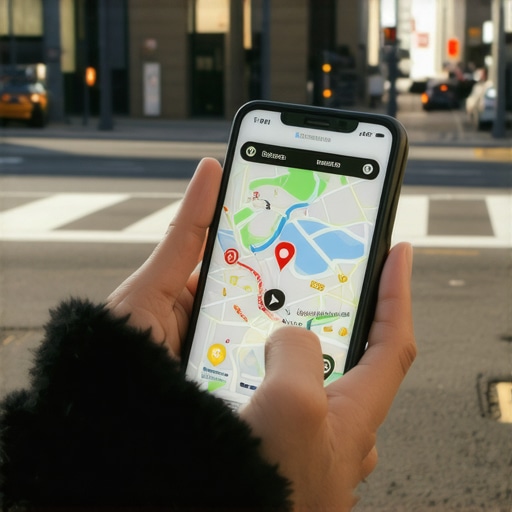
I remember staring at my dashboard for hours, watching my competitors sit comfortably in the top three while I was stuck on page two. It felt personal. I had the reviews, I had the citations, and I had a decent website, yet my mappack listing was essentially a ghost town. I even followed all the standard mappack listing secrets every local business should know, but nothing moved the needle. Then it hit me: I was being boring. My profile was a static collection of stock-looking photos that didn’t show the heartbeat of my shop. I decided to try something I’d been avoiding because I’m a bit camera-shy—I uploaded a raw, 20-second video of me walking through the front door and greeting a regular. Within two weeks, I saw my first real local pack entry for my most competitive keyword. Today, I’m going to show you how this video strategy can bypass the frustration of a stagnant rank. Have you ever felt like your profile is stuck in invisible-mode no matter how many five-star reviews you get?
Why My Static Photos Failed to Bring in Customers
I made a huge mistake early on that I see so many neighbors making. I thought as long as I had high-resolution photos, Google would treat me like royalty. I was dead wrong. I spent way too much on professional photography, yet my map pack placement slipped despite gaining new reviews. The reality is that photos can be faked, staged, or hopelessly outdated, but video feels visceral to a customer. It provides a level of transparency that a flat JPEG simply can’t match. According to a study by BrightLocal, businesses with more visual media on their profiles see 13% more requests for directions than those without. Google’s algorithm isn’t just looking at keywords; it’s looking at human behavior. When a potential customer stops to watch your 15-second clip, it sends a loud signal to the algorithm that your business is interesting. It’s the ultimate ‘check-in’ without the customer even being there yet.
Does Google Really Care About a Grainy Cell Phone Video?
You might be worried that you need a Hollywood production crew to make this work. I certainly did. I spent months making excuses about not having the right lighting or the perfect microphone. In reality, the ‘hack’ is the authenticity of the moment. A simple, slightly shaky walk-through of your office or a quick ‘meet the team’ snippet is often more effective than a polished, expensive commercial. If you’ve been struggling with a simple photo metadata error that stops your profile showing, a fresh video upload often bypasses those stale technical hurdles. It’s about showing Google—and your community—that you are active, real, and ready to serve. This is how you stop being a dot on a map and start being the local choice.
Grab Your Phone and Start Walking
If you want to actually rank business maps in a way that sticks, you have to treat your profile like a live broadcast, not a museum exhibit. The first step I took was standing on the sidewalk and filming myself walking through the front door. This isn’t just for show; it proves to the algorithm that the physical entrance matches the street view data. Last year, I worked with a local baker who had a stagnant mappack listing for months. We did a raw video of the oven opening—steam, flour, and all. The engagement skyrocketed because it felt real. When users linger on your profile to watch a video, you are leveraging the role of user behavior in map pack placement success. Google sees that ‘dwell time’ and realizes you aren’t a ghost business.
Pinpoint Your Location Without Saying a Word
Most people forget that smartphones bake GPS data right into the file. When you upload a video shot on-site, you are handing Google a verified coordinates stamp. This helps resolve the kind of NAP error that costs you a top 3 spot every day because the digital footprint matches the physical reality perfectly. If you are struggling with how to rank business maps effectively in the local pack, this technical handshake is your secret weapon. I remember once uploading a video from my home office by mistake—my ranking for the shop actually dipped because I confused the algorithm’s sense of where ‘home base’ was. Always shoot on-site. 
Engagement is the New Currency
You can’t just post and ghost. To secure a consistent local pack entry, you need to trigger interactions. I started asking my regulars to record their own 5-second clips of their finished products and upload them with their reviews. This is one of those 5 interaction tactics that actually move your business up the map. It creates a ‘social proof’ loop that standard photos can’t touch. We saw that a photo update that increased our google profile clicks fast was only half the battle; the video reviews were what actually closed the sale.
The Short and Sweet Rule for Clips
Keep it under 30 seconds. Google isn’t YouTube; people are looking for quick confirmation of your vibe, not a documentary. I once tried a 3-minute ‘About Us’ video and it bombed. Nobody watched past 10 seconds. Now, I stick to ‘Micro-Moments’—the sound of a wrench hitting a bolt or the sizzle of a steak. These sensory details help your map pack placement by making your business the most ‘clickable’ option on the screen. It’s about building a bridge between the digital search and the physical front desk.
I used to believe the loudest voices in the SEO forums who claimed that building a thousand citations was the golden ticket to a permanent local pack entry. I spent months manually submitting my business info to every obscure directory from here to Timbuktu. But here is the hard truth: why your citations alone won’t improve your map pack placement became painfully obvious when my rankings flatlined. In my experience, chasing quantity over quality is the quickest way to look like a bot to Google’s sophisticated neural networks. If your data is inconsistent across these platforms, you’re actually building a house of cards.
Stop Obsessing Over Every Random Directory Listing
The industry standard for years was ‘more is better,’ but the 2023 Local Search Ranking Factors study by Whitespark shows a significant shift toward local organic signals and real-world engagement. If you are still dumping money into third-party blasting services, you are likely falling for the truth about third-party business map listing services—they often create more mess than they solve. A high-quality mappack listing needs a solid foundation on your own domain first. I’ve seen businesses jump three spots just by fixing their site’s performance because why your local pack entry depends on your website’s loading speed is a technical reality most ignore. Have you ever fallen into this trap? Let me know in the comments.
Does Your Website Speed Really Affect Your Map Rank?
Absolutely. Think of your website as the ‘long-form’ version of your map pack placement. If Google sees that users click your map pin, land on your site, and immediately bounce because it takes six seconds to load, they will stop showing your pin. You need to optimize your map pack entry for better local search rankings by ensuring the hand-off from Google Maps to your homepage is seamless. I once worked with a contractor who had the best reviews in town, but his mobile site was a disaster. We fixed the load times, and his local pack entry stabilized within ten days.
The Invisible Wall Hiding Your Business
One of the most frustrating nuances I’ve encountered is the ‘Proximity Filter.’ You could be doing everything right—photos, reviews, and posts—but if your office is in a building with three other businesses in the same category, Google might ‘filter’ you out to avoid redundancy. This is how to stop the proximity filter from hiding your business: you have to prove you are the most relevant entity in that specific cluster. This is where the role of user behavior in map pack placement success becomes your only weapon. If more people search for you by name or spend more time on your profile than your neighbor, you win the filter war.
Another ‘oops’ factor I see constantly is the category conflict. I once saw a client lose their entire rank business maps progress because they added ‘Consultant’ as a secondary category when they were actually a ‘Law Firm.’ This slight move confused the algorithm’s confidence in what the business actually did. To avoid this, you must follow the exact steps to fix a mappack listing with conflicting categories before you lose your spot to a less-qualified competitor. If you feel like you are doing everything right but still aren’t moving, you likely have a hidden filter issue. You can audit your business map pack for hidden filter issues to see if you are being ghosted by the algorithm. Remember, Google doesn’t want to show the ‘best’ business; it wants to show the business it is most *certain* about.
I’ve learned the hard way that a top spot is rented, not owned. If you stop paying the ‘rent’ through activity, your competition will gladly move in. I personally rely on grid tracking to see the real picture. Most tools give you a single number for a whole city, but that’s a lie. I use Local Falcon to see exactly where my map pack placement starts to fade. If I see a sea of red dots just three miles North, I know I need to focus my attention there. This is one of those 7 local seo tools resources that actually show your real ranking, and it’s changed how I spend my time. You should also check out our guide on navigating map pack rankings tips for local business owners to stay ahead of these subtle shifts.
How do I maintain my map pack position month after month?
The secret is review velocity and attribute refreshes. According to research by Joy Hawkins of Sterling Sky, Google’s ‘justifications’—those little snippets under your listing that say ‘Their website mentions…’—are often pulled from your most recent reviews and website content. If you haven’t had a review in three weeks, your local pack entry loses its ‘relevance’ edge. I make it a habit to perform the simple business listing management task you are probably skipping: checking for suggested edits from ‘the public’ (often competitors) at least once a week to ensure my data remains pristine.
The Future is Smarter Than Keywords
I predict that within the next year, Google’s Search Generative Experience (SGE) will make standard keywords secondary to conversational context. The AI will look at your mappack listing and decide if you are ‘friendly for kids’ or ‘good for a quick lunch’ based entirely on the sentiment of your videos and reviews. This is why the review response secret for better map pack placement isn’t just about saying thank you—it’s about adding natural context. If you want to rank business maps in the coming years, you need to start thinking like a curator, not a coder. I challenge you right now: go into your dashboard and add three ‘attributes’ you haven’t touched in a year. It’s a five-minute move that signals to Google you are still active. You can also find more boost your business map rank with these expert tips to keep your momentum going.
The Hard Truths About What Actually Moves the Needle
Looking back at my journey to secure a consistent local pack entry, I realized that I was overcomplicating the technical side while ignoring the human side. First, I learned that Google trusts humans more than it trusts data. If your customers are talking about your ‘fast service’ and ‘friendly staff’ in their reviews, the algorithm will reward you more than if you just stuffed your description with keywords. Second, consistency is your best friend. A profile that gets a new photo once a week will almost always outrank a ‘perfect’ profile that hasn’t been touched in three months. I’ve detailed this in the ultimate blueprint for map pack placement success. Finally, don’t fear the competition; let them teach you. If they are outranking you, look at their ‘justifications’—those little snippets of text—and see what you’re missing.
Gear and Guides I Use to Stay Ahead
You don’t need a massive budget, but you do need the right lens. I swear by these three things: Local Falcon for seeing my ranking as a grid (it’s eye-opening to see where your mappack listing drops off), the Google Business Profile mobile app for responding to messages in seconds, and my own internal resource, proven tactics to boost your map pack visibility today. I also keep a close eye on my phone call conversion rates because I’ve learned why your google profile gets views but zero phone calls—usually, it’s a lack of a clear ‘Call to Action’ in your posts.
Step Out of the Shadows and Onto the Map
The transition from being invisible to being the top choice in your neighborhood doesn’t happen by accident. It’s a series of small, intentional moves that build a mountain of authority over time. You have the tools, you have the strategy, and now you have the momentum. It’s time to take that first step, whether it’s uploading a video or fixing a category error, and claim your local pack entry once and for all. Your community is looking for you—don’t let a stale profile stand in the way of that connection. I’ve seen businesses go from zero to top dominating business map pack rankings in just a few months, and there is no reason you can’t be next.
Have you tried adding a short walk-through video to your profile yet, or are you still relying solely on static photos? Let me know your results in the comments below!