I remember sitting at my kitchen table at midnight, staring at a screen that told me I was invisible. I’d spent months tweaking my business description and pestering every customer for a review, yet when I searched for my own services from three blocks away, my name was nowhere to be found. It felt personal. I had followed every ‘best practice’ in the book, yet my business map pack spot kept fluctuating like a heart monitor. That was the night I realized I was treating my Google profile like a static billboard instead of a living part of my brand.
The Moment I Stopped Relying on Luck for My Local Pack Entry
The breakthrough didn’t come from a new tool or a secret setting. It came when I started using my blog to prove to Google that I actually knew my local area. I used to think blogging was just for global brands or ‘thought leaders’ with too much time on their hands. I was dead wrong. I made the classic mistake of focusing entirely on keywords while ignoring the geographical context that Google craves. Once I started linking my service pages to hyper-local blog content, my local pack entry became much more stable. Today, I’m going to show you how to stop shouting into the void and start using your website’s content to anchor your physical location in the eyes of the algorithm.
Does Blogging Really Move the Needle for Local Search?
I get it. You’re busy running a business, and the last thing you want to do is write 800 words about the best parks in your city or the history of local architecture. You might even wonder if ignoring online advice is the better move. But here is the reality: Google uses ‘prominence’ as a core ranking factor. According to Backlinko’s research, content depth and relevancy are inextricably linked to how Google perceives your authority. If your blog proves you are the local expert, your map pack placement will follow. Have you ever felt like you’re doing everything right but still getting outranked by a competitor with half your reviews? Tell me in the comments, because that’s exactly where I was two years ago.
Stop Thinking of Your Blog as an Extra and Start Seeing it as a Signal
Your blog isn’t just a place for updates; it is a signal generator. Every time you write about a local project or a neighborhood event, you are feeding the ‘proximity’ and ‘relevance’ monsters that live inside the search engine. When I first started, I wrote generic posts that could have been about any city in the world. That was a waste of breath. Now, I focus on optimizing my map pack entry by connecting it to stories about real people in my town. It works because it builds a web of local relevance that a simple profile update just can’t match. You need to bridge the gap between your ‘About’ page and the physical streets your customers walk on.
Turn Your Blog into a Local GPS
Think of your website as a radio tower and Google as the receiver. If you’re broadcasting on a general frequency, you’re competing with every other tower in the country. To rank business maps effectively in the local pack, you need to narrow your frequency to a specific zip code. This starts with geo-targeted content silos. Instead of writing about ‘How to Clean Gutters,’ write about ‘Preparing Your Gutters for the Windy Season in [Your Neighborhood].’ By naming local streets, nearby landmarks, and even local weather patterns, you create a geographical relevance score that a generic service page simply cannot replicate. It’s like putting a physical pin on a digital map for every paragraph you write.
The Afternoon I Targeted a Neighborhood Fair and Won
I remember working with a local locksmith who was struggling to get any traction. We decided to stop competing for the broad city-wide terms and focused entirely on the ‘Security Challenges of the Historic West End District’ during their annual summer street fair. We wrote a 600-word post about the specific intersections that get congested and how residents could stay secure during the influx of visitors. I even had him take a photo of his van parked near the historic clock tower. Within three weeks, his mappack listing moved from the fifth page to the second spot in that specific district. It wasn’t about backlink volume; it was about the proximity signal we sent through that hyper-local narrative. 
Bridge the Gap Between Your Blog and Your Map Pin
To really cement your map pack placement, you must create a two-way street between your blog and your Google profile. Every time you publish a local-focused post, link it directly to your relevant service page, and then share the post as a ‘Google Update’ on your business profile. This creates a loop. Google sees the local signals on your site, follows the link to your profile, and recognizes the synergy. If you are struggling with the exact steps to fix a mappack listing with conflicting categories, this content strategy can actually help clarify your primary business purpose to the algorithm. You are effectively teaching Google what you do and exactly where you do it, neighborhood by neighborhood.
Make Your Content Work Harder Than Your Competitors
Most business owners just post a generic ‘Happy Holidays’ message and wonder why they aren’t winning. You can rank business maps in competitive neighborhoods by proving you are a community pillar. Talk about the local charities you support or the local vendors you use. This isn’t just fluff; it is a data-rich environment for search engines. When you mention a local park by name and link to its official city page, you are tethering your business map pack to a known geographical entity. It is the digital equivalent of shaking hands with the mayor; it builds immediate trust with the algorithm while reinforcing your local pack entry signals.
But here is the thing that keeps most people awake at night: you can do all the ‘right’ things and still wake up to find your business has vanished. I’ve seen it a hundred times. People think that once they hit that top three, they can put their feet up. The truth is, the map pack is a moving target. Everyone tells you that getting more reviews is the golden ticket, but I’ve watched businesses with 500 five-star ratings get bumped by a newcomer with only 20. Why? Because Google cares more about current relevance and user behavior than a trophy case of old reviews. In fact, if you’ve noticed that your map pack placement slipped despite gaining new reviews, you’re likely falling victim to a stagnation filter. Google wants to see that people are actually interacting with your profile right now—clicking your ‘Call’ button, asking for directions, or lingering on your photos.
The Counterintuitive Truth About Review Count
The biggest ‘oops’ I see—and I fell for this early on too—is trying to outsmart the algorithm by stuffing keywords into your business name. It feels like a quick win, but it’s a ticking time bomb. I’ve seen entire accounts wiped out because they added ‘Best Plumber Downtown’ to their actual brand name. It’s a violation that leads to immediate filtering. You need to realize that your mappack listing needs more than just a keyword-rich name to survive a manual review. If you’re constantly battling invisible walls, you might actually have the exact steps to fix a mappack listing with conflicting categories at the top of your to-do list to clear up your signals.
Why does my local pack entry vanish when I am standing right at my shop?
This is the ultimate frustration. You’re at your desk, you search for your service, and you’re nowhere to be found. This is usually the result of the ‘proximity filter’ or a ‘possum’ effect. According to the 2023 Local Search Ranking Factors study by Whitespark, proximity to the searcher remains the #1 ranking factor, but it can also backfire if Google thinks your location is too close to a competitor that it already trusts more. You have to learn how to stop the proximity filter from hiding your business by diversifying your local signals. It isn’t just about where you are; it’s about the real impact of foot traffic and how that data validates your physical presence. 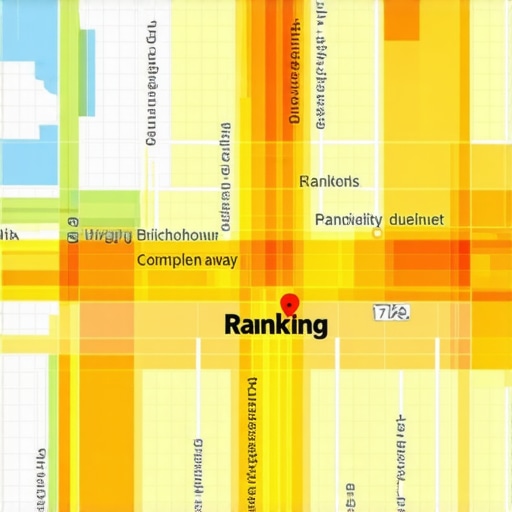
I want to be real with you: local SEO is messy. It’s not a straight line. Have you ever fallen into this trap where you gained reviews but lost rank? Let me know in the comments, because I’m curious if you’re seeing the same shifts I am. Success comes to those who stop chasing the ‘hack’ and start building a genuine digital footprint that matches their physical one.
Once you realize that local SEO isn’t a ‘set it and forget it’ project, the panic starts to set in. You wonder if you’ll have to spend every waking hour staring at your dashboard just to keep your spot. I found a better way by narrowing my focus to a few high-impact habits and a very specific set of software that doesn’t cost a fortune. I stopped chasing every shiny new feature and focused on the data that actually tells me why I’m winning or losing. If you’re tired of the guesswork, you need to start with 7 local SEO tools and resources that actually show your real ranking instead of the sanitized version Google shows you at your desk.
The minimalist toolkit I use for every audit
I don’t believe in paying for twenty different subscriptions. I use a ‘grid tracker’ to see how my business ranks street-by-street. This is vital because your rank isn’t a single number; it is a heat map. I personally use these 3 minimalist tools that find ranking gaps your agency missed to see exactly where my visibility drops off. If I’m a #1 rank at my front door but drop to #10 two blocks away, I know I have a proximity issue, not a content issue. According to Joy Hawkins at Sterling Sky, the ‘Possum’ filter still heavily impacts how these results are filtered based on physical location, and if you aren’t auditing your profile for these hidden filters, you’re flying blind. 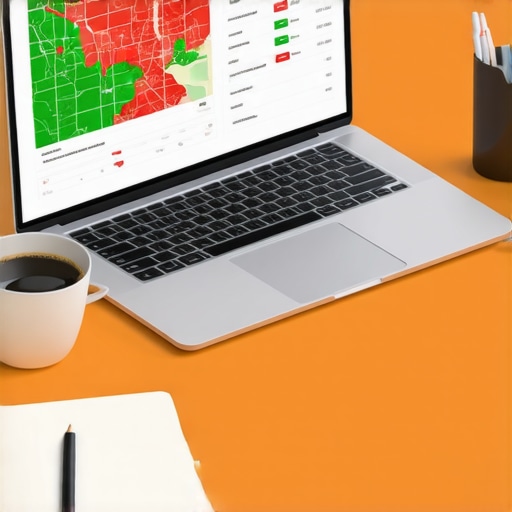
How do I maintain my map pack position over the long haul?
The secret isn’t a secret at all—it’s consistency. I spend 15 minutes every Tuesday doing the simple business listing management task you are probably skipping: checking for ‘suggested edits’ from the public. Competitors or ‘helpful’ users can suggest changes to your hours, your phone number, or even your category, and if you don’t reject the wrong ones, Google will eventually auto-apply them. This ruins your mastering business map pack strategy instantly. I also keep the checklist for fixing a stagnant mappack listing on my desk to ensure I’m hitting every seasonal update, from new photos of my team to responding to the latest Q&A entries.
Look ahead to the era of AI and visual search
I suspect the next phase of the local pack won’t just be about keywords; it will be about ‘visual proof.’ Google is already using AI to scan your uploaded photos to see if they match the services you claim to offer. If you say you’re a plumber but all your photos are of your office dog, you’re sending mixed signals. In the future, your local pack entry will depend on how well your visual content aligns with your ‘near me’ keywords. Before you do anything else today, I want you to audit your business map pack for hidden filter issues. Run a grid search from a location three miles away from your office. If you aren’t in the top three there, you have work to do, and the data will tell you exactly where to start.
Hard Truths I Learned While Navigating the Map Pack Maze
Reflecting on my journey, the biggest lesson was that reviews are just the invitation, not the entire party. I spent so much time chasing five-star ratings, but I realized that Google values relevance and recency even more than a static count. Another lightbulb moment was discovering that the role of user behavior in your success is massive; if people don’t click your ‘Call’ button or stay on your profile, your ranking will eventually sag. Finally, I learned that your map-pack listing secrets aren’t really secrets at all—they are just the result of staying consistent when everyone else gets bored and stops updating their profile. Your presence in the community needs to be reflected digitally every single week, not just once a year.
The Short List of Tools That Actually Save Me Time
I don’t like clutter, and I certainly don’t like paying for software I don’t use. For anyone serious about unlocking map pack visibility, I recommend keeping it simple. I personally rely on Whitespark’s Citation Finder because it cuts through the noise of messy data and identifies exactly where your NAP (Name, Address, Phone) information is fractured. I also keep a close eye on the Sterling Sky Local Search Forum to see what the algorithm is doing in real-time before it becomes mainstream news. For daily monitoring, I stick to the 7 local SEO tools that provide a clear heat map of where I actually stand. These resources haven’t just saved me money; they’ve saved my sanity by showing me exactly where I need to focus my energy each week. #IMAGE_PLACEHOLDER_E#
Take the Reins of Your Local Visibility
Local SEO isn’t a dark art, but it does require you to be the most active and honest representative of your neighborhood. Don’t let the technical jargon intimidate you. Start with one small task today—maybe it’s responding to an old review or auditing your local pack entry for conflicting info. Every small signal you send tells Google that your business is alive, well, and ready to serve the people around you. You have the tools and the strategy; now it’s time to go out there and boost your business map rank with confidence. Your community is searching for you—make sure they can find you.
Have you ever seen your business drop in the rankings even after getting a fresh 5-star review? Let me know your experience in the comments below!