
I remember sitting at my kitchen table, staring at my phone until my eyes blurred. My business had a solid 4.8-star rating, yet I was nowhere to be found in the top three. I’d done everything “right”—or so I thought. My categories were set, my hours were updated, and I’d even badgered my cousin to leave a review. Still, a competitor with fewer reviews and a lower rating was consistently snatching that coveted local pack entry. It felt like I was screaming into a void. Then, I finally realized that it wasn’t just about the stars; it was about how people actually felt when they mentioned my shop. Today, I am going to show you how to flip the script on sentiment to fix your visibility.
Why Five Stars Can Still Leave You Invisible
Sentiment is the silent engine behind your mappack listing. Google isn’t just counting the gold stars anymore; it’s reading between the lines to see if customers are genuinely happy or just “satisfied.” If your reviews are full of phrases like “it was okay” or “fine for the price,” you are likely losing out to the neighbor whose customers are raving about “excellent service” and “friendly staff.” I spent months chasing numbers when I should have been cultivating a vibe. This is one of those map pack listing secrets every local business should know that nobody tells you at the start. My biggest blunder early on was using canned, robotic responses for every customer. I thought I was being professional, but I was actually failing to reinforce the positive sentiment Google looks for. If you want to rank business maps effectively in the local pack, you have to stop treating your review section like a chore and start treating it like a conversation. Have you ever looked at a competitor with worse ratings than yours and wondered how on earth they’re outranking you?
Does Google really care about the ‘vibe’ of my reviews?
You might be thinking that an algorithm can’t feel feelings, and you’re right. However, it can process natural language with incredible precision. Research by the experts at BrightLocal has shown that 98% of consumers read online reviews for local businesses, and Google’s AI is built to mimic that human behavior. It identifies “Place Topics” based on recurring positive keywords in your feedback. If your customers aren’t using the right descriptive language, your map pack placement depends on your reviews velocity and the emotional weight of those words more than you might think. Even if you are dealing with a tough situation, knowing the best way to handle negative reviews on your local pack entry can actually turn a bad sentiment into a signal of trust and reliability. Let’s look at how we can start steering those conversations in the right direction.To steer the conversation, you have to stop being a spectator and start being an active participant in your business map pack. Think of your listing like a crowded local pub. If the owner is behind the bar, greeting people by name and handling complaints with a smile, the atmosphere is electric. If the owner stays in the back office, the energy falls flat. Google’s algorithms are looking for that ‘buzz’ through the sentiment of your interactions. Moving from invisible to essential starts with optimizing your map pack entry for better local search rankings by treating every review as a lead generation opportunity rather than a history lesson.
Turning Passive Reviews Into Active Ranking Fuel
The first step in this process is acknowledging that not all engagement is created equal. You can have a thousand reviews, but if they are stagnant, they won’t move the needle. You need to focus on how to outperform your competitors mappack listing engagement by injecting personality into your profile. Google reads your responses just as closely as it reads the customer’s original post. If you just say ‘thanks,’ you’re wasting valuable real estate.
Stop Copying and Pasting Your Responses
I learned this the hard way when I was managing a small boutique gym. We had a template for every five-star review: ‘Thank you for the kind words, we hope to see you again soon.’ It was safe, professional, and completely useless for our rankings. Our visibility only spiked when we started tailoring those responses to include specific services and emotional resonance. Instead of the template, we’d say, ‘We are so glad you enjoyed the high-intensity spin class, Sarah! Our instructors love seeing that kind of energy.’ This simple shift signaled to Google that we were active, relevant, and highly specialized in what we offered. This is a core part of mastering business map pack keys to top map pack placement because it builds a layer of semantic relevance that basic SEO simply cannot touch.
Guide the Narrative Without Being Pushy
You can actually plant seeds for future reviews by setting the stage during the transaction. Think of it like a garden; you can’t expect flowers if you don’t plant the right seeds. When a customer tells you they loved a specific product in-store, ask them to mention it specifically if they choose to leave a review. Most people want to be helpful but don’t know what to write. By giving them a small prompt—’It would really help us if you mentioned the artisan sourdough you liked’—you are helping them generate the keywords that Google’s AI uses to categorize your shop. This is why why your map pack placement depends on your reviews velocity and the specific vocabulary used within those reviews. It turns your customers into your most effective SEO specialists.
Build a Fortress of Consistency
Frequency matters more than a single burst of activity. If you get ten reviews in one day and then nothing for a month, it looks suspicious to the algorithm. It’s like a car that only runs when you kick it. You want a steady stream of feedback to prove your business is consistently delivering value. To support this, you should how to use your blog to support your mappack listing by highlighting customer stories or FAQ sections that mirror the sentiment found in your reviews. This creates a loop of trust between your website and your map profile. I once worked with a landscaper who was buried on page three. We changed his strategy to focus on getting just two high-quality, descriptive reviews per week rather than twenty generic ones. Within two months, he was the first name anyone saw when searching for ‘patio design,’ purely because his sentiment signals were more consistent and specific than the bigger companies in town.Most people assume that if they aren’t the closest business to a searcher, they have already lost the battle. This is what I call proximity paralysis, and it’s the biggest myth in local SEO. While distance is a foundational pillar of Google’s algorithm, it is not an absolute wall. I have seen businesses three miles away outrank a shop just three blocks away from the user because their relevance and prominence signals were undeniable. If you want to understand the proximity secret for business map pack success in dense cities, you have to realize that Google cares more about solving the user’s problem than just finding the nearest open door. If you are better at proving your expertise, you can overcome the ‘distance gap’ effortlessly.
Can I actually beat a competitor who is closer to the customer?
The short answer is a resounding yes. According to the comprehensive Local Search Ranking Factors study by Whitespark, ‘prominence’—which includes your brand’s overall digital footprint and the quality of your backlinks—can frequently override the physical distance between the searcher and your office. This is precisely how to outrank local competitors with higher review counts for business maps; you don’t need to be the closest, you just need to be the most ‘important’ in the eyes of the algorithm. This involves a deep dive into why ranking business maps requires more than just standard SEO, focusing on entity association rather than just keyword density. If your website is constantly mentioned by local news or other neighborhood authorities, your map pack placement will remain strong even for users in the next zip code. 
Avoid the Temptation of Constant Category Tweaks
One of the most dangerous ‘oops’ factors I see is the ‘tweak-it-to-death’ syndrome. Business owners often get impatient and start changing their primary categories or editing their service areas every few days when they don’t see immediate movement. This is a massive mistake. Every time you make a major change to your core data, Google’s trust in your listing takes a temporary hit while it re-verifies the information. This is often why your map pack placement drops every time you edit your hours or categories. You need to pick a strategy and let it sit for at least 30 days to see the real impact. Impatience is the fastest way to sink your visibility. I’ve seen businesses fall into a trap where they hire low-cost services that promise instant results by ‘optimizing’ these settings daily, but the danger of outsourcing your mappack listing to cheap agencies is that they often trigger automated filters that can lead to a soft suspension or a complete ranking disappearance.
The Invisible Connection to Your Website
Another nuance that even ‘experts’ miss is the deep, symbiotic relationship between your website’s landing pages and your map rank. If your GMB profile says you are an expert in ’emergency plumbing’ but your website hasn’t been updated in three years and never mentions the word ’emergency,’ Google will eventually notice the disconnect. There is a definitive missing link between website content and mappack listing rank that most people ignore. You have to ensure that the semantic signals on your site match the services you are claiming on your map profile. Have you ever fallen into this trap of over-editing or ignoring your site while focusing only on the map? Let me know in the comments below, and let’s troubleshoot it together.I used to think that once I hit the top three, I could just sit back and watch the leads roll in forever. I was wrong. The local algorithm is more like a garden than a trophy; if you stop watering it, the weeds of your competitors will quickly take over. To stay ahead, I had to develop a rhythm of maintenance that didn’t consume my entire week. I stopped wasting money on every shiny new software and narrowed my toolkit down to what actually moved the needle. One of the most important things I realized is how to audit your map pack placement without subscription software by using simple browser extensions and incognito searches to see what my customers are actually seeing. If you want to keep your spot, you need to understand unlocking map pack visibility strategies for local businesses that focus on longevity rather than quick hacks.
The Tools That Actually Save My Sanity
There are hundreds of ‘local SEO’ tools out there, but most of them just provide vanity metrics. I personally rely on a mix of Google’s own Search Console and a simple spreadsheet to track my ‘review velocity’ and attribute updates. I’ve found that why your business map pack profile needs fresh attributes monthly is a factor many tools miss entirely. Google frequently adds new industry-specific attributes—like ‘gender-neutral restroom’ or ‘online appointments’—and being the first to claim them gives you a micro-boost in relevance. To keep a pulse on things, I use a localized search simulator to check rankings from different zip codes without ever leaving my office. This is vital because it helps you how to monitor map pack placement without triggering bot filters, which can happen if you refresh the search results too many times from the same IP address.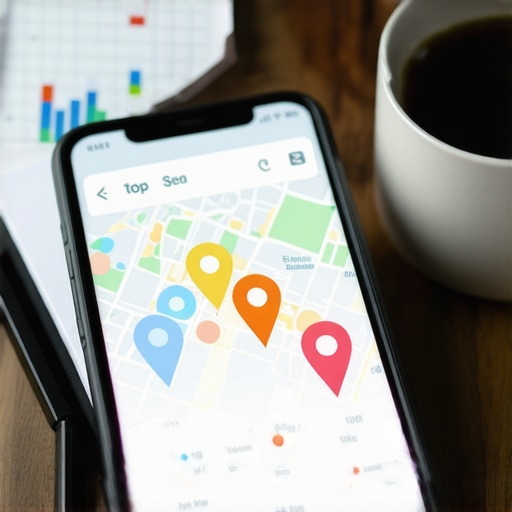
How do I keep my map pack placement stable over the long haul?
Maintenance is all about signals of life. I make it a point to upload at least two ground-level photos every week. According to Joy Hawkins, a leading expert in the local SEO space at Sterling Sky, ‘new photos are one of the lowest-effort, highest-reward ways to show Google your business is active and thriving.’ This consistent activity is part of the the ultimate blueprint for map pack placement success. I also suggest setting a recurring calendar invite to check your Q&A section. Often, potential customers ask questions that go unanswered, and your competitors can actually jump in and answer them for you if you aren’t careful. Staying on top of this ensures your dominating business map pack rankings isn’t just a one-time fluke but a permanent state.
Predicting the Next Shift in Map Rankings
Looking toward the future, I see the map pack becoming even more visual and interactive. We are already seeing Google prioritize listings with video updates and high-quality images that the AI can ‘read’ to confirm you sell what you say you sell. My prediction is that 2026 will be the year where ‘Search by Image’ becomes a primary driver for mappack listing visibility. If a customer takes a photo of a specific dish at your restaurant and uploads it, Google’s Lens technology will link that specific image to ‘near me’ searches for that food item. This is why why your mappack listing needs customer uploaded photos more than ever. You should start encouraging customers now to take photos of specific products, not just the storefront. If you haven’t yet, I highly recommend you try this today: Go into your Google Business Profile and add three new attributes that you haven’t touched in the last six months. It’s a five-minute task that can trigger a re-index of your relevance signals almost immediately.
The Hard Truths About What Actually Moves the Needle
Reflecting on my journey, I’ve realized that rank business maps success isn’t a one-time setup; it’s an evolving relationship with your community. Here are the lightbulb moments that changed everything for me:
- The Perfect Profile is a Myth: I spent weeks trying to make my description flawless, but I learned that optimizing your map pack entry for better local search rankings is more about fresh, authentic activity than a static bio.
- Reviews Are More Than Proof: I used to think reviews were just for the customers. Now I know that why your map pack placement depends on your reviews velocity is about the semantic signals those words send to Google’s AI.
- Proximity Can Be Beaten: You don’t have to be the closest shop. Mastering the proximity secret for business map pack success in dense cities means proving you are the most relevant and authoritative choice in the area.
Tools That Stopped Me From Refreshing My Browser Every Hour
You don’t need a thousand-dollar software suite to win. I’ve narrowed my focus to these few resources because they provide the most clarity with the least amount of noise:
- Google Search Console: This is the only place to get data directly from the source about how people find your site and your map profile.
- A Local Search Simulator: This allows you to how to audit your map pack placement without subscription software by seeing exactly what a user in a different neighborhood sees.
- Whitespark’s Ranking Factor Reports: I trust their research because they base their advice on annual local search studies rather than SEO folklore.
Take Control of Your Local Search Destiny
Ranking in the local pack is not about luck; it is about consistency and connection. By focusing on the sentiment of your customers and the specific vocabulary they use, you turn your mappack listing from a static map pin into a dynamic magnet for new business. Don’t wait for the algorithm to find you—give it every reason to put you at the top. Have you noticed a specific word or phrase appearing in your reviews that helped boost your visibility? Let me know in the comments below!