
I remember the exact Tuesday morning when I realized I was essentially invisible to my own community. I was sitting at my kitchen table, the coffee was lukewarm, and I decided to search for my own services on my phone. I wasn’t in the top three. I wasn’t even in the top ten. I was buried so deep in the search results that I might as well have been operating out of a basement in another state. Meanwhile, a competitor just two blocks away—someone whose work I know isn’t as good as mine—was sitting comfortably in that coveted top spot. It felt like a punch to the gut. This wasn’t just about pride; it was about the phone calls I wasn’t getting and the leads I was losing every single hour.
My Morning Coffee Became a Reality Check
That frustration led me down a rabbit hole of trial and error. I quickly realized that most of what we are told about local search is either outdated or intentionally vague. Early on, I made the classic mistake of thinking that just having the most reviews would guarantee me a spot at the top. I spent weeks pestering customers for feedback while ignoring the fact that my business name was listed differently on three different sites. I even fell victim to the proximity glitch that destroys your map pack placement because I hadn’t properly defined my service area. I was doing the ‘loud’ work but ignoring the quiet, technical signals that actually move the needle. Today, I’m going to share the specific, slightly ‘hidden’ strategies I discovered that finally forced Google to take notice of my business again.
Is snagging a local pack entry actually worth the effort?
You might be skeptical, thinking that people scroll past the maps to the organic links, but the data says otherwise. According to a study by BrightLocal, 87% of consumers used Google to evaluate local businesses last year alone. If you aren’t in those top three spots, you are essentially handing your local market over to whoever was savvy enough to optimize their profile. Have you ever felt like you’re doing everything right—posting photos, getting five-star ratings—yet your ranking just stays stagnant? I’ve been there, and it’s usually because your local SEO reports fail to show actual leads, focusing instead on vanity metrics that don’t put money in the bank.
Stop Letting Your Competitors Siphon Your Customers
The reality is that your competition is likely using small, tactical moves to stay ahead of you. They aren’t necessarily ‘better’ at business; they are just better at feeding the algorithm what it wants. We are going to look at the ‘why’ behind proven tactics to boost your map pack visibility that go beyond the basic ‘fill out your profile’ advice. We’ll talk about the invisible influence of user behavior signals and why your current map pack listing secrets might be missing the most critical component: consistency. I want to help you stop guessing and start appearing exactly where your customers are looking.The first thing you have to accept is that Google’s local algorithm isn’t a genius—it’s a data-hungry machine that rewards clarity over complexity. To win, you need to treat your profile like an instruction manual rather than a billboard. When I first started auditing my own presence, I realized I was focusing on the flashy stuff while my foundation was crumbling. I spent hours writing a flowery business description, only to find out why your google business description doesn’t actually affect your ranking in the way you think it does. The algorithm cares more about your categories and your physical location than your prose.
Your Primary Category Is Not a Suggestion
The single most impactful lever you can pull is your primary category selection. I once worked with a small clinic that was struggling to appear for high-value searches. They had set their primary category to ‘Health Club’ because they had a small gym on-site, but their main revenue came from specialized physical therapy. Within 48 hours of changing their primary category to ‘Physical Therapy Clinic,’ they jumped from page four to the middle of the local pack. If you are stuck, you should check why your primary category choice might be killing your local reach because Google uses this as its primary relevance filter. If you get this wrong, the rest of your efforts are essentially shouting into a void.
Fix the Data Discrepancies That Confuse the Algorithm
Consistency sounds boring, but in the world of local search, it is the law. I remember finding an old listing for my business on a forgotten local directory that had my suite number listed as ‘Suite B’ instead of ‘Unit 2.’ It seems trivial, but that one tiny difference was enough for Google to lose confidence in my location. This is the NAP error that costs you a top 3 spot every day because it creates a ‘trust gap.’ You need to ensure your Name, Address, and Phone number are identical across every corner of the internet. 
Turn Your Photos Into Silent Salesmen
Most people upload a grainy photo of the front of their building and call it a day. That is a massive wasted opportunity. Google’s Vision AI actually ‘reads’ your photos to understand what your business does. When I started uploading high-resolution photos of specific tools and results, my engagement metrics skyrocketed. However, you have to be careful about how you upload them. I once saw a contractor lose his ranking because he was using stock photos with stripped metadata; understanding the simple photo metadata error that stops your profile showing is crucial if you want your visual content to actually contribute to your rank.
Stop Ignoring How People Interact With Your Listing
Rankings aren’t just about what you tell Google; they are about how the public reacts to you. Every time someone clicks ‘Call,’ ‘Directions,’ or even just expands your photos, it sends a signal that your business is relevant. This is the role of user behavior in map pack placement success that many SEO ‘gurus’ ignore. I started focusing on getting people to actually click the ‘Request a Quote’ button by simplifying my service list, and the rankings followed the clicks. It’s a feedback loop: more interaction leads to higher visibility, which leads to even more interaction. If your profile is static, you are essentially telling the algorithm that you are a dead business.Most experts will tell you that the secret to a rock-solid mappack listing is a mountain of five-star reviews. They are wrong. While reviews are essential, focusing solely on the raw count is a beginner mistake that often leads to total stagnation. In my experience, I’ve seen businesses with 200 reviews lose to competitors with only 20, simply because the latter had better ‘keyword density’ within the user feedback and a more consistent business map pack presence. If you’re wondering why good reviews aren’t enough to rank business maps anymore, it’s because Google’s natural language processing is looking for proof of specific services, not just a generic ‘great job’ sentiment. You need customers to mention your specific services in their reviews to truly move the needle.
The Review Quantity Myth That Keeps You Stagnant
The biggest ‘oops’ factor I see with local business owners is what I call the ‘Profile Refresh’ death spiral. When a business sees its ranking drop, the instinct is to start changing everything at once—tweaking the business name, swapping primary categories, or updating the address. This is the fastest way to trigger a manual review or a profile suspension. You have to learn why you should ignore most map pack placement techniques you see online that promise overnight results through aggressive ‘growth hacking’ of your profile data. Real, sustainable map pack placement is built on stability and slow, methodical optimization. If you keep changing your ‘DNA,’ Google will never trust your location enough to put you in the top three. 
Don’t Let the Proximity Filter Turn Your Listing Into a Ghost
Another hidden nuance is the dreaded ‘similarity filter.’ If you are located in a building with three other businesses in your same niche, Google might intentionally hide your listing to provide ‘variety’ to the user. This is the exact reason your mappack listing is hidden from nearby customers even when you think you’ve done everything right. To beat this, you have to prove you are more ‘prominent’ than your neighbors. According to the Whitespark Local Search Ranking Factors study, the authority of your actual website is one of the most significant ‘tie-breaker’ signals. Your website’s SEO and your map listing are two sides of the same coin; you cannot ignore one and expect the other to thrive.
Can your website authority really push you into the top three?
Many people treat their business map pack profile as a separate entity from their website, but the algorithm sees them as a single brand footprint. If your website is slow, lacks local schema, or doesn’t have dedicated service-area pages, your map rank will eventually hit a glass ceiling. I always recommend that before you spend a dime on ads, you learn the best way to audit your business map pack profile without expensive tools to find these hidden gaps. Once I started treating my website as a ‘relevance engine’ for my map pin, the proximity filter stopped being an obstacle and started being a tool I could use to outshine my neighbors. Have you ever fallen into the trap of obsessing over review counts while your ranking stays frozen? Let me know in the comments. To get ahead, you must understand how to fix the proximity trap keeping you out of the map pack and focus on the technical signals that your competitors are likely ignoring.I finally stopped flying blind when I discovered grid-based tracking. Most business owners look at a single ranking number and think they’ve won, but that’s a dangerous illusion. You might be number one while sitting in your office, but two blocks away, you’re invisible. I personally rely on a grid-style local rank tracker because it visualizes the ‘proximity fade’ that happens as a searcher moves away from your front door. If you aren’t seeing the heat map of your reach, you don’t really know your business map pack status. I’ve found that how to use a google maps rank tracker to find competitor weak spots is the difference between a guess and a strategy. It reveals exactly where your competitors are losing steam, allowing you to swoop in and steal their territory.
Ditch the vanity metrics for a grid-based reality check
One of the most sobering moments of my journey was realizing that why most local keyword tracking tools give a false sense of security—they only track from a single point. To truly scale, you need to see your mappack listing performance across the entire city. I use these tools to identify ‘border zones’ where I’m rank four or five, and then I double down on local content for those specific neighborhoods. This isn’t just about maintenance; it’s about aggressive expansion. If you follow the ultimate blueprint for map pack placement success, you’ll see that data-driven adjustments beat ‘gut feelings’ every time. 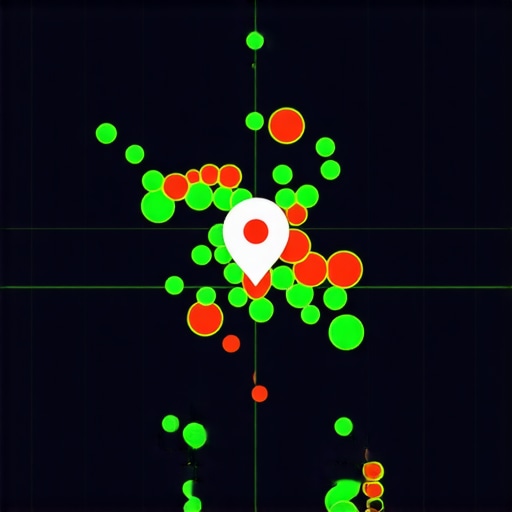
My go-to toolkit for technical local dominance
For the technical side, I don’t just rely on the Google dashboard. I use a tool called ExifTool to audit my photo metadata before I ever upload. Why? Because I want to ensure my images aren’t carrying conflicting GPS data that might confuse the algorithm. I also keep a strict eye on my structured data. If your site code is messy, you’ll find why your local schema might be failing to help your ranking the hard way when your map pack placement drops after a site update. I treat my mappack listing like a high-performance engine: it needs a tune-up every month, not just when the check-engine light comes on.
How do I maintain my map pack position over the long haul?
Sustainability comes down to a simple, non-negotiable checklist. Every month, I audit my top competitors for ‘title stuffing’ and report violations, while simultaneously adding three to five high-quality, geotagged photos to my own profile. This keeps the ‘freshness’ signal high. According to research by Sterling Sky, consistent activity is often a more sustainable ranking factor than a one-time blast of citations. Looking ahead, I predict that Google will rely even more on ‘probabilistic’ rankings driven by AI visual search. This means your photos won’t just need to be there; they’ll need to be contextually perfect. If you want to stay ahead, I challenge you to try this: download a metadata viewer today and check the last five photos you uploaded. If the location data is missing or wrong, you’ve found your first ‘leak’ to plug. To keep your momentum, follow a simple checklist for moving up in the business map pack every month and never let your profile go stale.
The Hardest Lesson I Learned About Scaling My Local Pack Entry
If there is one thing I’ve realized after years of obsessing over these pins, it’s that the business map pack is never static. I used to think I could ‘set it and forget it’ once I hit the top spot. I was wrong. The moment I stopped engaging with my own profile, a competitor with half my authority managed to snag a local pack entry simply by being more active with updates. I learned that Google rewards consistency over intensity. A sudden burst of 50 reviews looks like spam; one genuine review every week looks like a thriving business. I also discovered that the small profile edit that finally jumpstarts stalled impressions is often just a matter of refining your sub-categories to match the search intent of your neighborhood rather than the whole city.
My Must-Have Arsenal for Map Pack Placement Success
I don’t believe in over-complicating things with dozens of paid subscriptions. To truly mastering business map pack keys to top map pack placement, you only need a few reliable tools and a solid strategy. I personally rely on Whitespark for citation audits because their data is the cleanest in the industry. For technical metadata, ExifTool remains my go-to for ensuring my photos are perfectly geotagged. Most importantly, I keep a copy of the ultimate blueprint for map pack placement success bookmarked to ensure I never miss a step during my monthly audits. These resources aren’t just ‘nice to have’—they are the foundation of a predictable, repeatable strategy to rank business maps without the guesswork.
Your Future at the Top Starts with One Tweak
The journey to the top of the map isn’t about one giant leap; it’s about a series of intentional, small moves. You don’t need a massive agency budget to win; you just need to be more disciplined than the business owner across the street. If you are feeling overwhelmed, start by simply auditing your primary category and checking for NAP consistency. You’ll be surprised how quickly you can boost your business map rank with these expert tips once the technical fog clears. Your map pack placement is the most valuable digital real estate you own—treat it with the respect it deserves and the phone calls will follow. #IMAGE_PLACEHOLDER_E# What is the biggest hurdle you are facing with your mappack listing right now? Let me know in the comments below!