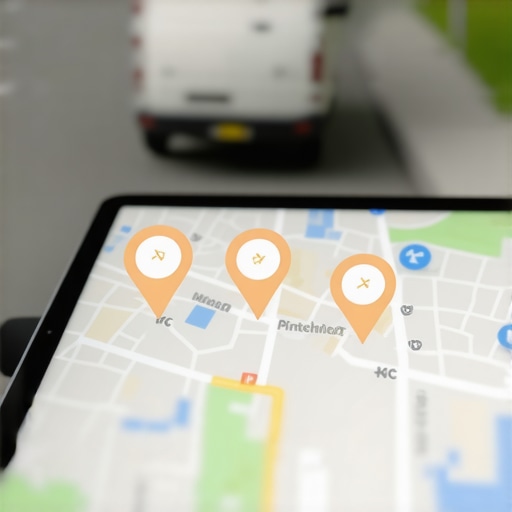
I sat in my home office three years ago, refreshing the search results for “emergency plumber near me” until my thumb went numb. I wasn’t looking for a competitor; I was looking for myself. I knew I was the best in the neighborhood, but according to the big search engines, I basically didn’t exist. It felt like being the kid at the school dance who didn’t get an invite. I realized then that my lack of a physical storefront was making me invisible, but I refused to believe that a lease on a brick-and-mortar building was the only way to get a solid map pack placement. I spent months failing, getting my profile suspended, and yelling at my monitor before I finally cracked the code for service-based businesses like us.
Stop Feeling Like a Ghost When You Don’t Have an Office
The reality is that Google’s algorithm is built to favor the physical, but that doesn’t mean we’re locked out of the party. If you are running a business out of your garage or a van, you have to play the game differently. Most people think they can just tick a box and wait for the phone to ring. I made the mistake of thinking my home address was a liability, so I tried to “game” the system with a UPS store box. Big mistake. That’s a fast track to a profile suspension that can kill your momentum for weeks. The truth is, you can rank business maps effectively without a lobby or a receptionist. It’s all about proving your local relevance through service area signals. According to data from BrightLocal, proximity remains a massive factor, but for us “hidden” businesses, our service area settings are the lifeblood of our visibility. If you don’t get those right, you’re just shouting into a void.
Does Google actually hate businesses that work from home?
It sure feels like it sometimes, doesn’t it? You see the shop down the street getting all the love while you’re doing the hard work in the field. But here is the secret: they don’t hate you; they just need more “breadcrumbs” to trust you. When you don’t have a sign on a building, your digital footprint has to be twice as loud. I used to think a mappack listing was a “set it and forget it” chore. I was wrong. It’s a living thing. I’ve seen so many contractors and consultants get buried because they think their reviews alone will save them. Newsflash: they won’t. I had forty 5-star reviews and was still sitting on page four. I had to learn how to optimize my entry using real-world data and precise service boundaries. Have you ever felt like you’re doing everything right—getting the reviews, doing the work—and yet your phone still stays silent while your competitors brag about being booked out? It’s frustrating as hell, and it usually comes down to one or two tiny settings you’ve overlooked.
Draw a Hard Line Around Your Service Area
Setting up your service area is like drawing a fence around your backyard. If that fence is too big, you cannot patrol it effectively, and neither can Google. I remember early in my journey when I thought bigger was better. I selected a 50-mile radius, thinking I’d catch every fish in the pond. Instead, my mappack listing became practically invisible. Google’s algorithm looks for density, not just distance. When I finally swallowed my pride and shrunk my radius to 15 miles around my core neighborhoods, my visibility exploded. This is because I solved the service area conflict that was confusing the proximity filter. You have to be a big fish in a small pond before you can conquer the ocean. Focus on the zip codes where you actually spend 80% of your time.
Stop Hiding Your Work Behind a Logo
If your profile is just a stock photo of a wrench or a generic logo, you are losing. Google wants to see the ‘boots on the ground.’ I started a habit two years ago that changed everything: every time I finished a job, I took a photo of my branded truck in front of the house (with the customer’s permission, of course). These aren’t just pictures; they are proof of life. When you upload these, you are providing the real-world evidence required to rank business maps effectively. I once spent a week uploading twenty high-quality, job-site photos and watched my impressions climb by 40% without changing a single word of text. It’s about the photo update that triggers the algorithm to realize you are actually active in that specific neighborhood. 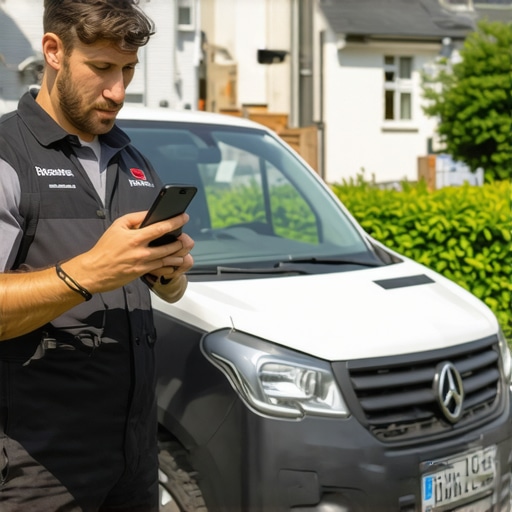
Turn Every Review Into a Conversation
Most people treat reviews like a trophy case. They look at them, smile, and walk away. That is a massive waste of map pack placement potential. Google reads your responses. If a customer mentions ’emergency leak repair in Springfield,’ and you respond with, ‘Glad we could help with that emergency leak repair in Springfield!’, you’ve just created a localized keyword signal. I used to just say ‘Thanks!’ until I realized that every response was a chance to secure a local pack entry for niche services. Don’t be a robot, but be intentional. Mention the service and the location naturally. It builds a narrative that you are the go-to expert for that specific street corner.
Does Your Website Actually Talk to the Map?
You can’t treat your website and your Google profile like two people who don’t speak the same language. If your site doesn’t mention the same service areas as your profile, Google smells a lie. I had a client whose business map pack rank was stuck on page three for months. We realized his website only mentioned the main city, while his profile was trying to rank for five surrounding suburbs. We created dedicated landing pages for each suburb, and the synchronization acted like a magnet. You have to focus on your profile photos and your on-site content simultaneously to create a unified signal. If the data on your site doesn’t back up the claims on your map, the algorithm will always favor the competitor who has their story straight.
I’m going to go against the grain here: stop obsessing over citations. For years, the ‘experts’ have told us that the more business directories we’re in, the better. I spent hundreds of dollars on those automated listing services only to see my mappack listing stay exactly the same. The truth is that citations alone won’t improve your map pack placement if your behavioral signals are dead. Google is moving away from static data and toward ‘proof of life’—things like click-through rates and how long people stay on your site. If your listing looks like a fossil, it will be treated like one.
The Shared Office Trap That Wiped Out My Progress
One of the biggest mistakes I see advanced users make is trying to scale too fast using ‘virtual’ or shared spaces. I once tried to claim a local pack entry for a shared office space to grab a foothold in a wealthier neighborhood. Google’s verification team nuked it within 48 hours. If you aren’t physically there with a legitimate lease and a dedicated suite number, you’re playing with fire. This is a common mappack listing error that can lead to a permanent blacklisting of your domain if you’re not careful. Instead of faking a location, you should be focused on ranking business maps for high-ticket services by using your actual project history as the anchor.
Why does your ranking tank the second you drive away?
Have you ever noticed that you rank #1 when you’re standing in your driveway, but as soon as you head to a job site ten miles away, you disappear? This isn’t just bad luck; you might be a victim of the proximity glitch that destroys your map pack placement. According to the Whitespark Local Search Ranking Factors study, proximity remains the single most powerful signal, but for service-based businesses, this can work against you. Google sometimes prioritizes the user’s mobile location over your defined service area. To combat this, you need to ensure your website’s loading speed and technical SEO are flawless. When your site is fast and highly relevant, it acts as a tether that keeps your business map pack pin stable, even when you aren’t physically in the center of the search radius. Have you ever fallen into this trap where your ranking seems to follow you around? Let me know in the comments. You have to master the keys to top map pack placement by balancing your physical location with hyper-local content that proves you serve the entire region, not just your street. Stop looking for shortcuts and start building the ‘real world data’ that Google actually craves.
Once you finally crack the code and see that beautiful map pack placement, the temptation is to sit back and enjoy the ride. Don’t. I’ve seen guys go from #1 to #15 in a month because they stopped feeding the beast. It’s like a garden; if you don’t pull the weeds of outdated info, the algorithm will bury you. I use a very specific tech stack to monitor this, but I stay wary because most local keyword tracking tools give a false sense of security by only checking from one fixed point. I prefer tools like Local Falcon or BrightLocal’s grid tracker because they show me the ‘red zones’ where my visibility drops off. If I see a dip in a specific neighborhood, I don’t just buy more ads; I go there, take a few photos of a completed project, and upload them immediately. This is how you go from zero to top dominating business map pack rankings and stay there.
Stop Your Ranking From Rusting While You Are Busy
Maintenance isn’t about doing hours of work every day; it’s about high-impact micro-tasks. I spent way too much money on agencies early on, only to realize the truth about third-party business map listing services is that they often ignore the nuances of your specific territory. They use robots; you should use your phone. Every Monday morning, I spend ten minutes looking at my ‘Insights’ tab. I’m not just looking at total views. I am looking at the ratio of phone calls to direction requests. If people are asking for directions to a service-area business with no office, I know my profile is confusing them, and I need to double-check my settings. Use the checklist for fixing a stagnant mappack listing if you notice your numbers flattening out for more than two weeks. 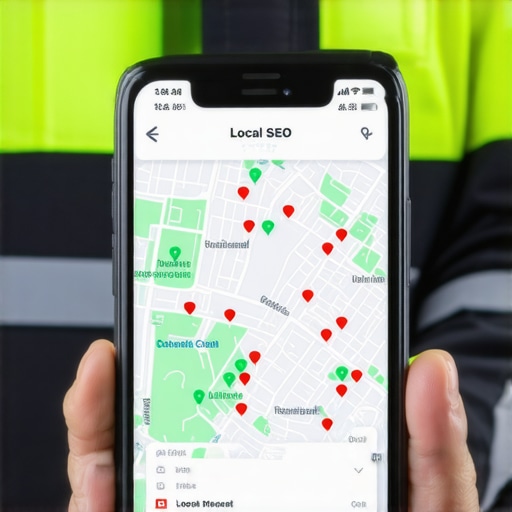
How do I keep my map pack placement consistent over the long haul?
The secret is ‘Entity Strength.’ As Joy Hawkins from Sterling Sky often points out, Google’s algorithm is becoming increasingly sensitive to actual user behavior patterns rather than just static keywords. You keep it consistent by proving you are a real person doing real work. I predict that within the next year, Google will start using AI to verify service-area businesses by cross-referencing your mobile GPS data with your profile updates. If your phone never goes to the neighborhoods you claim to serve, you’re in trouble. To stay ahead, use proven tactics to boost your map pack visibility today like seasonal updates. In the winter, I post about frozen pipes; in the summer, it’s about irrigation. This tells the algorithm your business map pack profile is relevant to the current needs of the community.
The Minimalist Toolkit I Actually Trust
Stop buying every SEO tool that pops up in your Facebook feed. You only need three things: a grid-based rank tracker, a way to geo-tag your photos (though Google is getting better at reading this naturally), and a solid review management system. I personally use GMB Everywhere to spy on my competitors’ categories. If a new guy moves into the neighborhood and starts taking my mappack listing real estate, I check his primary category immediately. Sometimes, just switching from ‘Plumber’ to ‘Heating Contractor’ during a cold snap is the simple change to rank business maps for multiple services that keeps the phone ringing. Don’t be afraid to pivot based on the season. If you want to scale, try this one specific move today: Take a 10-second video of a finished job and upload it as a ‘Google Update.’ Video is currently the most underutilized way to rank business maps effectively and usually gets 3x the engagement of a static photo.
The Brutal Truth About Keeping Your Pin on the Map
Looking back at my first year in business, I realize I wasted thousands of dollars trying to look “bigger” than I actually was. I thought a massive service area meant more leads, but in reality, it just diluted my ranking signals until I was invisible everywhere. I eventually learned why most local pack entry strategies fail after three months: business owners stop feeding the algorithm real-world evidence once they see a little bit of growth. Don’t fall into that trap. I also discovered that the role of user behavior in map pack placement success is the only metric that truly sustains you over the years. If a searcher clicks your profile and sees a real human being working in their actual neighborhood, you’ve already won the trust battle. Your business map pack profile should be a mirror of your daily hustle, not a static digital billboard.
The Slim Stack I Use to Stay Visible Every Day
You don’t need an expensive agency to manage your mappack listing; you just need to be more consistent than your competition. I personally rely on 3 minimalist tools that find ranking gaps your agency missed to keep my service boundaries sharp. My favorite move is utilizing the local pack entry hack using video on your profile. A simple ten-second clip of a job well done communicates more to Google’s AI than a hundred keyword-stuffed descriptions. I trust these methods because they focus on ‘proof of life’—the one thing a competitor with a fake office can never replicate. Keep your tools simple, keep your data fresh, and your rank business maps efforts will finally pay off.
Your Garage is a Launchpad Not a Liability
You don’t need a fancy suite at the center of the city to dominate the local market. In fact, being a service-area business gives you a level of authenticity that the big, bloated corporations can’t touch. By following the ultimate blueprint for map pack placement success, you are building a foundation that thrives on real customer interactions rather than just proximity. You have the skills and the local knowledge; now it’s just time to take the final leap and go from zero to top dominating business map pack rankings. Consistency is your best friend—keep posting, keep responding, and keep showing up for your community. Have you struggled more with shrinking your service radius or getting customers to leave reviews that mention your specific location? Let me know in the comments below! #IMAGE_PLACE_HOLDER_E#