I remember sitting in my home office three years ago, staring at a rank tracker that showed my client in the absolute #1 spot for every major keyword in the city. I felt like a local SEO genius. I even called the client to brag about our success, expecting them to be overwhelmed with customers. Instead, there was a long, awkward silence on the other end. ‘That’s great, but the phone hasn’t rung once today,’ they finally said. It was a gut-punch moment that taught me a hard lesson: a high-tier map pack placement is just a vanity metric if nobody actually bothers to reach out. I realized right then that I had been winning the wrong game. I was so focused on the algorithm that I completely forgot about the actual person searching for help on their lunch break. Today, I want to show you how to stop chasing those empty numbers and start seeing real results.
Your Top Spot Might Be Costing You Money
If you are pouring resources into visibility but seeing a flatline in your revenue, you are likely dealing with the real reason your map pack ranking isn’t generating actual leads. It is a common trap. We often assume that being seen is the same as being chosen, but in a world of zero-click searches, that simply isn’t true anymore. According to data from SparkToro, nearly two-thirds of Google searches end without a single click to a website. This means your mappack listing has to do all the heavy lifting within the search results themselves. Early in my career, I made the mistake of thinking a perfect map pack entry was just about the right keywords and categories. I ignored the ‘human’ elements like recent photos, detailed service descriptions, and genuine engagement. I’ve seen businesses with a lower rank outperform the #1 spot simply because their profile felt alive and trustworthy while the top result looked like a digital ghost town. Have you ever felt the frustration of seeing your traffic go up while your sales stayed exactly where they were?
Is Local Ranking Actually Worth the Effort?
It is a fair question to ask when you’re staring at a screen of views but zero phone calls. You might wonder if the map pack is just a playground for bots rather than a tool for business owners. The truth is, it is still the most powerful lead generator for local shops, but the rules of engagement have shifted. If you’re not seeing a return, you might need 5 specific moves to turn your profile into a lead machine rather than just another name on a list. Often, the issue is that your reputation strategy fails to generate leads because it lacks authenticity or responsiveness. We aren’t just looking for stars; we are looking for a reason to trust you with our hard-earned money. In the following sections, we’ll break down exactly why your phone isn’t ringing and how to fix it without spending a fortune on ads.If you want to how to rank business maps effectively in the local pack, you have to treat your profile like a living storefront rather than a static yellow-page entry. Think of your listing like a high-end restaurant in a busy downtown area. If people walk past the window and see dusty tables and a menu from 1994, they aren’t coming in, no matter how great the sign out front looks. Google notices this ‘loitering’ behavior. If users click your profile but immediately bounce back to the search results, it signals that your map pack placement isn’t actually helping the searcher.
Stop Looking Like a Digital Ghost Town
The first move is to stop feeding the algorithm and start feeding the visitor. We often obsess over keywords, but Google’s AI is now sophisticated enough to prioritize engagement. Use 5 interaction tactics that actually move your business up the map to force the algorithm to take notice. This includes things like responding to every single question in the Q&A section and posting weekly updates. I once worked with a local plumber who was stuck at the bottom of the top three. He had great reviews, but his profile was silent. We implemented the small tweak to your business map pack that fixes zero-click stats by adding clear ‘Request a Quote’ buttons and direct links to his emergency service page. Within two weeks, his call volume doubled because we stopped making people hunt for a way to contact him.
Give Searchers a Reason to Linger
When someone finds your mappack listing, they are looking for a reason to choose you over the person ranked #2. Most business owners fill out their info once and forget it, creating a discrepancy that devalues their presence. You need to perform the data cleanup move that fixes inconsistent business listing details to ensure your phone number, hours, and address are identical across the web. If Google sees different hours on Yelp than on your profile, it loses confidence in your data and pushes you down.
Snap Photos That Actually Sell Your Service
Visuals are the most undervalued asset in local search. I remember a specific instance where a client’s photos were just low-res shots of their office building. We replaced those with high-resolution, geo-tagged photos of their team in action and their branded trucks.  This wasn’t just for aesthetics; it was about how a simple photo update can trigger a new local pack entry. By showing real human faces and real work, the ‘trust factor’ spiked. People don’t want to see stock photos; they want to see the person who is going to show up at their front door.
Get Your Customers to Speak Google’s Language
Reviews are great, but reviews with specific keywords are gold. Don’t just ask for ‘a review.’ Instead, use the review strategy that actually triggers a local pack entry faster by asking customers to mention the specific service they received. If five people mention ‘water heater repair’ in their reviews, Google starts to see you as the authority for that specific term. This moves you beyond a generic ranking and into a specialized dominance that your competitors will struggle to match.But even with perfect reviews, I see business owners hitting a glass ceiling because they’ve fallen for the most common lie in local SEO: that being the closest business to the customer is the only way to win. Let’s dig deeper into why your proximity to the searcher is only half the ranking story.
The Proximity Myth is Keeping You Small
Most people assume that if they are physically located in the center of town, they will naturally rank for every search in that area. This is a dangerous oversimplification. I’ve seen businesses located two blocks away from a searcher get outranked by a competitor three miles away. This happens because Google values prominence and relevance just as much as distance. If your profile is a mess, you are likely stuck in the how to fix the proximity trap keeping you out of the map pack. 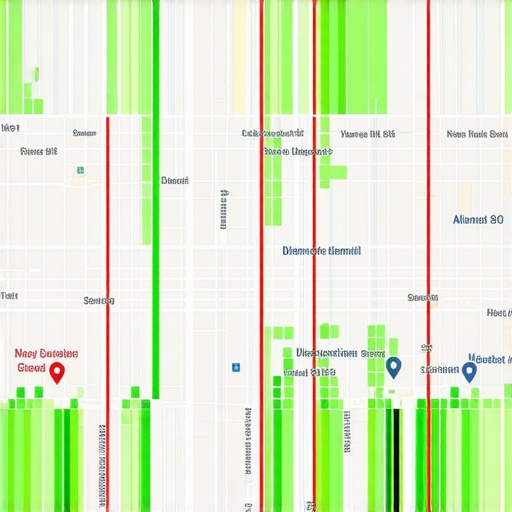 When Google’s algorithm calculates your local pack entry, it looks at your digital footprint outside of just your address. A study by Whitespark in their annual Local Search Ranking Factors report confirms that while proximity remains a core signal, it is increasingly overridden by strong behavioral signals and local authority. If your strategy to rank business maps is solely based on your office location, you’re essentially leaving your growth to chance. Have you ever fallen into this trap? Let me know in the comments.
Can a business with fewer reviews still win the top spot?
It sounds counterintuitive, doesn’t it? We are told that the person with 500 reviews always beats the person with 50. But in my experience, that isn’t always the case. I’ve analyzed hundreds of niches where the winner had a third of the reviews of the runner-up. The secret lies in why your competitors with fewer reviews still win the map pack placement. Usually, it’s because their reviews are more recent, contain high-value keywords, or their website has better local schema that proves their expertise to the algorithm. They are providing a more comprehensive answer to the user’s intent than the ‘giant’ with the stale reputation.
Generic Citations Will Kill Your Progress
One of the biggest ‘oops’ factors I see is the ‘more is better’ approach to citations. Many business owners hire a cheap service to blast their info to 100 random directories. This is almost always a waste of money and can actually lead to why buying 100 generic citations is actually hurting your local rankings. If those directories are low-quality or provide conflicting data, they create a ‘noise’ that confuses Google. Instead of a clear signal of your location, Google sees a mess of inconsistent data. Another hidden blocker is the service area conflict that secretly blocks your local pack entry. If you’ve set a service area that overlaps too aggressively with a physical office location in a way that the algorithm deems illogical, Google might hide your mappack listing altogether to avoid showing duplicate or suspicious results. This technical friction is often the reason your business map pack views arent turning into sales; you aren’t being shown to the right people at the right time because the algorithm is playing it safe and filtering you out. Mastering these nuances is what separates a business that just ‘exists’ on the map from one that actually dominates it.
I have seen it happen a hundred times: a business hits the top three, the owner pops the champagne, and then they stop doing the very things that got them there. Within three months, they are back on page two, wondering where the leads went. Ranking isn’t a trophy you win and put on a shelf; it is a position you defend every single morning. If you want to keep your local pack entry, you have to transition from a ‘launch’ mindset to a ‘maintenance’ mindset. I personally rely on a few specific 5 local seo tools that reveal why your competitors are still outranking you because they provide the granularity that a standard keyword tracker misses. I need to see exactly where my visibility drops off at a street-level view.
How do I maintain my map pack dominance over time?
Maintenance starts with a consistent rhythm. I tell my clients to follow a simple checklist for moving up in the business map pack every month, which includes a heavy focus on fresh content. Google is obsessed with ‘recency.’ If your last post was from 2022, the algorithm assumes you might be out of business. This is why I use 3 minimalist tools that find the ranking gaps your seo agency missed to ensure I am not ignoring the hyper-local keywords that people are actually typing into their phones today. You should also be hyper-aware of the move that recovers a mappack listing after a sudden ranking drop, which is often as simple as checking for a the nap error that costs you a top 3 spot every day. Sometimes a well-meaning employee changes a phone number on a random directory, and suddenly your whole map pack placement is in jeopardy.
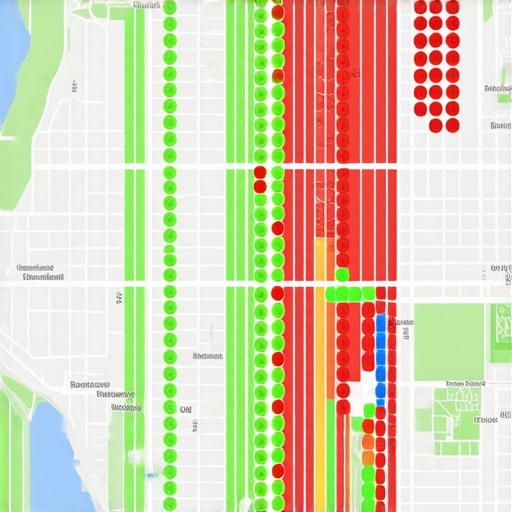
As we look toward the future, specifically looking at the core shifts in google maps seo for 2026 every local business needs to prepare for, it is clear that AI-driven ‘justifications’ are going to be the kingmaker. Joy Hawkins from Sterling Sky, a leading expert in the local SEO space, has frequently pointed out that Google’s algorithm is increasingly pulling text from your reviews and website to justify why you belong in the top spot. This is why the review response secret for better map pack placement is so critical—you aren’t just thanking the customer; you are feeding the AI the context it needs to rank you. I predict that by 2026, the traditional mappack listing will be almost entirely voice-and-AI driven, meaning your data accuracy across the web will be even more vital than it is now.
If you have been feeling the sting of a decline, you need to learn how to use a google maps rank tracker to find competitor weak spots immediately. This allows you to stop guessing and start attacking the specific neighborhoods where your competitors are vulnerable. I strongly recommend you try the one technical fix that restored our map pack placement in days: audit your local schema. If your code is broken, Google can’t read your location data correctly. Don’t let a small technical glitch ruin your map pack placement. Take ten minutes today to run a grid report and see exactly where you stand—the data might surprise you. If you need help troubleshooting a specific issue, feel free to contact us and we can look at the data together.
The Hardest Realizations from My Worst Ranking Slumps
Over the years, I have realized that a perfect local pack entry is worthless if it does not inspire an immediate click. My biggest ‘lightbulb moment’ came when I stopped looking at rankings as a trophy and started seeing them as a living conversation between you and a potential customer. Here is the insider wisdom I wish I had known when I first started:
- Engagement is the new backlink. If people find your profile but do not call, click your website, or request directions, Google eventually decides you are irrelevant. You must prioritize interaction tactics that actually move your business up the map pack rather than just obsession over keyword density.
- Contextual reviews outweigh high star counts. A generic ‘Great job!’ is nice, but a review that mentions your specific service or neighborhood helps the algorithm categorize you as a local authority.
- Technical health is your defensive shield. Even a small nap error that costs you a top 3 spot every day can undo months of hard-earned momentum.
#IMAGE_PLACEHOLDER_E#
The Toolkit That Keeps Me Sane in Local SEO
You do not need a massive marketing budget to win, but you do need data that actually means something. I personally rely on 3 minimalist tools that find the ranking gaps your seo agency missed because they cut through the fluff and show you where the money is hiding. For tracking how you appear in different neighborhoods, a grid-based rank tracker is non-negotiable. I also recommend checking 5 local seo tools that reveal why your competitors are still outranking you to see exactly where your mappack listing is falling short compared to the veteran businesses in your city. Knowledge is power, but specific, localized data is profit.
Your Business Deserves to Be More Than a Statistic
It is easy to get overwhelmed by the technical jargon of map pack placement, but at the end of the day, you are simply trying to help your neighbors find the solution they need. Don’t let the fear of the algorithm stop you from updating your photos or responding to that old review with genuine care. You can turn your business map pack into a 24-7 lead generator starting with the small, human-focused edits we discussed today. Your community is actively looking for you—make sure you are ready to be found when they arrive. Have you ever seen your ranking climb while your phone stayed completely silent? Let me know in the comments below, and let’s figure out the fix together.