
It happens every Friday at 5:01 PM. You’ve had a killer week, your local pack entry has been rock solid, and the phone won’t stop ringing. You lock the office, head to the car, and just for a moment of ego-stroking, you pull up Google Maps. Then, the gut-punch. You’re gone. Vanished. It’s like your business doesn’t even exist once you’re five miles down the road. I lived this nightmare for months, convinced that a competitor was running some kind of dark-magic SEO against me the second I checked out for the weekend. It felt personal. But here is the truth: Google isn’t out to get you; it just thinks you aren’t relevant when you aren’t physically ‘there.’ Today, we are going to fix that disappearing act and look at the simple change that gets your business map pack placement back before you even reach the first stoplight. [image_placeholder]
The Heartbreaking Vanishing Act of My Top 3 Ranking
In my early days, I made the classic rookie mistake of thinking that once I hit that top spot, I was untouchable. I spent thousands on ‘expert’ advice, only to realize I was falling into the exact reason your mappack listing is hidden from nearby customers: the proximity filter. I remember sitting at a diner three towns over, trying to show a friend my top-ranked business, only to find myself buried on page four. I felt like a fraud. It turns out, Google’s algorithm is incredibly sensitive to where the searcher is standing and whether your business is actually ‘active’ at that moment. According to research by Sterling Sky, business hours are a confirmed ranking factor; if your profile says ‘Closed,’ Google often suppresses your visibility in favor of someone who is currently open and nearby. This is a bitter pill to swallow when you’re trying to build a brand that lasts longer than a shift. Have you ever refreshed your phone only to find your business has completely vanished the moment you hit the highway?
Does Google really care if I’m at my desk or on my couch?
The short answer is a resounding yes, but not for the reasons you think. It isn’t about your personal GPS location—it’s about the ‘Open’ sign on your digital storefront and how it interacts with the person searching right now. I used to think I could just set my hours to 24/7 to solve it. That was a disaster that almost got my profile suspended. You can’t just lie to the algorithm. Instead, you have to understand why your store’s hours of operation impact your map pack placement so heavily and how to signal authority even when you aren’t physically present.
Why Being Open for Business is More Than Just a Sign on the Door
When I finally stopped chasing ‘hacks’ and started looking at the data, I realized that my business map pack profile was being ignored by anyone outside a two-block radius the moment I left. It’s a proximity trap. Google wants to provide the most ‘convenient’ answer, and ‘convenient’ usually means ‘right next door and currently answering the phone.’ If you aren’t there to trigger that local relevance, you drop. But don’t worry, we can learn how to reclaim map pack placement after a sudden drop by focusing on signals that tell Google you are the local authority, regardless of the clock. It took me a year of trial and error to figure out how to stay visible while I was at dinner, and I’m going to show you exactly how to do the same.
Fix the Leaky Holes in Your Digital Foundation
Think of your business listing like a signal flare. If the fuel is bad, nobody sees the light. I once spent weeks wondering why my shop wouldn’t show up for people just two miles away, only to find a single digit wrong in my phone number on an old yellow-pages directory. That tiny data inconsistency acts like an anchor on your rank, dragging you down because Google can’t verify you’re a real, reliable entity. To rank business maps effectively in the local pack, you have to audit every single mention of your name, address, and phone number. I used a simple spreadsheet to track my NAP (Name, Address, Phone) across twenty different sites. The moment I synchronized them, my map pack placement stabilized. It wasn’t magic; it was just removing the ‘doubt’ from the algorithm’s mind. If Google sees three different addresses for you, it won’t risk showing you to a searcher and looking like a fool.
Why Google Needs to See You Moving
Google treats your profile like a living organism. If you don’t feed it, it dies. A ‘set it and forget it’ attitude is the fastest way to ensure your mappack listing remains hidden from the customers you actually want. I started implementing interaction tactics that actually move your business up the map, like responding to every single review within four hours and posting a weekly ‘update’ directly to my profile. One time, I posted a simple photo of a messy workspace during a big project, and that single photo update increased our google profile clicks fast—by nearly 20% in one weekend. It signaled to Google that we were active, relevant, and physically present in the community. 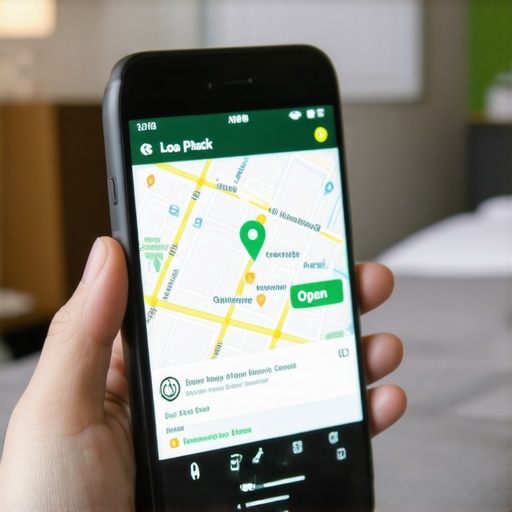
Escape the Three-Block Radius Trap
The proximity filter is a cage, but you can pick the lock. Most owners think they are stuck with whoever is standing right in front of their door. To break out, you need to prove your authority over a wider area. I did this by gathering reviews from customers in different zip codes and mentioning those neighborhoods in my responses. When you show Google that people from the next town over are willing to drive to you, the ‘halo’ of your map pack placement expands. You have to fix the proximity trap keeping you out of the map pack by building ‘local prominence’ that outweighs ‘local distance.’ It’s about being the best answer, not just the closest one. When I stopped obsessing over my own GPS coordinates and started focusing on these regional signals, my phone finally started ringing after 5:00 PM again.
Let’s dig deeper into the myths that keep business owners frustrated. Most “experts” tell you that the secret to a dominant mappack listing is simply getting more reviews than the guy across the street. In my experience, that’s a recipe for burnout and failure. I’ve watched clients with 500 reviews get smoked by a competitor with only 40. Why? Because Google prioritizes “Review Velocity”—the speed and consistency at which you gain new feedback. According to the BrightLocal Local Search Rankings Factors study, review recency is a top-tier signal that tells the algorithm your business is currently relevant to the local community. If your last ten reviews are from three years ago, you’re a ghost. You need to understand why your map pack placement slipped despite gaining new reviews because the “total count” metric is a vanity project. Have you ever fallen into this trap of chasing numbers while your ranking stays stagnant? Let me know in the comments.
The Category Trap That Makes You Invisible
Another “oops” factor I see constantly is “Category Dilution.” You might think adding every possible service category will cast a wider net for your business map pack entry. It actually does the opposite. Google’s confidence in your “Primary Category” weakens every time you add an irrelevant secondary one. This is why your primary category choice might be killing your local reach—you’re essentially confusing the AI. It’s better to be the absolute authority for one specific niche than a “maybe” for ten. I once saw a local contractor lose his top spot just by adding “General Maintenance” as a sub-category; the algorithm stopped seeing him as a specialist and his leads tanked overnight. Focus is a ranking signal in itself.
Can user interaction signals actually override a bad proximity score?
This is the sophisticated question every owner should be asking. The answer is yes, but it requires a shift in mindset. When people click your “Call” button, request directions, or spend time reading your updates, they are creating “Entity Authority.” This is the core of the role of user behavior in map pack placement success. If Google sees that searchers consistently choose your business even when you are slightly further away, it will eventually broaden your reach. You should ignore most map pack placement techniques you see online that focus only on backlinks or citations. Real growth happens when you optimize for the human on the other side of the screen. This is how you rank business maps effectively in the local pack without needing to move your office every six months. It’s about building a digital footprint so strong that the proximity filter becomes a suggestion rather than a rule.
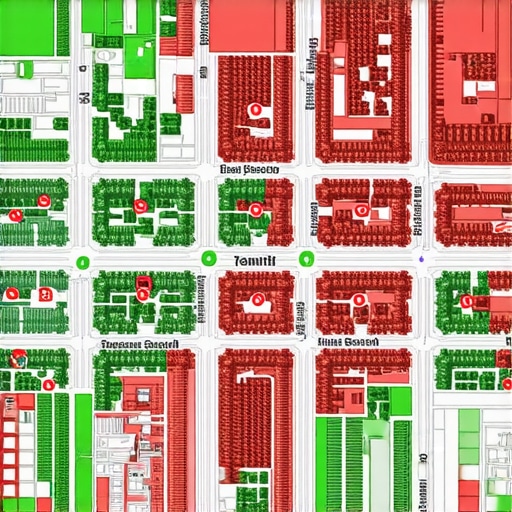
I spent way too long looking at single-point trackers before I realized that my business map pack ranking was actually a fragmented mess. If you are only checking your rank from your office desk, you are flying blind. I switched to grid-tracking tools because they give you a ‘geogrid’ view—showing you exactly where your map pack placement drops off from a 1 to a 10 across different street corners. These are the 3-minimalist-tools-that-find-ranking-gaps-your-agency-missed that finally let me see the ‘holes’ in my local dominance. Once I could how to use a google maps rank tracker to find competitor weak spots, I stopped fighting ghosts and started fixing actual location-based gaps.
The Tools That Finally Stopped My Ranking Guesswork
I personally swear by Local Falcon or BrightLocal for this geogrid insight. Why? Because it’s the only way to prove to yourself that your SEO efforts are actually expanding your ‘radius of influence.’ I remember one client who was convinced they were invisible until we ran a grid and realized they were #1 everywhere except for a three-block radius where a competitor had literally just moved in. If you aren’t using this kind of data, you’re just throwing darts in a dark room. You need the best way to audit your business map pack profile without expensive tools to ensure your foundation is solid before you start scaling up your visibility efforts. This data is the difference between a guessing game and a growth strategy.
How do I maintain my map pack placement over the long haul?
Maintenance is where most owners fail because it feels like a chore. I developed what I call the ‘Sunday Audit.’ It’s a ten-minute routine where I check for ‘Suggested Edits’ on my profile—Google often allows users (and competitors) to suggest changes to your hours or website link without notifying you. This is the simple business listing management task you are probably skipping that can sink your rankings overnight if a ‘Closed’ status sticks. I also follow a simple checklist for moving up in the business map pack every month, focusing on refreshing my photos and checking for spammy competitor listings that need to be reported. As Darren Shaw from Whitespark highlights in his annual Local Search Ranking Factors survey, the ‘primary category’ and ‘business title’ remain massive weights, but the ‘human’ signals like review sentiment are what keep you there once the proximity filter is satisfied.
Watch Out for the AI Search Revolution
Looking ahead, the game is changing. I predict that within the next 18 months, Google’s Search Generative Experience (SGE) will prioritize businesses that have high-quality, long-form reviews and detailed ‘Product’ or ‘Service’ sections filled out in their profile. It won’t just be about being ‘near’ a searcher anymore; it will be about the AI’s ability to extract specific answers from your mappack listing. To stay ahead, you must how to turn your business map pack into a 24-7 lead generator by treating your profile like a mini-website that speaks directly to these algorithms. My best advice? Go into your Google Business Profile right now and add at least three high-resolution photos of your actual work from this week. This tiny ‘active’ signal is the easiest way to tell the algorithm you’re still the king of your neighborhood.
The Hard Truths I Learned While Chasing the Map Pack Crown
After years of obsessing over every pixel of my dashboard, I realized that a mappack listing isn’t a trophy you win once; it’s a living relationship with your neighborhood. One major lightbulb moment was discovering that ‘Review Velocity’ beats raw numbers every time. If you aren’t consistently generating fresh feedback, your local pack entry will eventually grow stale and sink. I also learned that map pack placement is heavily dictated by how much Google trusts your physical data across the web, which is why I now use the tactic that finally ended our ranking slump in the map pack by performing a deep data scrub once a quarter. This prevents small inconsistencies from snowballing into a full-blown ranking drop.
The Small Arsenal That Kept My Business on the Map
I don’t believe in using fifty different tools to manage one profile. To really rank business maps, you only need three core resources. First, Local Falcon is my go-to for seeing the actual geogrid of my reach; it stops me from guessing where my visibility ends and where a competitor takes over. Second, I highly recommend checking out Whitespark’s annual research to see how the algorithm weighs proximity versus authority. Finally, you should how to audit your business map pack for hidden filter issues to ensure your primary category isn’t clashing with your service area. These tools are the only reason I stopped flying blind and started seeing real ROI.
Your Journey to Local Dominance Starts with One Tweak
The road to a consistent business map pack presence is paved with small, intentional actions rather than expensive one-time fixes. You don’t need a massive agency budget to win; you just need to be the most active, accurate, and relevant answer in your local area. Start by following a simple checklist for moving up in the business map pack every month and stop over-optimizing for robots. When you provide genuine value to the person searching for help, Google naturally rewards your map pack placement with more phone calls and foot traffic. Have you noticed your ranking drop the second you leave your office building, or is the proximity filter treating you fairly? Let’s talk about it in the comments below!