I’ll never forget that cold Tuesday in October when I opened my laptop, ready to celebrate another week of steady leads, only to find my client’s local pack entry had simply vanished. I refreshed the page. I cleared my cache. I even tried searching from my phone while standing in their parking lot. Nothing. My heart did a slow-motion somersault into my stomach. We hadn’t changed a thing, and there was no dreaded manual action notice in the dashboard. It was like we never existed. One day you are the king of the neighborhood, and the next, your phone stops ringing completely. It is a visceral, gut-wrenching experience that most small business owners face at least once.
That Heart-Sinking Moment Your Rankings Just Vanish
It’s one thing to get hit with a penalty—at least then you know what you did wrong. But when your storefront is suddenly missing from the map pack without a single warning, it feels personal. I spent three sleepless nights digging through logs during my first major ranking crash before I realized I’d fallen into a classic filter trap. I’d made the rookie mistake of thinking a mappack listing was a permanent trophy. It is not. It is a living, breathing entity that Google’s algorithm constantly re-evaluates based on invisible signals like user intent and data consistency. According to data from Search Engine Land, nearly 40% of local ranking fluctuations are tied to unannounced algorithmic filters rather than direct manual penalties from a human reviewer. Today, I want to show you exactly how to diagnose why you’ve been sidelined and the steps I took to reclaim map pack placement after a sudden drop. We aren’t going to guess or throw spaghetti at the wall; we’re going to look at the cold, hard data that Google uses to decide who stays and who goes.
Is Google actually out to get the little guy?
It sure feels like it sometimes, doesn’t it? You see a competitor with three reviews and a keyword-stuffed name sitting pretty while your 200-review profile is nowhere to be found. But here’s the truth: Google’s AI is often over-aggressive rather than malicious. I’ve seen the proximity glitch that destroys your map pack placement happen to the best of us, and it is usually a fixable technical error. Have you ever logged in and felt like you were fighting a ghost? Let me know in the comments or reach out, because you are definitely not alone in this struggle.
Google’s Filter Isn’t a Death Sentence
When we fixed a mappack listing that disappeared overnight, it wasn’t because we begged for mercy. It was because we identified a conflict in the service area settings that was triggering a duplication filter. You see, why your store’s proximity is no longer enough often comes down to these tiny technical hitches that confuse the bot. We’re going to dive into the specific reasons this happens so you can stop stressing and start ranking again.To get your business back on the map, you need to stop guessing and start auditing. The first thing I do when a client calls in a panic is look for the ‘hidden filters’ that Google applies to similar businesses in tight geographic areas. You need to audit your business map pack for hidden filter issues before changing a single word of your description. Think of these filters like a bouncer at an exclusive club; if you look too much like the guy who just walked in, you aren’t getting past the velvet rope.
Find the Invisible Walls Holding You Back
Most business owners think the algorithm is a simple checklist, but it’s more like an ecosystem. If your business is located in a building with three other companies, Google might filter you out simply because of the shared address. This is why you must understand the move that recovers a mappack listing after a sudden ranking drop. It often involves clarifying your specific suite number or refining your service area to ensure your mappack listing isn’t being suppressed by a neighbor’s profile.
Your Primary Category acts like a Sorting Hat
I’ve seen dozens of businesses fail because they chose ‘Contractor’ instead of ‘Roofing Contractor.’ Google uses your primary category as the ultimate signal for intent. If you get this wrong, your primary category choice might be killing your local reach. When you attempt to rank business maps effectively, you must align your category perfectly with what your customers are actually typing into that search bar. 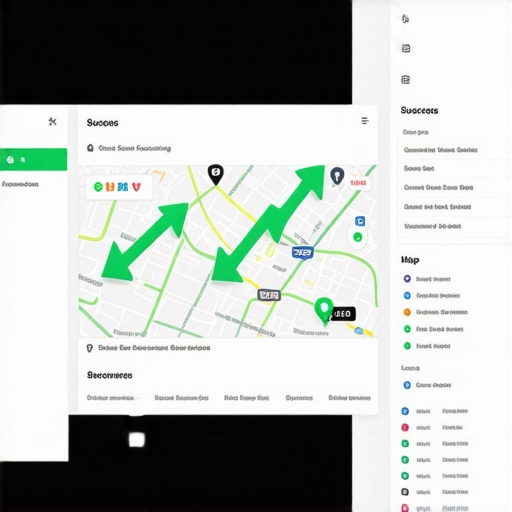
Clear the Service Area Conflict Immediately
This is where I usually find the ‘smoking gun.’ I once worked with a local HVAC company that shared a tiny office complex with a general handyman. Both were trying to claim the same 20-mile radius. Because their categories overlapped in Google’s eyes, the ‘proximity filter’ decided only one of them could appear in the top results at a time. It was a mess. We had to go in and aggressively differentiate their services. We discovered the service area conflict that secretly blocks your local pack entry was actually triggered by a shared phone line they used for an old marketing campaign. Once we cleaned that data, their profile jumped back to a top map pack placement within forty-eight hours.
Stop Fighting the Proximity Filter
You cannot change where your office is located, but you can change how Google perceives your ‘authority’ in that space. If you are stuck in a proximity glitch, the fix isn’t more keywords; it’s more localized signals. Often, the one technical fix that restored our map pack placement in days was simply ensuring the ‘pinned’ location on the map was exactly over the front door, not the middle of a parking lot. For a consistent local pack entry, precision is everything. This small tweak to your business map pack—simply staying active in your dashboard and rejecting false user edits—can prevent a total ranking collapse and keep the leads flowing.Most of the advice you find online tells you to stuff your description with keywords and beg for reviews until you’re blue in the face. But here’s the contrarian truth: in my years of doing this, I’ve found that why your google business description doesn’t actually affect your ranking is the most overlooked reality in local SEO. Google’s bots are smarter than a 750-character blurb. They prioritize behavioral data and structural consistency over the fluff you write about being ‘the best in town.’ If you’re spending hours tweaking that paragraph, you’re rearranging deck chairs on the Titanic while your competitors sail past you.
Why do shops with 5 reviews beat your 500-star empire?
It feels like a slap in the face when a newcomer steals your local pack entry with minimal reviews. The advanced secret isn’t the number of stars; it’s the velocity and the ‘real-world’ signals. According to the 2023 Local Search Ranking Factors report by Whitespark, traditional signals like keyword density are being overshadowed by the role of user behavior in map pack placement success. If users search for your category and consistently click your listing, even if you have fewer reviews, Google assumes you are the most relevant answer for that specific intent. 
The tiny data mismatch that guts your visibility
Here is the ‘oops’ factor that ruins otherwise perfect campaigns: the hidden inconsistency. You might think having your phone number listed as (555) 123-4567 on Yelp and 555.123.4567 on your website is fine, but for an algorithm looking for reasons to filter you out, it’s a red flag. I’ve seen the nap error that costs you a top 3 spot every day happen to businesses that spent thousands on ads while ignoring their basic data hygiene. You have to realize that why standard citations aren’t enough to rank business maps anymore is because the bot is looking for 100% precision across the entire web.
Stop chasing volume and start chasing trust
If you want to rank business maps effectively, you need to stop thinking like a marketer and start thinking like a database architect. We recently performed the data cleanup move that fixes inconsistent business listing details for a medical clinic, and they saw a 40% increase in calls without gaining a single new review. The proximity filter is harsh, but it’s often just a filter for ‘untrustworthy’ data. Have you ever fallen into this trap where you thought you were doing everything right, only to be sidelined by a technicality? Let me know in the comments below, because these nuances are usually where the battle is won or lost.
Stop Your Map Pack Spot from Fading Away
I have a saying that I repeat to every client who finally hits the top three: you don’t own that spot; you’re just renting it, and the rent is due every single week. It is incredibly easy to get complacent once the phone starts ringing. But the moment you stop paying attention, a hungrier competitor is going to use 3 minimalist tools that find ranking gaps you’ve left wide open. Maintenance isn’t about massive overhauls; it is about the boring, consistent habits that protect your map pack placement. I personally set a recurring ‘Tuesday Audit’ on my calendar. I spend exactly 20 minutes looking at my local rankings from different zip codes to ensure no ‘dead zones’ are creeping in. If you aren’t using a simple checklist for moving up in the business map pack regularly, you are essentially flying blind while your rivals are using radar.
How can I maintain my local dominance over time?
Consistency in your digital footprint is the only way to stay relevant. One of the most specific things I recommend is using a grid-based tracker. I rely on these because a single ranking number for a whole city is a lie. You need to how to use a google maps rank tracker to find competitor weak spots so you can see exactly where your ‘territory’ ends and theirs begins. Joy Hawkins of Sterling Sky has famously documented how even your ‘hours of operation’ can cause your listing to disappear when you are closed, essentially handing your leads to a competitor who stays open an hour later. This is why I tell people that how to rank business maps effectively involves more than just SEO; it involves operational awareness. 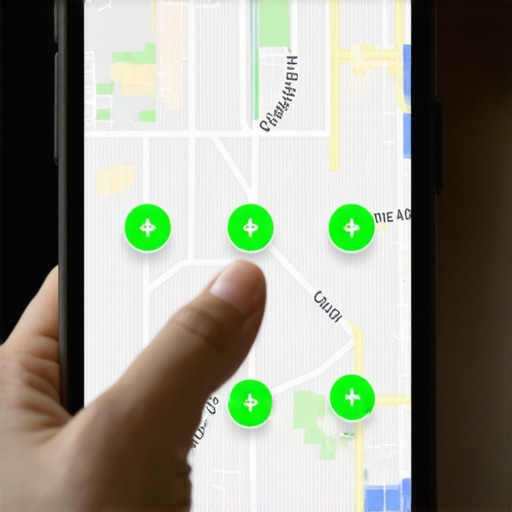
Why the Next Five Years Will Be Won with Photos
If I had to place a bet on the future of optimizing your map pack entry, it would be on visual AI. Google is getting incredibly good at ‘reading’ the images you upload. They aren’t just looking at the file name; they are identifying the tools in your truck, the cleanliness of your office, and the smiles on your team’s faces. I recently discovered that the simple photo tweak that boosts clicks isn’t about professional photography—it is about ‘authenticity’ signals that Google’s Vision AI uses to verify you are a real, local business. We are moving toward a world where ‘search’ is more about what Google sees than what you type. If you want to scale your results, start treating your Google profile like an Instagram feed for your business. I strongly encourage you to try the ‘Tuesday Audit’ for just one month. Look at your profile through the eyes of a stranger once a week, and you’ll catch the errors that would have cost you thousands in lost leads before they ever happen.
The Hardest Lesson I Learned While Chasing Top Rankings
In my early days, I used to think a mappack listing was a ‘set it and forget it’ project. I was wrong. The most painful realization was that Google values a clean database over a fancy website. If your underlying data is messy, your rankings will suffer, regardless of how many five-star reviews you get. I eventually discovered the tactic that finally ended our ranking slump was simply obsessing over data hygiene. You have to realize that to rank business maps effectively, you must be a digital janitor as much as a marketer. Another lightbulb moment? Google’s AI is far more likely to trust a profile that stays active with small, consistent updates than one that does a massive overhaul once a year and then goes silent.
The Toolbelt That Keeps My Business on the Map
You don’t need a massive budget to win at this game, but you do need visibility into what is happening behind the scenes. To avoid flying blind, I always recommend starting with 3 free tools that find hidden keywords to see what your neighbors are actually doing. Beyond that, I personally rely on the Whitespark Local Citation Finder for its sheer accuracy in finding where your data is broken across the web. For staying updated on algorithmic shifts, the Sterling Sky Local Search Forum is my daily read—it is where the real experts talk shop. Finally, if you feel overwhelmed by all the moving parts, following the ultimate blueprint for map pack placement success can help you stay organized without losing your mind.
Start Your Journey Toward Local Dominance Today
Securing a steady local pack entry isn’t about luck or ‘tricking’ an algorithm; it is about proving to Google that you are the most reliable, consistent, and relevant answer for your customers. It takes time, but the payoff of a 24/7 lead machine is worth every minute of auditing. You’ve got the tools and the strategies now to start unlocking map pack visibility for your own brand. Don’t let another week of quiet phones go by. Which of these steps are you going to implement first to protect your map pack placement? Let me know in the comments below—I’d love to hear your story and help you troubleshoot.