
The silence from my phone was deafening. I had just launched a very specialized service, and every keyword tool I touched gave me the same depressing news: “0-10 searches per month.” I almost threw in the towel. I figured the business map pack was a playground reserved for high-traffic giants like plumbers or personal injury lawyers. I spent nearly a year and a hefty chunk of change on a generic SEO agency that treated my niche like a high-volume retail store. It was a total disaster. It wasn’t until I stopped following the generic scripts and started looking at how Google actually treats specialized, low-volume services that the lightbulb finally went off. Today, I am going to show you exactly how to secure a local pack entry even when the experts tell you there is no volume to chase. We are moving past the basic stuff and getting into the specific levers that actually move the needle for businesses like ours.
Is a local pack entry actually worth the effort for you?
You might be thinking that if only a handful of people search for your service each month, the effort of maintaining a mappack listing is a waste of time. I am here to tell you that those few searchers are your most valuable leads. They aren’t just browsing; they have a specific, urgent need that only you can fill. According to research by BrightLocal, a staggering 87% of consumers used Google to evaluate local businesses in 2022, regardless of the industry size. In a low-traffic niche, your map pack placement acts as a massive trust signal that converts at a much higher rate than a standard organic link. Have you ever felt like you are doing everything by the book—uploading photos and responding to the few reviews you get—and yet the map refuses to budge? It is incredibly frustrating, but usually, it means you’re missing the nuances of local relevance.
Stop Being a Generalist to Claim Your Spot
My biggest early mistake was trying to look bigger than I was. I thought by choosing a broad category, I would cast a wider net. Instead, I just became invisible. In niches where search volume is low, the algorithm rewards the specialist. You need to understand how to rank business maps effectively by leaning into your most specific service rather than hiding behind a generic industry label. We are going to look at the exact category adjustments that signal to Google you are the only logical choice for that specific, rare search query. This is how you win when everyone else is ignoring the small opportunities.
Niche local SEO isn’t a game of ‘more’; it’s a game of ‘better’. Think of your mappack listing as a digital storefront in a very narrow alleyway. You don’t need a thousand people walking past; you just need the three people looking for your specific door to find it without a map. To rank business maps effectively in these quiet waters, you have to be the biggest fish in the smallest pond. This requires moving beyond standard settings and manipulating the specific signals that tell Google you are the local authority for a rare request.
Win the Click with Laser-Focused Categories
The first lever is your primary category. Most business owners pick the broadest category possible, thinking it helps them show up more often. In a low-volume niche, that is a ranking death sentence. If you are a specialized ‘Stained Glass Restoration’ expert, don’t just list yourself as a ‘Glass Shop.’ Google’s algorithm uses the primary category as the strongest relevance signal for your map pack placement. By choosing the most specific primary category, you effectively eliminate 90% of your broad-market competition who are fighting over the general terms.
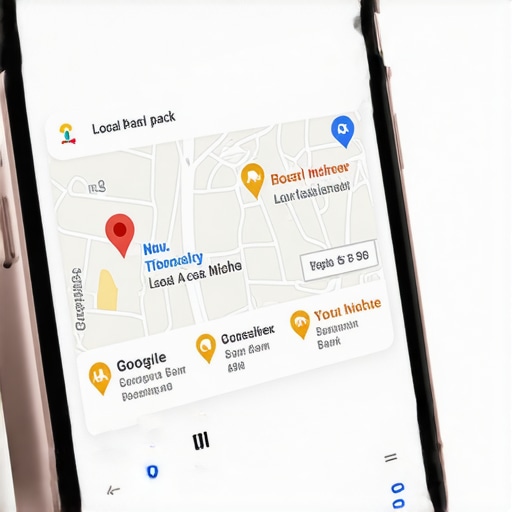
I remember a client who specialized in high-end forensic cleaning. He was originally listed under ‘Cleaning Services’ and was getting buried by house cleaners and maid services. He was getting zero leads from the business map pack. We executed the service category adjustment that finally ends your ranking slump by switching his primary category to the most specific niche label available. It was messy for the first week—his overall impressions dropped because he wasn’t showing up for ‘house cleaning’ anymore—but his phone actually started ringing for the $5,000 jobs he actually wanted. He secured a local pack entry for the high-intent keywords that mattered.
Connect Your Website Content to the Geographic Center
Google doesn’t just look at your profile; it looks at your website to see if it backs up your claims. This is where how to use local service pages to support your map pack placement becomes critical. Your website should act like a local compass. If you serve a specific neighborhood or a specialized niche, your service pages need to mention local landmarks, adjacent businesses, and specific neighborhood names. This creates a ‘relevance web’ that binds your website and your map listing together. If your site mentions the exact intersection where you operate, and your map listing is verified there, the algorithm’s confidence in your location skyrockets.
Ask for Reviews That Mention Your Specific Services
Generic five-star reviews that say ‘Great job!’ are okay, but they don’t help you rank for specific, low-volume keywords. You need ‘keyword-rich’ reviews. When a customer leaves a review, they are providing Google with fresh, user-generated content about your business. We found that the review strategy that actually triggers a local pack entry faster involves prompting customers to mention the specific service they received. Instead of asking for a review, ask them to ‘mention the specific restoration project we handled for you.’ When Google sees multiple users mentioning ‘clock repair’ or ‘vintage restoration’ in their reviews, it starts to associate your profile with those specific search terms, even if they have low monthly volume.
The Photo Meta-Data Myth and Reality
There is a lot of talk about geo-tagging photos, but the reality is simpler: Google’s AI can now ‘see’ what is in your images. If you are a niche provider, upload photos that clearly show the specialized equipment or the unique results of your work. Using the one photo adjustment that increases google profile views instantly—which is simply ensuring your photos have clear, descriptive filenames and high contrast—helps the algorithm categorize your business visually. This visual proof acts as a final nudge to the ranking algorithm that you are, indeed, the specialist the searcher is looking for.
While the basics of categories and photos are vital, there is a deeper layer to the algorithm that most local SEO agencies never touch because it doesn’t fit into a standard monthly checklist. Most people assume that if they are the closest business to the searcher, they will automatically win the mappack listing. This is the ‘proximity myth,’ and in a specialized niche, it can lead you to make some very expensive mistakes. If you are chasing a rare service query, Google cares far more about your ‘prominence’ and ‘relevance’ than how many miles you are from the user’s phone.
Why your proximity to the searcher is only half the ranking story
In high-competition markets like pizza or gas stations, proximity is the primary filter. But for specialized services, Google’s top priority is ensuring the searcher finds a solution, not just the nearest shop. I have seen businesses located ten miles away leapfrog over competitors sitting right next door to the searcher. This happens because the further business has stronger ‘relevance signals.’ This is exactly why your proximity to the searcher is only half the ranking story; if you can prove you are the definitive expert in your niche, Google will expand your ‘ranking radius’ significantly. If you’ve been obsessing over a physical office location, you might be falling for the proximity trap keeping you out of the map pack.

Can you actually outrank a competitor who is closer to the customer?
The answer is a resounding yes, but it requires a contrarian approach to citations. The common wisdom is to buy hundreds of generic directory listings. I’m here to tell you that this is often a waste of money and can even muddy your data. A study by Whitespark has shown that while consistent NAP (Name, Address, Phone) data is a baseline requirement, the sheer volume of low-quality citations has a diminishing return on map pack placement. For specialized niches, why citation volume alone won’t help you outrank local competitors comes down to authority. Google would rather see one link from a niche-specific trade association than fifty listings on ‘Generic-Business-Directory-Texas.com’.
The ‘description’ trap that wastes your time
Here is an ‘oops’ factor that almost everyone falls for: spending hours crafting the perfect, keyword-stuffed business description. I hate to be the bearer of bad news, but why your google business description doesn’t actually affect your ranking is one of the most well-documented facts in local SEO. The description is for the human reader, not the algorithm. If you are stuffing it with keywords in hopes of moving up the map, you are wasting energy that should be spent on how to rank business maps effectively through actual ranking factors like user engagement and local backlinks. Have you ever fallen into this trap, spending hours on a description only to see your rank stay exactly the same? Let me know in the comments. We need to focus on the levers that actually move the needle, like dominating business map pack rankings through behavioral signals and deep local relevance.
I don’t believe in paying for twenty different SEO dashboards that just vomit the same data in different colors. When you are fighting for a local pack entry in a niche where every lead counts, you need precision, not fluff. I rely on a select few minimalist tools that find the ranking gaps your SEO agency missed. For me, the holy grail is a localized grid tracker. If you aren’t using a tool like Local Falcon or the grid view in BrightLocal, you are essentially flying blind. These tools allow you to use a google maps rank tracker to find competitor weak spots by showing exactly where your visibility drops off—sometimes just a block away from your shop. This granular data is what allowed me to identify the one technical fix that restored our map pack placement in days after a sudden algorithm shift. 
How do I maintain high visibility over the long term?
Maintaining a business map pack presence isn’t about one-and-done settings; it is about the ‘Pulse.’ Google wants to see that your business is a living, breathing entity. This is why I follow a simple checklist for moving up in the business map pack every month, focusing on steady updates rather than frantic, once-a-year bursts of activity. According to local search authority Mike Blumenthal, Google’s ‘Openness’ signal—which prioritizes businesses that are currently open and actively engaging—is becoming a massive ranking weight. If your hours are wrong or you haven’t posted a fresh photo in six months, you’re basically telling the algorithm you’ve retired. You have to keep feeding the machine with small, consistent signals to ensure you are dominating business map pack rankings in your area.
Brace for the 2026 Real-Time Pivot
Looking ahead, the landscape is shifting from static data to behavioral reality. I expect how real-time foot traffic data changes google maps seo in 2026 to be the next big hurdle for niche businesses. We are moving toward a world where your map pack placement will be heavily influenced by anonymized location data from users’ phones. Google will know if people who search for you actually end up visiting your location or calling your number. The ‘fake it ’til you make it’ era of local SEO is dying. To stay ahead, you need to focus on genuine interaction. I want you to try one thing today: go into your profile and audit your primary category. If you’ve chosen something broad, switch it to the most laser-focused niche category available and watch what happens to your call volume over the next 72 hours.
The Lessons Only a Zero-Search-Volume Failure Could Teach Me
Looking back at my early struggles, the biggest revelation wasn’t a technical trick; it was realizing that Google actually wants to find a specialist for niche queries. My ‘lightbulb moment’ came when I stopped trying to appeal to the masses and started focusing on the specific intent of my three monthly visitors. First, I learned that a mappack listing isn’t a trophy for the biggest business; it is a tool for the most relevant one. I also discovered that ‘messy’ engagement, like a customer asking a weirdly specific question in the Q&A section, does more for your rank than fifty generic reviews. Most importantly, I realized that chasing broad terms is a fast track to invisibility. When you embrace your niche, you aren’t fighting for a local pack entry against the giants—you are simply claiming the space they are too big to see.
What I Use to Keep My Listing from Falling Off the Map
I have narrowed my strategy down to a few high-impact resources that actually move the needle. I steer clear of bloated SEO dashboards and instead rely on 3 minimalist tools that find the ranking gaps your SEO agency missed. These tools focus on local grid tracking, which is essential because it shows you exactly where your authority drops off. I also regularly consult the work of local search experts who focus on behavioral signals over old-school backlink building. To rank business maps effectively, you need to see what the competition is ignoring. By using a specialized google maps rank tracker to find competitor weak spots, I can pivot my strategy in real-time before my leads start to dry up.
Your Specialized Service Deserves the Spotlight
You have the expertise that broad corporations can’t replicate, and that knowledge is your secret weapon for mastering the business map pack. Don’t be discouraged by low search volumes or the ‘proximity trap’ that favors the guy next door. If you provide the best answer to a specific problem, Google will find a way to put you in front of the right person. It’s time to stop overthinking the algorithm and start proving your local relevance through the specific category and content moves we discussed. Your business map pack dominance is just a few laser-focused adjustments away. What is the most specific, ‘weird’ category you’ve found that actually describes what you do? Let me know in the comments below!