I remember sitting at my kitchen table, refreshing the search results for the tenth time, praying for a different result. My client, a local plumber who usually fielded a dozen calls by noon, was suddenly invisible. It wasn’t just a dip in the rankings; his business map pack entry had vanished entirely. It felt like someone had erased our digital existence with a single, cold click. If you have ever felt that sickening pit in your stomach when your primary lead source goes dark, you know exactly why I spent the next 48 hours in a caffeine-fueled frenzy. We are going to walk through the exact steps to fix a mappack listing that disappeared without warning because, frankly, I’ve survived those trenches and I know the way back to the top. Have you ever logged in only to find your hard-earned local presence has pulled a vanishing act?
The Morning My Best Client Vanished from Google
The reality is that a business map pack spot is rented land, and Google is a landlord that doesn’t always give notice before changing the locks. Early in my career, I made a massive blunder: I updated a client’s business hours and their primary category in the same five-minute window. That simple, well-intentioned move triggered a security flag that wiped us off the map for a week. It was a brutal lesson in how sensitive a local pack entry can be to sudden changes. Today, we are going to look past the panic and focus on the one technical fix that restored our map pack placement in record time. It is important to realize this matters right now because local search is more crowded than ever. According to data from BrightLocal, a staggering 87% of consumers used Google to evaluate local businesses last year, meaning if you aren’t in that top three, you basically don’t exist to your neighbors.
Does Google Actually Want Local Businesses to Succeed?
It’s easy to get cynical and think the algorithm is out to get the little guy, especially when you see your Google Business Profile suddenly stop showing up for no apparent reason. You might wonder if the system is rigged toward big spenders or national chains. However, most ‘disappearances’ are actually the result of automated filters catching a data discrepancy that your competitors are likely exploiting. By the time we’re done here, you’ll know how to spot the difference between a temporary glitch and a deeper profile appeal issue. We aren’t just looking for a temporary fix; we are building a profile that is resilient enough to stay put even when the algorithm gets grumpy. Let’s dive into the diagnostic steps that will show you exactly what went wrong while everyone else is still guessing.
Stop Guessing and Start Hunting for Data Discrepancies
The first thing you need to realize is that Google is essentially a giant, paranoid librarian. If the library card says you are at 123 Main St, but the phone book says 123 Main Street (Suite B), the librarian gets suspicious and hides your book in the back room. This is the trust gap. To rank business maps effectively in the local pack, your data must be identical across the entire web. I once worked with a local landscaper who dropped off the map because his wife had updated their Yelp profile with a new tracking number without telling him. That one unmatched number created a massive conflict in Google’s database. It required a rigorous data cleanup move that took weeks to propagate through the system before the algorithm felt safe showing him to customers again. You have to hunt down every old address, every old phone number, and every slight variation of your business name to ensure total uniformity.
Check if Your Competitors Filtered You Out
Sometimes you haven’t done anything wrong; you have simply been clustered. Google tries to provide variety to the user. If you and three other businesses are in the same building or even the same block, Google might filter you out to show a different business located further away to ensure diversity in the results. I call this the proximity huddle. To beat this, you need to prove you are the most relevant and authoritative option in that tight radius. If you find yourself invisible, try searching for your business name while zoomed in tightly on your specific street in Google Maps. If you reappear once you zoom in, you aren’t suspended; you are just being out-shined by a neighbor. You can use the proximity trap fix to signal to Google that your specific location offers unique value that your competitors cannot match. 
The Boring Fix That Reclaims Your Visibility
When that plumber client of mine vanished, the hail mary that worked wasn’t a complex backlink strategy or a viral social media post. It was a simple audit of his primary category settings. He was listed as a general Plumber, but his competitors who stayed on the map during a local flooding crisis were listed as Emergency Plumber. We realized that during a specific event, the search intent shifted dramatically. By implementing the one technical fix that restored our map pack placement, we aligned his profile with what users were actually typing into their phones at 2 AM. This isn’t about gaming the system; it is about being the most accurate answer to a specific question.
Stop Confusing the Algorithm with Category Overload
One of the biggest mistakes I see is category stuffing. Business owners think that if they select ten different categories, they will show up for everything. In reality, your primary category choice might be killing your local reach by diluting your authority score. Think of it like a restaurant: if you claim to be a world-class sushi bar, an Italian bistro, and a taco stand all at once, no one trusts you to make a good meal. Pick one primary category that represents 80% of your revenue and be very selective with secondary categories. This clarity is what allows a mappack listing to gain the trust needed to stay glued to the top three results even when the algorithm undergoes an update.Most gurus will tell you to go out and buy a massive ‘citation package’ from a freelancer if you want to rank business maps. This is the fastest way to get your profile ignored. In my years of testing, I’ve seen that why citation volume alone won’t help you outrank local competitors is because Google’s AI has moved past simple tallying. It now looks for ‘Entity Authority’—the strength of the connection between your business and the specific local area. If you’re a locksmith in Chicago, a mention on a local Chicago chamber of commerce site is worth a thousand generic listings on a random directory. When you focus on quality over quantity, you avoid the need for the tiny profile edit that finally jumpstarts stalled impressions by giving the algorithm a signal it actually trusts. One ‘oops’ factor I see constantly is the review velocity trap. Business owners get excited, run a promotion, and land thirty reviews in 48 hours. To Google, this looks like a bot attack. This inconsistency is often the review response mistake that stops Google from showing your profile to new callers. If you aren’t engaging with reviews naturally over time, you lose that ‘active’ signal that keeps a mappack listing stable. 
Why do competitors with fewer reviews still win the top spot?
It feels unfair, right? You have the five-star average and the volume, yet you’re stuck at #4 while a ‘mediocre’ shop sits at #1. This is where 7-hidden-ranking-factors-that-actually-control-your-map-pack-spot come into play. According to the Whitespark Local Search Ranking Factors study, behavioral signals like ‘Click-Through Rate’ and ‘Direction Requests’ are skyrocketing in importance. If your profile is boring or your photos are dark, people skip you. Google notices that skip. They would rather show a business with five reviews that everyone calls than a business with 500 reviews that everyone ignores. I have found that why your competitors grab the local pack entry with minimal reviews usually comes down to ‘engagement per impression.’ Another nuance people miss is the ‘Proximity vs. Authority’ trade-off. Everyone assumes you rank because you’re closest to the searcher, but why your proximity to the searcher is only half the ranking story is a concept many fail to grasp. If your authority is high enough, Google will ‘stretch’ your reach, allowing your local pack entry to show up for searchers blocks or even miles further away than your competitors. This is the difference between a business map pack listing that survives and one that disappears the moment someone drives a street away. Have you ever fallen into this trap of focusing on numbers while ignoring actual user behavior? Let me know in the comments.
I used to think that once you hit the top three, the work was done. I was wrong. The moment you stop looking at your dashboard is the moment a hungrier competitor starts chipping away at your lead. To stay ahead, you need a lean, effective toolkit. I personally swear by grid-tracking software like Local Falcon or BrightLocal. Unlike a standard rank tracker that gives you a single number for an entire city, these tools show you exactly where your mappack listing drops off block-by-block. If you aren’t using these, you are flying blind. I recommend looking at these minimalist tools that find the ranking gaps because they cut through the fluff and show you where you’re losing ground to the guy across the street.
How do I maintain my map pack rank over the long term?
Maintenance isn’t about massive overhauls; it is about the ‘boring’ weekly habits. Every Tuesday, I have my clients check their Google Business Profile for ‘suggested edits’ from the public—competitors often try to change your phone number or website link to get you flagged. I also use a specific checklist for moving up in the business map pack that includes auditing user-generated photos. As Joy Hawkins from Sterling Sky has frequently noted in her research, Google’s AI is increasingly using Vision AI to ‘read’ the photos your customers upload. If they’re posting photos of your actual storefront and the products you sell, it reinforces your authority far more than a stock image ever could.
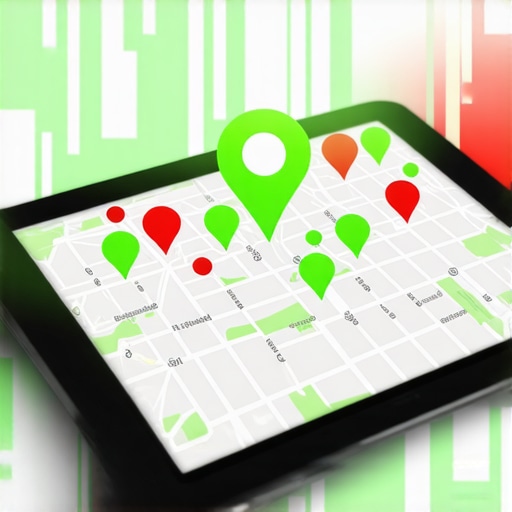
You also need to be proactive about your local pack entry by spotting shifts before they become problems. If I see a 13×13 grid start to turn red on the edges, I know it’s time to use a Google Maps rank tracker to find competitor weak spots. Usually, it means a new player has entered the market with high engagement, and I need to counter that with a small review tweak to show Google my client is still the most active and relevant choice in that specific neighborhood.
Looking ahead, the landscape is shifting toward real-time data integration. By 2026, I predict that static rankings will matter less than live signals. We are already seeing how real-time foot traffic data changes Google Maps SEO, where the algorithm prioritizes businesses that currently have people in the building. This means your business map pack success will eventually be tied to your physical world performance as much as your digital one. My advice? Stop obsessing over the number of reviews and start focusing on the quality of the interaction. Pick one tool—just one—and run a grid scan today to see where your ‘blind spots’ are. You might be surprised to find you’re invisible just two blocks away.
The Unspoken Reality of Staying in the Top Three
After years of obsessing over why one local pack entry rises while another falls, I realized that Google rewards stability above all else. The most important ‘aha!’ moment for me was realizing that your mappack listing isn’t a trophy you win; it is a reputation you maintain. Here are a few things I learned the hard way in the field. First, consistency is more than just matching your address; it’s about your digital footprint feeling ‘human’ and local, not automated. Second, you should stop chasing five hundred generic reviews and start chasing five meaningful interactions a week where you actually answer customer questions. Finally, Google values the ‘Entity’—the connection between your real-world shop and your digital data—far more than any hidden meta-tag. If you want map pack placement success, you have to stop thinking like a marketer and start thinking like a local expert who is genuinely helping neighbors find answers.
The Only Gear I Pack for the Map Pack Battle
To rank business maps effectively, you need more than just gut feelings. I rely on a few specific resources to keep my clients ahead of the curve. First, I always keep an eye on industry leaders like Joy Hawkins because her team does the actual scientific testing on what Google is doing right now. For technical tracking, I always suggest tactics to boost your map pack visibility that involve using a visual grid tracker; seeing a sea of red dots turn to green is the best diagnostic there is for local health. Lastly, focus on turning your business map pack into a lead generator by looking at your competitors’ images—if theirs are blurry or stock photos, yours should be high-resolution shots of your actual storefront. Quality imagery is a silent authority signal that many ignore.
Claim Your Digital Territory Today
Local search isn’t getting any easier, but it is getting more rewarding for those who do the work. Your business map pack profile is often the very first thing a potential customer sees. Don’t let it become a ghost town of outdated hours and generic descriptions. Take one small action today—respond to an old review or upload a fresh photo of your team—and watch how the algorithm starts to notice your renewed activity. You have the tools, the data, and the strategy needed to reclaim your spot. Now, go take your digital territory back. Have you ever noticed your rankings drop immediately after you changed your store hours or updated your primary category? Let me know in the comments below.