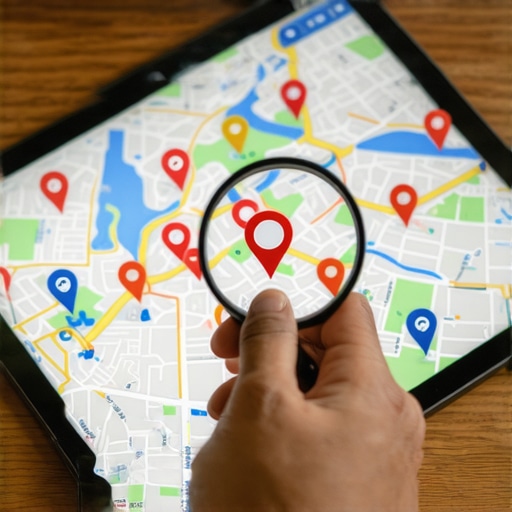
I remember the exact moment I realized my $150-a-month SEO dashboard was lying to me. The charts were glowing green, and the ‘health score’ was a perfect 98%, yet my phone was silent. I walked across the street, pulled out my phone, and searched for my own services. I wasn’t in the top three. I wasn’t even on the first page. A competitor with four reviews and a pixelated profile photo was sitting comfortably in the top spot while I was paying for expensive ghosts. That was my ‘aha’ moment: automation is no substitute for a pair of eyes that actually care about the business. Today, I’m going to show you how to conduct a manual check-up to fix the hidden errors keeping your phone from ringing without spending a dime on fancy software. [IMAGE_PLACEHOLDER]
Stop Paying for Data You Can Find for Free
I wasted nearly a year chasing ‘keyword density’ metrics because a tool told me to, completely ignoring that my primary category was slightly off. It’s a common trap. We get so caught up in the tech that we forget Google’s main job is to serve humans, not algorithms. When you perform a manual audit, you see the ranking gaps your competitors are ignoring because they, too, are likely relying on automated reports. You can spot the tiny inconsistencies—the different phone number on an old Yelp page or a service area that’s too broad—that a bot might overlook but Google’s trust algorithm hates.
Can a manual check-up actually beat an algorithm?
It sounds counter-intuitive. We’re taught that more data is better. But according to experts at Search Engine Land, proximity and relevance are weighted so heavily that a single ‘proximity glitch’ can ruin your visibility, regardless of how many backlinks you have. Automated tools often give a false sense of security by checking boxes rather than checking reality. By taking thirty minutes to look at your mappack listing through the eyes of a customer, you’ll find the ‘leaks’ that no software can. I once found that a simple photo metadata error was stopping my profile from showing entirely in certain neighborhoods. Have you ever felt like you’re doing everything ‘by the book’ but still getting outranked by businesses that don’t seem to be trying? It’s time to find out why.
See What Your Customers See Without the Dashboard Filters
To start, you need to strip away the ‘expert’ interface and go incognito. Think of your automated tools like a weather app that says it’s sunny while you’re standing in a downpour. To find the real truth, open a private browser on your phone while standing near your physical location or within your service area. Search for your primary service—not your business name—and see who Google actually recommends. If you aren’t seeing yourself, you’ve discovered a gap that no amount of link building can fix without addressing the basics. This is where you learn how to rank business maps effectively in the local pack by understanding the immediate proximity of your competitors. 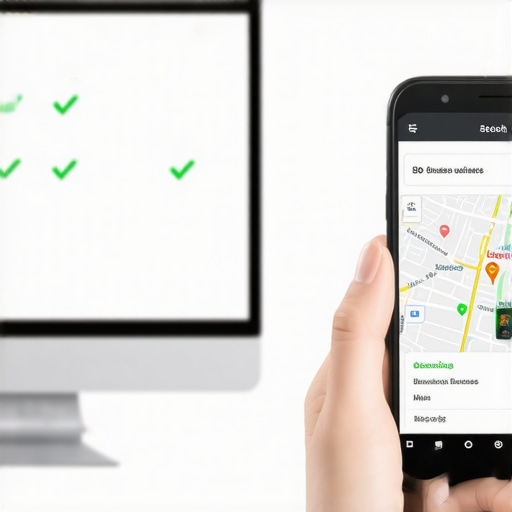
Kill the Ghost Listings and Clean Your Digital Footprint
Google is a trust engine before it is a search engine. If it finds three different versions of your business name or an old landline number on a forgotten directory, it gets ‘confused.’ A confused algorithm won’t risk its reputation by showing you to a user. You must hunt down these data ghosts. I spent three hours once manually searching for variations of a client’s old address. We found an old ‘Yellow Pages’ listing that still pointed to an office they left five years ago. Once we executed the data cleanup move that fixes inconsistent business listing details, their profile jumped four spots in two weeks. It wasn’t magic; it was just removing the noise that made Google doubt their location.
The Service Area Trap That Silences Your Phone
One of the biggest mistakes I see is the ‘Greed Filter.’ Business owners want to show up everywhere, so they set their service area to a 50-mile radius. In reality, this often dilutes your local authority. I remember working with a local handyman who was frustrated because he wasn’t appearing in searches three blocks from his house. It turned out he had checked every single suburb in the county. Google saw him as a ‘jack of all trades, master of nowhere.’ We narrowed his focus to his immediate three zip codes, and suddenly, he secured a local pack entry for the most profitable jobs in his neighborhood. This is a classic example of the service area conflict that secretly blocks your local pack entry 2.
Master the Art of Specificity
When you are auditing your own mappack listing, look at your categories. Are you listed as just a ‘Restaurant’ or specifically as an ‘Authentic Italian Restaurant’? The more specific you are, the less you have to fight for general relevance. It is much easier to apply the exact moves to rank business maps in competitive neighborhoods when you aren’t trying to be everything to everyone at once. Focus on your core strength, verify your phone number matches every single citation online, and watch the trust signals start to align.
Let’s dig deeper into why the standard advice often falls flat. You’ve likely been told that collecting hundreds of five-star reviews is the ultimate way to secure a map pack placement. In my experience, that is only half the truth. I have seen businesses with 200 reviews get consistently outranked by a competitor with only 45. Why? Because Google’s algorithm has evolved to prioritize review velocity and specific keywords within those reviews over the raw total. If your reviews are all three years old, Google sees a stagnant business. You need a steady pulse of fresh feedback to prove you are still relevant today. This is exactly why your competitors with fewer reviews still win the map pack placement while you’re left wondering what went wrong.
More Reviews Won’t Always Save You
The real secret isn’t just getting the review; it’s about what the customer says and how you respond. Most owners leave a generic “Thanks for the business” reply, which is a massive wasted opportunity. Instead, you should be using 5 interaction tactics that actually move your business up the map, such as naturally including service names in your responses. Whitespark’s annual Local Search Ranking Factors study consistently highlights that ‘behavioral signals’—like how often people click to call or ask for directions—are becoming more influential than traditional citations. If people aren’t interacting with your profile, Google assumes you aren’t the best answer for that search query.
Does Google care about what happens after the click?
This is a question I get from savvy clients all the time. The answer is a resounding yes. Google tracks what we call ‘pogo-sticking.’ If a user clicks your local pack entry, looks at your profile for two seconds, and then immediately hits the back button to click your competitor, that tells the algorithm your profile didn’t meet their needs. This is often why your google profile gets views but zero phone calls 2. Your photos might be blurry, or your hours might be missing, causing instant distrust. To win, you must look at the real impact of foot traffic on your local pack entry and ensure your digital storefront is as inviting as your physical one.
Avoid the Proximity Filter Before It Shrinks Your Territory
Here is a trap I see even ‘experts’ fall into: the proximity filter. Many believe that if they just optimize their website enough, they can rank 20 miles away. However, Google has tightened the ‘radius’ of the business map pack significantly over the last two years. If you try to game the system by using a fake office address or a P.O. Box, you aren’t just risking a lower rank; you’re asking for a permanent suspension. Instead of trying to fake your location, you need to learn how to fix the proximity trap keeping you out of the map pack 2 by building local relevance through geo-targeted content and community-specific backlinks. Have you ever fallen into this trap of trying to rank too far from your actual shop? Let me know in the comments. It’s a frustrating cycle, but the exact moves to rank business maps in competitive neighborhoods always involve proving to Google that you are the most trusted local authority in a tight, concentrated area before trying to expand.
I often hear business owners complain that they hit the top three only to slide back into obscurity within a month. It’s a frustrating cycle, but it happens because they treat local SEO like a one-time project instead of a living asset. Once you have cleared the initial hurdles, you need a strategy for keeping it working. If you don’t stay active, Google begins to doubt your relevance compared to the new guy down the street who is posting updates every day. To avoid this, I follow the checklist for fixing a stagnant mappack listing to ensure my profile never looks like a digital ghost town.
Tools That Show You the Cold Hard Truth
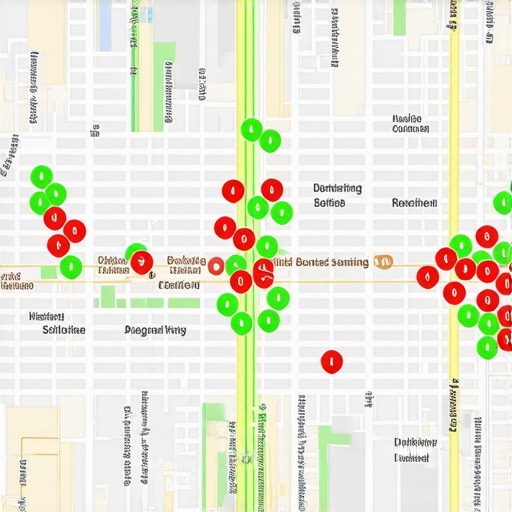
I don’t trust standard rank trackers that give you a single number for a city. They are fundamentally flawed because they don’t account for the proximity filter we discussed earlier. Instead, I rely on 3-minimalist-tools-that-find-ranking-gaps-your-agency-missed to see exactly where my visibility drops off. My weapon of choice is a local grid tracker. Tools like Local Falcon or BrightLocal’s grid tool allow you to see your map pack placement across a map of your city in a 5×5 or 7×7 grid. If you are ranking #1 at your front door but #10 two blocks away, you have a proximity issue, not a content issue. This is the only way to truly learn how to use a google maps rank tracker to find competitor weak spots 2 and adjust your strategy accordingly.
Beyond tracking, I am a firm believer in the power of visual evidence. I personally use a simple smartphone to take ‘behind the scenes’ photos once a week. It sounds basic, but Joy Hawkins of Sterling Sky has documented that high-quality, relevant photos are one of the most underrated conversion factors in local search. I’ve found that the simple photo tweak that boosts clicks from the business map pack is often just about showing the actual people behind the business, which builds immediate trust that a stock photo never could.
How do I maintain my map rank over the long haul?
Maintenance comes down to consistency in two areas: engagement and fresh data. I set a calendar reminder to respond to every single review—positive or negative—within 24 hours. This signals to Google that the business is active and cares about the customer experience. I also use proven tactics to boost your map pack visibility today by frequently updating the ‘Google Updates’ section with current offers or news. If you let these sections sit idle, you are effectively telling the algorithm that you’ve closed shop for the season. Remember, the role of user behavior in map pack placement success is massive; if users see a ‘dead’ profile, they won’t click, and your rank will suffer.
Prepare for the AI Shift in Local Search
Looking ahead, the trend is moving toward ‘Search Generative Experience’ (SGE). Google’s AI is getting better at reading the *sentiment* of your reviews and the *context* of your photos. In the future, simply having the right keywords won’t be enough; you’ll need to prove you are the best answer through a high volume of specific, high-quality interactions. My prediction is that local pack entry will soon be dominated by those who can generate ‘justifications’—those little snippets that say ‘Their website mentions…’ or ‘A reviewer said…’—more effectively than their peers. If you want to stay ahead, I highly recommend you try one specific advanced tip: go through your last ten reviews and see if you can naturally weave those specific services into your responses today.
What Most Agencies Won’t Admit About Winning the Map Pack
Over the years, I’ve realized that the ‘set it and forget it’ mentality is the quickest way to lose your map pack placement. Here are the three hardest truths I had to learn the hard way:
- Proximity is a cruel master: You cannot rank 20 miles away just by adding keywords; you have to prove you are a neighborhood fixture through local interactions.
- Activity beats history: A profile with 500 old reviews will eventually lose to the hungry newcomer getting five reviews a week.
- Software is a guide, not a god: If your dashboard says you are ranking but your phone isn’t ringing, trust your phone every single time. This is usually the real reason your map pack ranking isn’t generating leads despite the green charts.
The Only Three Shortcuts I Actually Trust
If you want to stop guessing and start winning, you need tools that show the ground-level truth. I never start a month without checking a local grid tracker to see exactly where my business map pack visibility ends. I also lean heavily on real-world visual proof. Instead of high-end photography, I use my phone to capture the photo update that increased our google profile clicks fast by showing real work in progress. Lastly, keep an eye on industry leaders like Whitespark or Sterling Sky to understand the macro shifts in local pack entry logic before they hit your market. These sources helped me develop the ultimate blueprint for map pack placement success that doesn’t rely on luck.
Take Back Your Local Territory Before Tomorrow
You don’t need a massive marketing budget to dominate your neighborhood. You just need to be the most active, accurate, and authentic choice in the eyes of the algorithm. By following a simple checklist for moving up in the business map pack every month, you can outpace competitors who are still waiting for their expensive agencies to send a report. It’s time to stop paying for ghosts and start to rank business maps based on real human trust. Your customers are already looking for you—make sure they can actually find you. Have you tried a manual search from a different part of town lately? What did you find? Let me know in the comments below.