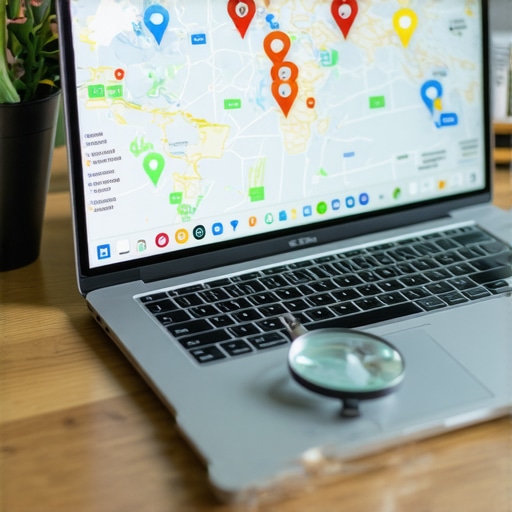
I remember sitting in my office three years ago, staring at a silent phone and wondering why the guy down the street—who didn’t even have a website—was getting all the calls. I had the five-star reviews and a fancy logo, but when I searched for my services, my business was nowhere to be found. I was completely missing out on that coveted map pack placement. It was a ego-bruising realization: I was failing at the simple, boring task of listing management that I thought I could just skip. I had assumed Google was smart enough to figure it out on its own. I was wrong. Today, I’m going to show you how to stop being invisible and finally claim your spot in the local search results.
Stop Letting Your Competition Win by Default
When I first started trying to rank business maps for my own shop, I made the classic mistake of thinking quantity trumped quality. I blasted my name across every directory I could find, but I wasn’t careful. I used “St.” on one site and “Street” on another. I even had an old office landline floating around on some ancient listings. That tiny NAP error that costs you a top 3 spot was quietly sabotaging my visibility. Consistency isn’t just a buzzword; it’s the foundation of your entire business map pack strategy. According to data from BrightLocal, nearly 87% of consumers used Google to evaluate local businesses last year, which means if your data is messy, you are essentially closing your doors to 9 out of 10 neighbors. Have you ever checked your own business across five different sites only to find three different phone numbers? If you have, you’re not alone, but you are losing money every single day.
Is this really worth all the extra effort?
You might be thinking that spending hours cleaning up digital paperwork sounds like a chore you’d rather delegate to a 2030 version of yourself. I get it. But the truth is that a solid local pack entry isn’t a trophy you win once; it’s a territory you have to defend. When I finally sat down and used a checklist for fixing a stagnant mappack listing, my impressions didn’t just grow—they exploded. I stopped being a ghost and started being a local authority. By fixing the discrepancy devaluing your business listing, you’re giving the algorithm the green light to trust you. We are going to dive into the exact steps to audit your mappack listing so you can stop wondering where your customers went and start seeing them walk through your front door.
The Direct Path to Local Dominance
Think of your business map pack presence as a giant game of ‘Telephone.’ Google is the listener at the end of the line. If five different directories tell Google a slightly different version of your name or address, the signal becomes garbled and unreliable. By the time it reaches the listener, the signal is too weak to rank business maps effectively. When I first audited my own profile, I found my business listed as ‘Joe’s Plumbing’ on Yelp and ‘Joseph’s Plumbing & Drain’ on a local Chamber of Commerce site. It felt like a small detail, but to an algorithm, these were two different entities competing for the same spot. Imagine trying to find a friend’s house but they gave you three different zip codes; you’d eventually give up and go home. That’s exactly what Google does when your citations are a mess.
Fix the Foundation with a Data Cleanup
The very first thing you need to do is perform the data cleanup move that fixes inconsistent business listing details. You aren’t just correcting typos; you are building digital trust. If your address is ‘Suite 200’ in one place and ‘#200’ in another, you are creating unnecessary friction. Last year, I spent a grueling Saturday afternoon matching every single mention of my business to the exact format found on my official utility bill. The result was almost immediate. Within two weeks, my mappack listing stopped bouncing between page one and two and finally stayed put in the top results. Consistency is the secret sauce that most competitors are simply too lazy to cook.
Choose Your Primary Category with Precision
Your primary category is the most powerful lever you have, yet most owners treat it like an afterthought. I once worked with a boutique gym that had ‘Fitness Center’ as their primary category. They were buried under huge national chains. We realized they specialized in Pilates, so we made the service category adjustment that finally ends your ranking slump by switching their primary to ‘Pilates Studio.’ Almost overnight, their local pack entry for high-intent searches skyrocketed because they were no longer fighting for the generic ‘Fitness’ term. You have to ask yourself: am I trying to be everything to everyone, or am I the specific answer to a customer’s problem? If you aren’t sure, you might find that your primary category choice might be killing your local reach without you even realizing it. Think of it like a library: if you put your book in the general ‘Non-Fiction’ section, it’s lost. If you put it in ‘Mid-Century Architecture,’ the right people find it instantly. 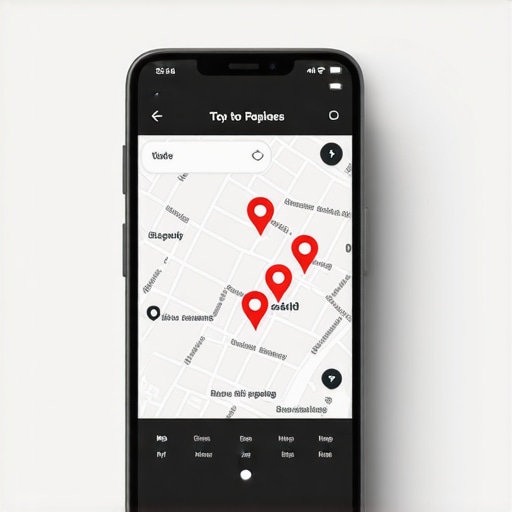
Visual Cues That Force Clicks
Google has evolved into a visual search engine. If your profile looks like a ghost town with one blurry photo of your storefront from five years ago, why would anyone click? I’ve seen cases where how a simple photo update can trigger a new local pack entry just by signaling to Google that the business is active and relevant. It’s not about hiring a professional photographer; it’s about authenticity and recency. I once uploaded a raw, behind-the-scenes video of our team working, and it became our most viewed asset in days. That’s the simple photo tweak that boosts clicks from the business map pack because it builds an immediate human connection. When you show the ‘real’ version of your business, you improve your map pack placement because users engage more, and consistent engagement is the ultimate ranking signal for local search.
More Reviews Won’t Save a Bad Strategy
Everyone tells you that reviews are the holy grail of your business map pack strategy. If you just hit 100 five-star ratings, you’ll be set for life, right? In my experience, that’s a dangerous half-truth. I’ve seen businesses with 500 reviews get outranked by a competitor with 20. Why? Because why good reviews arent enough to rank business maps anymore is a reality dictated by engagement and relevance. Google looks at the velocity of incoming feedback and the specific keywords tucked inside those testimonials. If your reviews are all generic ‘Great service!’ and your competitor’s reviews mention specific neighborhood names or services, they will likely snag the local pack entry instead of you.
Why does your ranking vanish when you’re just three blocks away?
This is where things get technical. You might look at your dashboard and see a #1 rank, but why most local keyword tracking tools give a false sense of security is because they often measure from a single point—usually your office. In reality, your map pack placement is a ‘bubble’ that expands and contracts throughout the day. Joy Hawkins from Sterling Sky has often noted that proximity remains a dominant factor, but it is often manipulated by searcher behavior. If you haven’t optimized for your surrounding neighborhoods, you might fall victim to the proximity glitch that destroys your map pack placement, where your visibility falls off a cliff the moment a customer crosses a main intersection. 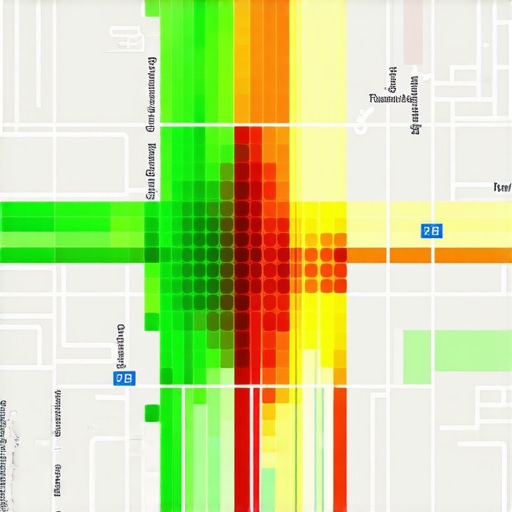
Avoid the Deadly Name-Stuffing Trap
I’ve seen so many business owners get desperate and try to rank business maps by stuffing keywords into their business title. They change ‘Joe’s Plumbing’ to ‘Best Emergency Plumber Near Me Joe’s Plumbing.’ While this might give you a temporary boost, it is a high-stakes gamble. Google is aggressive about suspensions now, and the hidden reason your profile suspension appeal got rejected is often because your legal paperwork doesn’t match your spammy digital name. You have to learn how to stop the proximity filter from hiding your business through legitimate geo-signals, not by cheating the system. Have you ever fallen into this trap of over-optimizing until it hurts? Let me know in the comments. We also need to talk about the real reason your map pack ranking isnt generating leads even when you’re in the top three—it’s usually a lack of ‘conversion triggers’ like booking buttons or Q&A sections. If you’re facing a situation where how to handle a competitor moving closer to your territory is your main concern, focus on local authority rather than just proximity.
Once you’ve shifted your focus to authority, the real challenge is keeping that momentum alive. I’ve seen countless owners hit the top three only to disappear a month later because they stopped doing the work that got them there. This is why most local pack entry strategies fail after three months—the false sense of security that comes with a temporary win. To sustain your map pack placement, you need a system that alerts you to changes before they become catastrophes. I personally use a recurring calendar reminder to audit my ‘suggested edits.’ Competitors or even bored users can suggest your shop is ‘closed’ or change your website link to a dead page. If you aren’t vigilant, you’ll find why your storefront is suddenly missing from the map pack after a single weekend of neglect.
Stay at the Top While Others Fade Away
I don’t believe in checking rankings every hour, but I do believe in checking them correctly. Standard trackers are often misleading. I’ve realized why most local keyword tracking tools give a false sense of security is that they only give you a single data point from your own office chair. To truly rank business maps, you need a grid-based view. I use tools like Local Falcon or BrightLocal’s local search grid to see my visibility in a five-mile radius. It’s eye-opening to see you are #1 in your parking lot but #10 just two blocks away. This helps you identify the exact reason your mappack listing is hidden from nearby customers in high-value neighborhoods where your competitors might be gaining ground. 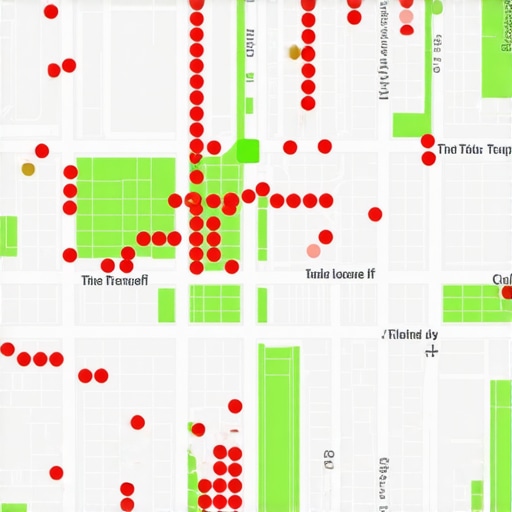
How do I keep my mappack listing dominant month after month?
The secret isn’t more software; it’s more local signals. I’ve found that using 3-minimalist tools that find ranking gaps your agency missed allows me to focus on ‘geo-relevance’ rather than just technical SEO. In the next few years, I predict that Google will rely even less on your profile data and even more on what the rest of the web says about you. Google’s own official documentation states that prominence is based on information Google has from across the web, like links, articles, and directories. This means that how local brand mentions can help you rank business maps better will soon be the deciding factor between a #1 spot and obscurity. If you aren’t getting mentioned by the local high school football team or the neighborhood blog, you’re missing out on the most powerful trust signals available.
The Essential Toolkit for Local Dominance
Scaling your reach requires you to how to increase google profile clicks without new reviews by using every feature available, including the Q&A and ‘Updates’ sections. I follow a simple checklist for moving up in the business map pack every month that ensures I’m not just a static listing, but a living business. My biggest piece of advice for those looking to scale? Go to your profile right now and look at the ‘Questions & Answers’ section. If you have unanswered questions, answer them immediately. If you don’t have any, have a real customer ask a question about your most profitable service. It creates a ‘conversion trigger’ that forces the algorithm to take notice of your active engagement.
Lessons from the Local Search Trenches
If there is one thing I’ve learned after years of obsessing over these listings, it’s that Google values activity more than history. I used to think a ten-year-old profile was an iron-clad shield, but I was wrong; I’ve seen brand-new shops snag a local pack entry simply because they were more active in responding to customers and updating their photos. Another big realization was that your rank is never static. If you experience a sudden dip, you need the move that recovers a mappack listing after a sudden ranking drop to get back on track quickly. Finally, never ignore the ‘neighborhood’ factor because the exact reason your mappack listing is hidden from nearby customers is often a lack of localized mentions on other community websites rather than a problem with your profile itself.
Tools That Actually Move the Needle
I don’t believe in over-complicating things with expensive software that generates confusing reports. Start with the best way to audit your business map pack profile without expensive tools to find the low-hanging fruit and errors. For monitoring, I swear by grid-based tracking tools like Local Falcon because they reveal the ‘proximity bubble’ that standard dashboards hide. I also highly recommend using 3-minimalist tools that find ranking gaps your agency missed to stay ahead of the competition without drowning in unnecessary data. My most important ‘tool’ is actually my phone calendar; I set a weekly alert to check for ‘suggested edits’ by competitors, which is a manual task no software can perfectly automate for you.
Claim Your Spot in the Neighborhood
Securing your map pack placement isn’t just about a temporary spike in phone calls; it’s about building a digital asset that works for you while you sleep. It takes patience to rank business maps correctly, but the long-term ROI of being the most trusted name in your zip code is unbeatable. You’ve got the strategy and the tools—now you just need the consistency to see it through and maintain your business map pack dominance. Have you ever noticed your ranking drop the moment you stop posting updates or responding to reviews? Let me know your experience in the comments below.