I remember sitting at my kitchen table at three in the morning, staring at my phone screen until my eyes blurred. I was refreshing a search for my own services over and over. One minute, my business was sitting pretty at the very top of the local pack. Ten minutes later? We were on page two, buried where no one looks. It felt like I was being gaslit by an algorithm. I had the reviews, I had the photos, and I had the local address, yet my mappack listing was dancing around like a caffeinated toddler. It drove me crazy. I felt like I was failing my team because I couldn’t figure out why we were invisible half the time. It turns out, I was looking at all the wrong things.
[image]
Why Your Map Spot Acts Like a Yo-Yo
You’ve probably been there. You check your ranking from the office, and everything looks golden. You check it from home, and you’ve vanished. This isn’t just bad luck; it’s usually tied to something much deeper than just your average ‘SEO factors.’ Early on, I made the huge mistake of thinking that more reviews would solve everything. I spent thousands on review software, only to realize that good reviews aren’t enough to rank business maps anymore. The truth is, Google’s ‘Vicinity’ update changed the game, making proximity and ‘searcher context’ more aggressive than ever. According to Search Engine Land, proximity is now a dominant factor in local rankings, which is why your spot fluctuates based on where the person is standing and the specific time of day.
Today, I want to pull back the curtain on the real reason your business map pack spot keeps jumping. We’re going to look at the hidden filters that Google uses to ‘de-dupe’ or hide results that it thinks are redundant. If you’ve ever wondered why a competitor with fewer reviews is beating you, this is likely why. We are going to find a way to blueprint your map pack placement success so you can finally stop stressing over every minor shift. The goal is stability, not just a temporary spike.
Is this constant jumping actually worth the stress?
It’s easy to feel like you’re chasing a ghost. You might even ask if a local pack entry even matters if it’s this unstable. The short answer? Yes. But the way we track it is often wrong. Most of us are using tools that give a false sense of security because they don’t account for the ‘yo-yo’ effect of the proximity filter. Have you noticed your ranking drops the second you step away from your storefront? If so, you aren’t alone, and it’s usually a sign that your profile’s authority isn’t strong enough to overcome the geographic filter. I want to show you how to rank business maps effectively by focusing on signals that tell Google you are relevant to the entire city, not just the block you’re on. Does your ranking feel like it’s on a rollercoaster right now, or have you managed to stay steady in the top three?
Before we dive into the technical fixes, we need to understand that map pack placement isn’t a trophy you win once; it’s a spot you have to defend with better data and consistent signals that prove you are the most relevant answer for a user’s specific search intent.
How to Push Your Signal Beyond Your Storefront
Think of your business like a local radio station. If your ‘antenna’ is weak, people can only hear your broadcast when they are standing right next to the tower. This is exactly what happens with the proximity trap. To stop your rank from dropping the moment you leave your driveway, you have to build relevance that extends into the surrounding neighborhoods. This starts with how you handle your service area and local signals. Most people think they need to blanket the city in backlinks, but I’ve found that simply learning how to fix the proximity trap keeping you out of the map pack usually comes down to strengthening your entity’s connection to specific zip codes through localized content and hyper-local mentions.
Stop Confusing the Algorithm with Category Overload
I once worked with a local plumbing contractor who was struggling to secure a local pack entry for his main service. When I looked at his profile, he had selected ten different categories, from ‘heating contractor’ to ‘septic tank cleaner.’ He thought he was being thorough; Google thought he was a jack-of-all-trades with no real specialty. We stripped it down to his primary core service and two secondary ones. This was the service category adjustment that finally ends your ranking slump. Within forty-eight hours, his business map pack position stabilized because Google finally understood exactly what he did best. It was a messy weekend of auditing, but the simple change that gets your business map pack placement back is often just about providing clarity over quantity.
Fix the Quiet Data Leaks Draining Your Authority
Consistency is the invisible anchor of map pack placement. If your phone number or business name is slightly different on an old directory from five years ago, it creates friction. I remember a specific case where a clinic disappeared from the maps because an old office suite number was still floating around on three obscure citation sites. It sounds trivial, but how outdated citations stealthily damage your map pack placement is a real phenomenon that confuses the search engine’s trust in your location. Fixing these discrepancies was the one technical fix that restored our map pack placement in days after weeks of silence. You can use 3 free tools that find hidden keywords and data gaps to spot these errors before they tank your visibility.
Make Your Profile Impossible to Ignore
Google doesn’t just look at what you say; it looks at how users interact with your mappack listing. Every time someone clicks ‘Call’ or scrolls through your photos, it sends a signal that you are a high-quality result. This is why you should stop chasing citations and focus on your business map pack photos. High-resolution, real-world images of your team and your work generate more clicks than a generic logo ever will. Understanding the role of user behavior in map pack placement success is the key to moving from the bottom of the list to the top three. When people engage with your profile, Google recognizes you as a ‘prominent’ answer, which helps you rank business maps even when the searcher is a few miles further away than usual.
We often talk about reviews as the end-all of local SEO. But in my experience, I’ve seen businesses with 500 reviews get smoked by a competitor with 40 and a cleaner digital footprint. The biggest myth I see beginners fall for is the idea that keyword stuffing your business name is a permanent shortcut to a better mappack listing. While it might give you a temporary boost, it is the most common way to trigger a manual review or a sudden profile drop. I’ve learned that why your mappack listing needs more than just a keyword-rich name often comes down to how Google views your brand as a unique entity, not just a string of search terms.
Stop Obsessing Over Review Volume Alone
Everyone tells you to chase more reviews, but they rarely mention the quality and velocity of those reviews. If you get twenty reviews in two days and then none for two months, Google’s algorithm flags that as unnatural. It’s better to have a steady drip of engagement than a sudden flood. This is why why most local keyword tracking tools give a false sense of security; they show you a snapshot in time without accounting for the long-term health of your profile’s engagement metrics. I once saw a client lose their map pack placement simply because they stopped responding to reviews, signaling to Google that the business was no longer active.
Can you actually outrank a competitor who is closer to the searcher than you are?
The answer is a resounding yes, but it requires overcoming the Vicinity filter. According to the Whitespark Local Search Ranking Factors study, while proximity is a top factor, ‘on-page signals’ and ‘behavioral signals’ are what allow you to reach further out from your physical address. To rank business maps successfully in the next town over, your website needs to prove that you are the authority there through localized landing pages and geographically relevant backlinks. If you don’t do this, you’ll find that the service area conflict that secretly blocks your local pack entry will keep you tethered to a three-block radius of your office.
Don’t Let Your Service Area Pages Kill Your Visibility
Here is a trap most service-based businesses fall into: they list every single city in a hundred-mile radius. This actually dilutes your authority. Google looks at your primary address and compares it against your claimed service areas. If they don’t match or seem unrealistic, your local pack entry will likely be suppressed. I recommend focusing on a smaller, tighter radius and building deep relevance for those specific areas. This is one of the hidden moves to secure a local pack entry for service businesses that actually move the needle. When you try to be everywhere, you end up being nowhere. Have you ever fallen into this trap of over-extending your service area? Let me know in the comments.
Ultimately, mastering business map pack keys to top map pack placement requires a shift from ‘gaming the system’ to ‘proving the value.’ If you focus on the technical health of your profile and the genuine interactions of your customers, you’ll build a business map pack presence that doesn’t just rank, but actually converts.
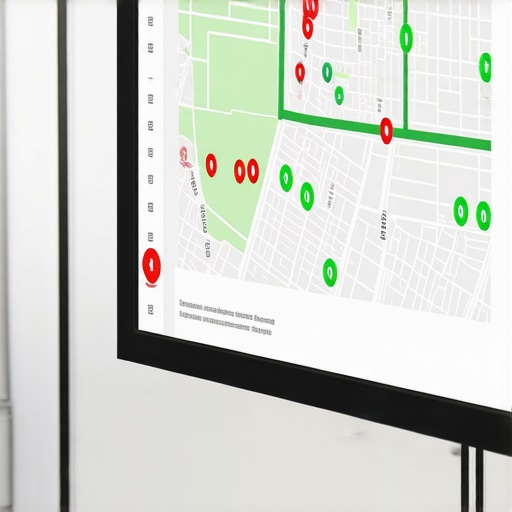
I’ve wasted more money than I’d like to admit on flashy dashboards that promised to help me rank business maps. The problem is most of them just scrape a single point in space. To really scale your mappack listing, you need a grid view. I personally use tools that allow me to see the exact street corner where my visibility dies. If you’re still looking at a single number for your ranking, you’re flying blind. Real success comes when you use local SEO tools that actually show your real ranking across a wide geographic area rather than just a single zip code.
Once you have the data, you need a system. I see so many business owners get a local pack entry and then immediately take their foot off the gas. This is exactly why most local pack entry strategies fail after three months. They treat it like a finish line rather than a position to be defended. In reality, your competitors are watching you. I have a specific routine I follow every thirty days. It’s a checklist for moving up in the business map pack that involves auditing my Q&A section and checking for new ‘near me’ keyword trends that the algorithm is rewarding.
How do I keep my business map pack spot year after year?
The secret isn’t a magic trick; it’s consistency. There is a simple business listing management task you are probably skipping: checking your ‘Suggested Edits.’ Competitors or even well-meaning users can suggest changes to your hours or categories that Google might auto-accept without notifying you. If you aren’t there to catch them, your map pack placement can tank overnight because of a single ‘closed’ tag on a holiday you actually worked. Consistency in monitoring is the only way to safeguard your business map pack presence.
Looking ahead, I see Google moving toward a more ‘entity-based’ understanding. As Joy Hawkins from Sterling Sky has noted in her research on the ‘Open Now’ filter and category influences, Google is getting better at detecting if a business is actually relevant to the user’s immediate intent beyond just keywords. In the future, I expect the business map pack to integrate even more deeply with your website’s real-time inventory and booking availability. If you want to stay ahead, you need to be mastering business map pack keys like merchant center integration now, rather than later.
My best advice is to stop overcomplicating the tech and start focusing on the data. Pick one thing this week: go and audit your primary category and see if a competitor has recently moved into your space or changed their service tags. Then, use the best way to audit your business map pack profile without spending a dime on enterprise software. If you can commit to twenty minutes of maintenance a week, you’ll be ahead of 90% of your local competition.
What Most SEO Agencies Don’t Say About That Top Three Spot
After years of obsessing over every pixel of the map, I’ve realized that mappack listing stability is actually a bit of a myth. The biggest takeaway I can give you is that Google values freshness and activity far more than a static set of citations. I’ve learned to be skeptical about the truth about third-party business map listing services that promise instant, permanent results. Real authority is built when you stop trying to set and forget your profile and start treating it as a live extension of your storefront. Movement in the rankings is often a sign that the algorithm is testing your relevance against new searchers.
[image]
I also discovered that your website’s organic health is the silent engine behind your map pack placement. If your site is slow or doesn’t mention your city naturally, your map pin will always struggle to reach the next neighborhood. There are specific map pack listing secrets every local business should know, and the most important one is that local relevance isn’t just about your address—it’s about how many local digital footprints you leave across the community through localized blog content and neighborhood-specific landing pages.
The Only Resources I Still Use to Stay Ahead
I don’t believe in using fifty different dashboards to track one business. I keep my toolkit lean and focused on data that actually leads to phone calls rather than just pretty charts. First, I always keep an eye on industry leaders like Sterling Sky for real-world testing of how Google actually behaves. For technical audits, I rely on a mix of local grid trackers that show visibility street-by-street.
If you’re feeling overwhelmed by the technical side, you can find my favorite 7 local SEO tools that show your real ranking to see what actually works for me without the fluff. I trust these because they don’t just give you a vanity number; they show you where your visibility starts to fade at the edge of town. These are the same proven tactics to boost your map pack visibility today that helped me stop guessing and start growing my local lead volume consistently.
Stop Watching the Pin and Start Serving the People
At the end of the day, Google’s goal is to provide the best user experience. When you focus on getting better photos, responding to every question with helpful detail, and making your profile truly useful for a neighbor, the algorithm eventually rewards that human-centric approach. Your business map pack presence is a reflection of your reputation in the community. Don’t be afraid to experiment with your primary categories or update your service descriptions as your business evolves. The map is always moving, and as long as you are moving with it, you’ll find your way to the top and stay there. Have you noticed your ranking drops on the weekends, or is it steady throughout the week? Let me know in the comments below!