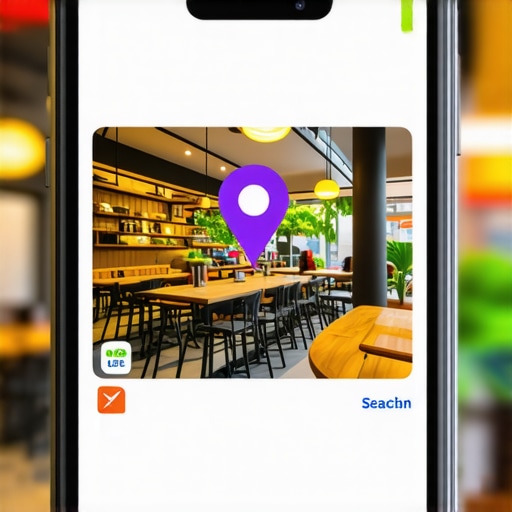
I sat in my truck for twenty minutes, refreshing my phone until my thumb hurt, and I just couldn’t believe it. There I was, buried in the more businesses graveyard while my newest competitor—a guy who barely knew a wrench from a screwdriver—was hogging the spotlight. My map pack placement was sinking, and I was doing everything by the book. Or so I thought. I had the NAP consistency, the citations, and a handful of five-star reviews. But his profile had something mine didn’t: it moved. He had these grainy, simple videos of him talking to customers, and Google was absolutely eating it up.
Stop Treating Your Profile Like a Static Billboard
I made a massive mistake early on by thinking that a few polished photos were the finish line. I spent hours focusing on my business map pack photos, making sure the lighting was perfect. It wasn’t enough. In a world where everyone is scrolling at 100 miles per hour, a static image is just background noise. When I finally swallowed my pride and started using the local pack entry hack using video, my visibility didn’t just crawl up; it leaped. Today, I’m going to show you why that motion is the signal Google is waiting for to finally give you that top map pack placement you’ve been working for. Have you ever felt like you’re doing all the right SEO moves but still feel invisible to your neighbors?
Do customers really care about a 30-second clip?
You might be thinking that people just want a phone number and an address. It’s a fair point. I used to think the same thing—that video was just for influencers. But the data tells a different story. According to research from Wyzowl, 91% of businesses use video as a marketing tool in 2023, and users are significantly more likely to engage with a profile that shows the faces behind the brand. When a potential customer sees a video, they stop scrolling. They get a feel for your voice, your shop, and your personality. It builds a bridge of trust that a JPEG simply cannot manufacture.
How Video Signals Google That You Are the Real Deal
Google’s algorithm is obsessed with real-world signals. They want to know you aren’t a ghost kitchen or a lead-gen bot living in a different state. By uploading video, you are providing a layer of verification that is incredibly hard to fake. Have you ever felt like your profile is stuck in neutral no matter how many reviews you get? That is often because your engagement metrics are flat. Video forces engagement. It keeps people on your listing longer, and that dwell time is a massive hint to the algorithm to rank business maps effectively. It is not just about the viewers; it is about proving you are an active, living part of the local community. [image-placeholder]
Film the Mess to Prove You Are Real
Stop trying to be a filmmaker. Google doesn’t want a Super Bowl commercial; they want a timestamped proof of life. When I first started, I tried to script my videos. I looked like a robot reading a teleprompter, and nobody watched. Then, during a particularly nasty HVAC repair in a cramped attic, I just hit record on my phone. I showed the rusted unit, the sweat on my forehead, and the specific part I was replacing. That raw 15-second clip did more for my the local pack entry hack using video than any polished ad ever could.
Show the Street View and the Door
One of the best map pack listing secrets is starting your video outside. Walk from the sidewalk into your front door. This bridge-building between the digital map and the physical world is a massive green flag for the algorithm. It confirms your location better than any postcard ever will. 
Connect Your Digital Dots for Better Rankings
Your website and your map profile are two halves of the same coin. If your website is slow or lacks local context, your map placement will suffer. I noticed that why your local pack entry depends on your website’s loading speed more than you would think. Google tracks the user’s journey from the map to your site. If they bounce because the page will not load, Google assumes you are not a good answer for that search.
Update Your Attributes Every Single Month
Most owners set their attributes and forget them. This is a mistake. To rank business maps effectively, you need to show constant activity. I make it a habit to check my dashboard every thirty days because why your business map pack profile needs fresh attributes monthly. Google often rolls out new options—like ‘Identifies as veteran-led’ or ‘Wheelchair accessible seating’—and being the first to check those boxes gives you a subtle edge over the guy down the street who has not logged in since 2019.
Feed the Algorithm Real Signal Data
You have to understand that why your local pack entry requires real-world signal data. This means getting people to actually interact with your listing while they are physically near your shop. I once ran a small ‘check-in’ promotion where customers got a free coffee if they opened our map listing while standing at the counter. Within two weeks, our map pack placement for ‘coffee near me’ shot from the middle of page two to the top three. Google saw a cluster of mobile devices all engaging with my profile at my specific GPS coordinates. That is a signal you cannot buy with SEO keywords.But here is where most people trip over their own feet. They get so caught up in the signals that they forget the fundamentals have changed. Everyone tells you to go out and get 500 citations from every corner of the web. I am here to tell you that is largely a waste of your Saturday. Ten years ago, citations were the king of the hill, but today why your citations alone won’t improve your map pack placement is a reality you have to face. Google has moved beyond counting mentions; it now weighs the quality and relevance of the entity.
Ditch the Citation Obsession Already
I used to spend hundreds of dollars on ‘listing sync’ services, thinking that having my name on some obscure directory in another country would help me rank business maps effectively. It didn’t. In fact, a study by Whitespark confirms that citation signals have been on a steady decline in importance for years. Instead, focus on the ‘big three’—Google, Apple, and Bing—and then spend that extra time on how to rank business maps using advanced schema markup on your actual website. This connects your digital data to your physical location in a way that a random directory never can.
The Deadly Trap of Name Stuffing
If you are tempted to change your official name to include your city and your main service—like ‘Dallas HVAC Repair Pros’—stop right now. This is the biggest ‘oops’ factor in the game. It might give you a temporary boost in map pack placement, but it is a house of cards. One competitor report and your listing is suspended. I have seen guys lose three years of reviews in a single afternoon because they tried to game the system. I’ve written specifically about why your mappack listing needs more than just a keyword-rich name, and trust me, the recovery process is a nightmare. If you’ve already done this, you need to learn how to recover a mappack listing after a name conflict before Google catches on.
Why does your listing disappear the moment you cross the city line?
This is the proximity paradox. You search for your business while sitting at your desk and you are #1. You drive three blocks away, search again, and you’re gone. Have you ever felt like your local pack entry is on a leash? This happens because Google’s proximity filter is tighter than ever. To combat this, you cannot just optimize your profile; you have to build ‘relevance’ through local content that mentions specific neighborhoods and landmarks. [image-placeholder] Understanding why your map pack placement sinks when you travel outside your zip code is the first step toward fixing it.
Build Real Authority with Local Entities
The pro move that your competitors are missing involves connecting your mappack listing to other local entities. Sponsorships of local little league teams or mentions on the local chamber of commerce site carry ten times the weight of a generic directory. These are the hidden map pack visibility tips that actually move the needle in high-competition areas. You are no longer just a business; you are a recognized part of the local ecosystem. Have you ever fallen into this trap of focusing on the wrong metrics? Let me know in the comments below!Once you crack the code and finally see your name in that coveted top three spot, the real work begins. I’ve seen too many business owners treat their local pack entry like a trophy they can just put on a shelf. But the truth is, the map is alive. It breathes and shifts every time a competitor uploads a photo or a customer leaves a review across town. To stay on top, you need to stop guessing and start measuring with precision. I personally stopped checking my rank by searching from my own office because Google knows it’s me; it gives me a biased ‘pat on the back.’ Instead, I rely on 7 local SEO tools and resources that actually show your real ranking across the whole city.
Stop Guessing and Use a Grid Tracker
If you want to rank business maps effectively, you have to see the ‘heat map’ of your visibility. I use grid tracking tools because they show me exactly where my signal drops off. If I’m #1 at my front door but #9 three miles east, I know exactly where I need to focus my local content efforts. This isn’t just about ego; it is about finding the ‘leaks’ in your service area. I’ve found that how to monitor map pack placement without expensive software is possible if you use a mobile browser in incognito mode while physically traveling, but a dedicated tracker is a lifesaver for scaling.
How can I maintain my local pack entry without spending four hours a day on it?
The secret to maintenance is ‘micro-actions.’ You don’t need a massive overhaul every week; you need a five-minute routine. I spend my Monday mornings responding to every review from the previous week. This keeps the ‘last active’ timestamp fresh in Google’s eyes. According to local search expert Joy Hawkins of Sterling Sky, Google’s algorithm heavily favors businesses that demonstrate consistent engagement rather than those that have massive bursts of activity followed by months of silence. If you stop, you drop. It is that simple, and why your map pack placement drops after you stop posting updates becomes painfully obvious within a few weeks. 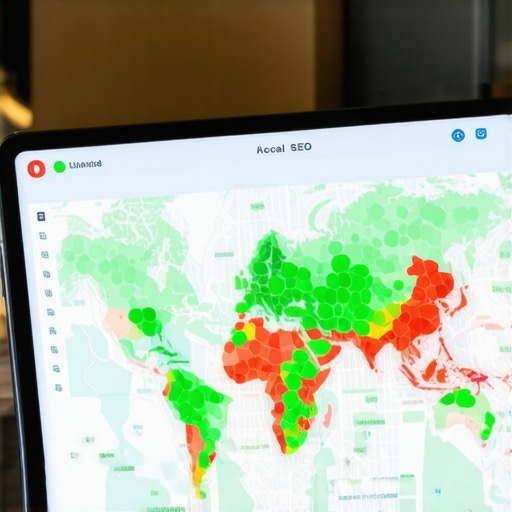
The Future of Maps Is Not Just Pins
Looking ahead, I predict that by 2026, the traditional list of three businesses will evolve into a more interactive, AI-driven experience. Google is already experimenting with ‘Search Generative Experience’ where the map pack is integrated with AI summaries of your reviews. This means the way to win a local pack entry in 2026 without ad spend will rely heavily on the *sentiment* of your reviews, not just the keywords. You need to encourage customers to mention specific services in their feedback. Don’t just ask for five stars; ask them to mention the ‘emergency pipe repair’ or the ‘vegan latte.’ This creates a rich data set for Google’s AI to chew on.
Stay Vigilant Against the Hidden Fluctuations
You might notice your rank bouncing around for no reason. Don’t panic. Often, the hidden reason your business map pack spot keeps fluctuating is just a ‘Google dance’ while they test a new algorithm tweak. The best thing you can do is keep your data clean. I make it a point to perform the simple business listing management task you are probably skipping: checking for ‘suggested edits’ from the public. Sometimes well-meaning users (or malicious competitors) change your hours or website link, and if you don’t catch it, your map pack placement will crater. Consistency is the ultimate currency. If you want to see how you actually stack up against the guy who’s been #1 for years, you need to look at your velocity. Go check why your map pack placement depends on your reviews velocity right now and see if you’re actually out-hustling the competition or just coasting.
The Hardest Lesson I Learned While Chasing Rankings
For years, I was chasing ghosts. I thought every citation was a brick in a wall that would eventually reach the top, but why most local pack entry strategies fail after three months is usually due to a lack of real-world human signals. The biggest shift in my thinking happened when I realized that Google doesn’t care about static directories as much as it cares about active engagement. I learned that a raw, shaky video of a real job site creates more trust with the algorithm than 500 business listings ever could. Your profile isn’t a billboard—it’s a conversation. If you aren’t talking back to your customers or updating your status, you will quickly find yourself wondering why your map pack placement slipped despite gaining new reviews.
[image-placeholder]
My Personal Arsenal for Map Pack Dominance
To keep my sanity and maintain my lead, I rely on a few specific resources that provide clear data rather than guesswork. First, I always perform the best way to audit your business map pack profile without expensive tools to find the invisible leaks in my local presence. For tracking my true reach across the city, I lean on these 7 local SEO tools and resources that actually show your real ranking across a multi-mile grid. I also recommend studying the ultimate blueprint for map pack placement success to ensure your technical foundation is rock solid. I trust these tools because they cut through the noise and show me exactly what the localized algorithm sees at every street corner.
Your Path to the Top Three Starts Now
The map is the digital heartbeat of your local reputation. You don’t need to be a technical wizard to rank business maps effectively; you just need to be more present and authentic than the competitor down the road. Whether you are using expert tips to boost your business map rank or just starting from scratch, remember that consistency is the only way to achieve a top dominating business map pack ranking. Start today by uploading one raw video or responding to one old review to signal that your business is alive and well. Which part of the map pack puzzle has been the most frustrating for you to solve lately? Let me know in the comments below!