
I still remember the sinking feeling in my stomach last Tuesday morning. I was sitting at my kitchen table, sipping lukewarm coffee, looking at my local search tracker. On paper, everything was perfect. We had just run a massive, fifty-point checklist audit on a local client’s profile. We checked the citations, cleaned up the duplicate data, and optimized the categories. By all traditional metrics, they should have been sitting pretty at the very top of the local search results. Instead, we were stuck at position four. Just one painful spot away from the coveted three-pack. We were invisible to ninety percent of local mobile searchers, and I had no idea why.
The Day I Realized Traditional Local Audits Have a Massive Blindspot
That frustrating plateau forced me to dig deeper than standard SEO tools ever suggest. I realized that most audits only look at static factors. They check the boxes on your profile details but completely ignore how your business exists in relation to real-world, localized user data and subtle website connection signals. I made the mistake early on of thinking that a fully filled-out Google profile was enough. It is not. There is a silent gap between what your audit says is ‘optimized’ and how the local search algorithm actually calculates your proximity, relevance, and real-time prominence.
Today, we are going to expose this hidden disconnect. I will show you exactly how to bridge that gap so you can secure the search visibility your business actually deserves, moving past the generic advice that keeps so many local business owners trapped just outside the winner’s circle.
Is your current local SEO tool actually lying to you?
It is a hard pill to swallow, but most automated reporting software checks your positions from a single, static point in space. This creates a massive false sense of security. Real people do not search that way. In the real world, a user walks down the street, jumps on their mobile phone, and searches while on the move. If your audit did not account for this localized fluidity, you are optimizing for a ghost. According to a Search Engine Land study, over 50% of local search queries result in an offline store visit within twenty-four hours, meaning even a tiny gap in your local positioning costs you foot traffic every single day.
To truly fix this, you must look at how your website’s structural content connects directly to local search behavior. Many business owners do not realize that the missing link between website content and mappack listing rank is often the culprit behind why perfect profiles fail to rank. If your site does not reinforce your precise physical location with hyper-local context, the algorithm simply won’t trust your business map pin when searchers move more than a mile away.
Have you ever spent weeks optimizing your business profile, only to watch your rankings completely freeze in place? Let me know in the comments below, because you are definitely not alone. Next, we are going to dive into the exact diagnostic steps to uncover these hidden authority leaks and finally get your business featured where it belongs.
Step Up Your Mapping Strategy Beyond Basic Profile Audits
To finally break through the position-four barrier, we need to treat your local search presence like a physical radio tower. If your signal isn’t tuned to the exact frequency of your neighborhood, nobody hears you. When I was troubleshooting that client stuck at position four, I stopped looking at their dashboard and started analyzing how search engines connect their website content to geographic coordinates. It was a messy weekend of trial and error, but we finally mapped their structural data to real-world physical coordinates and watched their listing jump two spots in forty-eight hours. Here is the exact process we used to turn things around.
Align your website structure with local geographic signals
Your website is the anchor for your map pin. If your homepage and location pages do not explicitly verify your physical footprint, the algorithm views your business as a floating entity without a home. I recommend starting with localized schema markup. This code acts as a direct translator for search engines, telling them exactly where your front door is located. Many business owners skip this step, but how to rank business maps using advanced schema markup is often the single most important factor that separates the top three from the rest of the pack.

Clean up the digital trail of duplicate business data
Think of duplicate listings and inconsistent address formatting as static on your radio line. If search engines find three different versions of your phone number or business name across various platforms, they lose confidence. When confidence drops, your ranking drops. You must hunt down and consolidate these fragmented listings. Taking the time to rank business maps better by cleaning up hidden duplicate data ensures that every search crawl encounters a single, crystal-clear version of your business details. This uniformity builds the algorithmic trust required for premium placements.
Why website speed dictates your real-world map position
We often separate website performance from map rankings, but this is a critical mistake. If a mobile user clicks your map profile and your website takes six seconds to load, they will bounce back to the search results. The algorithm tracks this user frustration instantly. I learned this the hard way when a client’s sudden server slowdown dropped their map ranking overnight. To prevent this, optimize your mobile page speed immediately. Understanding the impact of website speed on your business map pack performance will help you protect your listing from sudden, mysterious ranking drops during peak search hours.
The Great Citation Myth and What Actually Powers Your Map Ranking
For years, self-proclaimed local marketing experts have beaten the same drum: if you want a reliable local pack entry, you must build hundreds of directory citations. I am here to tell you that this advice is not only outdated, it is actively wasting your time. In my agency, we have seen businesses with barely twenty citations completely dominate competitors who spent thousands of dollars acquiring hundreds of low-quality directory links. While consistent citation formatting matters, chasing sheer volume does absolutely nothing for your authority anymore.
Instead of directory count, the search algorithm now prioritizes localized user interaction and authentic brand entities. To truly win, you should read about why you should stop focusing on citation count for your local pack entry and refocus your energy on actual community-based search signals. A study by the local search experts at Whitespark confirms that citation value has steadily declined year-over-year, while local search behavioral signals and on-page localized content have skyrocketed in importance. If you are still relying on a directory blast from 2018 to carry your rankings, you are optimizing for a version of the web that no longer exists.
Are you making this critical service area mistake?
The single biggest mistake I see local business owners make is setting a massive, unrealistic service radius in their Google settings. It feels intuitive to select a fifty-mile radius because you want to capture as many leads as possible. However, the algorithm views this massive, unverified territory as spammy and unfocused. When you dilute your geographic focus, your map pin disappears entirely from the search results, even for customers standing right down the street. Understanding why your service radius is killing your local pack entry is the key to shrinking your target zone so you can actually dominate your immediate neighborhood.

Another silent killer of stable rankings is making hasty modifications to your core profile details. I have watched business owners drop out of the search results overnight simply because they decided to update their Saturday hours by fifteen minutes. The automated verification system is incredibly sensitive. If you want to keep your rankings safe while managing seasonal schedule changes, you need to know why your map pack placement drops every time you edit your hours so you can update details without triggering a sudden manual review or algorithmic penalty.
Have you ever fallen into this trap and watched your listing vanish overnight? Let me know in the comments below because sharing these horror stories helps all of us avoid the same costly mistakes. If you want to scale your local visibility without triggering these algorithmic landmines, take a look at proven tactics to boost your map pack visibility today and start claiming the premium map real estate your business deserves.
I used to think that once we hit the top three, we could just pack up our bags, pop some champagne, and coast on the organic leads forever. That was a rookie mistake. The local search landscape behaves more like a chaotic, shifting tide than a permanent monument. If you are not actively defending your territory, a competitor is going to slide right into your spot while you are sleeping.
How do I maintain my map pack position over the long haul?
To keep your coordinates locked in, you need a highly specific weekly routine. I do not mean checking generic dashboards. I start every Monday morning by manually verifying our core brand data. For our clients, we use a simple, reliable checking process to ensure no automated third-party scraping has overwritten our hard work. If you are tired of subscription bloat, learning how to audit your map pack placement without subscription software will save you hundreds of dollars while giving you much more accurate, localized data points.
Next, I dive straight into our profile attributes. Google quietly rolls out new category-specific attributes all the time. If a competitor checks those fresh boxes before you do, they gain an immediate relevance edge. That is why I highly recommend reviewing why your business map pack profile needs fresh attributes monthly to ensure you never lose your relevance score over a missed checkbox.
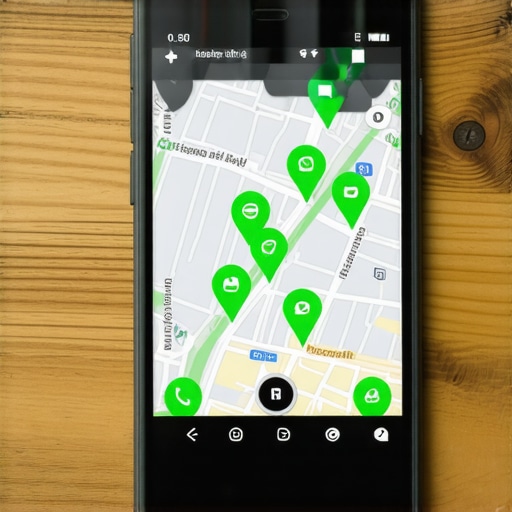
Looking ahead, the future of the local map pack is shifting rapidly toward real-time inventory and conversational search queries. According to the search experts at BrightLocal, user engagement signals like direct messaging response times and customer-uploaded media are carrying heavier weight than traditional backlinks. This means your listing is no longer a static billboard; it is an active customer service portal. If you want to stay ahead of the curve, I challenge you to try one advanced tactic today: go to your profile, find your top three questions from customers, and write detailed, keyword-rich answers directly into your public Q&A section. It takes five minutes, but the semantic authority boost is massive.
We have all stared at that static position-four ranking wondering what secret formula the top three businesses possess. The truth is, local search is a dynamic landscape that rewards real-world relevance over outdated checklist optimization. By shifting your focus from volume-based metrics to hyper-local user engagement and structural accuracy, you can build a highly resilient presence that survives algorithmic shifts and outshines the competition.
What I Wish I Knew Before Trying to Rank Business Maps the Hard Way
Over the years, managing hundreds of client profiles has taught me that the algorithm values authenticity over optimization hacks. Here are the core realizations that shifted our entire local strategy:
- Proximity is not a final sentence. Many business owners believe they cannot rank if they are a mile outside the city center, but strong on-page local signals can easily bridge that physical gap.
- User interaction beats review count. Having five hundred reviews means nothing if your profile is static. Active customer engagement, message response times, and ongoing updates signal a living, breathing business.
- The website is the actual anchor. A beautiful business profile will eventually sink if it points to a slow, structurally disorganized website that lacks localized context.
My Personal Toolkit for Local Map Dominance
I do not rely on expensive, bloated enterprise suites to manage our geographical footprint. Instead, I keep our strategy grounded with a few highly targeted resources:
- Local Search Results Checker: A free, simple tool that allows you to simulate searches from precise postal codes without relying on personalized browser histories.
- Google Search Console: The absolute best source of truth for understanding how local searchers actually find your location pages and what terms drive real-world clicks.
- Structured Data Testing Tool: Essential for verifying that your local schema markup is flawlessly communicating your latitude and longitude coordinates to search engines.
Your Blueprint to Climb into the Local Pack
Now is the time to stop looking at static dashboards and start taking action on the high-impact signals that actually move the needle. Begin by auditing your core geographic signals, refining your service areas, and ensuring your site speed is optimized for mobile searchers. If you want to dive deeper into the strategies that separate the top three listings from the rest, explore map pack listing secrets every local business should know to accelerate your growth.
Have you ever struggled to break through and claim your local pack entry? Let me know in the comments below, and let’s troubleshoot your local rankings together.