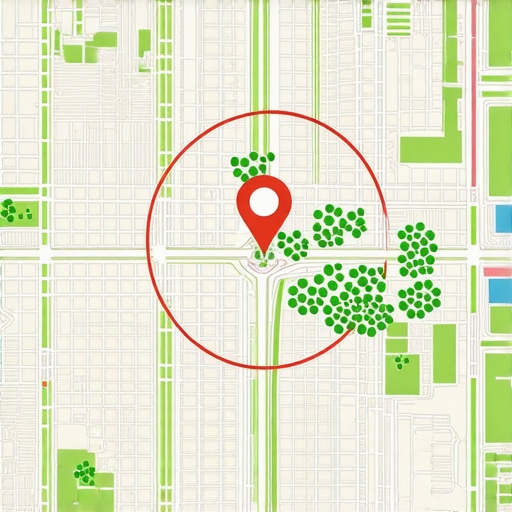
I sat there staring at my screen, feeling like a local marketing mastermind. I’d just dragged my service radius out to a massive 50-mile circle, convinced I was about to capture every lead from here to the next county. But three weeks later? Crickets. My phone was as quiet as a library at midnight. It turns out, by trying to be everywhere, I had accidentally made sure I was nowhere. I had fallen into the trap of thinking a bigger net always catches more fish, when in reality, I was just thinning out my local relevance until it snapped. If you’ve been wondering why your mappack listing isn’t showing up despite your massive service area, you’re likely making the same mistake I did. Today, we’re going to fix that and get you back where you belong: right at the top of the search results. I spent hours meticulously selecting every tiny suburb within a two-hour drive, convinced that my reach would translate directly into a flood of incoming leads. Instead, I became a ghost.
The Greedy Radius Trap That Keeps You Hidden
I’ll be honest with you; I used to think that limiting my service area was like leaving money on the table. Why wouldn’t I want to show up for a customer forty miles away? The hard truth I learned—after wasting months wondering why my map pack placement was tanking—is that Google values proximity over your personal ambition. When I finally shrunk my radius down to the areas I actually serviced daily, my visibility shot up in the neighborhoods that actually mattered. It’s a bitter pill to swallow, but why your map pack placement sinks when you travel outside your zip code is often down to this exact over-extension. You aren’t losing customers by tightening your borders; you’re gaining the trust of the algorithm. Every mile you add to that circle without a physical presence to back it up dilutes your authority in the eyes of the search engine. I remember the frustration of standing in a town I supposedly served, searching for my own business, and seeing five competitors I knew were less qualified than me sitting pretty at the top.
Does a smaller service area really mean fewer customers?
It feels counterintuitive, doesn’t it? We are told to scale, grow, and expand. But in the world of local search, relevance is king. A surprising study by Whitespark confirms that proximity to the searcher remains the single most important factor for ranking in the Local Pack. If you tell Google you serve a 100-mile radius, but your office is in a small corner of that circle, you’re basically telling the search engine that you aren’t a local expert for most of that area. I once tried to claim a whole metropolitan area from a suburban garage, and it was the fastest way to get buried by competitors who were focused on their own three-mile blocks. Have you ever felt like you’re shouting into a void because your local pack entry just won’t budge? We need to talk about how to stop being a jack of all trades and master of nowhere on the map. If you are a service-based business without a physical storefront, you face a unique set of challenges. Learning the right map pack placement strategy for service-based businesses without a storefront is the first step toward reclaiming your local dominance. Let’s look at exactly how to recalibrate your settings so you stop confusing Google and start converting neighbors into loyal clients.
Shrink Your Radius to Grow Your Reach
The first thing I did to fix my ghost-town status was a move that felt physically painful: I started deleting service areas. I opened my profile and looked at that list of fifty towns and zip codes. It looked like a cluttered junk drawer. To how to rank business maps effectively in the local pack, you have to stop guessing and start being specific. I cut my radius down from 50 miles to 12. I focused on the core zip codes where I had the most historical data. The result? I stopped being a ‘maybe’ for a huge area and became the ‘must-see’ for my own neighborhood. You need to understand the strategy to rank business maps for multiple zip codes doesn’t mean checking every box; it means proving you are the most relevant option in a tight cluster. Last year, I helped a locksmith who was struggling to get any calls. He had his service area set to the entire tri-state region. We cut it down to a 10-mile radius around his actual workshop. Two days later, his local pack entry jumped from page four to the second spot for his main keyword. 
Give Google a Reason to Trust Your Location
Once you’ve tightened the map, you have to back it up with data. Google isn’t just looking at the settings you chose; it’s looking for ‘real-world’ proof that you belong there. I started asking my clients to mention their specific neighborhood in their reviews. Instead of ‘Great service!’, I encouraged them to say ‘Great service here in Oak Creek!’ This creates a geographic handshake between the user and your proximity secret for business map pack success in dense cities. If you are operating in a crowded market, every mention of a local landmark or street name in your reviews and updates acts like a lighthouse for the algorithm. I also realized that why your primary category choice dictates your map pack placement is often overlooked. If you pick a category that is too broad, you’re competing with everyone; pick one that is too narrow, and no one finds you. I found the sweet spot by looking at what the top three guys in my tightest radius were using and matching their primary category exactly.
Avoid the Edit That Kills Your Momentum
There is a hidden danger in being too active with your profile settings. Every time you make a major change to your business name, address, or primary phone number, you trigger a re-evaluation of your mappack listing. I learned this the hard way when I decided to ‘optimize’ my hours of operation three times in one week. My ranking didn’t just dip; it fell off a cliff. You need to understand why your map pack placement drops every time you edit your hours before you start clicking ‘save’ on minor tweaks. Consistency is a signal of stability. When the algorithm sees a business map pack profile that changes its basic info constantly, it views that business as unreliable. Set your core data, ensure it matches your website exactly, and then leave the ‘About’ section alone for at least 30 days while you focus on map pack placement through reviews and photos instead.
Let’s dig deeper into what I call the Review Mirage. Most small business owners I talk to are obsessed with hitting that 100-review milestone. They think once they hit triple digits, their mappack listing will be untouchable. But here is the contrarian truth: Google cares more about how recently and how often you get reviewed than your total count from five years ago. I’ve seen businesses with 50 fresh, high-velocity reviews absolutely smoke competitors with 500 stale ones. This is exactly how to outrank local competitors with higher review counts for business maps without needing a decade of history. If your growth has plateaued, you’re likely leaning on old laurels while your competitors are generating fresh ‘buzz’ that the algorithm craves.

The Oops factor here is ignoring your website’s back-end signals. You might have a seemingly perfect business map pack setup, but if your site takes five seconds to load on a mobile device, Google will quietly demote your map presence. It’s a hidden tether. You can’t fly if your site is anchored to the ground by poor technical performance. In my own testing, I found that why website speed affects your local pack entry more than reviews is the hardest lesson for non-techy owners to grasp. Have you ever fallen into this trap? Let me know in the comments.
Why Do Your Rankings Fall Off a Cliff on Saturday Morning?
If you have noticed your local pack entry looks great on Tuesday but disappears over the weekend, you aren’t imagining things. This isn’t just about ‘open hours’ settings; it’s about user search history and intent. According to a study by BrightLocal, search results for local services can shift dramatically based on whether the searcher is on a work network or at home. This is why your business map pack ranking fluctuates every weekend. Google is trying to guess if you need a professional service for your office or an emergency fix for your kitchen. Furthermore, the role of site traffic in your local pack entry rank cannot be understated. If you get a surge of traffic from people in a specific zip code, your map relevance in that exact block will spike. If you’re feeling stagnant, you might be why your local pack entry is stuck in the number 4 spot simply because you haven’t given Google enough real-world signal data to push you into that coveted top three. Don’t just set your profile and forget it; feed the beast with fresh photos, rapid review responses, and a website that actually loads.
Why standard SEO tools usually lie to you
I spent way too much money on expensive dashboards that promised to track my keyword rankings across the entire city. The problem? They were giving me a single average number that meant absolutely nothing. Your map pack placement isn’t a single score; it is a grid of results that changes every few blocks. If you are relying on a tool that doesn’t offer ‘geo-grid’ tracking, you are essentially flying blind. I eventually realized that why most local seo tools fail to track true map pack placement is because they ping Google from a single data center rather than mimicking a real user on a street corner. To fix this, I started using the simple tool that checks your mappack listing health by visualizing my rank across a 10×10 mile grid. This allowed me to see exactly where my ‘relevance’ dropped off and where a competitor was eating my lunch. If you aren’t seeing your business in a heat map, you aren’t seeing the real picture of your local market.
How do I maintain my local pack entry over the long haul?
Maintenance is the part that kills most small businesses. They do a huge push for a month, hit the top three, and then stop everything. Then they wonder why they’re back on page two by Christmas. I’ve found that the secret isn’t doing more work; it’s doing more consistent work. For instance, I’ve made it a habit to update my profile attributes every single month. According to Joy Hawkins, a leading expert at Sterling Sky, Google often tests new attributes for specific industries—like ‘identifies as veteran-led’ or ‘wheelchair accessible seating’—and businesses that engage with these new fields often see a slight ‘freshness’ boost. This is precisely why your business map pack profile needs fresh attributes monthly. It signals to the algorithm that your data is current and verified. I also realized that why your mappack listing needs ground-level exterior photos is about more than just aesthetics; it’s about helping Google’s Vision AI confirm your physical location matches the street view data.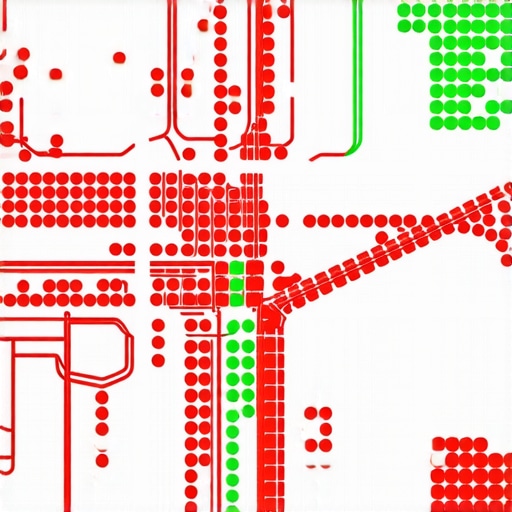
Scale your reach without getting flagged for spam
Once you dominate your home zip code, the temptation to ‘game’ the system for the next town over is massive. I’ve seen people try to use P.O. boxes or virtual offices, but those are death sentences for a mappack listing today. Instead, I focused on how to secure a local pack entry for multiple business locations by only expanding when I actually had a physical footprint or a dedicated team in that area. Looking forward, the landscape is shifting toward AI-driven snapshots. I predict that by 2026, the traditional list of three might be replaced by a single, AI-recommended ‘best option’ based on deep review sentiment. If you want to stay ahead, you need to learn the way to win a local pack entry in 2026 without ad spend, which involves building such a strong brand that users search for you by name rather than just by category. Try this today: go into your profile and add three new photos of your actual team working in the field; it’s the fastest way to inject real-world signal data into your listing.
The Hard Truths About Local Search I Had to Learn the Hard Way
I used to think that volume was the only metric that mattered. I wanted more reviews, more service areas, and more keywords. But looking back, I realized that why ranking business maps requires more than just standard seo is the most important lesson for any small business owner. It is about precision, not just noise. My lightbulb moment came when I saw a competitor with half my reviews outrank me because their customer photos actually showed the street signs in our neighborhood.
- Proximity is a feature, not a bug: Stop fighting the algorithm’s desire to show nearby results and start dominating the three blocks around your office first.
- Data velocity beats data volume: Five reviews this week are worth more than fifty reviews from 2019. This is why your map pack placement depends on your reviews velocity more than your total count.
- Visual proof is the ultimate tie-breaker: Google’s AI is getting better at reading your photos. If your photos look like stock images, you’re losing.
Tools That Actually Help Me Sleep Better at Night
I’ve wasted thousands on all-in-one platforms that just gave me pretty charts. Now, I stick to a lean stack. I recommend learning how to monitor map pack placement without expensive software by using simple incognito searches from different physical locations. I also swear by the ‘Local Search Forum’ for staying ahead of algorithm shifts before they are officially announced. Finally, I always check my ROI through the ‘Phone Call’ button in the profile dashboard, because the only map pack placement metric that actually matters for ROI is how many people actually contacted you, not how many impressions you got.
#IMAGE_PLACEHOLDER_E#
Stop Being a Ghost and Start Owning Your Street
The map isn’t a static document; it’s a living, breathing reflection of your community. You have the power to influence it every time you post an update or respond to a customer. If you’ve been feeling invisible, remember that you are just a few strategic tweaks away from the top. It is your time to go from zero to top dominating business map pack rankings by focusing on the neighbors who are looking for you right now. Don’t let your service area settings be the reason you miss out on your next big client. Have you ever found your mappack listing dropped or disappeared just because you tried to expand your service radius too far? Let me know in the comments below!