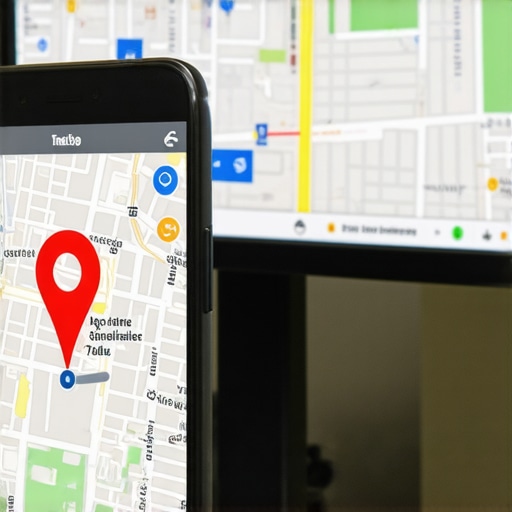
I’ll never forget the night I realized I’d been chasing ghosts. There I was, leaning back in my office chair with a cold coffee, admiring a bright green “#1” on my rank-tracking dashboard. According to the software, my business was dominating the local area. I felt invincible until I actually hopped in my truck and drove two miles east to a job site. I pulled out my phone, searched for my own services, and… nothing. My business was nowhere to be found in the local pack. I wasn’t just buried; I was invisible. It was a brutal wake-up call. I had spent months and thousands of dollars based on data that simply wasn’t true in the real world. This is the reality most business owners face: your tools are telling you what you want to hear, not what your customers are actually seeing on the street.
Why Your Ranking Dashboard is Probably Lying to You
The truth is, most local SEO tools are essentially guessing. They ping a server from a fixed data center, often miles away from your actual storefront, and try to simulate a local search. But Google is smarter than that. It uses precise GPS coordinates and real-time user behavior to decide who gets that coveted local pack entry. If you aren’t looking at the data from the perspective of a person standing on a specific street corner, you aren’t seeing the real picture. Early in my career, I made the massive mistake of relying on national SEO software that promised “local” tracking but only checked rankings from the center of the zip code. It’s a trap. I was optimizing for a single point on a map while my competitors were stealing my customers just three blocks away. This is exactly why your mappack listing rank varies block by block and why a static report will never give you the full story. Today, we are going to tear down the curtain. I’m going to show you how to stop wasting money on “vanity metrics” and start looking at the proximity signals that actually matter. We’ll dive into how to monitor map pack placement without expensive software that feeds you fairy tales.
Is it actually possible to get an honest rank report?
I get it. You’re skeptical. If the big, expensive tools can’t get it right, who can? The fear is that we’re all just flying blind, hoping the “Google Gods” smile on us today. But the reality is more manageable than you think. According to the Moz Local Search Ranking Factors survey, proximity of the searcher to the place of business remains the #1 ranking signal for the local pack. This means that any tool not accounting for “hyper-local” distance is inherently flawed. The “secret” isn’t a more expensive tool; it’s understanding why your map pack placement sinks when you travel outside your zip code and adjusting your strategy to build authority that radiates outward. Have you ever checked your rankings while standing in your competitor’s parking lot? If you haven’t, you might be in for a shock. Tell me, have you ever seen your business drop off the map just by crossing the street? Let’s fix that.
Stop guessing and start auditing like a pro
Most business owners treat a map audit like a simple checklist, but checking your phone number once a year isn’t enough. I learned this the hard way when a client’s phone stopped ringing despite what looked like a perfect profile on my desktop. We discovered that the best way to audit your business map pack profile without expensive tools is to physically simulate searches from specific GPS points across your city. If you are only looking at your data from a fixed office chair, you are completely blind to the local competition. This is usually why your last google maps audit failed to find the real leak—it didn’t account for the street-by-street changes in how Google serves results.
How I fixed a dead listing by walking three blocks
I remember working with a local service provider who was losing his mind because his map pack placement was non-existent. We didn’t buy more expensive links; we simply fixed his categories. It turns out he was listed as a general “security service” instead of a specific “locksmith.” Following the exact steps to fix a mappack listing with conflicting categories changed his business volume overnight. 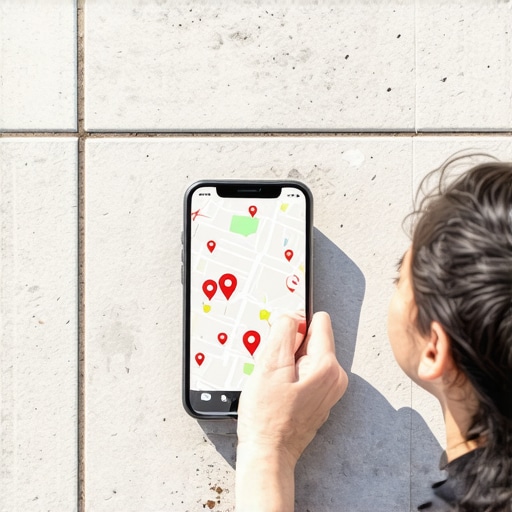
Push your reach into the next town over
To truly rank business maps effectively in the local pack, you must convince the algorithm that your relevance extends beyond your immediate front door. I frequently use the strategy to rank business maps for multiple zip codes by creating hyper-local landing pages and utilizing the best way to mention nearby landmarks for map pack placement. When Google sees reviews mentioning the “old clock tower” or the “central park entrance,” it starts to expand your geographic footprint. This is especially vital if you run a service-area business where you don’t even have a physical storefront; you need the hidden moves to secure a local pack entry for service businesses to keep your competitors from boxing you in.
Feed the machine with real-world signals
Google’s algorithm is essentially a giant behavior vacuum. It watches how users interact with your mappack listing engagement every second of the day. Are they clicking “call”? Are they asking for driving directions from five miles away? This is the role of user behavior in map pack placement success. One of the quickest wins I’ve found in my own testing is to stop chasing citations and focus on your business map pack photos. Specifically, why your mappack listing needs ground-level exterior photos is simple: it provides the visual proof Google needs to verify your physical existence. I once helped a small clinic jump three spots in the rankings just by having the owner take a ten-second video of the front entrance. It is about building trust through tangible, real-world data points that a bot can’t ignore.
I see it every single day in the forums: a business owner pulls their hair out because they’ve built 200 citations and their ranking hasn’t moved an inch. There is a persistent myth that the more ‘directory mentions’ you have, the higher you’ll climb. In my experience, that’s a legacy tactic from a decade ago. If you’re still obsessed with being listed in every obscure corner of the internet, you are missing the forest for the trees. Today, Google values real-world activity far more than a static address listing on a forgotten directory. In fact, why your citations alone won’t improve your map pack placement comes down to the fact that the algorithm has pivoted toward engagement and trust signals rather than just raw volume.
Stop hiding behind keyword-stuffed business names
Everyone tells you to put your city and service in your business name. ‘Bob’s Plumbing New York’ sounds like an SEO dream, right? It might work for a week, but it’s a house of cards. I’ve watched massive listings get nuked overnight because they tried to game the system. You need to understand why your mappack listing needs more than just a keyword-rich name to survive long-term. Real brands have identities, not just descriptions. When you over-optimize, you aren’t just risking a suspension; you’re signaling to Google that you are a ‘lead gen’ site rather than a local staple. If you want to build a listing that lasts, you should follow the ultimate blueprint for map pack placement success, which focuses on authentic brand authority.
Why does your rank vanish the moment you step outside your office?
This is the question that keeps local marketers up at night. You’re number one in your lobby, but number ten at the coffee shop down the street. According to the 2023 Whitespark Local Search Ranking Factors survey, proximity remains the most weighted signal, but it’s also the most misunderstood. If you find that your reach is hyper-limited, you are likely fixing the proximity error that blocks your local pack entry by simply existing in a saturated market. To break that radius, you can’t just ‘SEO’ your way out; you have to generate traffic from those outer areas. This is exactly why your business map pack rank drops every time you leave the office—Google doesn’t see a reason to show you to people further away if those people aren’t already searching for you by name.
The shared office strategy is a ticking time bomb
I’ve seen dozens of companies try to scale by renting virtual offices or desks in a WeWork to ‘pin’ themselves in a new city. Let me be clear: this is the fastest way to get your account blacklisted. Google’s AI is incredibly good at identifying the addresses of virtual office providers. Falling for the risk of using virtual offices for map pack placement is a rookie mistake that can lead to a permanent ban. If you don’t have a physical door that a customer can walk through, or a clearly defined service area that you actually work in, you are playing with fire. 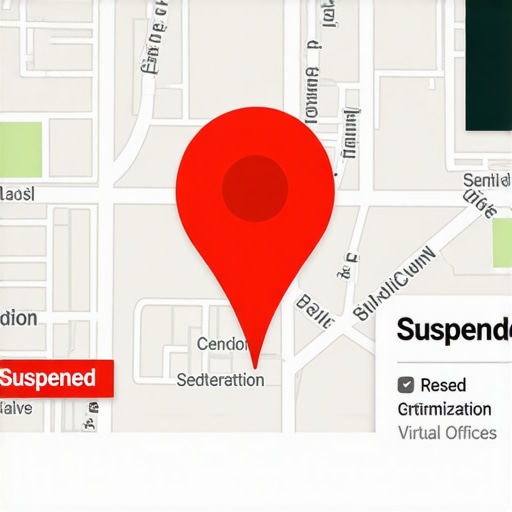 Instead of trying to fake a location, focus on how to rank business maps effectively in the local pack by using your actual service data and customer reviews to prove you are active in that region. Have you ever fallen into this trap or seen a competitor get caught? Let me know in the comments.
Your ranking will rot if you look away
I’ve seen it happen a hundred times. A business owner finally cracks the top three, starts getting phone calls, and thinks they can put their feet up. Within ninety days, they’re back on page two, wondering where the leads went. The local algorithm is hyper-reactive; it doesn’t care what you did last year. This is exactly why your map pack placement drops after you stop posting updates. Google interprets silence as inactivity, and in a competitive market, inactivity is a death sentence. You have to treat your profile like a living, breathing entity. If you aren’t feeding it fresh signals—new photos, updated attributes, and rapid response times—your competitors will simply out-hustle you. It’s about building a machine that stays in motion.
Tools that actually tell the truth about your position
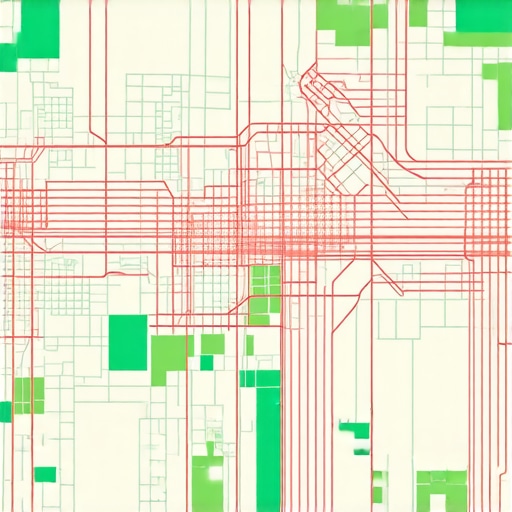
If you’re still using the standard Google Business Profile dashboard to ‘measure’ success, you’re only seeing the tip of the iceberg. I personally rely on grid-tracking tools like Local Falcon because they show me the ‘red zones’ where my visibility falls off. It’s the only way to see 7 local seo tools resources that actually show your real ranking across a whole city rather than just one street corner. I use these tools once a week to spot trends before they become disasters. For example, if I see my rankings shrinking in the north, I know I need to focus my next few customer case studies or landmark mentions on that specific neighborhood. As Joy Hawkins from Sterling Sky often notes, Google’s ‘Open Now’ filters can drastically shift these rankings in real-time, making static reports even more useless for high-intent searches.
How do I maintain my visibility without burning out?
The secret isn’t spending ten hours a week on SEO; it’s consistency in the ‘small’ things. I always tell my clients that the simple business listing management task you are probably skipping is the monthly audit of your own attributes. Google often ‘suggests’ changes to your hours or services based on user feedback, and if you don’t reject the wrong ones, your ranking can tank overnight. You also need to keep an eye on your interaction speed. We know why your map pack placement depends on your reviews velocity, but it’s the steady drip of reviews that wins, not a sudden burst followed by silence. Aim for two reviews a week, every week, rather than twenty in a single day.
The future belongs to real-time verification
Looking ahead to 2025 and 2026, I predict that Google will rely even less on ‘data’ and more on ‘proof.’ We are already seeing a shift where how to rank business maps effectively in the local pack involves using more video content and AI-verified street-level imagery. The algorithm wants to see that you are a real person doing real work in a real location. If you want to future-proof your business, start documenting your service calls with short, geotagged videos. This provides the ‘ground-truth’ data that AI-driven search engines crave. My best advice? Stop looking for a ‘hack’ and start implementing the ultimate blueprint for map pack placement success by focusing on genuine user engagement. Take one hour this week to respond to every unanswered question in your Q&A section—it’s the highest-ROI move you can make right now.
The Hardest Lesson I Learned While Chasing Local Pack Rankings
After years in the trenches, I’ve realized that the algorithm doesn’t care about your effort—it cares about your evidence. First, proximity is a cage, but you can widen the bars. I spent years thinking a single pin was enough, but I learned that unlocking map pack visibility strategies involves proving you actually service those outer edges through localized content and engagement. Second, a “perfect” profile isn’t a static one. The moment I stopped updating my attributes and posting updates, my traffic plummeted. Third, stop obsessing over total review counts. I’ve seen listings with 50 reviews outrank those with 500 because their engagement was higher and more consistent over time. #IMAGE_PLACEHOLDER_E#
The Gear I Actually Use to Keep My Rankings High
You don’t need a thousand-dollar subscription to win this game, but you do need the right eyes on the street. I swear by grid-tracking tools because they reveal the reality of your map pack listing secrets across different neighborhoods rather than just your lobby. I also follow the annual industry surveys from experts like Whitespark to see how the landscape is shifting. Lastly, never underestimate the power of your own smartphone. Walking a few blocks and performing a search is the most honest audit you will ever get. These habits help me focus on the only map pack placement metric that actually matters for ROI: actual customer interactions. I also recommend checking out these proven tactics to boost your map pack visibility today if you are feeling stuck.
It Is Finally Time to Own Your Street
Local SEO isn’t a dark art; it’s a commitment to being the most relevant and responsive business in your area. Don’t let the technical jargon scare you off. If you start by simply documenting your work and being honest with your customers, you’re already ahead of 90% of your competition. Use these expert tips to start your journey, but remember that the best time to fix your business map pack presence was yesterday—the second best time is right now. Go out there and claim your spot.
Have you ever noticed your ranking completely vanish just by walking to the other side of town? Let me know your experience in the comments below!