
I was sitting in my small home office at 2:00 AM, nursing a lukewarm cup of coffee and staring at a screen filled with green dots. To any outsider, I was winning. I had managed to rank business maps for my latest project right into the number one spot across the entire neighborhood. I felt like a hero—until the client called the next morning. They weren’t happy. Despite the top-tier map pack placement, their phone had stayed silent for three days straight. It was a visceral, ego-bruising realization: I had been chasing a high score in a game that didn’t pay the bills. I had fallen into the trap of thinking visibility was the same thing as value, and that mistake almost cost me a long-term contract.
Ranking High is Meaningless if Your Phone Stays Silent
Today, I want to pull back the curtain on the industry’s biggest lie and promise you a solution that actually moves the needle. We are going to stop obsessing over where your pin sits and start focusing on the only metric that dictates whether your business map pack strategy is a profit center or a money pit: Conversion Actions. When I first started out, I spent months obsessing over getting a local pack entry for broad, high-volume keywords, only to realize that nobody clicking those results actually wanted to buy anything. I was getting ‘lookers’ but not ‘bookers.’ It is exactly why most local SEO reports fail to show actual leads—they focus on the sparkle of impressions rather than the substance of intent. I learned the hard way that a lower rank for a high-intent keyword is worth ten times more than the top spot for a generic term. Have you ever felt that sinking feeling of seeing ‘10,000 views’ on your dashboard but zero new customers in your shop?
Is securing a top spot just a vanity project?
It certainly can be. If you are not tracking how many people actually click that ‘Call’ button or request directions, you are flying blind. According to a study by BrightLocal, nearly 76% of consumers who search for something local on their smartphone visit a related business within 24 hours. If your mappack listing isn’t capturing that immediate need, your strategy is broken. My early mistake was ignoring the ‘Insights’ tab in favor of third-party rank trackers. I wanted the vanity of the number one spot, but the number one spot doesn’t pay the rent—customers do. We need to bridge the gap between being ‘seen’ and being ‘selected.’ In the next section, I’ll show you exactly how to audit your profile to ensure your map pack placement actually converts.
Identify the silent killers on your profile
To fix a broken strategy, you have to start with the obvious technical traps that everyone ignores. A business map pack profile with no calls is essentially a billboard in the middle of a desert—it looks great, but nobody can reach it. Last year, I worked with a local HVAC company that had achieved a prime map pack placement. On paper, they were killing it. In reality, their dispatch team was bored and the phones were silent. After digging, I found the tiny profile error killing your map pack placement this week: a secondary phone number was causing a data conflict that essentially hid the call button on mobile browsers. It was a mess, but it taught me that you need the best way to audit your business map pack profile without expensive tools to catch these human errors before they drain your budget.
Fixing the ‘No Calls’ mystery
If your rankings are high but your leads are low, you are likely suffering from a trust gap or a technical glitch. I call this the quick fix for a business map pack profile with no phone calls. Check your call-to-action buttons on a physical phone, not a desktop emulator. Often, a small formatting error in your NAP (Name, Address, Phone) can trigger a hidden filter.
Real photos beat stock images every time
Your mappack listing needs to prove you exist in the real world. Stock photos are like a fake smile at a job interview; everyone knows it is not real and it immediately kills rapport. I have seen businesses climb the ranks just by swapping out stale stock images for gritty, real-life action shots of their team at work. This is one of the most proven tactics to boost your map pack visibility today because Google tracks how long users linger on your visual content. I once helped a local bakery that saw a massive spike in foot traffic because we implemented the photo update that increased our google profile clicks fast. We didn’t change their description or their categories; we just showed the actual steam rising from the bread. 
Boost engagement through tiny interactions
Google doesn’t just want to see that you are relevant; it wants to see that you are active. If you have a local pack entry that is showing up for the wrong searches, check your primary and secondary categories. I have followed the exact steps to fix a mappack listing with conflicting categories for a law firm that accidentally listed themselves as a ‘Government Office.’ They were ranking, but for people looking for a license office, not an attorney. Using 5-interaction-tactics-that-actually-move-your-business-up-the-map—like responding to Q&As and updating weekly posts—can amplify your visibility once those category errors are buried. Stop guessing and start auditing the small, boring settings that actually dictate how you rank business maps for the long haul.Most people think a high-volume review count is the ultimate golden ticket for a local business. I used to believe that too, until I watched a client with 500 reviews get consistently outranked by a competitor with only 40. Why? Because the competitor understood ‘semantic relevance’ while my client was just chasing numbers. Google’s Natural Language Processing (NLP) now reads the actual content of your reviews to understand your niche. If your customers are just leaving five stars and saying ‘Great service!’ without mentioning the specific problem you solved or the neighborhood you served, you are missing out on map pack listing secrets every local business should know. Context is the new currency.
Stop chasing five stars and start chasing context
In my experience, a ‘perfect’ profile can actually look like a red flag to a sophisticated algorithm. If your growth is too linear or your reviews lack the specific keywords your customers actually use in conversation, you are likely hitting a glass ceiling. This is where the review response secret for better map pack placement comes into play. You should be using your responses to anchor your location and services. Instead of a generic ‘Thank you,’ try ‘We were so happy to help with your emergency pipe repair here in downtown [City]!’ This gives the algorithm the geographic and topical proof it craves.
The proximity trap that blinds your local customers
One of the most frustrating nuances of a business map pack strategy is the geographic filter. Have you ever noticed why your business map pack rank drops every time you leave the office? This isn’t a glitch; it is the proximity filter in action. If your physical office is even a mile outside the main commercial hub, Google might hide your pin for ‘near me’ searches in the city center to favor businesses that are physically closer, regardless of their quality. According to the 2023 Whitespark Local Search Ranking Factors study, proximity remains the single most powerful—yet uncontrollable—ranking factor. However, you can counter this by strengthening your ‘Prominence’ through localized content on your website. If you aren’t careful, the nap error that costs you a top 3 spot every day—like having a slightly different suite number on your site versus your profile—will give Google an excuse to filter you out in favor of a closer, more ‘consistent’ competitor. 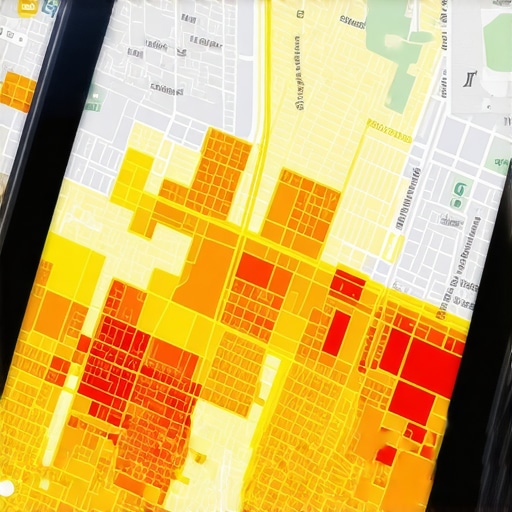
Does your website speed dictate your map position?
Many advanced practitioners overlook the fact that your local pack entry is inextricably linked to your website’s health. Google doesn’t want to recommend a business that provides a frustrating mobile experience. This is why your local pack entry depends on your websites loading speed. If a user clicks from the map to your site and it takes six seconds to load on a 4G connection, they will bounce back to the map results. Google tracks this ‘pogo-sticking’ behavior and will eventually demote your map pack placement because you aren’t solving the user’s problem efficiently. Furthermore, if your technical SEO is messy, why your local schema might be failing to help your ranking-2 becomes a major concern; without proper structured data, the map algorithm can’t verify that the business at 123 Main St is actually the same one listed on your homepage. Have you ever fallen into this trap of focusing on vanity metrics while ignoring these hidden signals? Let me know in the comments.To keep a mappack listing healthy, you have to treat it like a garden, not a trophy. Most people win the top spot, celebrate for a week, and then wonder the hidden reason your business map pack spot keeps fluctuating six months later. I learned this the hard way with a client in the legal niche; we hit number one, stopped our weekly updates, and were buried by a competitor within forty-five days. The reality is that mastering business map pack visibility requires a relentless focus on data hygiene.
Stop the decay with a monthly hygiene check
You need to be looking for the small discrepancies that creep in over time. I call this the simple business listing management task you are probably skipping: auditing your own attributes. Google often ‘suggests’ changes based on user feedback or AI crawls of your site, and if you don’t reject the incorrect ones, they become permanent. This is why I advocate for a strict monthly audit using the checklist for fixing a stagnant mappack listing to ensure no ghost edits have messed with your primary categories or service areas.
The tech stack I actually use every morning
I don’t trust standard rank trackers. Most tools give you a single number for a whole city, which is why most local keyword tracking tools give a false sense of security. Proximity is hyper-local. I personally use grid-tracking tools like LocalFalcon or PlePer because they show you exactly where your ‘green’ zones end and your ‘red’ zones begin. If I see my map pack placement shrinking by just two blocks, I know I need to push out more localized content immediately. Check out these 7 local SEO tools resources that actually show your real ranking to get a clear picture of your actual reach. 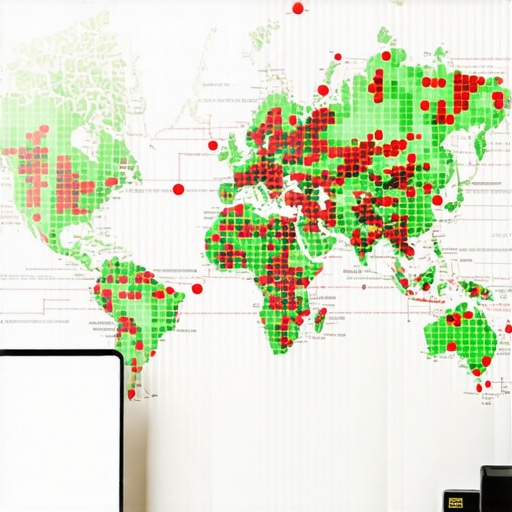
How do I keep my map pack spot from sliding?
Consistency in your signals is the only way to stay on top. Google’s own documentation on local rankings explicitly notes that ‘Prominence’—one of the three pillars of local SEO—is based on information that Google has about a business from across the web. This means you must address how outdated citations stealthily damage your map pack placement-2 every single quarter. I also recommend a high-frequency posting schedule; businesses that post a new photo or update at least once a week see significantly higher engagement rates.
The future of the map pack is conversational
Looking ahead, I predict that traditional keyword stuffing will become completely obsolete as Google’s Search Generative Experience (SGE) takes over. We are moving toward a world where your local pack entry will be chosen based on ‘social proof’ extracted from reviews and AI’s understanding of your specialized services. To prepare, you should start using the local pack entry hack using video on your profile now. Video provides a rich layer of data that AI can parse much more effectively than flat text. If you want to stay ahead, stop thinking about keywords and start thinking about how to prove your authority to an algorithm that is learning to read like a human. My best advice? Go open your dashboard right now and respond to that one-star review from three years ago—it’s the fastest way to show the algorithm you’re still listening.
The Hard Truths I Discovered While Fighting for the Top 3
After years of obsessing over these green dots, I’ve realized that the algorithm is far more human than we give it credit for. Here is what I wish I had known on day one:
- Proximity is a hurdle, not a wall. Even if you aren’t in the city center, you can stop the proximity filter from hiding your business by being the most relevant and localized answer to a user’s specific problem.
- Engagement trumps history. An old, established profile will eventually lose its map pack placement to a hungry newcomer who is actively responding to every review and keeping their information fresh.
- Vanity kills ROI. I’ve seen businesses go bankrupt while holding the number one spot because they ignored the real reason your map pack ranking isn’t generating leads—which is almost always a lack of localized trust or a technical glitch on the profile.
Tools That Actually Tell the Truth About Your Map Position
To win this game, you need data that isn’t sugar-coated by your own browser cache. I personally rely on a very lean stack of resources to keep my clients ahead of the curve. First, you need to know how to audit your business map pack for hidden filter issues manually; no software is better than your own eyes on a physical mobile device. I also highly recommend looking into 3 minimalist tools that find ranking gaps your agency missed to see the hyper-local grid of where you actually stand. Finally, keep 7 local SEO tools resources that actually show your real ranking bookmarked so you can verify your progress across different neighborhoods without the bias of third-party averages.
#IMAGE_PLACEHOLDER_E#
It is Time to Turn Your Pin Into a Profit Center
Visibility is just the invitation, but conversion is the party. You now have the roadmap to not only rank business maps effectively but to ensure that every local pack entry you secure results in a ringing phone and a full calendar. Don’t let the technical jargon or the constant algorithm shifts intimidate you. If you focus on being the most helpful, most transparent, and most active business in your neighborhood, Google will have no choice but to show you off. Have you ever noticed your mappack listing suddenly drop for no apparent reason, and what was the first thing you checked to get it back? Let me know in the comments below!