I spent six months shouting into a void, and honestly, it was embarrassing. I had the fancy storefront, the ‘best in town’ signs, and a Google profile I polished every single morning like a trophy. Yet, when I looked at the local map, I was nowhere. It felt like I was hosting a party where nobody—not even the search engine—was invited. It wasn’t until I stopped obsessing over my own site and started looking at what the rest of the town was saying that the lights finally clicked on. I was trying to rank business maps by talking to a mirror instead of talking to my neighbors. It was a lonely, frustrating place to be, staring at a screen that refused to show my hard work despite my best efforts.
Real Authority Comes From the Neighborhood Not Just Your Profile
I used to think that the secret to getting a better map pack placement was just about checking boxes. I made the massive mistake early on of thinking that buying 100 generic citations from some offshore farm would trick the system into thinking I was important. It didn’t. It just made my data messy and my ranking flatline. I realized that Google isn’t just looking at what you say about yourself; it’s listening to what the community says about you. Local brand mentions—those little nods to your business on local news sites, blogs, and community hubs—act as digital votes of confidence. They tell the algorithm that you aren’t just a business on a map; you are a landmark in the community. Today, I’m going to show you how to turn those mentions into a ladder. We’re going to stop being the best-kept secret in town and start being the first name people see when they search.
Does this really move the needle more than a five-star review
It’s a fair question to be skeptical. We’ve been told for years that reviews are king. While they certainly matter for conversion, Google’s prominence algorithm is much deeper and more sophisticated than a simple star count. According to research by Moz, brand signals and offline prominence are becoming critical markers for local authority and search visibility. If your business is mentioned on the local high school’s sponsorship page or a ‘best of’ list from a nearby city blogger, Google sees that as a real-world connection. It’s the digital equivalent of a neighbor leaning over the fence and saying, ‘Yeah, those are the guys you want.’ Have you ever felt like you’re doing everything right with your mappack listing but still getting outranked by the guy down the street who doesn’t even have a website? It’s infuriating, right? Usually, it’s because he’s been the talk of the town for twenty years, and the digital mentions reflect that history. We are going to close that gap starting right now, moving you from zero to top by focusing on the mentions that actually move the needle.
Start Harvesting Local Authority from Real Sources
To move the needle, we have to look at the ‘digital proximity’ of your mentions. Think of Google as a local detective. If they see your business mentioned on the high school football schedule and then again on the town’s annual festival website, the detective concludes you are a real, active part of that specific geography. This is how you secure a local pack entry without relying on luck. I’ve seen dozens of business owners throw thousands of dollars at agencies that promise ‘thousands of citations,’ but the truth is that why citation volume alone won’t help you outrank local competitors is due to the lack of geographic relevance. A link from a local Chamber of Commerce is worth more than a thousand links from a directory in another country because it anchors your business to a specific street corner in the eyes of the algorithm.
Stop Wasting Time on Global Directories That Nobody Visits
I remember a specific case where a bakery I was helping was invisible. We tried everything—photos, keywords, the works. It wasn’t until we convinced the owner to host a ‘Cupcakes for Causes’ event that was picked up by the neighborhood blog that her map pack spot finally stabilized. The blog post didn’t even have a fancy anchor text; it just mentioned the bakery’s name and address. That ‘real-world’ signal was the missing piece of the puzzle. If you want to rank business maps effectively, you have to stop thinking about SEO as a technical task and start thinking about it as a community relations task. 
The Power of a Neighborhood Sponsorship Link
Stop chasing generic links and start looking at the local little league, the high school theater program, or the neighborhood watch association. I’ve written before about why sponsoring local teams builds better backlinks than most SEO packages, and the reason is simple: relevance. When a local organization links to you, they are giving Google a coordinate, not just a vote. This geographic data is what fuels your mappack listing and tells the search engine that you aren’t just a digital ghost. You are a physical entity that people in that specific zip code interact with daily. While you are building these new, high-value mentions, don’t forget to look back at your old data. You would be shocked at how broken citations are quietly stealing your local lead volume by confusing the engine with old phone numbers or slightly different addresses. Consistency in your name, address, and phone number (NAP) across these local mentions acts as a force multiplier for every other effort you make.Everyone says reviews are the end-all-be-all of local SEO. If I hear one more ‘expert’ tell a struggling business owner to just ‘get five more stars,’ I’m going to lose it. In my experience, chasing volume is a fool’s errand. I’ve seen dozens of cases why your competitors with fewer reviews still win the map pack placement. Why? Because Google prioritizes recent engagement and geographic relevance over a stale mountain of praise. According to the Local Search Ranking Factors study by Whitespark, while reviews are a top-tier signal, the ‘proximity’ factor remains the most dominant and often the most misunderstood piece of the puzzle. If you aren’t updating your mappack listing with fresh photos or responding to current questions, the algorithm eventually treats you like a digital relic.
Stop Chasing Five-Star Ratings Like They Are the Only Metric
The trap most people fall into is the ‘set it and forget it’ mindset. They think a map pack placement is a permanent trophy. It’s not; it’s a lease. One of the biggest mistakes I see is the ‘Service Area Conflict.’ Business owners try to claim they serve every town within a fifty-mile radius, but by stretching their service area too thin, they actually dilute their authority in their own backyard. This is the service area conflict that secretly blocks your local pack entry. If your website says you’re in City A, but your profile claims you cover City B through Z, Google gets confused and hides you from everyone. 
Why does your shop vanish the moment a customer drives three blocks away?
It’s called the proximity trap. You might have a perfect profile, but if you haven’t optimized for the specific neighborhood-level data, you’ll find yourself hitting a wall. I’ve spent years helping people how to fix the proximity trap keeping you out of the map pack by focusing on hyper-local signals. Most ‘experts’ ignore this because it’s hard work, but it’s the difference between being a local leader and being invisible. Another ‘oops’ factor is ignoring the one nap discrepancy that stealthily devalues your business listing every month. If your suite number is ‘Suite 101’ on Yelp but ‘#101’ on your Google profile, you are creating friction for the search engine. Have you ever fallen into this trap? Let me know in the comments. We need to stop guessing and start looking at the proven tactics to boost your map pack visibility today that actually reflect how real people find businesses in 2024. Let’s make sure you aren’t just from zero to top in your mind, but on every customer’s phone.Once you finally break into that top three, the real work begins because your competitors are staring at your success with a target on your back. Staying at the top isn’t about luck; it is about having a maintenance routine that treats your profile like a living asset. I personally rely on a few minimalist tools that find the ranking gaps your seo agency missed, specifically grid-tracking software like Local Falcon. Unlike a standard search that only shows your rank from one spot, a grid tracker shows me exactly where my visibility drops off. If I’m #1 at my front door but #7 two blocks away, I know I have a proximity issue to solve. You need to how to use a google maps rank tracker to find competitor weak spots before they find yours. I’ve found that checking this grid once a week is the difference between a minor dip and a total disappearance.
Don’t Let Your Hard-Earned Visibility Slip Away While You Sleep
It is a common misconception that once you have achieved map pack placement, you can stop. Google’s algorithm is constantly re-evaluating relevance based on real-time signals. I’ve seen businesses lose their local pack entry simply because they stopped uploading fresh content. I make it a hard rule to upload at least two high-quality, geo-tagged photos every week. Why? Because the one photo adjustment that increases google profile views instantly is often just about showing Google that the business is active and physically present. Joy Hawkins from Sterling Sky, a leading authority in the local SEO space, has frequently pointed out that proximity remains a volatile factor, especially as Google refines its ‘Vicinity’ filters to prioritize the most relevant local results. If you aren’t feeding the beast with fresh data, the algorithm starts to favor the guy who is. 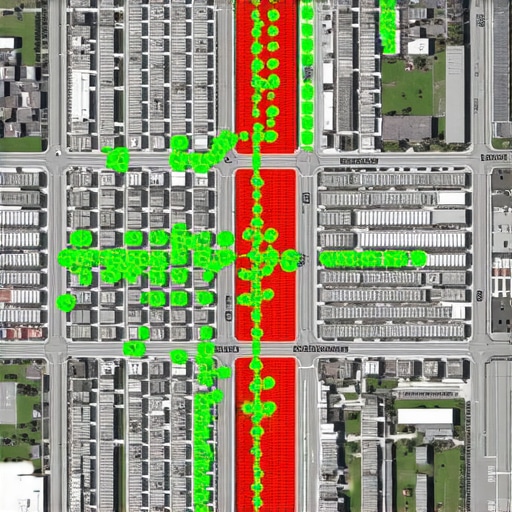
How do I maintain my map pack dominance every single month?
Consistency is your best friend. Beyond photos, I spend ten minutes every Tuesday responding to every single review—even the ones without text. This interaction signal is huge. If you are struggling, look for the tiny profile edit that finally jumpstarts stalled impressions, which is often as simple as updating your holiday hours or clarifying a service category. Looking ahead, the game is shifting toward real-world movement. We are already seeing how real-time foot traffic data changes google maps seo in 2026, where the physical popularity of your shop actually influences your digital rank. In the future, I predict that ‘dwell time’—how long a person actually stays at your location—will become a primary ranking factor for any business map pack. We are moving toward an era where you can’t just fake authority; you have to physically earn it. To stay ahead, you need to beat the 2026 proximity filter for a faster local pack entry by encouraging customers to check in or use your Wi-Fi. My advanced tip for you today: go into your profile settings and ensure your ‘Service Area’ doesn’t overlap too aggressively with other locations, as this is the quickest way to get filtered out. Check your photo metadata right now and make sure your ‘Alt Text’ includes the neighborhood name, not just the service.
Three Lessons Learned from My Most Embarrassing Ranking Failures
If there is one thing I’ve learned, it’s that your business map pack status is never truly “finished.” I spent months thinking a few nice reviews would do the heavy lifting, but I was wrong. First, I realized that activity beats perfection every single time; a blurry photo of a happy customer is often better for a local pack entry than a stock photo that looks too clinical. Second, I discovered that the exact reason your mappack listing isnt showing up for nearby customers is often just a lack of neighborhood-specific mentions, not a lack of keywords. Finally, I learned that you have to how to fix the proximity trap keeping you out of the map pack by being a real human in your city, not just a digital profile.
The Minimalist Toolkit That Keeps Me Visible
I don’t believe in buying every software under the sun. To rank business maps effectively, I stick to three essentials. I use 3 minimalist tools that find the ranking gaps your seo agency missed to keep me honest about my progress. Then, I rely on a grid tracker to how to use a google maps rank tracker to find competitor weak spots before they can react. Lastly, I keep it simple with the small tweak to your business map pack profile that fixes zero click stats, ensuring that when people see me, they actually click through.
#IMAGE_PLACEHOLDER_E#
Claim Your Spot and Own the Neighborhood
Local SEO isn’t about gaming a machine; it’s about proving to your community—and the algorithm—that you are the most reliable option in the zip code. You have all the tools you need to secure a lasting map pack placement. Take one action today, whether it’s responding to a review or geotagging a new photo. Your future customers are already searching for you; it’s time to make sure they find you. What’s the one thing holding you back from a better map pack placement right now? Let’s chat in the comments below.