
The silence was deafening. I sat in my empty new storefront, staring at my phone, waiting for it to ring. I had spent six months and a small fortune opening this second branch, convinced that my brand’s reputation would carry me. But when I searched for my services nearby, I was invisible. I wasn’t just low in the rankings; I didn’t exist in the eyes of Google Maps. It was a gut-punch realization that a hidden mappack listing error was effectively keeping my doors locked to the digital world. I’d assumed the algorithm would just ‘know’ I was there. It didn’t. I had to learn the hard way that securing a local pack entry for new business locations requires a specific, aggressive blueprint, not just a hope and a prayer. Today, I’m going to show you exactly how to bypass that frustrating waiting period and get your new location the attention it deserves.
My Second Store Was Initially a Digital Ghost
The biggest mistake I made—and I see neighbors making this constantly—was thinking that a new location inherits the ‘juice’ of the old one automatically. It doesn’t. When I first set up my profile, I rushed through the details. I picked a category that was way too broad because I wanted to ‘capture everything,’ but my primary category choice ended up killing my reach before I even had my grand opening. I was trying to be everything to everyone and ended up being nothing to the algorithm. According to a BrightLocal study, nearly 32% of all clicks go to the very first result in the local pack, and if you aren’t there, you’re fighting for crumbs. I had to go back to the drawing board to capture a local pack entry for new business locations quickly by treating the new spot like a unique entity that needed its own local roots.
Is a Fresh Listing Even Capable of Beating Local Legends?
I know what you’re thinking. How can a shop that opened yesterday beat the guy down the street who has been there for twenty years and has a thousand reviews? It feels like a rigged game. But here is the secret: Google isn’t just looking for the ‘oldest’ business; it’s looking for the most relevant and trusted answer for the user’s current intent. If you can provide better, more accurate local signals right now, you can leapfrog the ‘dinosaurs’ who have grown lazy with their profiles. Have you ever felt like your business was doing everything right offline, but you still couldn’t crack that top three spot online? It’s a common frustration, but it’s one we can fix by focusing on the data that actually moves the needle.
Stop Falling for the Proximity Trap
Many owners think that just having a physical address near the customer is enough to win. It’s a trap. I found out that proximity is only one part of the story. If your business information is inconsistent across the web, Google gets ‘confused,’ and a confused algorithm never ranks a business. I had to spend hours fixing the NAP error that costs you a top 3 spot by ensuring every single mention of my name, address, and phone number was identical. You have to proactively fix the proximity trap by building local relevance that extends beyond your front door. We are going to look at the exact moves I used to turn my invisible second location into the top-rated choice in the neighborhood within weeks.
Clean Up Your Digital Fingerprint Before You Start
Every local listing is like a digital fingerprint. If yours is smeared with old phone numbers or slight spelling variations, Google won’t verify your identity. I learned this the hard way when a single ‘Road’ vs ‘Rd’ mismatch on a secondary directory kept my second shop in the shadows for a month. You need to execute the data cleanup move that fixes inconsistent business listing details immediately. Don’t wait for a monthly audit; manually hunt down every stray mention of your old address. I remember spending a Saturday with three monitors open, scrubbing the web for a ‘Ste. 200’ vs ‘Suite 200’ discrepancy that was sabotaging my growth. Correcting these tiny errors is the only way to build the bedrock of trust the algorithm demands for a new location.
Why Local Context Beats Proximity Every Time
Next, you need to understand how to rank business maps effectively in the local pack by speaking the search engine’s language. This means deploying local schema. If your website code doesn’t explicitly tell Google where you are, you’re making the algorithm guess. And algorithms hate guessing. I’ve seen cases where your local schema might be failing to help your ranking because it’s either outdated or missing your new address entirely. This is the one technical fix that restored our map pack placement in days when we were struggling to show up for our most profitable keywords in the new zip code.
The Hidden Lever That Moves You Up Within Days
It’s not just about the data; it’s about the movement. Think of your profile like a storefront window. If the same dusty display sits there for three months, people stop looking. Google sees ‘static’ profiles as less relevant than ‘active’ ones. I started using 5 interaction tactics that actually move your business up the map, including responding to every single question in the ‘Q&A’ section within an hour. This signal of life is more powerful than a hundred dormant backlinks from irrelevant sites.
One specific move I made was the simple photo tweak that boosts clicks from the business map pack: I stopped using professional stock photos and started uploading raw, geotagged shots of my team actually working at the new location. The engagement rate tripled overnight. You are trying to build a narrative of local authority, and that starts with showing, not just telling. Finally, bridge the gap between your website and your map listing. You should be using how to use local service pages to support your map pack placement. Every service page on your site should act as a supporting document for your Google profile. When I linked my primary service page directly to my specific service area in the map pack, the correlation was instant, signaling to Google that we weren’t just a new listing, but the most relevant local solution.
Forget the 100-Citation SEO Packages
Most people will tell you that the secret to a fast mappack listing is sheer volume—blasts of hundreds of citations from directories you’ve never heard of. In my experience, this is the fastest way to trigger a ‘quality filter’ or, worse, a verification loop. I used to think more was better, but I’ve found that why buying 100 generic citations is actually hurting your local rankings is a lesson every business owner eventually learns. Google’s algorithm has evolved to prioritize ‘Prominence,’ and 500 low-quality links from obscure sites in a different country don’t build prominence; they build noise. I shifted my focus to why citation volume alone won’t help you outrank local competitors and instead targeted five high-authority local mentions—the chamber of commerce, a local news feature, and a neighborhood blog. These heavy hitters carry more weight than a thousand ‘yellow pages’ clones.
Why More Reviews Won’t Always Save a Sinking Rank
It’s a common belief: ‘If I just get more five-star reviews, I’ll rank #1.’ This is the ‘Oops’ factor that blindsides even smart entrepreneurs. You can have 500 reviews and still lose to someone with 50. Why? Because why your competitors with fewer reviews still win the map pack placement often comes down to review velocity and diversity. If you get 50 reviews in one week and then nothing for three months, Google sees that as unnatural. According to the Whitespark Local Search Ranking Factors survey, steady, organic engagement and behavioral signals like ‘requesting directions’ are now massive influencers that can override raw review counts. If your profile is static, you’re losing. I had to learn how to rank business maps effectively in the local pack by prioritizing recent, high-quality interaction over just hitting a target number on a spreadsheet.
What Really Happens When You Change Your Primary Category?
I see people tinkering with their categories every other week, thinking they’ve found a ‘hack.’ Be careful. This is a high-stakes move. Changing your primary category can result in an immediate ranking drop while the algorithm re-evaluates your business entity. I only recommend a change if you’ve realized the service category adjustment that finally ends your ranking slump is your last resort for relevance. Have you ever fallen into this trap? Let me know in the comments. 
The Real Reason You’re Stuck in the Top 10 but Not the Top 3
If you’re hovering just outside the winner’s circle, you probably have a ‘relevance leak.’ This happens when your website doesn’t back up the claims made on your Google Profile. If your profile says you’re an expert in ‘Emergency Roof Repair’ but your website’s home page just says ‘General Contractor,’ you’ve created a disconnect. I found that 7 hidden ranking factors that actually control your map pack spot often include how well your on-page SEO mirrors your map listing categories. If you haven’t audited this lately, you are likely suffering from the real reason your map pack ranking isn’t generating actual leads. It isn’t enough to just ‘exist’ on the map; you have to prove you are the most authoritative answer to the specific query being typed into that search bar. Stop looking for hacks and start looking for consistency.
Stop Guessing Where You Rank
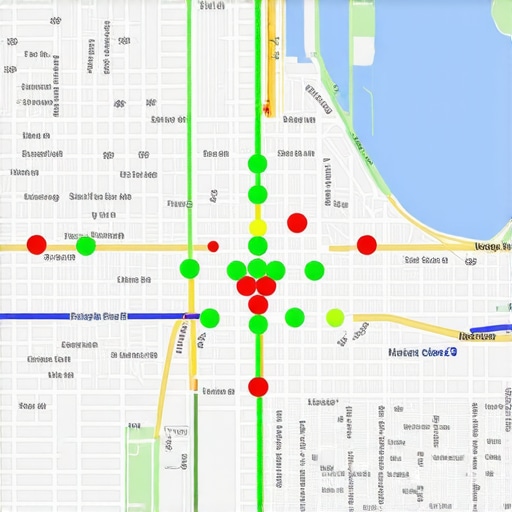
I learned the hard way that sitting at my office desk and searching for my own business was the worst way to track my progress. Google knows it’s me. To really see how I was performing, I had to stop relying on my own screen and start using specialized software that scans the city from different GPS coordinates. I personally rely on grid-based tracking because it reveals exactly where my reach fades out. If you aren’t using a tool like this, you are flying blind. You might be #1 at your front door but invisible two blocks away. I started using how to use a google maps rank tracker to find competitor weak spots to identify the exact street corners where my competitors were vulnerable. This isn’t just about ego; it’s about knowing where to focus your local content efforts next.
How do I keep my business map pack results alive for the long haul?
Maintenance is the part everyone ignores because it isn’t ‘exciting.’ But the moment you stop feeding the algorithm, your local pack entry starts to decay. I treat my profile like a living organism. Every Monday, I go through a simple checklist for moving up in the business map pack every month, which includes checking for ‘suggested edits’ from competitors. Yes, people will try to change your phone number or mark you as ‘permanently closed’ just to steal your spot. You have to be your own digital bouncer. According to the Google Maps Platform documentation, your ‘Place ID’ is a persistent identifier, but your metadata is surprisingly fragile. If you don’t verify your details regularly, a single malicious edit can trigger a verification loop that takes weeks to fix.
Don’t Let Your Competitors Steal Your Profile Details
The biggest threat to a stable mappack listing isn’t the algorithm—it’s the other guys in your zip code. I’ve seen rivals get aggressive with keyword stuffing in their business names, which is a direct violation of terms but often works for a few weeks. Instead of stooping to their level, I use 5 local seo tools that reveal why your competitors are still outranking you to build a case for a redressal form. When you play the long game, you win by being the most trusted, most consistent option. I also suggest keeping a close eye on the core shifts in google maps seo for 2026 every local business needs to prepare for. We are moving toward a ‘Search Generative Experience’ where Google’s AI will summarize your reviews for the user before they even click your site. If your reviews don’t mention specific services, you’re going to get left behind in the AI summary.
The Future of Local Search is Contextual
I predict that by 2026, proximity will matter even less than it does now, and ‘real-time signals’ will take over. Google is already experimenting with using anonymized phone data to see how long people actually stay at your business. If people click your map listing but never actually drive there, your rank will tank. This is why I am so obsessed with how we fixed a mappack listing that disappeared overnight by focusing on user intent rather than just keywords. You need to give people a reason to actually hit the ‘Directions’ button. Tonight, I want you to try one advanced move: Go into your competitor’s top three listings and see if they are using a ‘virtual office’ or a P.O. Box. If they are, and you have a real physical storefront, you can often clear them out with a single report, opening up a massive gap for your own brand to dominate. It’s time to stop playing defense and start securing your territory.
Lessons I Learned the Hard Way While Chasing Local Pack Dominance
Securing a local pack entry isn’t about outspending the competition; it’s about out-thinking them. I spent months worrying about getting a high volume of reviews, only to realize that relevance was the missing piece. One lightbulb moment occurred when I stopped treating my profile as a static yellow pages ad and started treating it like a community bulletin board. Consistency is your greatest weapon—if your address varies even slightly between your site and your listing, you’re essentially telling Google you don’t know where you live. Finally, don’t let a lack of history scare you. Newer, highly relevant listings often jump over older ones because they provide the exact details a modern searcher needs right now.
The Toolkit That Actually Keeps My Listings Visible
I don’t believe in magic ‘SEO buttons,’ but I do believe in data. To truly rank business maps effectively in the local pack, you need a view from the outside. I swear by grid-based trackers that show my ranking street by street; it’s the only way to see if my reach is growing or shrinking. I also suggest keeping a simple checklist for moving up in the business map pack every month to ensure you never miss a malicious edit or a new question from a lead. These aren’t just ‘tasks’—they are the digital maintenance required to keep your phone ringing.
#IMAGE_PLACEHOLDER_E#
Take Your Territory and Start Winning Today
Building a dominant presence isn’t an overnight sprint, but the rewards are permanent and powerful. When you finally see your second or third location pop into that top three spot, the influx of leads feels like someone finally turned the faucet on. You’ve worked hard to build a real business; don’t let a few technical errors keep you in the shadows. By applying these mappack listing secrets every local business should know, you are laying the foundation for years of organic growth. I’ve gone from zero to top dominating business map pack rankings by staying disciplined, and I know you can do the same for your local brand. Which of these steps are you going to implement first to claim your map pack placement? Let me know in the comments below!