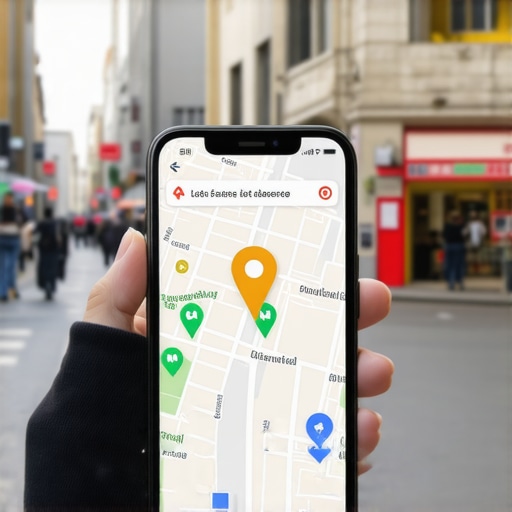
I sat there in my truck, parked right across the street from my own storefront, and pulled up Google Maps on my phone. My heart sank. Even though I was practically leaning against my own building, my business didn’t show up in the top three results. A competitor from two towns over was sitting pretty in that gold-medal spot. I felt like a ghost in my own neighborhood. It is a gut punch when you realize your mappack listing is effectively invisible to the people who are literally walking past your door. Today, I am going to pull back the curtain on exactly why this happens and how to fix it. It is rarely just about how many reviews you have; it is usually something much more technical and, frankly, annoying. Have you ever searched for your own services from a nearby coffee shop only to find yourself buried on page two?
Why your proximity is no longer a ranking guarantee
For years, I told anyone who would listen that being close to the searcher was the ultimate cheat code. I was wrong. Google has evolved, and now, your proximity to the searcher is only half the story. If your digital signals are messy, Google would rather show a distant business with clear data than a nearby one that looks like a gamble. According to research from BrightLocal, proximity remains a primary factor, but the ‘relevance’ and ‘prominence’ filters are now aggressive enough to hide a business that sits right next door if its local signals are weak. This is often caused by a service area page error that confuses the algorithm about where you actually serve customers.
Does the map pack even matter for your bottom line?
You might be wondering if fighting for that local pack entry is worth the headache when you already have a loyal following. The reality is that over 40% of all local searches result in a click within that map area. If you aren’t there, you aren’t just losing ‘visibility’—you are actively handing your local leads over to the guy down the street who simply checked the right boxes.
My early mistake with messy business data
When I first started, I thought I could outsmart the system by using slightly different names for my business on different websites to ‘track’ where leads came from. It was a disaster. I was actually creating broken citations that were quietly stealing my lead volume. Google saw three different versions of my business and decided none of them were trustworthy enough to show to nearby customers. I had to learn the hard way that consistency is the bedrock of ranking business maps effectively. We are going to dig into how you can audit your own presence and stop the ‘invisible business’ syndrome for good.
Clean up your digital fingerprints first
Imagine your business data is like a radio signal. If you have three different stations broadcasting on the same frequency, all the listener hears is static. This is exactly what happens when your Name, Address, and Phone number (NAP) aren’t identical across the web. I once worked with a local bakery that had three different versions of their name on Yelp, Facebook, and their own site. They were wondering why their mappack listing wasn’t showing up. Once we performed a data cleanup move, their visibility shot up because Google finally knew who they were. You need to hunt down every old address and disconnected phone number. This isn’t just busy work; it is the fundamental step to rank business maps effectively.
The category tweak that ends your ranking slump
Most business owners pick a category that is ‘close enough’ and call it a day. That is a massive mistake. Google’s algorithm is incredibly literal. If you are a plumber but you’ve listed yourself under ‘General Contractor’ to try and cast a wider net, you are actually diluting your relevance for the searches that matter most. I’ve seen businesses transform their results overnight by making a service category adjustment. It is the difference between being a big fish in a small, relevant pond and drowning in the ocean. 
Stop uploading generic stock photos
We have all seen those overly polished photos of handshakes or smiling models that clearly don’t work at your office. Google hates them, and so do your customers. I started seeing real movement when I began uploading raw, high-quality photos of my actual truck and the jobs I was doing. When you leverage local photos, you are giving Google visual proof of your location and service quality. It’s like showing your ID at the door; it proves you are who you say you are. Make sure you aren’t making a simple photo metadata error that strips the location data from your files.
Why clicks matter more than five-star ratings
You can have five hundred reviews, but if nobody is actually interacting with your profile, Google thinks you are a ‘dead’ business. I used to focus purely on the number of stars, but I realized my competitors were winning because people were actually clicking their ‘Call’ button or asking for directions. You need to use interaction tactics that encourage people to engage. Respond to every review, post weekly updates, and answer the Q&A section. This creates a ‘heartbeat’ for your local pack entry that signals to the algorithm that you are the most active, and therefore most helpful, choice for the searcher.
Fix the technical leaks in your service pages
If your website doesn’t explicitly support your map profile, you are fighting with one hand tied behind your back. I spent months wondering why a specific neighborhood wasn’t seeing my business until I realized I had a service area page error on my site. The text on your page should mirror the service area you’ve set in your profile. When your website and your map listing tell the same story, your map pack placement becomes much more stable.I’ve spent years looking at local grids, and I can tell you that review volume is often a vanity metric. If you have 500 reviews from three years ago and your competitor has 10 reviews from the last month, Google’s ‘freshness’ filter will likely favor them. This is why good reviews aren’t enough to rank business maps anymore if the activity has stalled. According to research by Joy Hawkins at Sterling Sky, review content and recency are frequently more influential for ranking than the raw star count.
The review count myth that is holding you back
Many owners think they can just hit a ‘magic number’ of reviews and stop. That is a dangerous mistake. You need ‘Review Velocity’—a steady stream of feedback that proves your business is still alive and kicking. If your profile goes dark for two months, your mappack listing begins to lose its ‘prominence’ score.
Why does the competitor with fewer reviews still win the top spot?
It feels like a glitch in the matrix when you see a competitor with fewer reviews winning the map pack placement. The secret usually lies in ‘brand authority’ and ‘local justification.’ Google is looking for signals that you are a real, talked-about entity in your specific town. If a local news site mentions your business name or you sponsor a little league team, those local brand mentions can help you rank business maps better than a hundred generic reviews. #IMAGE_PLACE_HOLDER_C#
Stop wasting money on the citation volume trap
One of the biggest ‘traps’ I see is the ‘Citation Explosion.’ Business owners get desperate and pay for hundreds of citations on random, low-quality directories. In reality, buying 100 generic citations is actually hurting your local rankings because it creates a footprint of low-quality spam. Google knows the difference between a mention on your local Chamber of Commerce site and a listing on a ‘link farm.’ Focus on quality. I have found that citation volume alone won’t help you outrank local competitors who have deep, localized links. Another common ‘Oops’ is neglecting your technical foundation; why your local schema might be failing to help your ranking often comes down to simple formatting errors that confuse the crawlers.
Cracking the proximity trap
Just because you are physically closer doesn’t mean you win the local pack entry. If your website lacks local relevance, you’re essentially invisible. How to fix the proximity trap involves proving your relevance through content that actually mentions local landmarks. Your map pack placement is a reflection of your real-world reputation. Have you ever fallen into this trap of focusing on the wrong numbers? Let me know in the comments. We need to look at 7 hidden ranking factors to truly move the needle.
Ditch the vanity metrics and see the real grid
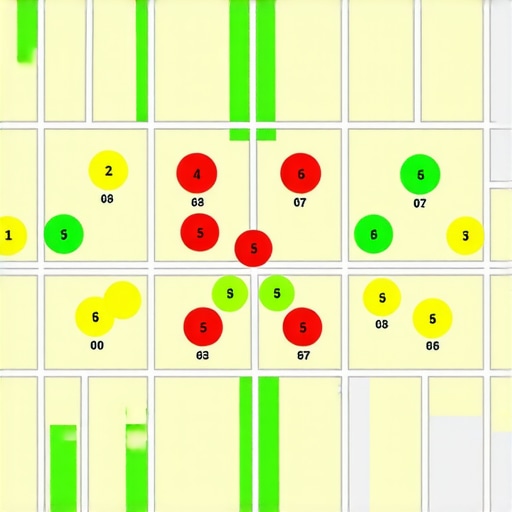
For a long time, I made the mistake of searching for my own business from my desk, seeing myself at number one, and feeling like a king. The problem is that ranking for a single search from a single chair is a lie. Most local keyword tracking tools give you a false sense of security because they don’t show you the ‘shrinkage’ of your visibility as you move just two blocks away. To stay on top, I rely on grid-based trackers. You need to use a google maps rank tracker to find competitor weak spots by seeing exactly where your green ‘rank 1’ bubbles turn into red ‘rank 10’ bubbles. This visualization is the only way to see if your mappack listing is actually dominating the neighborhood or just serving your own office building.
How do I maintain my map pack ranking over the long haul?
Maintenance isn’t about massive overhauls; it is about micro-actions. I have a simple checklist for moving up in the business map pack every month that starts with auditing the ‘suggested edits’ from the public. If a competitor or a confused user changes your hours or category, and you don’t catch it, Google will trust them over you. You also need to keep your ‘velocity’ up. This means at least one high-resolution photo upload and one owner-response to a review every seven days. If the activity stops, the local pack entry begins to slide. David Mihm, a pioneer in local search, often emphasizes that ‘relevance’ is not a static score but a decaying one. If you aren’t feeding the profile new data, your relevance is expiring in the eyes of the algorithm.
Prepare for the shift toward real-time signals
If you think the current system is demanding, wait until you see the core shifts in google maps seo for 2026. We are moving away from static signals like citations and toward dynamic signals like real-time foot traffic and mobile interaction speed. Google is getting better at knowing if someone actually walked into your store after seeing your map pack placement. This is why you must optimize your map pack entry for better local search rankings by making your ‘Call’ and ‘Direction’ buttons the easiest things for a user to click. High-friction profiles—those with missing menus, no price ranges, or outdated hours—will be the first to get cut from the top three as the algorithm prioritizes user experience above all else. My advice? Go pull up your local grid right now. Find one ‘red’ area on the map where you should be ranking but aren’t, and publish a local post specifically targeting that neighborhood’s landmark or street name. It is time to stop guessing and start measuring.
Three Hard Truths About Why Your Business Map Pack Spot Keeps Slipping
I learned the hard way that a business map pack isn’t a ‘set it and forget it’ trophy. First, your ranking is a decaying score; if you stop feeding Google new, localized data, your relevance starts to evaporate. Second, the NAP error that costs you a top 3 spot every day is often found in the most obscure places, like an old profile you forgot existed years ago. Finally, user behavior is the ultimate tie-breaker. If people find your mappack listing but never click for directions, Google assumes you aren’t the best answer for that local search. You have to give people a reason to interact, not just look.
Tools That Actually Help You Move the Needle
I don’t recommend a hundred tools, just the ones that provide map pack visibility strategies that actually translate into calls. I swear by grid-trackers because they reveal the proximity trap in real-time. For managing your reputation, skip the expensive agencies and use the simple review request strategy that won’t annoy your best customers. This keeps your review velocity high without looking spammy. Lastly, use the native Google Business Profile app; replying to a customer message within minutes is a stronger signal to the algorithm than any generic backlink from a distant blog.
Taking Back Your Local Territory
Your journey to rank business maps effectively isn’t about gaming a system; it is about becoming the most prominent digital landmark in your community. When you fix the technical leaks and start providing real-time value to your neighbors, the algorithm has no choice but to reward you. Go out there, clean up your data, and claim the map pack placement your hard work deserves. What is the one ranking gap you have noticed your competitors are exploiting lately? Let me know in the comments below.