
I sat there for three hours, refreshing the page and hoping for a miracle that never came. My client’s plumbing business was invisible in the local results, despite having dozens of five-star reviews and a verified profile. I felt like a total failure because I’d promised them a local pack entry within a month. I had spent weeks tweaking their description and uploading photos of leaky pipes, yet they were nowhere to be found. It wasn’t until I looked at their competitor’s backlink profile that the lightbulb finally flickered on. I realized I was fighting a war with only half my army.
The Invisible Cord Between Your Site and the Map Pack
We often think that what happens on Google Maps stays on Google Maps. It’s a common trap. Early in my career, I focused entirely on the listing itself, neglecting the very foundation it sits on—the website. I made the classic mistake of thinking that citations alone would do the heavy lifting. They didn’t. The truth is, your map pack placement is deeply tethered to your website’s organic authority. If your site has no votes of confidence from other reputable corners of the internet, Google simply won’t trust you enough to put you in the top three.
Is This Link Building Stuff Actually Worth the Headache?
I get it. You’re busy running a business, not chasing down journalists for a shout-out. You might be wondering if backlinks are just some outdated SEO relic. They aren’t. In fact, the experts at Whitespark note in their annual survey that local organic ranking factors—of which backlinks are a massive part—make up about 31% of the weight for ranking business maps effectively. It’s not just extra credit; it’s a core requirement. Have you ever felt like you’ve done everything right on your profile but still can’t crack that top three? You’re likely missing the external validation your site needs.
Your Website’s Authority is the Secret Engine
When I finally started building local links for that plumber—getting them mentioned in local news blogs and sponsoring a little league team—the results were almost immediate. We weren’t just optimizing for local search rankings; we were building a reputation that Google could see. The role of user behavior and trust cannot be overstated. When a local news site links to you, it tells the algorithm that you are a real, relevant pillar of the community. Today, we are going to dive into exactly how those backlinks bridge the gap between just another listing and a dominant local presence that actually rings your phone.Think of your website as a physical store and backlinks as the street signs pointing people toward you. If you only have signs inside your own building, no one is ever going to find the front door. I learned this the hard way with a boutique HVAC client in a crowded suburban market. They had a decent site, but their mappack listing was stuck on page four. It wasn’t until we secured a single link from the local high school’s booster club website that we saw the needle move. That one locally relevant ‘vote’ did more for their map pack placement than fifty generic directory submissions ever could.
Stop Chasing Giant Sites and Start Owning Your Neighborhood
Most people get caught up in Domain Authority (DA) and try to get featured on massive national blogs. For a local business, that’s often a waste of energy. Google’s local algorithm cares far more about geographic relevance than global prestige. If a local neighborhood association or a nearby chamber of commerce links to you, it confirms your physical presence in that specific area. This is one of the most effective tactics to rank business maps because it provides a ‘location signal’ that a link from a New York Times article just can’t replicate. 
The Community Sponsor Strategy That Actually Works
Instead of cold-emailing strangers, look at who you already know. I once suggested a client sponsor a local ‘Adopt-a-Highway’ segment. Not only did they get a physical sign on the road, but they also got a link from the state’s environmental department page dedicated to local contributors. This is how you rank business maps effectively: you marry real-world activity with digital signals. If you’re struggling, stop looking at SEO tools and start looking at your community calendar. Sponsoring a 5k run or a local charity auction often results in a high-quality, hyper-local backlink that solidifies your local pack entry.
Turn Your Blog Into a Local Powerhouse
You probably have a blog that you haven’t touched in six months. That is a goldmine waiting to be tapped. I’ve found that writing about local events or ‘best of’ lists for your town can attract natural links from other local businesses. When you use your blog to support your mappack listing, you are creating a web of relevance. For example, a roofer writing about the ‘Top 5 Parks in [City Name]’ might get a shout-out from a local parenting blog. That link tells Google that the roofer isn’t just a service provider; they are a part of the local fabric.
Don’t Ignore Your Technical Foundation
While you’re out there building links, make sure your house is in order. A common reason a local pack entry fails is because the website it’s linked to is a technical mess. If your site takes ten seconds to load on a mobile device, Google will be hesitant to promote you, no matter how many links you have. In fact, your local pack entry depends on your websites loading speed more than you might think. A fast, responsive site ensures that when a customer clicks your map listing, they actually stay long enough to call you, sending positive engagement signals back to the algorithm.Let’s dig deeper into what is actually happening behind the scenes. Most gurus will tell you that proximity is the end-all, be-all of your local pack entry. They claim if you are not right next to the searcher, you are invisible. In my experience, that is a dangerous oversimplification. While Google certainly prioritizes location, digital authority can and does override physical distance. If your website has significant local clout, you can leapfrog a competitor who is physically closer but digitally weaker. This is precisely why your stores proximity is no longer enough to win the map pack. You have to prove you are the most relevant answer, not just the nearest one. One of the biggest ‘oops’ moments I see involves business names. It is tempting to change your name to ‘Best Plumbing Los Angeles’ on your profile to game the system. While it might give you a temporary boost, it is a ticking time bomb. Google is increasingly aggressive about name consistency. A conflict can trigger a suspension that takes months to resolve. I have seen businesses lose a year of growth because of a single keyword. Trust me, your mappack listing needs more than just a keyword-rich name to survive a manual audit. 
Why Does My Rank Change from One Block to the Next?
This is the question that keeps business owners up at night. You might be in the top three while sitting at your desk, but your mappack listing rank varies block by block once you walk to the coffee shop down the street. This is often due to centroid shifts and local competition density. According to research by Sterling Sky, the presence of hidden filters—like the proximity filter—can cause your listing to disappear if another business in the same category is closer to the users specific GPS coordinate. To beat this, you need to focus on Review Velocity. It is not just about having 100 reviews; it is about how recently and consistently you are getting them. This is a massive part of how to rank business maps effectively in the local pack because fresh engagement tells Google you are currently active and reliable. Have you ever fallen into this trap or noticed your rankings disappear as you drive across town? Let me know in the comments. We have found that the hidden map pack visibility tips your competition is using often revolve around these hyper-local engagement signals that most people ignore in favor of generic citations. Success in map pack placement requires a balance of local signals and technical precision.Reaching the top of the search results is an incredible rush, but staying there is a marathon that requires more than just luck. I’ve seen too many business owners secure a local pack entry, celebrate for a few days, and then panic when they’ve dropped to position seven by the following Tuesday. To prevent this, I rely heavily on visual grid trackers. Tools like Local Falcon or BrightLocal’s heatmaps are indispensable because they reveal the truth about your reach across different neighborhoods. If you aren’t using 7 local seo tools resources that actually show your real ranking, you are essentially flying blind. I use these heatmaps to see exactly where my ‘authority bubble’ ends and where a competitor starts to take over, allowing me to adjust my local content strategy for specific street corners. One specific thing I do every Monday morning is check for ‘suggested edits’ on my clients’ profiles. Competitors can be ruthless, suggesting your business is permanently closed or changing your phone number to a dead line. This is the simple business listing management task you are probably skipping, and it’s the easiest way to lose your hard-earned spot overnight. I also keep a close eye on category conflicts. If a new business opens nearby with the exact same primary category, Google might filter one of you out to provide ‘variety’ to the user. Joy Hawkins, a renowned expert at Sterling Sky, often notes that category cannibalization is a silent killer for visibility. If you see a sudden dip, you need to know how to monitor map pack placement beyond just searching from your own phone, which is heavily biased by your personal search history. 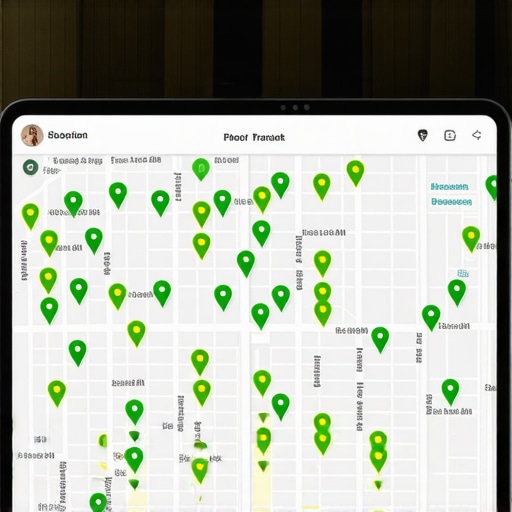
How do I keep my map ranking from falling off a cliff?
Maintenance isn’t just about defensive moves; it’s about staying relevant through fresh data points. I strongly advocate for a ‘Photo First’ strategy. Every time a technician finishes a job or a new product hits the shelf, someone should snap a high-resolution photo. Not only does this provide social proof to potential customers, but how a simple photo update can trigger a new local pack entry signal for the algorithm is often underestimated. It shows Google that your business is active in the physical world today, not just six months ago. While consistency in your NAP data is the absolute minimum requirement, active engagement is what builds your ranking ceiling. This is why mastering business map pack success requires a weekly routine of responding to every review and posting Google Updates that highlight your current offers. Looking ahead, I predict that AI-driven ‘Review Summaries’ will become the primary way Google decides who gets the top spot. We’re already seeing Google use its Gemini AI to summarize what customers say about your specific service speed, pricing fairness, or office atmosphere. This means the way to win a local pack entry in 2026 will rely less on internal keywords and more on the specific adjectives used in your customer feedback. If you want to stay ahead of this trend, stop asking for ‘five stars’ and start asking your customers to mention the specific service you provided in their review. Don’t wait for your rankings to tank before you take action. Go into your Google Business dashboard right now and upload three new photos of your latest project—it’s the fastest way to signal life to the algorithm. If you’re still feeling stuck or your profile just won’t budge regardless of what you try, feel free to contact us for a deep dive into your specific market.
What My Worst Ranking Drops Taught Me About Google
Over the years, I have learned that the algorithm is far more sensitive to real-world signals than any spreadsheet can track. One of my biggest lightbulb moments was realizing that why your map pack placement slipped despite gaining new reviews often comes down to the quality of the interactions, not just the raw volume. You cannot simply ‘buy’ your way into a local pack entry by stacking generic citations; it requires a genuine connection to your neighborhood. I also discovered that transparency wins every time. If you try to hide a physical location or use a virtual office, you are setting yourself up for a painful mappack listing recovery process later. The hardest lesson was accepting that SEO is never ‘done’—it is a living, breathing part of your business that needs weekly attention.
The Essential Toolkit for Staying Visible
I rely on a handful of resources that provide the ground-level truth rather than theoretical fluff. First, I always consult 7 local seo tools resources that actually show your real ranking because they cut through the bias of your personal search history. I also suggest keeping an eye on the Whitespark Local Search Ranking Factors report, which is the gold standard for understanding what actually moves the needle each year. For those who want to dig into the technical side, finding 3 minimalist tools that find ranking gaps your agency missed can save you thousands in unnecessary consultant fees. These tools help you see exactly where your competitors are outworking you so you can strike back with precision.
Your Path to Local Search Dominance
You now have the blueprint to stop being a ghost in your own city. Winning a top spot in the business map pack isn’t about having the largest marketing budget; it’s about being the most consistent, relevant, and authoritative answer for your neighbors. Don’t let the technical jargon intimidate you. Focus on your reviews, your photos, and your local community links, and the rankings will follow. If you are ready to take it to the next level, I recommend looking at dominating business map pack rankings as your long-term goal. Have you ever noticed your rankings change drastically just by moving a few blocks away from your office? Let me know your experiences with proximity in the comments below!