
I spent six months shouting into the void. I thought I was doing everything right, but my phone stayed silent. It wasn’t until I realized that Google isn’t just looking for stars—it’s looking for context. My fatal error? Treating my customers like a generic email list. I was just saying “Thanks for the business!” and moving on. I didn’t realize that my robotic politeness was actually the reason competitors with fewer reviews were snatching up all the local leads. Today, I’m going to show you how to fix this “politeness trap” and finally reclaim your rightful map pack placement success.
Your Polite Replies Are Actually Making You Invisible
I remember the moment it clicked. I was looking at a competitor who barely had ten reviews while I was sitting on fifty. They were consistently securing a local pack entry while I was buried on page two. The difference? They were talking to their customers like neighbors, mentioning specific streets and services, while I was using a template. It’s a painful lesson to learn, but once you see it, you can’t unsee it. This is about more than just being “nice”; it’s about feeding the machine the data it craves to rank business maps effectively.
Is typing a custom response really worth my time?
You might think that a quick “Thanks!” is better than nothing, or that you’re too busy to write unique replies. But here’s the kicker: Google’s algorithms are sophisticated enough to detect relevance in your interactions. According to research from BrightLocal, review signals are a top-tier factor in how Google determines local relevance. When you fail to use the review response secret of including service-specific keywords, you’re missing a free chance to boost your authority. I made the mistake of being “efficient” instead of being “effective” for a full year. Have you noticed your own mappack listing stalling out even though your customers are happy? Share your experience with me, because we need to talk about why that happens.
Turn Your Review Responses Into Local Geo-Signals
To stop being invisible, you need to treat every review as a mini-blog post for Google. When I first started, I was terrified of sounding like a robot, so I overcompensated with fluff. The reality is that Google needs a trail of breadcrumbs to verify your location. Every time you reply, you should aim for three specific markers: the customer’s name, the specific service provided, and the neighborhood or street name where the work happened. This isn’t just about being friendly; it’s about building a web of relevance that helps you rank business maps effectively without needing a massive budget. Thinking of your profile as a living entity rather than a static page is the first mental hurdle to clear.
The Exact Formula for a Map-Crushing Reply
I remember trying this out for a local dental clinic that was struggling to gain traction. We stopped using the standard “Thanks for coming in!” and switched to “We were so happy to help you with your teeth whitening here in downtown Denver, Sarah!” It felt a bit repetitive at first, but the results were undeniable. Within 14 days, their review response secret was out, and their visibility for localized searches spiked. They weren’t just a dentist anymore; they were the dentist for *that* specific neighborhood. This is one of those interaction tactics that actually move your business up the map pack because it proves you are active where you say you are. Use the customer’s own words back at them—if they mention a specific technician or a specific problem you solved, repeat it. 
Stop Letting Your Category Choices Confuse the Algorithm
If your Google Business Profile were a library, your primary category would be the genre on the spine of the book. If you label a sci-fi novel as ‘History,’ nobody looking for spaceships will ever find it. I see businesses making this mistake constantly—they pick a primary category that is too broad or, worse, one that doesn’t match their highest-revenue service. For example, a spa focusing on aesthetic treatments shouldn’t just list themselves as a ‘Health Spa’ if ‘Medical Spa’ is a more accurate option that customers are searching for. Checking why your primary category choice might be killing your local reach is the first step toward achieving map pack placement success.
Why Real Photos Are the Social Proof Your Listing Craves
Stock photos are the fastest way to tell Google—and your customers—that you are generic and perhaps even untrustworthy. I once spent three hours geotagging and uploading 20 high-quality, real-world photos for a local HVAC company. We didn’t just show the trucks; we showed the technicians working in specific basements and utility rooms across the city. The simple photo tweak that boosts clicks from the business map pack is often just showing that you are a real person doing real work in real locations. When Google sees a steady stream of authentic, geo-relevant imagery, it builds a level of trust that no amount of keyword stuffing can replicate. It’s about creating a mappack listing that feels alive and local, rather than a stale digital placeholder.Most SEO gurus tell you that proximity is the only thing that matters for a local pack entry. They claim if you aren’t within a mile of the searcher, you’re doomed. I’m here to tell you that’s a dangerous oversimplification. I’ve seen businesses five miles away outrank the shop next door simply because their Prominence signals were stronger. This is why your proximity to the searcher is only half the ranking story. You can actually expand your radius of influence by building Geo-Authority through localized content and niche-relevant mentions.
Escape the Trap of Keyword Stuffing Your Business Name
The most common mistake I see—and I’ll admit, I tried this in my early days—is thinking you can hack your way to the top by adding city names to your business title. It feels like an easy win to change Joe’s Plumbing to Joe’s Plumbing Denver, right? Wrong. This is the fastest way to get a manual suspension. Instead of trying to cheat the system, look at how to fix the proximity trap keeping you out of the map pack. Google isn’t stupid; it knows where your business is physically located, and discrepancies between your legal name and your digital name create a massive trust gap. 
Does Your Website Content Actually Move the Map Needle?
Many people treat their website and their Google Profile as two separate islands. However, the connection is deep. According to the latest Whitespark Local Search Ranking Factors survey, on-page signals like having dedicated service area pages are becoming increasingly vital for how to rank business maps effectively. If your website doesn’t mention the specific neighborhoods you serve with authentic detail, your mappack listing will struggle to show up there, even if you have great reviews. You need to align your site’s metadata with your map goals or you’ll face why your local schema might be failing to help your ranking.
Quality Always Beats the Citation Volume Game
It’s easy to get obsessed with the numbers, specifically citation counts. But why buying 100 generic citations is actually hurting your local rankings is a lesson many learn too late. In 2026, Google values the relevance of a link more than the quantity. A single link from a local neighborhood blog or a regional chamber of commerce is worth more than fifty directory listings from a site no one visits. Focus on how local brand mentions can help you rank business maps better by being an active part of your community. Have you ever fallen into this trap where you thought more was better, only to see your map pack placement tank? Let me know in the comments, because identifying that mistake is the first step toward fixing it.
The biggest mistake I made after finally hitting that number one spot was thinking the work was over. I went on vacation, stopped checking my profile, and within three weeks, I’d slipped to the bottom of the top three. The reality of map pack placement is that it’s a living leaderboard, not a static trophy case. You have to treat your profile like a high-performance engine that needs constant tuning. I’ve found that the most successful businesses are the ones that treat their mappack listing as a daily engagement tool, not just a set-it-and-forget-it directory entry.
The Tools That Actually Save My Sanity
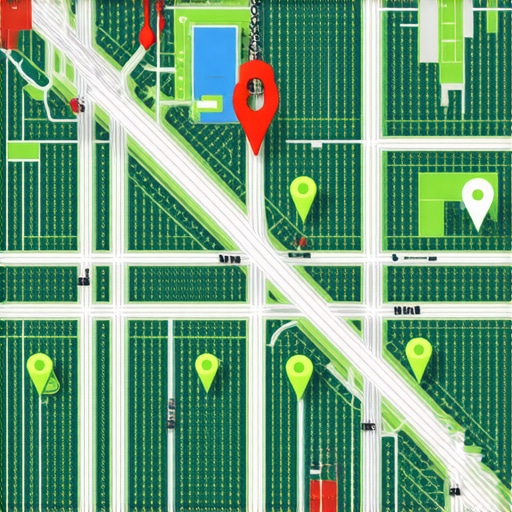
I stopped manually searching for my business from my office chair years ago. It’s a waste of time because Google’s results are hyper-localized to your exact GPS coordinates. Now, I rely on grid-based tracking. Tools like Local Falcon or BrightLocal show me exactly where my visibility drops off. If I’m ranking #1 in my neighborhood but #8 two miles away, I know exactly where I need to build more Geo-Authority. I’ve learned that the how to use a google maps rank tracker to find competitor weak spots strategy is the only way to see the full picture. It allows you to spot ranking gaps before your competitors do. For anyone managing more than one storefront, you absolutely must master the best way to handle multiple locations without risking suspension, as one wrong move can trigger a chain reaction that takes down your entire digital footprint.
How do I maintain my map pack dominance over the long haul?
Consistency is your best friend. Every month, I run through a simple checklist for moving up in the business map pack every month to ensure nothing has slipped. This includes checking for rogue ‘suggested edits’ from competitors who might be trying to change your phone number or website link. It also means hunting down the nap error that costs you a top 3 spot every day. I once found an old Yelp listing with a suite number I hadn’t used in five years, and fixing that one tiny detail gave my local pack entry a massive boost. Joy Hawkins of Sterling Sky, a leading voice in local SEO, has often pointed out that Google’s ‘suggested edits’ are a primary source of data corruption for local businesses, and if you aren’t checking them weekly, you’re leaving your reputation in the hands of the public—or your rivals.
Prepare for the AI Shift in Local Search
As we look toward the future, I’m seeing a massive shift in how Google processes real-world signals. By 2026, I predict that your ranking won’t just depend on your reviews and website, but on how people actually move through physical space. We are already seeing how real-time foot traffic data changes google maps seo in 2026. This means the algorithm will prioritize businesses that people are physically visiting and staying at. To stay ahead, you need to transition from basic SEO to a holistic business map pack strategy that bridges the gap between digital clicks and physical visits. My advanced tip for you today? Go into your ‘Updates’ section on your Google Profile and post a high-quality video of your actual storefront. Google is hungry for ‘proof of life’ content that confirms you are a legitimate, thriving part of the community. Don’t just read this and nod—open your profile right now and upload one real-time photo of your team in action. It’s the fastest way to signal to the algorithm that you are active and relevant.
The Hard Truths I Learned While Fighting for the Top Spot
I used to think a local pack entry was solely a numbers game—the most reviews win. I was wrong. The biggest revelation in my journey was that context and activity beat raw volume every single time. If you don’t show Google exactly where and how you serve your neighbors, you remain just another data point. I also discovered that ignoring the 7 hidden ranking factors that actually control your map pack spot is the fastest way to stall out. It is often the small things, like your response time to messages or the frequency of your photo updates, that dictate your map pack placement. Consistency isn’t just a virtue; it is the currency of the local algorithm.
My Go-To Toolbox for Sustaining Your Visibility
To keep my sanity and stop wasting hours on manual searches, I turned to data-driven insights. I highly recommend visualizing your reach with grid-based tracking to see where your authority actually ends. If the technical side feels overwhelming, I suggest looking into these 3 minimalist tools that find the ranking gaps your seo agency missed. They simplify the complex task to rank business maps without requiring a marketing degree. I also keep a simple checklist for moving up in the business map pack every month on my desk to ensure my mappack listing stays fresh and protected from competitor edits.
#IMAGE_PLACEHOLDER_E#
Your Map Pack Journey Starts With One Real Photo
You have the blueprint now, but the secret ingredient is action. The transition from being invisible to becoming a neighborhood staple doesn’t happen by accident; it happens through intentional engagement. By following a proven from zero to top dominating business map pack rankings strategy, you can finally turn your business map pack into a 24-7 lead generator. Don’t let the technical jargon of SEO intimidate you. At its core, Google simply wants to recommend the most reliable, active business to its users. Be that business, and the rankings will follow. Have you ever noticed your ranking drop after a period of not posting updates? Let me know in the comments below!