
I still remember the look on Sarah’s face. She had spent six months and a small fortune on a sleek, white-marble reception desk and the latest skin-tightening tech. But when we looked at her phone? Silence. We pulled up Google and searched for Botox in her city. Her business was buried on page three, effectively invisible to every potential client in a ten-mile radius. It is a gut-punch that too many owners feel every single morning when they realize their mappack listing is basically a ghost town. You have the skills and the beautiful space, yet that 1-star competitor down the street is hogging all the bookings because of a specific ranking strategy you haven’t touched yet. I am here to tell you that it is not about who has the prettiest office; it is about who plays the Google game correctly.
Why Your Luxury Spa Stays Hidden on the Second Page
Early in my career, I made a massive mistake that I still cringe about: I thought that good reviews were enough to win. I spent months helping a client chase five-star ratings, only to realize that Google’s algorithm is far more cynical than I was. We had 100+ reviews and were still getting beat by a clinic with twelve. I was ignoring the technical foundations, the “backend” details that actually move the needle for map pack placement. Most med spas fail here because they treat their Google Profile like a static business card instead of a living, breathing lead generator. If you are stuck at #7 or #10, you are likely falling into the same trap I did years ago, neglecting the specific data signals that prove to Google you are the most relevant local authority.
Is this whole SEO thing just a massive money pit?
I get it. You have probably heard ten different “experts” tell you ten different things, and it often feels like hiring a local SEO expert is just a fast way to lose a few thousand dollars. But here is the reality: 76% of people who search for something nearby on their smartphone visit a related business within a day, according to data from Think with Google. If you are not in that top three local pack entry, you are invisible to three-quarters of your local market. Today, we are going to stop the bleeding. We will look at the service category adjustments and technical tweaks needed to claw your way back to the top. Have you ever felt like you are doing everything right and still getting outranked by a mediocre competitor? It is time to change that.
Stop Hiding in the Wrong Category
Think of your primary category as the aisle in a supermarket. If you are selling high-end skincare but you are listed in the ‘General Health’ aisle, the customers looking for a luxury facial will never find you. I once consulted for a clinic that was struggling to gain traction for ‘Laser Hair Removal’ because their primary category was set to ‘Wellness Center.’ As soon as we made the service category adjustment that finally ends your ranking slump, their impressions for high-value keywords doubled in three weeks. Google needs specific labels to trust you. If your mappack listing is vague, you are essentially asking the algorithm to guess what you do—and the algorithm is too busy to guess.
Fix the Data Glitches That Confuse Google
I remember a dental office in Scottsdale that had three different business names listed across Yelp, Facebook, and their own website. To a human, it was obviously the same place. To Google’s bot, it looked like three separate, unreliable entities competing for the same space. This is the nap error that costs you a top 3 spot every day. Your Name, Address, and Phone number (NAP) must be identical everywhere. If one site says ‘Street’ and another says ‘St.’, you are leaking authority. We spent a weekend cleaning up their digital footprint, and the result was a steady climb from #12 to #4 without spending a dime on ads. It is about removing the friction that prevents Google from verifying your location. 
Escape the Proximity Trap
Most owners think they only rank for people standing right outside their front door. This is what I call the ‘proximity trap.’ While distance is a factor, you can expand your reach by proving your relevance in surrounding neighborhoods. This isn’t about keyword stuffing your description; it’s about how to fix the proximity trap keeping you out of the map pack through localized content and geo-tagged media. When we started uploading photos of the clinic’s team at local charity events and tagging the specific neighborhood, Google began to associate the business with a wider radius. You have to actively teach the map where you belong.
Fuel the Engine with Real Interaction
Google watches how people interact with your local pack entry. Do they click to call? Do they request directions? Or do they keep scrolling? If your profile is a ghost town, your ranking will reflect that. I’ve seen businesses move up simply by implementing 5 interaction tactics that actually move your business up the map, such as responding to every single Q&A and updating ‘Google Posts’ weekly. These small signals tell the algorithm that your business is active and helpful, which is exactly what Google wants to reward. It is a feedback loop: more interaction leads to better map pack placement, which in turn drives even more interaction.Let’s dig deeper into the mechanics of why some profiles soar while others remain anchored in mediocrity. Most ‘experts’ will tell you that the secret to a high-performing mappack listing is simply getting more reviews. I’m here to tell you that’s a dangerous oversimplification. In fact, chasing quantity over quality is often why good reviews aren’t enough to rank business maps anymore. Google’s AI has evolved to prioritize review ‘velocity’ and the semantic keywords hidden within the text of those reviews over the raw number at the top of your profile. I’ve seen clinics with 500 reviews get bypassed by a newcomer with 50 simply because the newcomer’s customers were mentioning specific services like ‘CoolSculpting’ or ‘HydraFacial’ in their feedback. This creates a relevance signal that a generic ‘great service!’ five-star review just can’t match. This is exactly why your competitors with fewer reviews still win the map pack placement. They aren’t just getting feedback; they are getting contextually rich data that tells Google exactly what they excel at.
The Quantity Myth That Keeps You Stuck at Number Four
Why do businesses with massive review counts still lose to the underdog?
Recent studies by Whitespark in their annual Local Search Ranking Factors report confirm that while reviews are vital, they are only one piece of a complex puzzle. High-ranking profiles often succeed because of ‘local justification’—where Google pulls a snippet of a review or website text to prove to the searcher that the business offers exactly what they need. If you are not encouraging your clients to mention the specific treatment they received, you are leaving money on the table. Have you ever fallen into this trap? Let me know in the comments.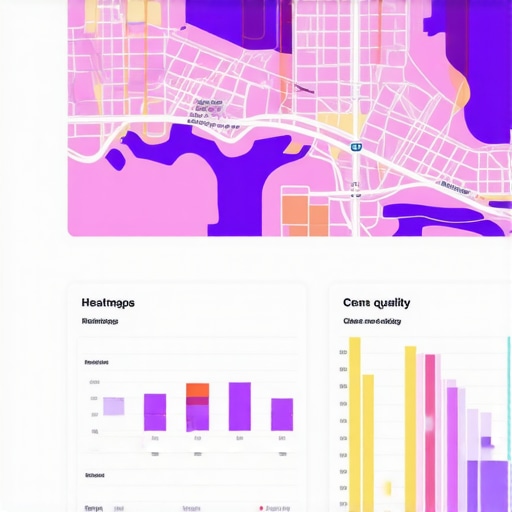
Stop Chasing Every Directory on the Internet
Then there is the citation trap. I see business owners spending hundreds on ‘SEO packages’ that promise 100+ directory listings. Here is the contrarian truth: most of those directories are digital graveyards. In reality, why buying 100 generic citations is actually hurting your local rankings is because it creates a messy data trail that dilutes your authority. Google cares about the ‘Big Three’—Apple Maps, Yelp, and Bing—and niche-specific aggregators. If you’re a med spa, a link from a reputable aesthetic directory is worth fifty links from a generic ‘business list’ site. You need to focus on 7 hidden ranking factors that actually control your map pack spot rather than just filling out forms on obscure websites.
The Risky Game of Name Stuffing
A common ‘oops’ moment I see involves the business name itself. It is tempting to add keywords like ‘Best Med Spa’ or ‘Top Rated Botox’ to your profile name. While it might give you a temporary boost in rank business maps, it’s a violation of Google’s Terms of Service and a fast track to a hard suspension. I’ve had to help dozens of owners through the exact steps we used to reverse a Google Business Profile suspension because they tried to ‘hack’ the system. It is much safer and more effective to build authority through the backend than to risk losing your entire local pack entry overnight. Interestingly, most people don’t realize that why your Google Business description doesn’t actually affect your ranking is because Google’s algorithm ignores that field for ranking purposes, focusing instead on categories and actual user behavior. Stick to the data that moves the needle and ignore the filler.Building that initial momentum feels like a win, but the real work starts when you have a target on your back. Once you hit the top three, every other local competitor is going to look at your mappack listing and try to figure out how to knock you off. I have seen businesses climb to the top only to vanish a month later because they stopped doing the very things that got them there. To prevent this, I rely on a ‘set it and forget it’ maintenance routine powered by a few specific tools. I am a huge advocate for using 3 minimalist tools that find the ranking gaps your seo agency missed, specifically focusing on grid trackers like Local Falcon or BrightLocal. Most people just check their rank from their office, which is useless because Google knows you are standing right there. A grid tracker shows you exactly how you rank block-by-block across the whole city.
Track Your Rankings Without Losing Your Mind
If you are not seeing the full picture, you are essentially flying blind. I personally use grid tracking to identify ‘weak spots’ in the city where my reach drops off. This allows me to see how to use a google maps rank tracker to find competitor weak spots and pounce on them. Joy Hawkins of Sterling Sky has famously noted that Google’s ‘Vicinity’ update made distance a much harsher ranking factor, but you can fight back by proving your relevance in those ‘faded’ areas through specific localized posts. Don’t just post once and stop; use a simple checklist for moving up in the business map pack every month to stay consistent. 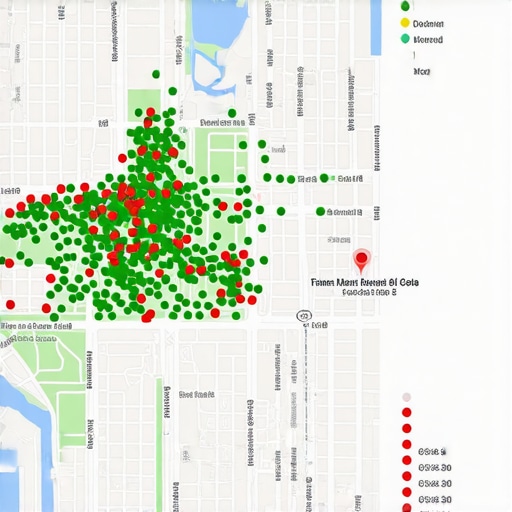
How do I maintain my business map pack spot over time?
The secret is not magic; it is a heartbeat. Google wants to see that your business is still alive and kicking. I make it a non-negotiable rule to swap out at least one image every week. It sounds minor, but the one photo adjustment that increases google profile views instantly is often just showing a ‘behind the scenes’ look at your staff or a new piece of equipment. This activity signal is one of the keys to top map pack placement. If you let your profile go stale for even three weeks, you are basically telling the algorithm that you do not care about new customers.
The Crystal Ball for Local Search
Looking ahead to the next few years, the game is shifting toward hyper-real-time data. We are already seeing how real-time foot traffic data changes google maps seo in 2026, where Google prioritizes businesses that are actually busy in the physical world. This means that your digital presence must match your physical reality. If your hours are wrong or you have a sudden drop in reviews, the algorithm will notice faster than ever. This is the tactic that finally ended our ranking slump in the map pack: treating the digital profile as a real-time reflection of the store’s energy. Stop treating this as a one-time project and start treating it as your most valuable storefront. My challenge to you: Go into your profile right now and upload one high-quality, non-stock photo of your front door. It is the easiest way to prove you are still there and open for business.
The Hardest Truth I Learned About Dominating the Map Pack
Over the years, I have realized that a mappack listing is not a trophy you win once; it is a reputation you maintain daily. One of the most painful lessons I had to learn was that Google values consistency over bursts of activity. I used to think a massive wave of 50 reviews in a week would skyrocket a client, but I quickly found that why your reputation strategy fails to generate leads is often due to these unnatural spikes. Google’s algorithm is smarter than we give it credit for—it looks for a steady “heartbeat” of interaction. Trust is built when you consistently reply to customers and keep your data clean. If you are struggling, it might be because how broken citations are quietly stealing your local lead volume without you even realizing it. Consistency beats intensity every single time in the local search world.
My Personal Tech Stack for Outpacing the Competition
You do not need a thousand-dollar software suite to rank business maps effectively. In fact, most of the noise out there is just a distraction. I rely on a few specific resources that provide “Information Gain” rather than just regurgitated data. I highly recommend checking out 3 minimalist tools that find the ranking gaps your seo agency missed to get a clear view of your local grid. Additionally, for anyone feeling overwhelmed by the technical side, 5 local seo tools that reveal why your competitors are still outranking you can help you see exactly what the guy across the street is doing differently. These tools allow you to stop guessing and start making data-driven adjustments to your local pack entry. #IMAGE_PLACE_HOLDER_E#
Your Map Pack Journey Starts With a Single Photo
It is easy to get bogged down in the technical weeds, but remember that at the end of every search is a real person looking for a real solution. Achieving top-tier map pack placement is ultimately about becoming the most helpful and visible option in your neighborhood. Do not let the fear of “getting it wrong” stop you from taking that first step today. Whether it is fixing your categories or simply responding to an old review, every action moves the needle. You have the tools and the strategy now—it is time to turn your business map pack profile into your most profitable asset. What is the biggest hurdle you have faced while trying to climb into the top three? Let me know in the comments below!