
I remember the exact moment I realized I was doing everything wrong. I was sitting at my kitchen table, nursing a lukewarm coffee, and searching for my own business on my phone. I’d spent thousands on ‘standard SEO’ and months perfecting my blog posts, yet when I searched for my services, I didn’t even see my own shop in the three spots that actually matter. I was buried under a pile of competitors who didn’t even have a blog. That’s when it hit me: the rules for a local pack entry are not the same as the rules for ranking on page one of Google search results. I’ll be honest with you—I was arrogant. I thought because I knew how to rank a blog post for a national keyword, I’d walk all over the local competition. I was very, very mistaken.
Stop Treating Your Map Profile Like a Standard Website
For a long time, I believed that if I just checked off the standard SEO boxes—keywords, backlinks, site speed—the rest would fall into place. It was a frustrating, expensive mistake. You see, your mappack listing needs more than just a keyword-rich name to survive the competition these days. Google looks at signals that have absolutely nothing to do with your meta tags. We are talking about proximity, review velocity, and real-world behavior. I spent months building backlinks to my homepage while my competitors were snatching up every local lead with profiles that looked half as good as mine because they understood that the rank business maps game is played by different rules. In my early days, I obsessively tracked my rankings from my office desk. I thought I was winning because the software told me so. But then I walked down the street to the local park and searched again. I was invisible. This happens because most local keyword tracking tools give a false sense of security by only checking from one fixed point. Real people move, and if your map pack placement isn’t optimized for that movement, you’re losing money.
Is the map pack really where the money is?
You might be skeptical. Is it really worth stressing over three tiny spots on a screen? According to a study by BrightLocal, the Google Business Profile is responsible for a staggering 36% of the ranking factors for the local pack. If you aren’t there, you aren’t just losing ‘visibility’; you’re handing your customers over to the guy next door. I had to learn the hard way that proximity is no longer enough to win the map pack. You have to actively prove to Google that you are the most relevant answer for that specific user, at that specific moment. This is where the role of user behavior in map pack placement success becomes your greatest asset or your biggest liability. Have you ever felt like you’re shouting into a void despite doing everything the ‘experts’ told you to do? Have you checked your own rankings from a block away lately? Today, I’m going to show you why the standard SEO playbook is failing you and how to actually claim the ground you deserve.To actually move the needle, you have to stop thinking about your profile as a static yellow page entry and start seeing it as a living breathing entity that needs constant feedback from the real world. If you want to rank business maps effectively, you need to understand that Google is essentially a recommendation engine, and it won’t recommend a ghost town.
Pick the Right Lane Before You Start Driving
I once worked with a local plumber who couldn’t figure out why he was invisible for ’emergency pipe repair’ despite having fifty five-star reviews. We dug into his dashboard and found he had listed his primary category as ‘HVAC Contractor’ because he thought it sounded more high-end. Google was confused, and when Google is confused, you lose. You have to follow the exact steps to fix a mappack listing with conflicting categories before you spend another dime on ads. Your primary category is the ‘lane’ you drive in; if you pick the wrong one, you’re essentially trying to sell steak in a vegan grocery store.
Show Google You Actually Exist with Raw Media
For a long time, I used stock photos because they looked ‘professional.’ It was a disaster. My engagement rates were in the basement. I decided to try an experiment: I deleted every polished stock image and replaced them with raw, slightly messy photos taken on my iPhone of the actual office and our team in action. Within two weeks, our map pack placement surged. This is because high-quality, geotagged images act as a ‘proof of life’ for the algorithm. You need to stop chasing citations and focus on your business map pack photos if you want real results. I saw firsthand how the photo update that increased our google profile clicks fast changed the way customers interacted with our listing. 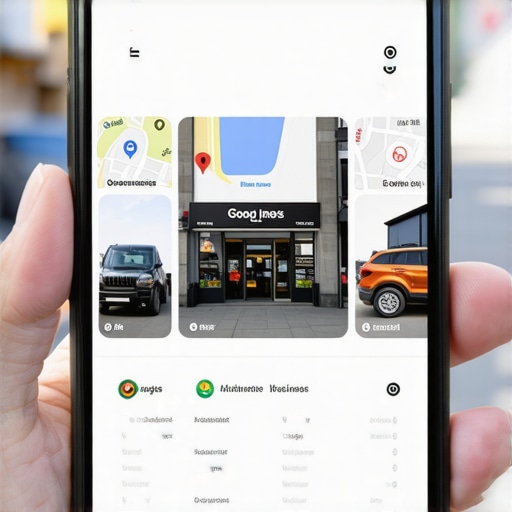
Keep the Momentum or Watch Your Rank Die
Most business owners think getting to the top is a finish line. It isn’t; it’s a treadmill. If you get ten reviews in a week and then nothing for a month, Google’s algorithm flags you as potentially ‘closed’ or irrelevant. This is what we call review velocity. I’ve seen businesses with 500 reviews get outranked by a shop with 50 reviews simply because the smaller shop was getting one new review every three days. You must realize why your map pack placement depends on your reviews velocity rather than just the total count. It’s better to have a slow, steady drip than a flood followed by a drought. Furthermore, how you respond to those reviews matters just as much as getting them. Falling into the review response mistake that stops google from showing you—like using the same canned response every time—can actually devalue your local pack entry.
Dominate Through Hyper-Local Relevance
If you are trying to rank business maps in a city you aren’t physically located in, you’re fighting an uphill battle against the proximity filter. To win, you have to prove your relevance through your website’s connection to the map. Every page on your site should act as a beacon for your physical location. I discovered how to rank business maps effectively in the local pack by ensuring our service pages mentioned local landmarks and neighborhoods, not just the city name. This creates a digital ‘map’ that confirms your business map pack presence is legitimate to the AI scanners.Let’s dig deeper into the actual mechanics of why some profiles stay stuck despite having ‘perfect’ SEO. Everyone tells you that citations—those mentions of your name, address, and phone number across the web—are the holy grail. I’m here to tell you that while they matter for consistency, they aren’t the engine that drives your map pack placement anymore. In fact, why your citations alone won’t improve your map pack placement is a lesson many businesses learn only after wasting hundreds on listing services. According to the 2023 Whitespark Local Search Ranking Factors study, citation signals have been declining in importance for years, while ‘On-page’ and ‘Behavioral’ signals are skyrocketing. If you are following the old advice of ‘more citations equals more rank,’ you are essentially buying yesterday’s lottery tickets. To move forward, you have to realize why you should ignore most map pack placement techniques you see online and focus on what Google actually tracks: real-world interactions.
Why does your ranking drop when you step outside the office?
It is the proximity glitch. I’ve seen owners get a local pack entry while sitting in their breakroom, only to realize why your business map pack rank drops every time you leave the office is because of a hyper-local filter Google applies to prevent monopolies. If you haven’t checked, you might be suffering from the proximity glitch that destroys your map pack placement without even knowing it. This is why why your mappack listing rank varies block by block—the algorithm is designed to give different results based on the searcher’s physical movement. You must how to audit your business map pack for hidden filter issues to see if your ‘top rank’ is just a localized illusion. 
The dangerous trap of legal name manipulation
Here is the ‘oops’ factor I see constantly: the temptation to stuff your business name with keywords. It feels like a quick win to rename your shop ‘Joe’s Plumbing – Emergency Local Plumber Near Me,’ but this is a ticking time bomb. This is a common the discrepancy devaluing your business listing every month. Eventually, a competitor will report you, or the algorithm will flag the mismatch between your legal name and your profile. I’ve seen businesses lose their entire business map pack presence overnight because of this one ‘shortcut.’ Furthermore, Google is increasingly using real-world signal data to verify legitimacy, meaning why your local pack entry requires real world signal data like mobile location history from users visiting your shop. Have you ever fallen into this trap of over-optimizing the wrong fields? Let me know in the comments.I’ve learned that the only way to scale your local presence is to automate the boring stuff while keeping the human touch in the places Google actually tracks. When I first started, I was manually checking my phone every time I drove to a new coffee shop just to see where I ranked. It was exhausting and, frankly, inaccurate. Today, I rely on a combination of ‘grid’ tracking and raw engagement. I realized that most local keyword tracking tools give a false sense of security because they only give you a single data point. In reality, your ranking is a living, breathing heat map that changes every few hundred yards. To truly rank business maps, you need to see the whole picture, not just the view from your office chair.
Stop guessing where you actually stand
I personally use tools like Local Falcon or BrightLocal’s grid tracker because they show me exactly where my ‘proximity bubble’ ends. If I see a sea of green (rank 1-3) that suddenly turns red two miles east, I know exactly where I need to focus my hyper-local content or my next round of review requests. However, you don’t always need to open your wallet to get the truth; I often recommend learning how to monitor map pack placement without expensive software by using simple browser emulators or just asking a friend across town to run a search. If you’re just starting, the best way to audit your business map pack profile without expensive tools is to look at your own insights tab and compare your ‘discovery’ searches against your ‘direct’ searches.
How can I maintain my local pack entry without working 24/7?
Maintenance is where most people fail. They reach the top and then take their foot off the gas. This is why most local pack entry strategies fail after three months—the momentum dies. To stay relevant, I follow a strict ‘Proof of Life’ schedule: one new photo per week and one update to the ‘Google Posts’ section every ten days. It’s not about volume; it’s about signaling to the algorithm that the lights are on and somebody is home. Joy Hawkins at Sterling Sky has noted in her research that while some features like ‘Services’ might not be direct ranking boosters, they drastically affect the ‘justification’ snippets Google shows to users, which directly impacts your click-through rate. 
The future is visual and incredibly fast
Looking ahead, I suspect that the business map pack will soon be dominated by AI-driven visual search. Google is already using its ‘Multisearch’ capabilities to pair what people see in the real world with local results. This means that how a simple photo update can trigger a new local pack entry today is just a preview of the visual-first world we are entering. By 2026, the ‘Standard’ local pack entry will likely involve video snippets and AR previews of your storefront. I am already preparing my clients for the way to win a local pack entry in 2026 without ad spend by focusing on short-form video content uploaded directly to their profiles. If you want to stay ahead, stop thinking about text and start thinking about what a camera sees. My advanced tip for you today? Go pull a 13×13 grid search for your primary keyword in your city. Don’t look at the average; look at where the ‘red’ starts and find one local landmark in that red zone to mention in your next profile update.
What the Algorithms Taught Me About Real People
Reflecting on my journey to rank business maps, I realized that Google’s algorithm is essentially trying to mimic a local neighbor who knows the best spots in town. One of my biggest lightbulb moments was discovering that map pack placement isn’t a reward for being the oldest business; it’s a reward for being the most active and helpful one. I learned the hard way that local pack entry is highly sensitive to how users interact with your profile in real-time. For instance, I found that the only map pack placement metric that actually matters for roi is how many people actually click the ‘Call’ or ‘Directions’ button, not just how many people see your pin. I also saw that service-based businesses have a different path to success; using the hidden moves to secure a local pack entry for service businesses is vital if you don’t have a storefront. Finally, I realized that your mappack listing is never truly ‘finished’—it’s a digital handshake that needs to be renewed every single week with fresh photos and honest reviews.
Tools That Actually Tell the Truth
If you want to win, you have to stop looking at the world through the lens of a static desktop search. I personally rely on a few specific resources to keep my business map pack strategy sharp. First, I always check 7 local seo tools resources that actually show your real ranking because most ‘standard’ trackers ignore the proximity filter entirely. I also recommend following the research from Sterling Sky; their case studies on local search are the gold standard for anyone serious about map pack placement. For audits, I find that the best way to audit your business map pack profile without expensive tools is to simply look at your Google Business Profile insights to see which photos are getting the most views. These tools help you see through the noise and focus on the signals that actually move the needle for your local pack entry.
Claim Your Place on the Map
The digital landscape is changing, but the need for local connection remains the same. Don’t let the technical jargon of a mappack listing intimidate you. At the end of the day, Google wants to show its users a business that is open, active, and trusted by the community. You have the power to rank business maps effectively just by being consistent and authentic. Whether you are a plumber, a lawyer, or a boutique owner, your map pack placement is your most valuable digital asset. Start by uploading one real photo today and responding to your last three reviews. The momentum you build now will carry your business map pack presence through the next algorithm update and beyond. Have you noticed your ranking change when you move from your office to the coffee shop next door? Let me know your experience with the proximity filter below!