I’ll never forget the sinking feeling in my stomach when I realized that my sleek new shared office space was essentially a black hole for my business visibility. I had the high-end coffee machine, the ergonomic chair, and the prestigious downtown address, yet when I searched for my services, I wasn’t even on the radar. I was buried under a pile of competitors who hadn’t even updated their websites since 2015. It was a wake-up call. I realized that simply having a mailbox isn’t a ticket to the top. This wasn’t just a minor technicality; it was a wall between me and my future clients. I spent weeks banging my head against the wall trying to understand why Google treated my legitimate business like a digital phantom.
Stop Being a Ghost in Your Own Office Building
The truth is, Google is incredibly wary of shared spaces. They’ve been burned by thousands of ‘virtual offices’ that were nothing more than a PO Box and a dream. Early on, I messed up big time by using the main building’s phone number instead of a dedicated line, which completely confused the algorithm and led to my listing verification failing repeatedly. It was frustrating, but it taught me that claiming a local pack entry for a shared office requires a surgical approach, not a sledgehammer. You can’t just wing it and hope for the best. You need to provide the kind of real-world signals that prove you are actually there, sitting at a desk, doing the work.
Is it actually possible to rank when ten other people share your address?
You might be thinking that the deck is stacked against you because your neighbors are technically your roommates in the eyes of a search engine. I get it. The fear is real. But according to data from Search Engine Land, nearly 46% of all Google searches have local intent, and shared spaces are not excluded from that pie—if you play by the rules. We are going to solve this today. I’m going to show you how to navigate the risks of virtual offices and finally grab that map pack placement you deserve. Have you ever felt like your business is literally hidden in plain sight, even though you are right in the thick of things? Let’s fix that together. Before we dive into the nitty-gritty, we need to talk about the signals that actually move the needle for a local pack entry when you are sharing walls with your competition.
Fix Your Address Without Getting Flagged
Think of your shared office address like a large apartment complex. If you just put the street number, the mailman—or in this case, the Google bot—doesn’t know which door to knock on. You have to be surgical. When I first started, I thought simply adding a suite number was enough, but I was wrong. I was sharing ‘Suite 400’ with a law firm and a graphic designer. Google saw three businesses in one room and hit the brakes. To rank business maps effectively, you must differentiate your space. If your lease allows, use a unique identifier like ‘Suite 400-B’ or ‘Office 12.’ This tiny change is often the direct move to fix your mappack listing address errors before they even start. It creates a unique digital footprint that tells the algorithm you aren’t just a squatter in someone else’s office.
Capture Ground-Level Proof of Your Presence
Google’s trust is earned through your camera lens. If you only upload stock photos of a generic lobby, you’re telling them you don’t actually exist there. I remember spending a whole Saturday at my old coworking spot, taking photos of my logo on the directory, my name on the actual office door, and even the view from my window. This isn’t just vanity; it’s because your mappack listing needs ground-level exterior photos to prove physical occupancy. If a Google street view car can’t see your sign, you have to bring the sign to them through your profile.
Ditch the Building Phone Number Immediately
This is the hill many local businesses die on. Using a shared receptionists number is like sharing a toothbrush—it’s messy and leads to problems. Google uses your phone number as a primary piece of DNA to identify your business. If your number matches three other companies in the same building, your local pack entry requires real-world signal data that is unique to you. Get a dedicated local VOIP line. It’s a small expense that prevents the algorithm from merging your data with your neighbors.
Consistency is Your Best Friend
Once you have your unique suite and your dedicated phone line, you must guard them with your life. Every single mention of your business online—from Facebook to the local chamber of commerce—must match perfectly. I once saw a client lose their top-three spot because they used ‘Street’ on their website and ‘St.’ on their Google profile. It sounds trivial, but the simple business listing management task you are probably skipping is checking for these tiny discrepancies. When you are in a high-density shared building, Google is looking for any reason to filter you out to avoid showing duplicate results. Don’t give them that reason. Every ‘real-world’ signal, from your utility bills to your door signage, needs to tell the exact same story to ensure top map pack placement.
But here is where most people get it wrong. They assume that if they just match their NAP (Name, Address, Phone) across a thousand directories, they will win. In reality, why your citations alone won’t improve your map pack placement is one of the most common hard truths I have to deliver. Modern algorithms have moved way beyond simple directory scraping. Everyone tells you to focus on quantity, but I have found that a single mention in a local news piece or a niche-specific blog carries ten times the weight of a dozen generic directories. If you are still obsessing over Yext or Moz citations while ignoring your actual brand authority, you are fighting a losing battle.
Stop Playing the Keyword Stuffing Game
I see it all the time: a business changes its legal name on Google to ‘Best Plumber Downtown New York’ to try and hack the system. This is the ultimate ‘oops’ factor. While it might give you a temporary boost, it is a ticking time bomb. Google is aggressively cracking down on this, and I have seen years of hard work vanished in a single afternoon because of a manual suspension. You need to understand why your mappack listing needs more than just a keyword-rich name to survive long-term. Real ranking comes from engagement and behavioral signals, not just linguistic tricks. Have you ever fallen into this trap of adding ‘just one more keyword’ to your title? Let me know in the comments; I’d love to hear how you handled the fallout.
Why does your ranking tank the moment you drive home?
This is the proximity paradox that drives business owners crazy. You might be sitting in your office and see yourself at number one, but as soon as you get three miles away, you disappear. This is not a glitch. The 2023 Whitespark Local Search Ranking Factors study confirms that proximity remains the single most powerful ranking factor, yet it’s also the one you have the least control over. This is exactly why your map pack placement sinks when you travel outside your zip code. To combat this, you cannot just rely on your address; you have to build relevance through hyper-local content that proves your services cover a wider area than just your front doorstep.
Another nuance people miss is the concept of ‘Review Velocity.’ It is not just about having 500 reviews; it is about how fast you are getting them. If you got 100 reviews three years ago and nothing since, Google views you as a stagnant business. I’ve noticed that why your map pack placement depends on your reviews velocity is often the difference between the #3 spot and the #7 spot. A steady stream of two reviews a week is significantly better than a massive dump of fifty reviews once a year. Furthermore, you must keep an eye on your operational signals. It sounds crazy, but why your local pack entry might disappear during off-hours is a real phenomenon where Google prioritizes businesses that are currently ‘Open’ for certain high-intent searches.
Ultimately, you have to be careful about where you get your advice. There is a lot of noise out there, and why you should ignore most map pack placement techniques you see online is usually because those tactics are five years out of date. Many people fall into the danger of outsourcing your mappack listing to cheap agencies that use automated bots to ‘simulate’ local traffic, which is the fastest way to get your business blacklisted. Instead, focus on the real-world signals that prove you are an active, vital part of your local community.
Once you’ve cleared the hurdle of verification, the real work begins. I’ve seen too many business owners treat their map pack placement like a set-it-and-forget-it crockpot. They get into the top three, pop the champagne, and then stop doing everything that got them there. Two months later, they are calling me, wondering why they’ve slipped to the dreaded fourth spot. The reality is that why your local pack entry is stuck in the number 4 spot usually comes down to post-launch laziness. Maintenance is the differentiator between a flash-in-the-pan and a local authority.
The One Tool That Keeps Me Sane
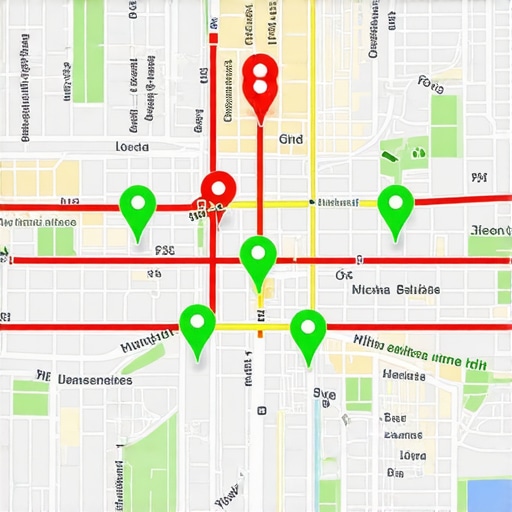
I don’t believe in buying every shiny new software that hits the market, but there is one thing I cannot live without: a local grid tracker. If you are only checking your rank from your own desk, you are lying to yourself. I use a tool that shows me exactly where my pin drops off as I move away from the shared office building. This is the simple tool that checks your mappack listing health by visualizing your reach. It allows me to see if a competitor is eating my lunch just three blocks away. If you aren’t ready to pay for high-end suites, you need to learn how to monitor map pack placement without expensive software by manually checking via Incognito mode and different zip codes. It’s tedious, but it’s the only way to stay honest about your visibility.
How do I maintain my map pack ranking over time?
Consistency isn’t just about your address; it’s about your activity level. Google’s algorithm rewards businesses that prove they are still ‘alive’ and kicking. This means you need to be updating your profile constantly. I make it a habit to refresh my ‘Attributes’ every single month. Whether it’s adding ‘Wi-Fi available’ or updating holiday hours, these tiny pings tell the system you are active. I’ve found that why your business map pack profile needs fresh attributes monthly is often overlooked by 90% of your competition, giving you a massive edge. Also, don’t stop the content flow. If you stop, you’ll quickly realize why your map pack placement drops after you stop posting updates. It’s like a gym membership; you can’t keep the muscles if you stop lifting the weights.
What the Future of Local Search Looks Like
As we head toward 2026, the game is shifting toward ‘Zero-Click’ searches and AI-driven recommendations. Google is increasingly using ‘Search Generative Experience’ (SGE) to answer local queries. This means your business needs to be mentioned in high-authority local contexts. According to the Google Business Profile Help Documentation on ‘relevance,’ the engine now looks for deep semantic connections between your website content and your map listing. This is the way to win a local pack entry in 2026 without ad spend—by becoming the most talked-about entity in your specific neighborhood. If you want to stay ahead, I challenge you to do one thing today: go into your profile and add a highly specific ‘Service’ that you offer but haven’t listed yet. It’s the simple change to rank business maps for multiple services that can trigger a whole new stream of traffic by tomorrow morning. Don’t wait for the algorithm to find you; force it to notice you.
Hard Truths I Learned While Fighting for My Business Map Pack Spot
Building a presence from a shared desk taught me that the algorithm is skeptical by design. First, I realized that generic advice is often a trap; proximity is a math problem, but trust is a photography project. If you do not show the physical reality of your desk, Google assumes you are a ghost. Second, I discovered that your neighbors are not just competitors; they are data points. If their profiles are messy, it can pull yours down by association. Finally, the biggest ‘aha’ moment was realizing that the ultimate blueprint for map pack placement success is not about hiding the fact that you share an office—it is about proving why your specific business is the most relevant entity inside that building.
The Gear That Finally Put Me on the Map
You do not need a massive agency budget to win this game, but you do need the right eyes on your data. I personally rely on 7 local seo tools resources that actually show your real ranking because they cut through the noise of ego searches from your own desk. I also highly recommend keeping a dedicated folder on your phone for Ground Truth photos—every time you walk into the building, snap a picture of the directory or your signage. For those just starting out, navigating map pack rankings tips for local business owners from industry leaders provides the foundational logic that keeps you from making expensive mistakes.
#IMAGE_PLACEHOLDER_E#
Your Business Deserves to be Seen
Do not let the walls of a shared workspace limit the reach of your brand. You have put in the work to build a real business, and now you have the tools to ensure the digital world recognizes it. Achieving dominant map pack placement is a marathon, not a sprint, but every photo you upload and every review you answer is a step toward that top-three finish. Start small, stay consistent, and remember that how to use your blog to support your mappack listing is the secret weapon that keeps your relevance high even when you are not physically at your desk. It is time to stop being a digital phantom and start being the local leader your community is looking for. Have you ever felt like your shared office address was being ‘shadowbanned’ by Google because of your neighbors? Let me know in the comments below!