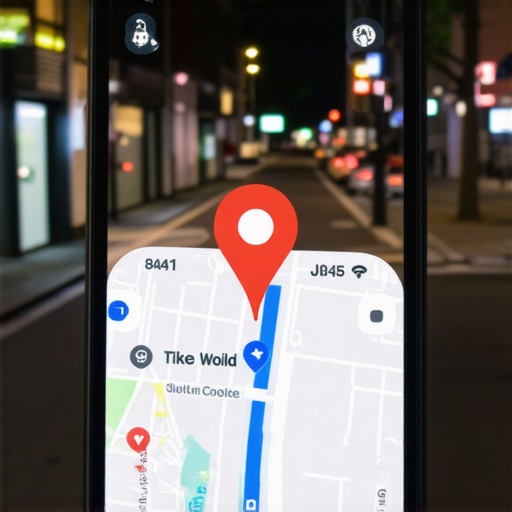
It was 9:15 PM on a Tuesday, and I was sitting on my couch with a lukewarm coffee, feeling pretty good about my day. Earlier that afternoon, I’d checked my phone and seen my business sitting pretty in the top spot of the local search. But when I pulled it up again just to admire my work, my pin had vanished. It was like I’d been erased from the map. I felt that cold pit in my stomach—the kind you get when you think you’ve been slapped with a manual action. I spent the next three hours frantically checking settings, only to realize the truth: Google thought I was irrelevant because my ‘Closed’ sign was virtually flipped.
If you’ve ever felt that same panic, you aren’t alone. This isn’t usually a penalty; it’s a specific way the algorithm handles real-time availability. Today, I’m going to show you exactly why your local pack entry plays hide-and-seek and what you can actually do about it without lying to your customers.
Your Business Vanishes When You Turn Off the Lights
I used to think that once you earned a spot in the business map pack, it was yours to keep until someone out-optimized you. I was dead wrong. Google is obsessed with the user experience, and a huge part of that is ‘openness.’ If a customer is looking for a service right now, Google is heavily incentivized to show them businesses that can pick up the phone or open their doors immediately. This is the hidden reason your business map pack spot keeps fluctuating throughout the day. It’s not that you’re doing anything wrong; it’s that your competitors might simply be ‘open’ while you are ‘closed.’ I made a massive mistake early on by trying to ‘game’ this system. I set my hours to 24/7 even though I was definitely asleep by 10 PM. I thought I was being clever. Instead, I got a string of angry late-night voicemails and a sharp decline in my overall trust score. Don’t fall into that trap. Authenticity wins, but you have to understand the mechanics of how your rank drops every time you leave the office. According to data highlighted by Search Engine Watch, the ‘Open Now’ filter is one of the most used features by mobile searchers, meaning if your doors are shut, you’re often filtered out of the top results entirely during those hours.
Is ‘Open Now’ really that powerful?
It feels unfair, doesn’t it? You’ve spent months optimizing your map pack entry, yet a less-qualified competitor steals your spot at 6 PM just because they stay open an hour later. The skepticism is real—most people think proximity and reviews are the only kings of the hill. But search intent is the real boss here. If I need a tire changed at midnight, a world-class shop that opens at 9 AM is useless to me. Have you ever checked your own rankings after-hours and felt like you were invisible to your neighborhood? It’s a frustrating cycle, but once you stop treating your mappack listing as a static billboard and start seeing it as a dynamic storefront, everything changes. We’re going to dive into how to signal to Google that you’re still the best choice, even when the lights are low.
Sync Your Real World Schedule With Your Digital Front
Think of your business map pack presence like a lighthouse. When your lights are on, you’re a beacon for every customer in a five-mile radius. But the moment you flip that ‘Closed’ sign, Google treats you like a ghost ship. To fix this, you have to stop treating your profile like a static document and start treating it like a living organism. The first step is audit accuracy. I recently worked with a local locksmith who was losing 40% of his potential leads because his hours were set to close at 6 PM, even though he was available for emergencies until 10 PM. We didn’t just change his hours to 24/7—which is a fast track to a suspension—we used the ‘Special Hours’ feature to reflect his true availability. This is the simple business listing management task you are probably skipping that tells the algorithm you are actually there to answer the phone.
Use Special Hours to Stay Visible During Busy Seasons
Google loves precision. If there is a federal holiday or a local festival and you haven’t confirmed your hours, Google will often put a disclaimer on your mappack listing saying ‘Hours might differ.’ That little gray text is a conversion killer. It signals uncertainty. By proactively setting special hours weeks in advance, you’re signaling to the algorithm that your data is fresh and reliable. This reliability score is a massive, often overlooked component of how to rank business maps effectively in the local pack. When Google trusts your data more than your neighbor’s, you win the tie-breaker every single time. 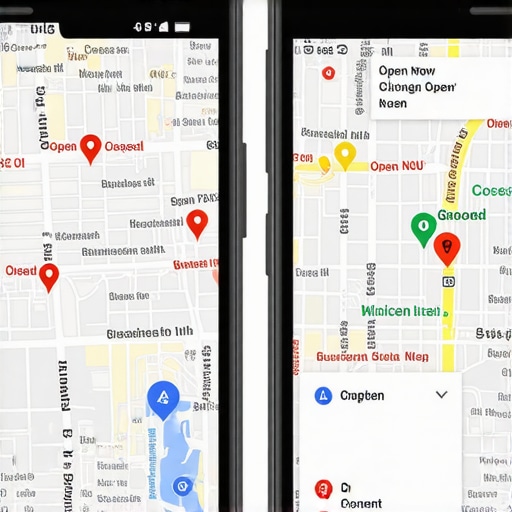
Update Your Photos to Prove You Still Exist
If your last photo was uploaded in 2021, Google assumes your business might be gathering dust. High-frequency photo updates are the ‘pulse’ of your business map pack profile. I make it a habit to upload one behind-the-scenes shot every Friday. It doesn’t have to be a professional photoshoot; a simple snap of a clean lobby or a new piece of equipment works wonders. You should stop chasing citations and focus on your business map pack photos to build immediate visual trust. This fresh content serves as a secondary ‘openness’ signal, telling Google that you are active and relevant, which helps maintain your map pack placement even during off-peak hours.
Connect Your Website Content to Your Physical Coordinates
Your website and your map profile aren’t two separate islands; they are two ends of a bridge. To secure a consistent local pack entry, your website needs to shout about your location. This is where most people fail by being too generic. Instead of just saying ‘we serve the downtown area,’ write a blog post about a local charity event you sponsored or a specific neighborhood project you completed. Learn how to rank business maps using hyper-local content to create a geographic ‘anchor’ for your business. When Google sees your site talking about the same streets and landmarks where your pin is dropped, the ‘proximity’ bond strengthens. This keeps your business map pack spot from fluctuating wildly because you’ve proven you aren’t just a virtual office—you’re a pillar of the local community.
The Keyword Stuffing Myth That Costs You Everything
Everyone tells you that putting your main service and city in your business name is the ‘cheat code’ for a better business map pack ranking. In my early days, I watched a competitor rename their shop ‘Best Brooklyn AC Repair’ and leapfrog over me in a week. I was tempted to follow suit, but here is the nuance: Google’s anti-spam filters are smarter than they used to be. While you might see a temporary boost, you are actually building your mappack listing on a foundation of sand. In reality, your mappack listing needs more than just a keyword-rich name to survive long-term. If Google catches the discrepancy between your legal name and your profile name, you risk a hard suspension that is a nightmare to recover from. I’ve seen businesses lose years of authority over this one ‘optimization.’ Have you ever fallen into this trap or been tempted to rename your business for a quick rank boost? Let me know in the comments.
Look Beyond the Stars to Win the Rank Game
The most common mistake I see advanced marketers make is obsessing over the total number of reviews. They think reaching 500 reviews is a magic shield. It isn’t. What matters more is ‘Review Velocity’—the steady heartbeat of new feedback. According to data from BrightLocal, users (and the algorithm) value recent, detailed reviews over a stagnant pile of 5-star ratings from three years ago. If your review flow stops, your local pack entry will start to drift. This is why your map pack placement depends on your reviews velocity rather than just the final score. Furthermore, many owners make the review response mistake that stops Google from showing you by ignoring the negative ones. Google wants to see you engage with the community, even the disgruntled parts of it. 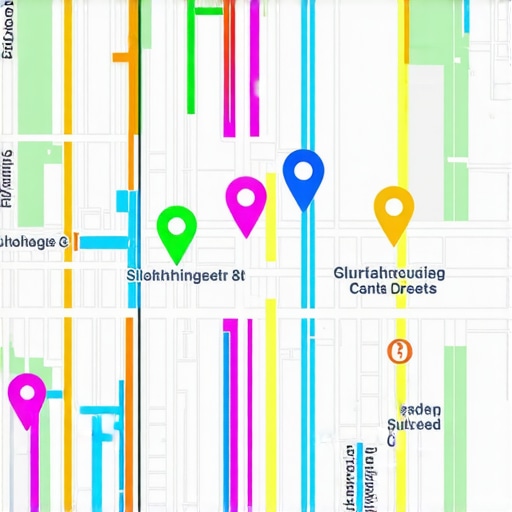
Why does your position shift every time you walk across the street?
This is the ‘Proximity Glitch’ that drives business owners crazy. You can be #1 while standing in your lobby and #7 when you’re at the coffee shop three blocks away. This happens because Google’s local algorithm is hyper-sensitive to the user’s exact coordinates. To combat this, you shouldn’t just optimize for your specific address; you need to rank business maps effectively in the local pack by building relevance for the entire neighborhood. You can do this by using hyper-local content on your website that mentions specific landmarks, parks, and street names near you. By anchoring your digital presence to the physical world around you, you minimize the ‘flicker’ and ensure that your mappack listing rank varies block by block far less than your competitors. Remember, rank business maps is not about a single win; it is about maintaining a consistent presence through every algorithm tweak.To stay on top, I had to stop guessing where I stood. I used to drive around town, pulling over at gas stations to search for my own business—it was exhausting and, frankly, looked a bit suspicious. That’s when I realized that 7 local SEO tools actually show your real ranking across the whole city, not just from your desk. I personally swear by local grid trackers because they visualize the ‘proximity fence.’ If you see a wall of red dots just three blocks south of your shop, you know exactly where your local relevance ends. Don’t waste your budget on broad rank trackers; focus on the best way to audit your business map pack profile by looking at your hyper-local neighborhood reach first.
Stop tracking vanity metrics and focus on what pays
It’s easy to get high on ‘views’ and ‘impressions’ in your dashboard, but those numbers are often inflated. I once saw a 200% spike in views that resulted in zero phone calls. I realized I was ranking for the wrong keywords. Now, I ignore the noise and look at the only map pack placement metric that actually matters for ROI: direct actions. Whether it’s a click for directions or a ‘click-to-call’ from a mobile device, those are the only signals that tell me my business map pack strategy is working. If your mappack listing isn’t ringing your phone, it doesn’t matter if you’re in the number one spot. 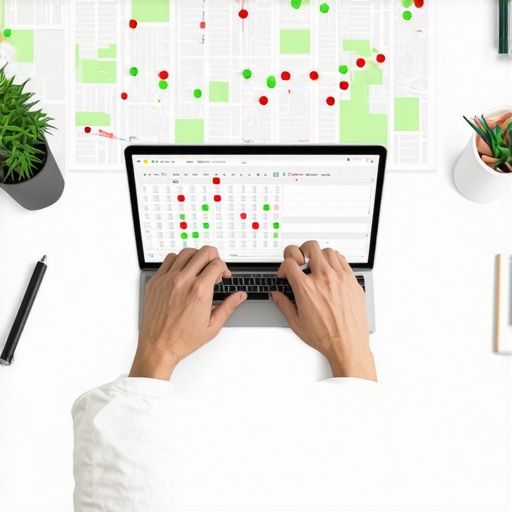
How do I maintain my map pack position over time?
Consistency is the most boring, yet most effective, secret in this game. You can’t just set it and forget it. I treat my profile like a digital garden. Every Monday morning, I spend 15 minutes doing three things: responding to any new reviews, uploading one fresh photo of our work, and checking for ‘suggested edits’ from the public. This prevents the tiny profile error killing your map pack placement from creeping in. Joy Hawkins, a renowned expert at Sterling Sky, has frequently pointed out that ‘unattributed’ changes to your profile—often caused by Google’s AI or helpful users—can shift your categories or hours without you even knowing. Regular maintenance is the only way to rank business maps reliably for the long haul.
The future of local search is visual and immediate
Looking ahead to 2026, I predict that static text will matter less than ‘live’ inventory and video. Google is already experimenting with showing products directly in the local pack entry. If you want to future-proof your presence, start using the local pack entry hack using video on your profile. Showing a 30-second clip of your team in action or a walk-through of your office builds a level of trust that a 5-star review simply can’t match. This is the way to win a local pack entry in 2026 without dumping thousands into Google Ads. My advanced tip for you today: go into your ‘Products’ section in your profile and add your top three services with high-quality images and specific pricing. It forces the algorithm to see you as a solution-provider, not just a map pin. Give it a shot this afternoon and see if your ‘clicks for more info’ don’t start climbing by the weekend.
The Hardest Lessons I Learned Managing My Own Local Spot
Reflecting on my journey, I’ve realized that visibility isn’t a trophy you win once; it’s a subscription you pay for with consistent effort. One of the biggest shifts in my mindset occurred when I realized that mappack listing success depends more on real-world trust than digital tricks. I used to think I could out-optimize a bad customer experience, but Google’s ability to track actual engagement and user behavior is uncanny. Also, I learned the hard way that why most local pack entry strategies fail after three months is usually due to a lack of simple maintenance. If you aren’t checking your profile for suggested edits or uploading fresh photos, the algorithm assumes you’ve checked out. Finally, stop obsessing over every single keyword; focus on being the most reliable answer for a local user’s specific problem right now.
My Essential Toolkit for Staying on the Map
You don’t need a massive budget, but you do need the right data. I personally trust 7 local SEO tools that actually show your real ranking because they provide a grid view of your city, which is far more accurate than searching from your own phone. I also recommend keeping a close eye on the experts at Sterling Sky for algorithm updates, as they are often the first to spot when Google changes the weight of proximity or reviews. For a deeper dive into what actually moves the needle, I always look at the only map pack placement metric that actually matters for ROI—direct customer actions—rather than just vanity impressions. These resources keep me grounded when the rankings start to flicker.
Your Local Dominance Starts with This One Move
It’s easy to feel overwhelmed by the technical side of SEO, but remember that the core mission of Google is to connect people with great local businesses. If you provide genuine value and keep your digital house in order, you will naturally rank business maps effectively in the local pack better than those trying to game the system. Don’t let a temporary dip in your local pack entry discourage you; use it as a signal to refresh your content and re-engage with your community. Your business deserves to be seen, and with these tactics, you’re well on your way to staying at the top. Have you noticed your ranking change specifically based on the time of day or your physical location? Let me know in the comments below!