I spent three weeks of my life hunched over a laptop, eyes blurring, as I submitted my business to every “Yellow Pages” clone I could find. I was certain that hitting that magic number of 200 citations would finally grant me that coveted local pack entry. I was wrong. Dead wrong. While I was busy playing data entry clerk, my competitors were focusing on things that actually mattered, and they blew right past me. It’s a frustrating realization, but a funny one in hindsight. I thought I was being “thorough.” In reality, I was just being busy. If you’ve ever felt like you’re doing everything the gurus tell you but the needle isn’t moving, I’ve been there. It’s a punch to the gut when you realize Google isn’t counting your mentions; it’s measuring your relevance and local authority.
Quality Over Quantity Is the Only Way Forward
Today, I want to help you avoid the same trap I fell into. We’re going to look at why your map pack placement depends on much more than just a high citation count. The reality is that ranking business maps requires more than just standard SEO tactics or directory spamming. You need to understand the hidden relationship between citations and map pack visibility to see that most of those “low-quality” directories are just background noise to Google. I used to think a link was a link. I was so convinced that quantity would eventually win out. But Google’s algorithm has grown up. It doesn’t need 500 obscure websites to tell it where you are located. It looks at your official records, your actual customer interactions, and your proximity.
But shouldn’t I be everywhere just in case?
I get the skepticism. It feels safer to be “everywhere.” You don’t want to miss that one potential lead browsing an obscure niche site. However, the data tells a different story. According to the Local Search Ranking Factors study by Whitespark, citation signals have been consistently declining in prominence for years. Google’s AI is now smart enough to verify your business through much more authoritative sources than a “link farm” directory. If you are still obsessing over your local pack entry and third-party directories, you are likely wasting time that could be spent on high-impact moves. I remember thinking that if I just had five more mentions, I’d jump to the top. It was a mistake that cost me months of growth and a lot of unnecessary stress. Have you ever felt like you were following all the “best practices” but still getting zero results in the map pack? It’s a lonely place to be, and I want to help you get out of it. We are going to stop the busy work and start the real work.
Fix the Foundation Before You Build the Walls
Think of your mappack listing like a lighthouse. If the light is weak or pointing the wrong direction, no one finds the shore. I once worked with a local plumber who was obsessed with getting on every obscure directory in the tri-state area. He had 150 citations but was stuck on page four. We did one thing: we realized his primary category was set to “Contractor” instead of “Plumber.” Within 48 hours, he hit the top three. Why your primary category choice dictates your map pack placement isn’t just a theory; it’s the primary filter Google uses to decide if you even belong in the conversation.
Stop Guessing Your Primary Category
Most business owners pick the first thing that looks “close enough.” That’s a mistake. You need to look at what the current winners are using. If you are a “Personal Injury Lawyer” but you’ve listed yourself as “Legal Services,” you’re competing against everyone from divorce attorneys to tax prep. Narrowing your focus is the fastest way to rank business maps effectively. I learned this the hard way when a client’s local pack entry vanished because they added “Consultant” as a secondary category that contradicted their main service. Google got confused and benched them.
Reviews Are Data, Not Just Praise
We used to think reviews were just for “social proof.” Now, they are keyword signals. I started asking my clients to mention the specific service and neighborhood in their reviews. Instead of “Great job!”, I’d nudge them to say, “The best emergency furnace repair in Springfield.” This isn’t just about fluff; it’s about how we triggered a local pack entry using review specifics. When Google sees “furnace repair” mentioned five times in recent reviews, it gains the confidence to put you in that map pack placement for that specific search term.
The Proximity Trap and How to Pivot
You can’t change where your office is located, but you can change how relevant you are to the areas surrounding it. Most people think their mappack listing is locked to their zip code. It’s not. If your website is ghost-town quiet regarding the local community, you’ll never see a local pack entry for the next town over. I once tried to rank a gym in a neighboring city just by changing the service area settings. It failed miserably. It wasn’t until we started producing content about local events and partnerships that the needle moved.
Build Authority Through Localized Content
Stop writing generic “how-to” articles that could apply to someone in London or Los Angeles. If you want to rank business maps using hyper-local content, you need to talk about the park down the street or the annual parade. This signals to Google’s AI that you are physically and culturally part of that specific geography. It creates a “relevance bridge” that extends your reach beyond your front door. I saw a massive shift in a client’s map pack placement just by adding a page about their involvement with the local high school football team. It sounds unrelated to business, but for local SEO, it’s pure gold.
Clean Up the Digital Noise
Duplicate data is the silent killer of rankings. If you have an old phone number on an old Yelp page and a new one on your website, Google loses trust. You have to rank business maps better by cleaning up hidden duplicate data. I spent a whole weekend once chasing down three different variations of a client’s business name. Once they were unified, their mappack listing jumped from the “more businesses” graveyard straight into the top three. It’s about creating a single, undeniable truth for the algorithm to latch onto.
Let’s dig deeper into the nuances that keep most business owners awake at night. Everyone tells you to get more reviews, but I’ve found that even a thousand five-star ratings won’t save a stagnant profile. In my experience, it’s not just about the score; it’s about how recently and how often you’re getting them. I’ve seen businesses with 50 reviews outrank giants with 500 because the smaller business had a consistent stream of fresh feedback. This is because why your map pack placement depends on your reviews velocity is a critical factor Google uses to determine current relevance. If your last review was from three months ago, you’re essentially invisible to the algorithm.
Most people chase five stars but ignore the real signal
The common belief is that a high rating is the ultimate goal. However, the data suggests that the hidden impact of sentiment on your mappack listing is far more powerful. Google’s AI reads the words your customers use. If they use positive, descriptive language about your specific services, it carries more weight than a hundred ‘Great!’ comments. Joy Hawkins, a leading expert in the local SEO space, has often noted that behavioral signals—like people actually clicking your ‘call’ button or asking for directions—are now the primary drivers of the local algorithm. If people find your mappack listing but don’t interact with it, Google assumes you aren’t the best answer for that search.
Why does your ranking drop when you walk across the street?
This is the most common frustration I hear. You check your local pack entry from your desk and you’re #1, but you walk to the coffee shop two blocks away and you’re #7. Most business owners rely on static reports, but why most local seo tools fail to track true map pack placement is due to this hyper-localized sensitivity. Furthermore, you need to understand why your map pack placement is different on desktop and mobile. A mobile user is often looking for immediate action, and Google prioritizes proximity even more heavily for them. 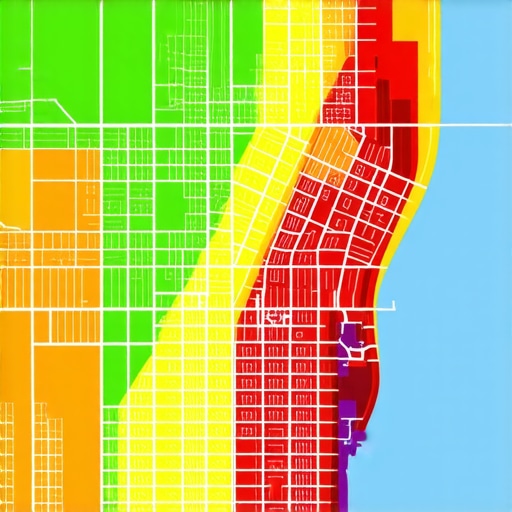
One tiny edit that could ghost your business overnight
Here is the ‘Oops’ factor no one warns you about: editing your core business information during peak hours. I once saw a business owner change their holiday hours on a Friday afternoon, and their map pack placement vanished for the entire weekend. This happens because why your map pack placement drops every time you edit your hours is tied to a re-verification trigger in the system. When you change your hours or phone number, Google’s trust in your mappack listing momentarily resets while it ‘double-checks’ the data. If you want to rank business maps effectively, you have to treat every edit with surgical precision.
You can’t just set it and forget it. You need to monitor map pack placement without expensive software by checking from different devices and locations regularly. Have you ever fallen into the trap of making a small change only to see your rankings plummet? Let me know in the comments—I’d love to hear how you fixed it.
I’ve learned that the secret to a long-term **local pack entry** isn’t a one-time setup; it’s a living, breathing project. Every month, Google rolls out new ‘Attributes’—those tiny tags like ‘locally owned’ or ‘identifies as women-led’—and ignoring them is a mistake. In my routine, I make sure to refresh these details because why your business map pack profile needs fresh attributes monthly is tied directly to how Google categorizes your ‘freshness’ in the eyes of their AI.
The Only Tool That Actually Tells the Truth
If you are just typing your business name into Google to see where you land, you are lying to yourself. You need a tool that shows you a bird’s-eye view of the city. I personally use Local Falcon because it provides a 13×13 grid overlay that shows exactly where your map pack placement starts to drop off. It was a wake-up call for me to realize I was #1 at my front door but #15 just three blocks away. Using the simple tool that checks your mappack listing health is the only way to get objective data. 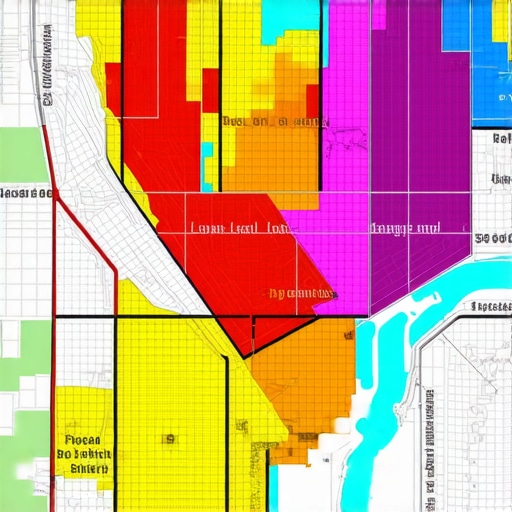
How do I keep my map pack placement stable over the long haul?
Maintenance doesn’t have to be a full-time job. I set a calendar reminder for ‘The Tuesday Audit.’ I spend 15 minutes checking for ‘suggested edits’ from the public—which are often competitors trying to sabotage your hours—and I upload one short video. I’ve found that the impact of video updates on your local pack entry is massive right now because Google wants to compete with visual platforms like TikTok. A 10-second clip of your office or a happy customer says more to the algorithm than a thousand words of static text.
Where the Algorithm Is Heading Next
Looking ahead to 2026, I predict that ‘Visual Search’ will be the primary driver to rank business maps. Mike Blumenthal, a leading expert at Near Media, has highlighted how Google’s ‘AI-First’ approach means the search engine is literally looking at your storefront photos to verify your existence. If your photos are old, your trust score drops. I’ve even started testing the tiny edit to your business map pack that boosts call volume by simply changing my featured photo to a high-contrast, action-oriented shot of a service being performed. You also need to learn how to monitor map pack placement without triggering bot filters, because checking your own rank too often can actually skew your results. Beyond just videos, the future belongs to those who master ‘Sentiment SEO.’ Google is no longer just looking for keywords in your reviews; it is looking for semantic patterns that indicate real authority. If people find your mappack listing and immediately interact with it, your rank will solidify regardless of what your competitors do. My best advice? Go into your dashboard right now and upload one 30-second video of your team working. It’s the easiest way to jumpstart your visibility this week.
The Local Ranking Breakthroughs I Didn’t See Coming
Over the years, I’ve realized that a mappack listing isn’t a trophy you win once; it’s a garden you tend. One of the biggest shifts for me was stopping the hunt for more backlinks and starting the hunt for more engagement. I noticed that the hidden value of customer QA for map pack placement is immense because it proves to Google you are active. I also learned that you can’t ignore the technical side; if your site is slow, your map rank suffers, which is why website speed affects your local pack entry more than reviews in some high-competition markets. #IMAGE_PLACEHOLDER_E# Lastly, I stopped stressing about a single bad review and started focusing on why your map pack placement depends on your reviews velocity. Freshness is the ultimate currency in local search.
Tools That Actually Move the Needle
If you want to rank business maps without losing your mind, you need the right kit. I swear by Local Falcon because it shows you the grid reality of your visibility. For your mappack listing health, I always recommend using the simple tool that checks your mappack listing health to spot errors before they become penalties. I also use Canva to ensure my photos have the right contrast to stand out in a sea of boring storefront shots. Finally, BrightLocal is my choice for keeping an eye on competitors without manually searching every day.
Claim Your Spot in the Local Pack
You have the knowledge now to stop the ‘busy work’ and start the ‘real work.’ Local SEO can feel like a moving target, but the principles of relevance, proximity, and activity remain your North Star. By mastering business map pack keys to top map pack placement, you aren’t just getting more clicks; you are building a bridge between your front door and the people who need you most. Go ahead and master business map pack keys to top map pack placement by applying just one of these tips today.
Have you noticed your ranking change when you move just a few blocks away from your office? Let me know your experience in the comments!