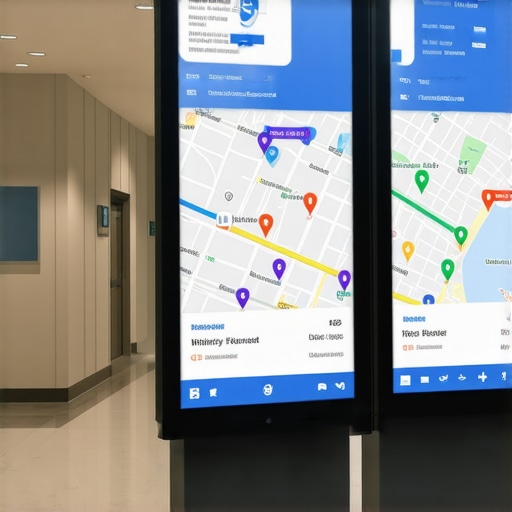
I still remember the sinking feeling in my stomach when I opened Google Maps, typed in my service, and saw my competitor’s business pinned directly on top of mine. Literally on top of mine. We shared the exact same multi-story downtown office building. But while they were sitting pretty in the local three-pack, my business was completely invisible. I made the classic rookie mistake of thinking that simply submitting my lease agreement to Google was enough. It wasn’t. For months, I struggled with a ghost profile because I didn’t understand how the search algorithm filters out duplicate addresses in shared environments. If you are sharing a commercial space, a co-working hub, or a high-rise with dozens of other entities, you are actively fighting an invisible filter designed to keep the map clean.
The Shared Space Battleground
Sharing an office building is great for your rent budget, but it is absolute chaos for your digital footprint. When multiple businesses operate out of the same physical address, search engines try to prevent spam by filtering out what they perceive as duplicate entries. Today, I am going to show you exactly how to bypass this filter and secure your rightful spot on the map. We will dive into the precise physical and digital tweaks that prove to search engines you are a distinct, thriving entity deserving of local visibility. If you have been struggling with this, you might want to read about how to secure a local pack entry for a shared office space to see just how common this headache really is.
Is sharing an office keeping you hidden on purpose?
Yes, it actually is. Google’s primary goal is to provide a clean user experience, which means they hate showing five different businesses in the exact same suite or building lobby if they look too similar. Early in my journey, I made the mistake of using a generic building address without a unique suite number. I essentially merged myself into a black hole of shared data. According to local search experts at Search Engine Land, physical proximity and shared address structures remain one of the most common causes of algorithmic filtering in local search results. To fight back, you need to establish distinct physical proof. This means adding unique suite numbers, upload photos of your permanent directory listing, and even updating your site with hyper-local signals. Have you ever searched for your business from the lobby of your own shared building only to find your competitor listed instead? It is incredibly frustrating, but completely fixable. You can learn more about how physical variables impact your visibility by reading about why proximity alone won’t save your business map pack spot.
Your Address Must Tell a Unique Story
To stand out in a crowded building, your address formatting needs to be incredibly precise. If the postal service and search engines cannot distinguish your suite from the dental office next door, your rankings will suffer. Establishing this unique identity is the first real step to getting noticed. Once you fix the physical address bottleneck, you can begin focusing on other critical ranking factors. For instance, you should investigate the hidden relationship between citations and map pack visibility to ensure your business data remains consistent across the entire web.
The Exact Steps to Separate Your Identity from Your Neighbors
Think of your shared office building as a massive apartment complex sharing a single main mailbox. If everyone just writes ‘123 Main Street’ on their mail, the mail carrier is forced to guess who gets what. Search engine algorithms operate with that same basic confusion when analyzing a crowded building. To break free and establish a distinct mappack listing, you must prove your physical, isolated existence. We cannot just hope the algorithm figures it out; we must force its hand with unmistakable physical signals.
Claim a Non-Standard Suite Designation Immediately
I learned this lesson the hard way. I once set up a consulting arm in a shared tech hub that had forty other desks. Everyone was using ‘Suite 400.’ We were all cannibalizing each other’s local rankings, completely filtered out of the top results. I went into the office backend, officially changed my mailing address with the USPS to ‘Suite 400-D,’ and updated my profiles. Within three weeks of making that slight variation, my profile was pulled out of the algorithmic filter. Do not use generic suite numbers if your lease allows for any level of modification. Even adding a simple letter designation creates a distinct data string that separates your business from the company next door, directly improving your chances for a coveted local pack entry.
Turn Your Office Entrance Into an Unmistakable Digital Landmark
Algorithms do not just read text; they look at visual proof to verify real businesses. If your office looks like a temporary hot-desk, you will likely stay hidden. When I was struggling to climb the ranks, I printed a high-quality, permanent acrylic sign with my logo and mounted it right next to my office door. I took a wide-angle video walking from the street, through the main lobby, up the elevator, and straight to my office door showing that permanent sign. Uploading this to my profile was the turning point. It is highly recommended that you upload ground-level media because your mappack listing needs ground-level exterior photos to bypass strict manual and algorithmic reviews. This visual trail proves to the AI that you are not running a phantom business or a spammy lead-generation site.
Inject Localized Authority Directly Into Your Core Website
Many business owners think the battle for map pack placement is fought entirely inside the map dashboard. It isn’t. Your website’s authority is the fuel that powers your map pin. You must align your landing page content to reflect your precise physical location. I started writing hyper-local case studies mentioning nearby cross streets, local transit stations, and neighboring landmarks. This context helped search engines tie my website’s organic authority directly to that shared physical building. If your website is generic, your map pin will remain weak. You can read more about why your local pack entry requires localized content on your website to see how the two systems connect. Once your on-page signals match your physical location, the algorithm stops filtering you out and starts pushing you up.
Clean Up Hidden Citation Conflicts Across the Web
When you share an office space, there is a high probability that a defunct business previously occupied your exact suite. If their old citations are still floating around the web, search engines will get confused and suppress your listing. I spent two full days auditing old web directories to find and delete dead listings that were still associated with my suite number. This cleanup is critical if you want to rank business maps better by cleaning up hidden duplicate data. By wiping out those digital ghosts, you ensure that every single mention of your address online points to your business and your business alone.
When I first started trying to rank business maps from a shared office, I consumed every blog post and YouTube tutorial available. The overwhelming consensus was clear: just build fifty more citations, throw some keywords in your business description, and wait for the magic to happen. But that advice is not just outdated; it is actively keeping you out of the local pack. The truth is, building a massive volume of low-quality citations actually does more harm than good when you are fighting for a shared space map pack placement. You are likely just feeding the algorithm conflicting data strings that force it to filter you out. Instead of focusing on raw numbers, we need to focus on authority and precision.
Why does building more citations actually kill your local ranking?
Everyone in the local SEO space tells you to buy citation packages to boost your prominence. However, in my experience, focusing strictly on citation quantity is a trap that leads to severe data fragmentation. According to a local search study by BrightLocal, search algorithms prioritize the consistency and authority of data sources over sheer volume. When you share an address, buying cheap directory blasts often associates your unique suite with legacy business data still lingering on those low-tier platforms. If you want to scale your visibility, you must realize why you should stop focusing on citation count for your local pack entry and shift your energy toward cleaning up old, conflicting records on major data aggregators.
Another dangerous trap is trying to game the system by creating virtual offices or using P.O. Boxes. I once worked with a local consultant who set up five different virtual suites in a single city to dominate the surrounding areas. Google’s real-time verification algorithms caught on within a month, suspending his primary listing and wiping out years of hard-earned authority. Understanding the risk of using virtual offices for map pack placement is crucial if you want to build a sustainable, long-term digital asset. Real physical presence, backed by honest localized signals, is the only way to survive algorithm updates.
If you truly want to secure your spot, you need to connect your physical location to your website’s organic authority. This is where most business owners fail: they treat their map listing and their website as two completely separate entities. But they are deeply interconnected. When you optimize your landing page to mirror your unique physical footprint, you build an ironclad proof of existence that the algorithm cannot ignore. If your website is poorly structured, you will remain stuck. I highly recommend reading about how a messy website keeps you out of the local pack entry to ensure your digital foundation is supporting, rather than sinking, your maps performance. Have you ever fallen into this trap? Let me know in the comments below.
Once you clear out the duplicate database junk and correctly label your unique suite, you might think your work is finished. But local search is not a set-it-and-forget-it game. The algorithms that govern map pack placement are constantly recalculating spatial data. If you ignore your digital presence for even a few weeks, a newly verified competitor in your building can easily push you back down into the algorithmic filter. To maintain my hard-earned visibility, I had to build a lean, reliable workflow using specialized diagnostic tools rather than relying on manual, proximity-biased searches.
How do I maintain my map pack rankings over the long term?
To keep your coordinates dominant, you need to monitor how search engines view your business from different physical locations. I highly recommend using local rank-tracking tools that use precise geocoordinates rather than general zip codes. For my personal setup, I rely heavily on specialized local grid trackers like Local Falcon because they allow me to see exactly where my pin drops when a user searches from the coffee shop next door versus three blocks away. This level of granularity is crucial because, as we know, most local seo tools fail to track true map pack placement by only pulling data from a single centralized IP address. I pair this with monthly checks using the simple tool that checks your mappack listing health to catch hidden address errors before they trigger automated filters.
As we look toward the future, local search is shifting rapidly toward AI-driven semantic understanding. According to technical documentation on spatial data indexing by the Open Geospatial Consortium, search systems are increasingly relying on real-time user movement patterns and real-world physical verification over static text directories. This means that things like user engagement and direct navigation requests to your specific suite will carry even more weight. If you want to survive the next generation of algorithmic updates, you need to start implementing 3 changes that solidify your map pack placement this month. My absolute best advice for you right now is to stop focusing on low-quality directory links and immediately implement the ground-level video verification strategy. Go pull out your phone, walk from the main lobby directly to your office door while filming, and upload that video file directly to your profile dashboard today. It is the single most powerful way to tell the algorithm that you are a real, physical entity operating in that shared building.
My Hardest Lessons Fighting the Shared Address Filter
When I look back at my earliest attempts to rank business maps from shared office hubs, I realize I was making life incredibly difficult for myself by following generic advice. The single biggest breakthrough came when I stopped treating my physical location as a static line of text and started treating it as an interactive digital entity. I learned that Google’s algorithm does not care about your lease agreement; it cares about digital signals that confirm your unique operational footprint. If you try to blend in with the building, you will remain filtered out. You have to actively force your way into the database by creating distinct physical-to-digital touchpoints that your neighbors simply cannot replicate.
Another major realization was that clean data always beats raw volume. I spent months thinking that more citations would solve my visibility issues, only to find that I was actually amplifying old, messy data associated with my suite’s previous tenants. Taking the time to perform a thorough cleanup is how you truly rank business maps better by cleaning up hidden duplicate data. Once those legacy digital ghosts are gone, the algorithm can clearly see your business as a distinct, authoritative entity.
The Diagnostic Arsenal I Keep in My Digital Toolbox
You cannot fight a highly sophisticated spatial algorithm with manual searches from your office desk. To maintain your edge in a crowded building, you need to see exactly what the search engine sees from different points in your city. Here are the specific resources and tools I rely on to keep my profiles healthy:
- Local Falcon: This is my absolute favorite tool for tracking real-time spatial visibility. It gives you a clear visual grid of where your business actually ranks across different neighborhoods, showing you exactly where your coverage starts to drop. It is a eye-opening alternative to traditional trackers because most local seo tools fail to track true map pack placement by relying on static IP addresses.
- Local Utility Audit Tools: Before making any edits to your address dashboard, you should run a quick diagnostic. I routinely use the simple tool that checks your mappack listing health to ensure there are no formatting discrepancies or pending automated flags on my profile.
- The Open Geospatial Consortium (OGC): I regularly read their whitepapers on spatial data indexing. Understanding how modern database systems calculate physical coordinates will completely change how you approach geo-targeted landing pages on your website.
Claim Your Physical Coordinates and Own the Map Pack
Operating from a shared office building does not mean you have to accept second-class visibility. By implementing unique suite variations, uploading ground-level video proof, and aligning your website’s localized content, you can easily break through the algorithmic filter that holds your competitors back. Taking these precise physical steps is the ultimate way to secure a permanent, highly visible map pack placement that consistently drives real customers to your door. Stop letting your shared address keep you hidden—go claim your coordinates and watch your local phone calls soar.
Have you ever struggled with your business profile getting filtered out or hidden behind a competitor in your own office building? Let me know in the comments below!