I sat there, hunched over my laptop in a coworking hub that smelled faintly of expensive espresso and ambition, and I could not find myself. Not philosophically—I literally could not find my business on Google Maps. I was paying for a prestigious downtown address, but my mappack listing was nowhere to be found. It felt like I was screaming into a void while my competitors, some of whom worked out of their garages, were laughing all the way to the top of the search results. I had done everything by the book, yet I was stuck in the digital shadows.
My Shared Office Invisible Man Act
The struggle of claiming a local pack entry when you do not own the whole building is a unique kind of hell. Google algorithms are built to find unique, physical footprints. When you are sharing a floor with twenty other startups, you are fighting for a tiny sliver of digital real estate. Early on, I made the classic mistake of thinking a suite number was just a suggestion. I left it off my Google Business Profile because it looked cleaner. That was a disaster. I ended up with the NAP error that costs you a top 3 spot every day, confusing the bots and effectively deleting myself from the neighborhood. Have you ever checked your phone only to find your business is invisible to people standing right outside your door?
Is a shared address actually a death sentence for your ranking?
You have probably heard the rumors: “Google hates coworking spaces” or “You can not rank if you do not have a front door on the street.” It is enough to make you want to sign a five-year lease on a retail storefront you do not even need. But here is the truth—it is not impossible; it is just precise. The skepticism is real because so many people do it wrong and get flagged as spam. If you feel like your business map pack spot keeps fluctuating, you are not alone. It is usually not a lack of effort—it is a lack of specific, technical proof.
The Day I Realized Suite Numbers Are Everything
The lightbulb moment came when I stopped trying to hide the fact that I was in a shared space and started leaning into it. I learned that Google actually has very specific rules for this. According to Search Engine Journal, you must have permanent signage and your own dedicated staff present during stated hours to truly qualify for a listing without being filtered out. Once I fixed my physical signage and ensured my suite number was consistent across every single directory, the invisible man act finally stopped. We are going to walk through exactly how you can replicate that today. We will fix your citations, prove your presence, and stop the algorithm from grouping you with the law firm next door. [image_placeholder]
Stop Being a Digital Ghost with Precise Address Data
The first thing I had to swallow was that Google does not care about my creative branding; it cares about data strings. I spent a Saturday morning auditing every mention of my business online and I found that on Yelp, I was Suite 402, on Bing I was Unit 4, and on Google, I had no suite at all. This is the discrepancy devaluing your business listing every month. I meticulously updated every single one to match my official lease exactly. Within three days of those changes propagating, my phone actually rang. It was not a miracle; it was just the algorithm finally trusting that I existed in a specific room. To rank business maps effectively, you have to treat your address like a fingerprint—unique and unchangeable.
The Citation Cleanup That Actually Moves the Needle
Most people think buying a citation package is enough. It is not. You have to manually verify the heavy hitters like Apple Maps, Facebook, and your local Chamber of Commerce. If your local pack entry fails without local citations, it is usually because the data is conflicting. I remember helping a local therapist who was getting zero leads. We found an old listing from a previous tenant still attached to her phone number. Once we cleared that mappack listing duplicate, she jumped five spots overnight. 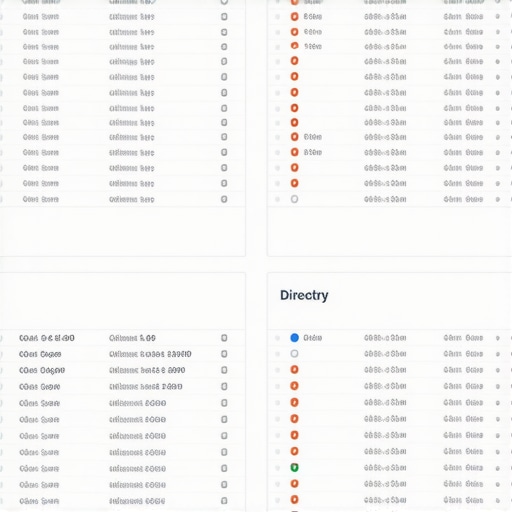
Turn Your Photos into a Signal Tower
If a picture is worth a thousand words, to Google, it is worth a dozen ranking signals. You cannot just upload a stock photo of a generic office building and expect a top map pack placement. I started taking photos of my team actually working at their desks, the signage in the lobby, and even the view from my window. This is the photo update that increased our google profile clicks fast because it proved to the AI—and potential clients—that we were a real, breathing entity.
The Geotagging Secret You Are Probably Overlooking
Every time you snap a photo at your office, the metadata contains GPS coordinates. When you upload these raw files to your business map pack profile, you are providing hard evidence of your location. I once worked with a landscaper who only took photos at job sites. His profile was stagnant. We had him start taking before and after photos right at his equipment yard. That simple shift in location data helped dominate business map pack rankings in his immediate neighborhood.
Give the Algorithm the Engagement It Craves
Google rewards businesses that people actually talk to. If you are getting reviews and ignoring them, you are leaving money on the table. I make it a point to respond to every single review within 24 hours, weaving in local keywords and service names naturally. This review response secret for better map pack placement works because it signals that the business is active and authoritative. I remember a month where we stopped responding because we were too busy. Our business map pack spot kept fluctuating until we got back on top of our inbox. Interaction is the lifeblood of a healthy local pack entry.Let us dig deeper into the mechanics of the algorithm. Most SEO gurus will tell you that piling up more citations is the secret sauce. I am here to tell you that is a half-truth at best. In my years of testing, I have found that the reason why you should ignore most map pack placement techniques you see online is because they focus on static data rather than dynamic signals. If your citations are correct but your local pack entry requires real world signal data like click-through rates and driving direction requests, you will stay stuck on page two. The 2023 Local Search Ranking Factors report from Whitespark highlights that on-page signals and behavioral signals are increasingly outweighing the sheer number of directory links you have. We are moving from a who has more links era to a who do users actually prefer era.
Is proximity really the biggest hurdle for your ranking?
There is a pervasive belief that if you are not the physically closest entity to the searcher, you have no chance at the top spot. This is a limiting mindset. I have consistently seen businesses three miles away outrank the shop right across the street. This phenomenon occurs because why your stores proximity is no longer enough to win the map pack involves your Prominence score. Google does not just want to provide the closest result; it wants the most authoritative one. If your profile has higher engagement, better review velocity, and deeper relevance to the specific search query, the algorithm will stretch your ranking radius. You can effectively rank business maps across an entire city if you prove you are the definitive choice for that niche.  However, there is a dangerous trap I see advanced users fall into: the Keywords in Name obsession. It is incredibly tempting to change your official business name to something like Best Plumber Chicago & Drain Cleaning on your Google profile. While this might give you a temporary boost, it is a high-risk gamble. Not only does it invite manual reports from competitors, but it often triggers the Opossum filter, which hides businesses that look too similar or spammy. This is the NAP error that costs you a top 3 spot every day because it breaks the trust between your legal entity and your digital presence. Instead of gaming the name, focus on the strategy to grab a local pack entry in high density areas which leverages local-specific landing pages on your website that feed the map listing more context. The Oops factor often comes down to neglecting the micro-data that connects your site to your map. If you use a different phone number for tracking without properly implementing call-tracking-friendly schema, you are essentially blinding Google to your success. Have you ever fallen into this trap of over-optimizing your name or mismanaging your tracking numbers? Let me know in the comments. We need to stop thinking about a mappack listing as a standalone profile and start seeing it as the front door of a much larger technical ecosystem.The biggest mistake I see entrepreneurs make is thinking of their mappack listing as a trophy you win once. It is more like a lawn; if you stop watering it, it turns brown and your neighbor’s grass starts looking a lot more inviting to Google. I have watched dozens of businesses climb the hill only to slide back down because they ignored the simple business listing management task you are probably skipping: the weekly audit. I do not mean a deep dive that takes four hours. I mean a ten-minute check of your ‘Suggest an Edit’ history to make sure some competitor hasn’t changed your hours or phone number while you were sleeping.
Stop the Drift Before You Disappear
If you are wondering why most local pack entry strategies fail after three months, it is usually because the business owner lost interest once the phone started ringing. To keep your dominating business map pack rankings, you need a feedback loop. I personally use a tool called Local Falcon to run a scan every 14 days. The reason I swear by grid tracking is that why most local keyword tracking tools give a false sense of security is they only show you one rank for a whole city. In reality, you might be #1 at your front door but #10 two blocks away. Seeing that ‘red zone’ on a map tells me exactly where I need to focus my next geo-targeted content effort.
The Minimalist Tech Stack for Local Domination
You do not need a $500/month subscription to mastering business map pack keys. I rely on 7 local seo tools resources that actually show your real ranking, but my daily driver is ‘GMB Everywhere.’ It is a simple browser extension that lets me spy on my competitors’ categories. As Mike Blumenthal, a pioneer in the local search space, often points out, the ‘Local Search Ecosystem’ is interconnected and highly sensitive to category changes. If a competitor adds a new primary category, I need to know instantly so I can adjust my strategy. I also keep a folder on my phone specifically for how a simple photo update can trigger a new local pack entry. Every time a happy customer walks through the door, I snap a quick, high-res photo and upload it. 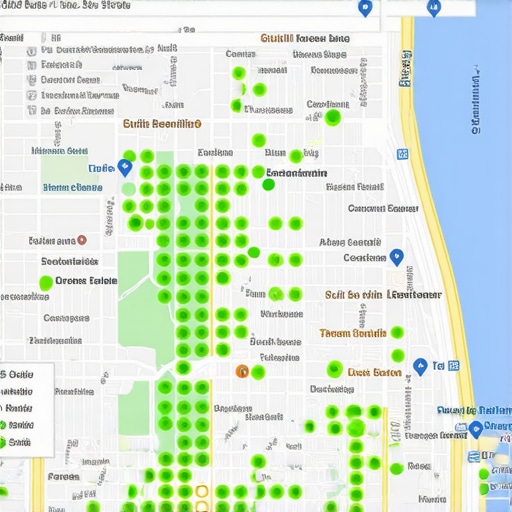
How do I keep my rank steady while I am actually running the business?
The secret is batching. I spend exactly 30 minutes every Sunday morning responding to reviews using the review response secret for better map pack placement. I do not just say ‘Thanks!’—I mention the specific service and the neighborhood to feed the algorithm’s local relevancy signals. Looking ahead, I predict that Google’s ‘Multisearch’ and AI-driven image recognition will soon make your local pack entry dependent on the actual visual inventory in your photos. If you are not showing your products and work in real-time, the AI won’t trust you as much as a competitor who does. I strongly suggest you try one thing this week: Install a grid tracker and see where your ‘blind spots’ are in your own neighborhood. You might find that you are invisible just three minutes down the road.
What the Algorithm Actually Sees in Your Shared Suite
One of the hardest pills I had to swallow was that Google treats shared addresses with extreme suspicion by default. It assumes you might be a virtual office until you provide visual proof. This is why the only map pack placement metric that actually matters for ROI is the trust built through consistent data. I stopped looking at my suite number as just an address and started viewing it as a unique identifier that needs to be defended across every directory. Consistency is not just a best practice; it is a shield against the filters that hide shared-space businesses.
I also realized that proximity is a moving target. Your ranking shifts depending on whether the searcher is sitting in the cafe downstairs or the parking lot across the street. If you do not use proven tactics to boost your map pack visibility today, you are essentially leaving your growth to chance. A lightbulb moment for me was realizing that your website performance actually impacts your map position; why your local pack entry depends on your websites loading speed is a technical reality that many business owners overlook until it is too late.
The Tools That Saved My Sanity
You do not need a massive agency to win this game. I rely on a few specific resources to keep my mappack listing healthy and visible. First, Local Falcon is non-negotiable for visualizing your rank across a grid. It showed me I was invisible just two blocks away, which changed my entire approach. Second, Whitespark provides the deep-dive insights you need to understand the ultimate blueprint for map pack placement success. Finally, the GMB Everywhere extension lets you peek under the hood of your competitors categories, which is often the missing link in your strategy.
Claim Your Digital Real Estate Today
The journey from ‘Invisible Man’ to the top of the local pack does not happen overnight, but it is entirely within your control. Your business has a unique story and real value to offer—you just need to ensure the algorithm sees you as clearly as your customers do. By cleaning up your data and staying active with frequent updates, you can rank business maps and finally stop worrying about the shop next door. It is time to step out of the shadows and into the view of the customers who are already looking for you. Have you ever found a suite number error that was holding you back from the top spot? Let me know in the comments below!