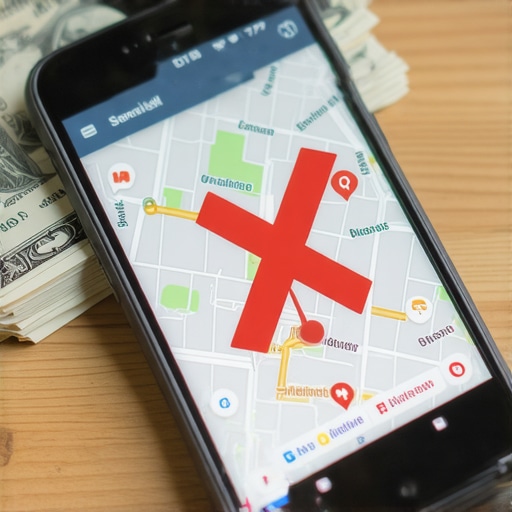
I sat there, cold coffee in hand, staring at a blank screen where a thriving business should have been. I had just tried to “prime the pump” by purchasing ten five-star reviews from a guy on a forum. It seemed like a victimless crime. Everyone was doing it, right? Wrong. Within seventy-two hours, that mappack listing didn’t just drop in rank; it was nuked from orbit. My heart sank as I realized I hadn’t just made a mistake—I had effectively erased my client’s digital existence. It was a visceral, sickening realization that no amount of refreshing the page would fix.
The Night I Almost Deleted a Client’s Future
It’s a gut-wrenching feeling. You search for your business name and… nothing. Not page two. Not page ten. Just a void. This is the reality of trying to rank business maps using shortcuts that Google’s sophisticated algorithms are literally built to destroy. I learned the hard way that a business map pack is built on trust, and once you break that trust with the “Big G,” there is often no coming back. I’ve spent the last three years helping folks recover from these exact blunders, and believe me, the cost of the “fix” is ten times higher than doing it right the first time. If you’ve been tempted by those “50 Reviews for $99” packages, I’m here to be the voice of reason you need right now. We are going to look at why these shortcuts lead to permanent bans and what you should be doing instead to boost your business map rank. Have you ever been tempted by those “fast-track” review services because you felt your competitors were cheating?
Does Google Really Know My Reviews Are Fake?
You might think you’re being subtle. Maybe the profiles have photos. Maybe they use different IP addresses. But here is the thing: Google looks at more than just the text. They track the reviews velocity and the digital footprint of the accounts leaving them. In fact, according to the Federal Trade Commission (FTC), fake reviews are now a major target for federal enforcement, with proposed rules that could lead to fines reaching nearly $51,744 per violation. Google doesn’t just want to provide good results; they want to avoid legal liability. When they see a sudden spike in local pack entry engagement that doesn’t match real-world foot traffic or location history, they don’t just send a warning. They pull the plug.
Why Your Map Pack Placement is a Privilege Not a Right
The biggest mistake I made early on was treating my mappack listing like a social media profile I could growth hack. It’s not. It is a highly regulated database. If you get caught, you don’t just lose your reviews; you lose your map pack placement for every single keyword you’ve worked for. I once saw a family-owned plumbing shop lose 80% of their lead volume overnight because the owner’s nephew bought a batch of reviews to “help out.” It took six months of grueling appeals and data cleaning just to get a chance at a local pack entry again. Don’t let your business become a cautionary tale. The algorithms are faster than your best “trick,” and the permanent ban list is a very lonely place to be.
Clean Up the Mess Before You Ask for Rank
When I first started, I thought I could just blast the web with links. I was wrong. Think of your mappack listing like a digital handshake. If your data is messy, Google pulls its hand away. I once worked with a local bakery that had three different phone numbers listed across the web—one from an old owner, one from a defunct landline, and their current cell. They were invisible. To rank business maps effectively, you have to find every scrap of old data and force it into one unified voice. Check your primary categories; if you are a plumber but also listed as a ‘general contractor,’ you are diluting your ranking power. Follow the exact steps to fix a mappack listing with conflicting categories to ensure your core identity is crystal clear to the bots.
Ditch the Fancy Tools and Use Your Phone
Real-world signals are the currency of the business map pack. Google knows where your phone is, and they know where your customers’ phones are. I started telling my clients to take a photo of every completed job site and upload it immediately from their mobile device. Why? Because the metadata in that photo—the GPS coordinates and timestamp—is a signal that no bot can fake. You should stop chasing citations and focus on your business map pack photos instead. It’s the difference between telling someone you’re at the party and sending a selfie from the dance floor.#IMAGE_PLACE_HOLDER_B#
Your Website is the Anchor for Your Map Pin
A common mistake is thinking your map listing is an island. It’s not; it’s an extension of your homepage. If your website is slow, clunky, or lacks local relevance, your local pack entry will suffer. I remember a roofer who had great reviews but stayed stuck at the bottom of page one. We realized his website didn’t mention his city name once in the footer. By strengthening the link between website backlinks and local pack entry, we tied his digital presence to his physical location. Also, keep in mind that why your local pack entry depends on your websites loading speed isn’t just about user experience—it’s a direct ranking signal for mobile users searching on the go.
Get Reviews Without the Drama
You don’t need to buy reviews; you need a process. I started using a simple text-message follow-up for a dental clinic, and their five-star count doubled in a month without a single ‘fake’ account. The trick is timing. Ask when the customer is most satisfied, usually within ten minutes of the service ending. Use the simple review request strategy that wont annoy customers to build a steady reviews velocity that looks natural because it is natural. To truly boost your map pack visibility today, you need to turn your happy customers into your most effective marketing department.Let’s dig deeper into a nuance that even some ‘pros’ get wrong. You’ve probably heard that the business with the most five-star reviews wins. In my experience, that is a dangerous oversimplification that leads business owners to waste thousands on review campaigns while their map pack ranking isn’t generating leads. The truth is, Google’s proximity filter is the ultimate gatekeeper. I’ve seen businesses with 500 reviews get outranked by a shop with 10 reviews simply because the smaller shop was 200 yards closer to the person searching. According to the 2023 Whitespark Local Search Ranking Factors study, ‘Proximity’ remains the single most influential factor for the business map pack, often overriding social proof.
The Proximity Filter Will Crush Your Review Strategy
If you are trying to rank business maps in the next town over, reviews won’t save you if you haven’t established a physical ‘footprint’ there. It’s a bitter pill to swallow: you can’t simply ‘out-review’ a competitor who is physically more relevant to the user’s current GPS coordinates. This is why your mappack listing rank varies block by block. Have you ever fallen into this trap, thinking more reviews would magically expand your reach across the whole county? Let me know in the comments. #IMAGE_PLACE_HOLDER_C#
Stop Trying to Cover the Whole State
Another massive ‘oops’ factor is the service area overlap. I recently audited a locksmith who set his service area to a 50-mile radius. He thought he was being smart by casting a wide net, but Google saw it as ‘spammy’ and unfocused. By trying to be everywhere, he ended up nowhere. The service area conflict that secretly blocks your local pack entry is real; if your stated area is too large, Google loses confidence in your ability to serve the ‘hyper-local’ user. You are better off dominating a 5-mile radius than being invisible in a 50-mile one. When you realize that why your citations alone wont improve your map pack placement, you start looking at behavioral signals. Google tracks ‘dwell time’ on your listing. If people click your phone number then immediately hang up, or click ‘Directions’ but never actually arrive, your role of user behavior in map pack placement success becomes a negative weight. It’s not just about getting the click; it’s about satisfying the searcher’s intent.
Can I Rank My Map Pack Listing for Services Not on My Homepage?
This is a common advanced question. The short answer is yes, but you have to be tactical. You should learn how to rank business maps for services you dont feature on your homepage by creating dedicated local landing pages. If your homepage is about ‘Plumbing,’ but you want to rank for ‘Water Heater Repair,’ your local pack entry needs a specific URL to point to that proves your expertise in that niche. Most people just link everything to the homepage and wonder why their secondary services never show up. You are essentially leaving money on the table. To truly master ranking business maps, you have to treat every service as its own ‘mini-business’ within the ecosystem. Avoid the simple business listing management task you are probably skipping: updating your ‘Products’ and ‘Services’ tabs inside the Google Business Profile dashboard regularly. These aren’t just for show; they provide the raw data Google needs to match you with specific, high-intent searches.
I’ve spent a lot of time talking about the ‘setup,’ but the real magic—the part where the phone actually rings—happens in the maintenance phase. If you treat your mappack listing like a ‘set it and forget it’ billboard, you’re going to be disappointed when a hungrier competitor slides into your spot. I personally spend about 20 minutes every Monday morning checking the ‘health’ of my clients’ pins because the local landscape is dynamic, not static. To truly rank business maps and stay there, you need to transition from a builder to a gardener. You have to pull the weeds of spammy competitor reviews and water your own profile with fresh data.
Stop Guessing Where You Actually Stand
One of the biggest mistakes I see is business owners searching for themselves on their office Wi-Fi. Of course you’re number one! You’re sitting right on top of the pin. To see the truth, you need tools that simulate searches from different blocks in your city. I swear by local grid trackers because they show you a heatmap of your business map pack performance. If you see a sea of green around your office but red dots three blocks away, you know exactly where your local pack entry is failing. I recommend checking out 7 local SEO tools resources that actually show your real ranking to get a clear picture of your visibility. Using the simple tool that checks your mappack listing health can save you from the heartbreak of realized your ranking dropped weeks after it happened.
#IMAGE_PLACE_HOLDER_D#
How do I maintain my map position for the long haul?
Consistency is the boring secret to success. It’s about the weekly cadence of Google Posts, the quick response to Q&As, and the constant flow of new photos. Sterling Sky recently published a study highlighting the ‘Openness’ factor, where businesses that are physically open during the time of search see a significant boost in map pack placement. This means if you haven’t updated your holiday hours, you are literally handing customers to your competitors. You should understand why consistent business hours matter for your local pack entry because Google’s algorithm is increasingly prioritizing ‘real-time’ availability. I also suggest learning how to monitor map pack placement without expensive software by using simple browser extensions that clear your cache and mimic different zip codes.
The Future of Maps is Smarter Than You Think
Looking ahead, I see a shift toward ‘Visual Search’ and ‘AI-Overviews.’ Google is getting better at reading the text inside the photos you upload. If you’re a landscaper, don’t just upload a photo of a lawn; upload a photo of a ‘retaining wall’ or ‘irrigation system’ because the AI is indexing those objects to help you boost your business map rank for those specific services. This is the way to win a local pack entry in 2026 without ad spend: be the most helpful, most visual, and most accurate data source in your neighborhood. If you want to get ahead of the curve, I challenge you to try one advanced move today: Go into your dashboard and use store code tactics to organize your data if you have multiple locations. It seems small, but it’s the professional touch that signals to Google you are a high-authority entity. To really see results, take a look at the ultimate blueprint for map pack placement success and pick one maintenance task to automate this week.
Hard Truths About Staying in the Top Three
Over the years, I’ve realized that trying to rank business maps isn’t just about a one-time setup; it’s a psychological game. Here are the lightbulb moments that changed everything for me:
- Stability is a myth: Your local pack entry will fluctuate naturally. Don’t panic when your map pack placement slipped despite gaining new reviews; Google is often just testing new data to see how users react.
- The Ghost of Proximity: If you leave your service area, your phone will lie to you. Understanding why your business map pack rank drops every time you leave the office is the first step to staying sane and measuring real success.
- Reviews aren’t the only fuel: I’ve seen pins with mediocre review counts dominate because their ‘real-world’ signals—like foot traffic and mobile location history—were undeniable to the algorithm.
#IMAGE_PLACE_HOLDER_E#
The Toolkit That Keeps My Clients Visible
I don’t believe in overcomplicating things with five-figure software. My ‘go-to’ stack is lean and effective, focusing on the metrics that actually move the needle:
- Grid Trackers: Essential for seeing the reality of why your mappack listing rank varies block by block. It’s the only way to audit without the bias of your own office GPS location.
- The Native Dashboard: Never underestimate the power of responding to a lead in under 5 minutes. This responsiveness is a massive user-behavior signal that boosts your mappack listing health.
- DIY Audits: I always recommend the best way to audit your business map pack profile without expensive tools to keep your marketing overhead low.
- Resourceful Lists: Check out 7 local SEO tools resources that actually show your real ranking for a deeper dive into the specific tech I trust.
Claim Your Space in the Neighborhood
You’ve seen the pitfalls of shortcuts and the damage that fake signals can do to a business map pack. Now, it’s time to build a presence that lasts. Every photo you upload and every honest review you earn is a brick in your digital storefront. Don’t be intimidated by massive corporate competitors; consistency beats cleverness every single time in local search. By focusing on dominating business map pack rankings through real human interaction and data accuracy, you are setting your business up for a legacy, not just a temporary spike. Start with mastering business map pack placement keys and watch how your local community responds. How many miles from your office do you actually show up in the top three right now? Let me know below!