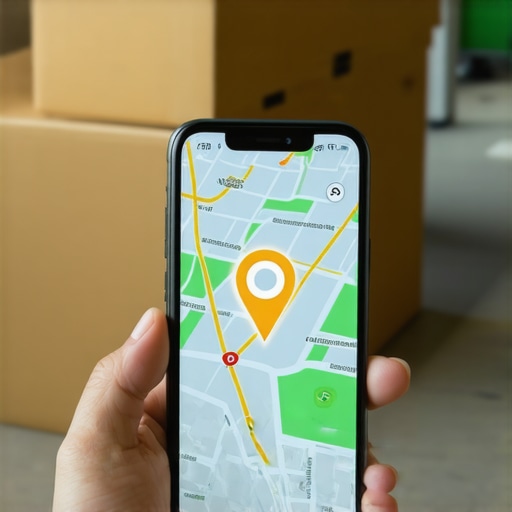
I sat in my new, echoes-filled office, surrounded by stacks of cardboard, and realized I’d made a massive mistake. I’d spent months getting my mappack listing to the top of the pile, only to watch it plummet to page four because I thought a simple address update was enough. My phone, which usually buzzed with local leads, was suddenly as silent as a paperweight. It’s a gut-wrenching feeling when you realize your local pack entry has essentially been wiped off the face of the earth just because you moved three miles East. But here’s the good news: I clawed my way back, and I’m going to show you exactly how to rank business maps effectively even when your physical location is in flux. We aren’t just moving boxes; we are moving your digital authority.
The Day My Business Map Pack Ranking Vanished
When I first moved my consulting firm, I was so focused on the new lease that I neglected the digital breadcrumbs. I thought Google would just “figure it out.” Spoiler alert: it doesn’t. Google is like a skeptical accountant; it needs every receipt to match perfectly. If your old address is still floating around on some random directory while your new one is on your homepage, you are navigating map pack rankings in a storm without a compass. According to research by BrightLocal, citation consistency remains a top-tier factor for local visibility, and even a small discrepancy can trigger a ranking drop. I learned the hard way that a “close enough” attitude is the fastest way to kill your map pack placement. I spent three weeks wondering where my customers went before I realized my old suite number was still haunting my search results.
Is a move actually going to destroy your hard-earned SEO?
It’s the question that kept me up at night while I was tape-gunning boxes. You’ve put in the work, gathered the reviews, and finally secured a solid map pack placement. The fear is real, but the destruction isn’t inevitable. We aren’t just changing a street name today; we are re-syncing your entire digital identity to ensure the transition is seamless. If you’ve ever felt like your business is a ghost in the machine after a relocation, you aren’t alone. Have you noticed your leads dropping off since you signed that new lease?
Stop the Bleeding with Immediate Data Alignment
The first technical fix involves more than just clicking ‘edit’ on your profile. You have to hunt down every single ghost of your previous office. Early on, I ignored a few obscure citations because I thought they didn’t matter. Big mistake. Those conflicting signals are exactly why your business map pack rank drops when the algorithm gets confused. You need to ensure your Name, Address, and Phone number (NAP) are identical across the web. This isn’t just about being tidy; it’s about proving to the search engines that you are still the same reliable authority, just in a new building. I’ll walk you through how to fix your mappack listing address errors without losing your mind or your customers.
Scrub the Web to Kill Your Business’s Digital Ghost
Think of your business address like a digital DNA strand; if one part is mutated, the whole system fails. You cannot simply update your website and hope for the best. You need to perform what I call a digital exorcism. Start by scouring the web for every mention of your old office. I am talking about the obscure directories, the local chamber of commerce pages, and even that one old blog post from three years ago. This is the simple business listing management task you are probably skipping, but it is the difference between a top three spot and total obscurity. When I moved my office, I found my old address on a ‘Top 10 Consultants’ list I didn’t even know I was on. Google found it too, and it confused the algorithm enough to drop my mappack listing for weeks until I contacted the site owner to fix it.
Keep Google From Suspending Your Move
The moment you change your address in your Google Business Profile dashboard, you are entering a high-risk zone. Google’s automated systems are designed to detect fraud, and a sudden move can look like a ‘hijacking’ attempt. To avoid the dreaded suspension, do not change your phone number, business name, and address all at once. I learned this the hard way with a client in the HVAC niche. We changed three major data points in ten minutes, and the account was instantly flagged. It took two weeks of stressful appeals to get their local pack entry back online. Instead, update the address first, verify it through the postcard or video method, and wait for the status to show as ‘Live’ before touching anything else. If you are struggling with the technical side, check out why your mappack listing verification keeps failing to troubleshoot the common hurdles.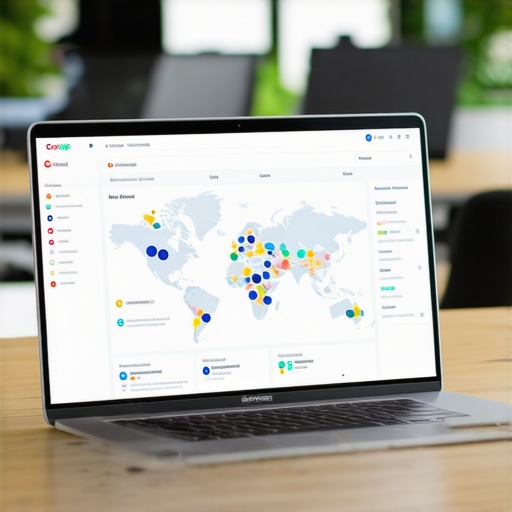
Prove to the Neighborhood That You Have Actually Arrived
Proximity is a massive ranking factor, but relevance is the king that keeps you there. When you land in a new area, your map pack placement relies on proving you are a part of that specific community. You need to feed the algorithm real-world evidence. This means uploading high-resolution, geo-tagged photos of your new storefront. Google needs to see the street sign, the front door, and the interior layout to verify you aren’t just a virtual office. In fact, why your mappack listing needs ground-level exterior photos is a topic I swear by because it provides the ‘visual proof’ the AI craves. After my move, I spent an entire morning taking photos of the surrounding landmarks and posting them as updates. It wasn’t just for aesthetics; it was a calculated move to secure a local pack entry for new locations fast. This signals to Google that you are a local authority in the new zip code, effectively helping you rank business maps effectively despite being the ‘new kid’ on the block. Your business map pack performance is a reflection of trust, and nothing builds trust faster than transparency and consistent data.One of the biggest lies told in the SEO world is that citations are the end-all-be-all of local success. Don’t get me wrong; you need them, but they are just the entry fee. I’ve seen businesses with perfect NAP consistency across 100 directories get absolutely crushed by a competitor with half the citations but double the engagement. This is why your citations alone won’t improve your map pack placement as much as they used to. Google has evolved. It’s no longer just looking at what the directories say; it’s looking at how users interact with your brand in the real world. When a user looks for a service and ignores the top result but clicks the second one, Google’s algorithm makes a note. If that happens enough, you’ll see a shift in map pack placement faster than any backlink campaign could achieve. This is a nuance many people miss: you aren’t just optimizing for a bot; you are optimizing for a human being’s split-second decision. If your mappack listing looks boring or lacks photos, you’re bleeding rank simply because of a lack of clicks.
The Desktop Trap That Fools Even Pro SEOs
The ‘Oops’ Factor is assuming that what you see on your office computer is what your customers see on their phones. I once spent a week celebrating a #1 spot for a client, only to realize we were actually at #5 for anyone standing two blocks away. This happens because the hidden reason your business map pack spot keeps fluctuating is often tied to hyper-local proximity and user behavior. If you aren’t checking your rank from multiple GPS coordinates, you are flying blind. Neglecting the link between your site’s technical health and your local pack entry is another common pitfall. Many think of ‘local SEO’ as separate from ‘technical SEO.’ In reality, they are twins. If your site takes four seconds to load on a 4G connection, that user is bouncing back to the map results. Google tracks that bounce. That is a negative signal for your business map pack position. You could have 500 five-star reviews, but if your site is a digital dinosaur, you’ll never consistently rank business maps in competitive zip codes.
Why does your rank look different when you leave the building?
It’s frustrating to see your local pack entry thrive while you’re at your desk but vanish once you’re at the coffee shop down the street. This isn’t a glitch; it’s the algorithm at work. According to the Whitespark Local Search Ranking Factors study, proximity to searcher remains the number one factor for local packs. However, you can offset a lack of physical proximity by building massive digital authority. This is why ranking business maps requires more than just standard SEO; you need to prove to Google that you are the most relevant result regardless of the few extra yards of distance. You can even use map pack placement to beat huge competitors by dominating the ‘relevance’ and ‘prominence’ pillars. 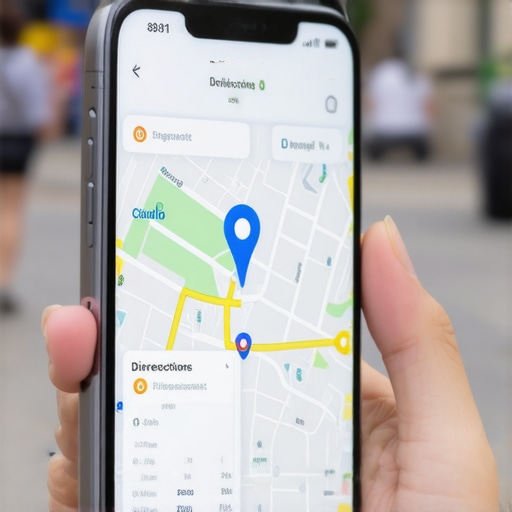 Most people forget that your local pack entry requires real-world signal data—like how many people actually click ‘Directions’—to stay on top. If your website is sluggish, you are losing these signals before they even start because website speed affects your local pack entry more than reviews in some high-stakes niches. Furthermore, how user search history changes your mappack listing visibility is a major factor that standard tools often miss. Have you ever fallen into this trap of thinking a pretty website was enough? Let me know in the comments.
The Dashboard I Check Every Monday Morning
I don’t trust the search bar on my laptop anymore. When I want to see if I truly rank business maps for my new location, I use grid-based tracking. I personally swear by Local Falcon because it visualizes your map pack placement as a series of pins across a map, rather than just a single number. You might be the king of your street corner, but a ‘ghost’ in the next neighborhood over. This is one of the 7 local SEO tools and resources that actually show your real ranking. If you aren’t seeing a grid of green dots, you aren’t seeing the whole truth. Early in my career, I wasted months thinking I was winning, only to find out my mappack listing was invisible five blocks south of my office. Learning how to monitor map pack placement without expensive software is a skill that saves your budget and your sanity, especially when you are scaling to multiple locations.
How do I maintain my ranking without losing my mind?
Consistency is the silent killer of competition. Once you’ve secured that local pack entry, the work shifts from ‘building’ to ‘defending.’ I make it a habit to update my profile attributes every single month. Google loves fresh data. If you haven’t checked your attributes lately, you are missing out on the nuance of why your business map pack profile needs fresh attributes monthly. Is your entrance wheelchair accessible? Do you offer Wi-Fi? These tiny binary choices are often the tie-breakers between you and a competitor. 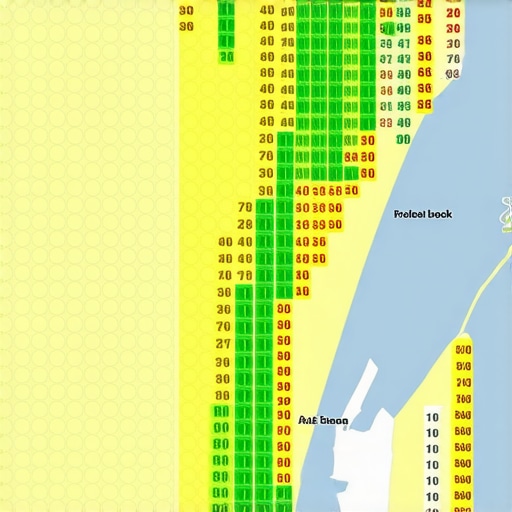
Stop Trusting Your Desktop Search Results
The biggest mistake I see pros making is relying on third-party aggregators to handle their entire identity. I’ve found the truth about third-party business map listing services is that they often create ‘digital clutter’ that you eventually have to clean up yourself. Instead, I focus on signals that prove I am a living, breathing part of the city. For example, the impact of local news mentions on your mappack listing is far greater than fifty low-quality directory links. Local search expert Mike Blumenthal has long emphasized that Google’s ‘local ecosystem’ is built on real-world entity validation, meaning your digital footprint must match your physical reality. If the local newspaper mentions your grand opening, Google’s crawlers see that as a massive trust signal.
Why Fresh Data Beats Static Citations
I’ve realized that chasing every obscure directory is a waste of energy. Instead, I focus on the only map pack placement metric that actually matters for ROI: actual customer actions. I look at how many people are clicking ‘Call’ or ‘Request a Quote.’ In the near future, I predict we will see the rise of ‘predictive local search,’ where Google’s AI suggests your business map pack profile to users before they even finish typing, based entirely on their previous habits and your real-time availability. We are moving toward a world where your local pack entry is more of a dynamic concierge than a static listing. My challenge to you: This week, try using a hyper-local event to boost your signals. Use the mappack listing secret using local events to boost visibility and see if you notice a nudge in your proximity rank. It’s the small, human moves that the bots value most.
What My Search Traffic Taught Me About Moving Day Realities
Looking back at the weeks of silence after my move, I realized that I treated my mappack listing like a physical object instead of a living relationship. Here are the core truths I wish I’d embraced before the first box was packed:
- Data is fragile: A single comma difference in your address across different platforms can confuse the bots. It’s why why your address verification isnt enough for a local pack entry if your legacy data is still messy.
- Review velocity matters more during a transition: When you move, you need fresh signals. I found that responding to every review during the first month in a new spot acted like a lighthouse for Google’s crawlers.
- Visual proof is the ultimate tie-breaker: If the algorithm is on the fence about your new location, video content of you actually walking into the new building is the ‘smoking gun’ evidence that seals the deal.
My Go-To Toolbox for Local Dominance
To ensure your map pack placement doesn’t tank, you need more than just hope. These are the resources I keep on my second monitor: 1. Local Falcon: As I mentioned, the grid view is essential to spot the moment your business map pack hits the top 3. 2. BrightLocal’s Citation Tracker: It’s the only way to catch those ‘ghost’ addresses effectively. 3. Your Own Smartphone: Never underestimate the power of checking why your mappack listing rank varies block by block by actually driving around the new neighborhood.
Your New Office Deserves a Top Spot
Relocating is stressful enough without the added weight of a disappearing digital presence. Remember, the goal isn’t just to update a field in a database; it’s to re-establish trust in a new environment. By being proactive with your data and aggressive with your local signals, you can secure map pack placement success that lasts for years in your new home. Go ahead and take that first photo of your new storefront today—it’s the first step to ensuring you rank business maps effectively once again. #IMAGE_PLACEHOLDER_E#
Have you ever noticed your leads dropping immediately after a minor change to your business profile? Let me know in the comments below.