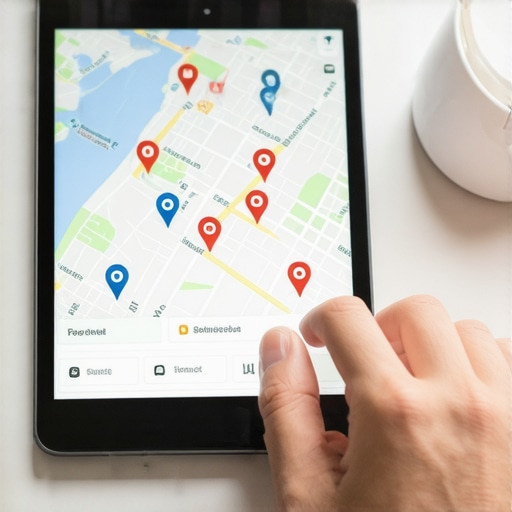
I remember sitting in my home office at 2 AM, frantically toggling my VPN to different zip codes. I just wanted to see if my business was actually hitting the top three. Instead of a victory lap, I got a screen full of blurry traffic light photos to identify. Google didn’t think I was a business owner; they thought I was a bot. It was a wake-up call. I was trying so hard to rank business maps that I ended up locked out of the very data I needed. Most of us are obsessed with our mappack listing, but we’re checking it all wrong. We refresh the page fifty times a day, thinking we’re being thorough. In reality, we’re just triggering security filters that skew our data. Today, I’m going to show you how to keep tabs on your position without the ‘Are you a robot?’ nightmare.
Stop Poking the Google Search Giant
You’ve likely been there too. You refresh, you clear cookies, you switch to mobile data—anything to get a ‘clean’ look at your map pack placement. But here’s the kicker: Google is smarter than your incognito tab. When you repeatedly search for the same keywords from the same vicinity, Google’s anti-spam algorithms kick in. They assume a bot is trying to scrape data or manipulate results. My biggest mistake early on was thinking that my home office Wi-Fi was enough to get an accurate read. I didn’t realize that rank varies block by block, and by the tenth search, I was seeing cached results that didn’t reflect reality. According to a study by BrightLocal, the local pack receives a massive chunk of all clicks for local queries, so the stakes are high. If you aren’t seeing the truth, you’re making business decisions based on a lie.
Is manual checking even worth the effort anymore?
The short answer? Yes, but only if you do it with surgical precision. If you’re just typing keywords into a standard browser, you’re likely seeing a personalized version of the web that no one else sees. You need to see what the guy three miles away sees. This is where monitoring without expensive software becomes an art form. We’re going to dive into the exact methods I use to bypass those annoying bot filters while still getting the hyper-local data necessary to dominate the business map pack. Have you ever been ‘soft-banned’ by Google while trying to check your own rankings? It’s a specialized kind of frustration, isn’t it? Let’s make sure it never happens again.
Getting a Clean Look at Your Local Numbers
We need to talk about the ‘Local Search Results Previewer.’ It is a free browser tool that changed my life. Before I found it, I was doing the ‘VPN dance,’ which usually just resulted in Google flagging me for suspicious activity. This tool allows you to set your location down to the specific street address without actually being there. It is like having a digital drone that hovers over your competitor’s storefront. This precision is vital because your mappack listing rank varies block by block. If you are not checking from the specific intersection where your customers live, you are just guessing. I once tried to check a client’s rank in a city 50 miles away by simply zooming out on the map. I told them they were #1. They called me later, standing in front of their shop, saying they were not even in the top 10. I realized then that my ‘view’ was tethered to my current GPS, not theirs.
Spoof Your Location Like a Pro
To rank business maps effectively across multiple neighborhoods, you need to simulate the user’s exact coordinates. Open the ‘Sensors’ tab in Chrome Developer Tools. You can literally input the latitude and longitude of any street corner. It is the difference between looking at a general map and actually standing on the sidewalk. This is the gold standard for monitoring map pack placement without expensive software. By doing this, you avoid the personalized search history that usually skews your results. 
Feed the Beast with Fresh Data
Google loves ‘freshness’ as much as a morning bakery. If your profile is static, it is slowly dying. I once ignored a client’s ‘Updates’ section for three months. Their mappack listing did not just slide; it fell off a cliff. Now, I tell everyone that your map pack placement drops after you stop posting updates. Think of your profile as a social media feed. Upload a photo of a finished job, answer a question in the Q&A, or post a 50-word update about a seasonal discount. This signals to Google that you are an active, reliable business.
Consistency Is Your Silent Partner
Nothing kills a local pack entry faster than conflicting information. If your website says you close at 6 PM but your Google profile says 5 PM, the algorithm gets confused. And when Google gets confused, it hides you. I have seen businesses lose their top spot simply because consistent business hours matter for your local pack entry more than almost any other basic trust signal.
Tackle the Spam Head-On
Sometimes you are doing everything right, but a competitor with a keyword-stuffed name is sitting in your spot. This is where you become a digital vigilante. Use the ‘Suggest an edit’ feature. If ‘Joe’s Plumbing’ is actually named ‘Joe’s Plumbing – Best Plumber in Miami Affordable Clogged Drain Repair,’ they are breaking the rules. Fixing these local pack entry buried by spam competitors issues is often the fastest way to jump from #4 to #2 without changing a single thing on your own site.Most people will tell you that getting more reviews is the golden ticket to a top-tier mappack listing. They are partially right, but here is the contrarian truth: reviews are just the entry fee, not the winning bet. I have seen countless business owners obsess over their star rating while their technical SEO is in shambles. In my experience, website speed affects your local pack entry more than reviews once you hit a certain threshold. If your site takes five seconds to load on a mobile device, Google is not going to risk its user experience by putting you at the top, regardless of your 5-star status.
The Optimization Trap That Kills Rankings
One of the biggest mistakes you can make is what I call ‘The Tuesday Tweak.’ You get a burst of energy and decide to update your business description, change your primary category, and adjust your closing time all in one afternoon. To you, it looks like productivity. To Google, it looks like a potential security breach or business instability. I have documented cases where map pack placement drops every time you edit your hours or core info too frequently. When you trigger the ‘re-verification’ flag, you might be looking at a week of ‘Pending’ status where you are invisible to customers. 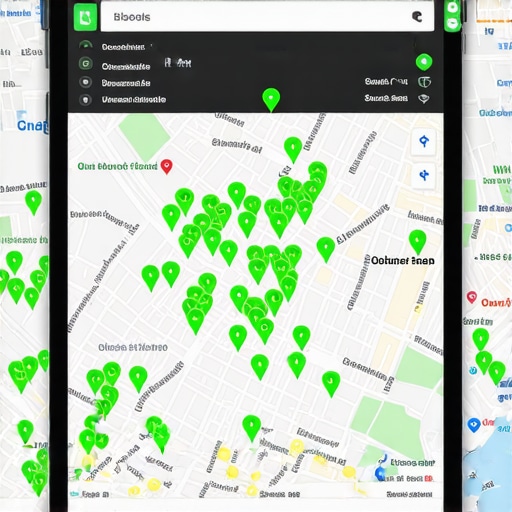
Can you really outrank a business that has been there for decades?
The short answer is yes, but it requires more than just standard SEO. According to data from the local SEO experts at Whitespark, behavioral signals—like how many people click ‘Call’ or ‘Directions’—are becoming massive drivers for ranking business maps effectively. To beat the local titan, you need to prove you are more relevant right now. This means your mappack listing needs ground-level exterior photos that match Google Street View, proving you are a tangible part of the community. You can also look at how to outrank national brands for a local pack entry by focusing on hyper-local content that big corporations simply cannot replicate.
Stop Playing the Proximity Game
Everyone says proximity is the number one factor for a business map pack spot. While you can’t move your physical building, you can expand your relevance radius. Most people think they are stuck in a three-block radius, but by using advanced schema markup on your landing pages, you can signal to Google that your service area is much wider than your zip code. The goal is to show the algorithm that even if you aren’t the closest option, you are the best option for that specific query. Have you ever fallen into this trap? Let me know in the comments.If you want to stay in the top three without losing your mind, you need to shift your focus from ‘winning’ to ‘holding.’ I see so many business owners celebrate a #1 rank on a Tuesday and then never look at their dashboard again. That is a recipe for disaster. To truly scale, I personally swear by grid-based tracking software like Local Falcon. I use it because it gives me a heat map of the city. Most standard trackers give you a single ranking number, but as we’ve discussed, rank varies block by block. Seeing a grid of green pins across a five-mile radius is the only way I can sleep at night. If you’re only checking from your desk, you’re flying blind. This is exactly why most local SEO tools fail to track true map pack placement; they aren’t granular enough.
How do I keep my business map pack spot for the long haul?
Maintenance is not about massive overhauls; it is about the ‘1% moves.’ For example, I dedicate 20 minutes every Friday to review management. I don’t just look for stars; I look for keywords. When a customer mentions ‘fast service’ or a specific ‘leaky faucet fix,’ that becomes fuel for the algorithm. I’ve found that responding to every review with a unique, non-templated message keeps the ‘relevance’ signal high. Joy Hawkins of Sterling Sky recently highlighted how ‘Justified by’ snippets—those little bolded text bits in the local pack—are often pulled directly from review content and website text. If you aren’t active, you lose those justifications. 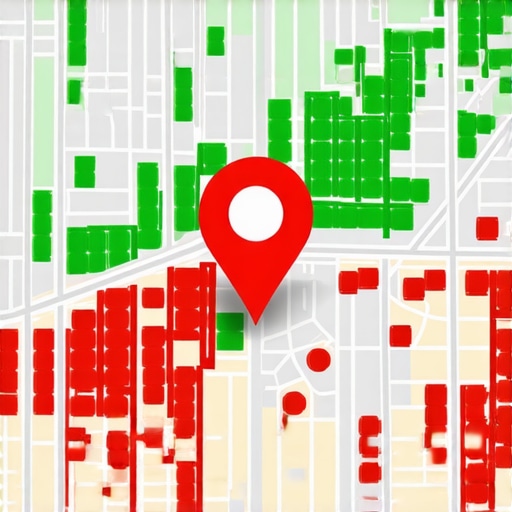
Prepare for the Visual Search Shift
Looking ahead, I predict that static images will soon be secondary to short-form video in the local space. Google is already experimenting with ‘Vlogs’ and video updates in the mobile feed. If you want to know the way to win a local pack entry in 2026 without ad spend, start filming 10-second clips of your storefront or your team in action. This builds a layer of trust that a stock photo never will. It’s about moving from a static mappack listing to a living business profile.
Commit to a Realistic Weekly Routine
Stop obsessing over the daily fluctuations. Instead, check your only map pack placement metric that actually matters: the ratio of ‘Discovery’ vs. ‘Direct’ searches in your Insights. If your discovery numbers are climbing, your proven tactics to boost your map pack visibility are working. I challenge you to go into your profile right now and add one new ‘Attribute’ that you haven’t updated in months. It sounds small, but in the world of ranking business maps effectively, the person who cares the most about the details usually wins.
The Hard Truths I Learned While Fighting for the Top Spot
Over the years, I’ve realized that a mappack listing isn’t a ‘set it and forget it’ asset. One of my biggest lightbulb moments was discovering that Google values stability over raw optimization; if your mappack listing verification keeps failing, it is often because your digital footprint is scattered across too many old directories that contradict your current profile. I also learned that you shouldn’t panic over weekend dips, as ranking fluctuations every weekend are a normal part of the algorithm testing new contenders. Treat your profile like a 24/7 digital storefront, not just a static phone number on a map.
The Tools That Keep Me Ahead of the Curve
I don’t believe in buying every shiny new software, but three things are non-negotiable for me. First, Local Falcon is my go-to for seeing the truth through grid-based tracking. Second, I rely on Whitespark for finding the gaps in my local citations. Third, I constantly revisit the ultimate blueprint for map pack placement success whenever I feel stuck. These resources help you rank business maps effectively without wasting hours on manual searches that Google will eventually filter as bot activity.
Claim Your Digital Real Estate Today
The journey to the top of the business map pack is a marathon, not a sprint. It can feel overwhelming when you are buried at #15, but remember that every photo you upload and every review you answer is a brick in your defensive wall. Focus on the map pack placement metrics that actually matter for ROI, like calls and direction requests, rather than just vanity numbers. You have the tools and the knowledge; now go out there and show your community that you are the best choice for them. #IMAGE_PLACEHOLDER_E# Have you ever noticed your ranking drop the second you changed your business description? Let me know your experiences in the comments below!