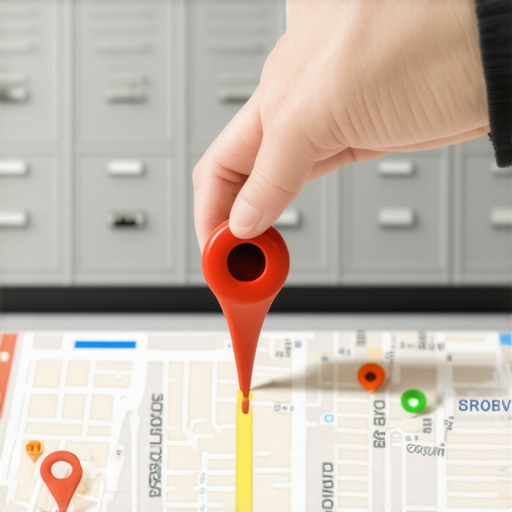
I remember the exact moment the realization hit me like a ton of bricks. I was sitting in my dimly lit home office, nursing a lukewarm coffee, and searching for “marketing consultant near me.” My competitors, some of whom I knew didn’t have half the experience I did, were proudly displayed in the top three results. I, on the other hand, was nowhere to be found. My business was essentially a ghost. The culprit? That shiny new P.O. Box I’d rented at the local post office because I wanted to look “official” without giving out my home address. I thought I was playing the game smart. In reality, I had accidentally locked myself out of the stadium. Today, I’m going to show you exactly how to climb out of that hole and finally secure a legitimate local pack entry, even if you don’t have a traditional storefront. [image1]
Stop Hiding Behind a Post Office Box
I made the classic mistake of thinking Google wouldn’t notice. I figured a suite number was a suite number, right? Wrong. According to Google’s Business Profile guidelines, addresses that are purely P.O. boxes or located at remote mail-receiving facilities are strictly prohibited for businesses that aren’t “service-area” models. This is the primary reason why so many people find that their mappack listing verification keeps failing no matter how many times they request a new postcard. I spent months fighting this, thinking I could outsmart the algorithm. I couldn’t. I ended up with a “suspended” badge that felt like a scarlet letter. You need a strategy that respects the rules while still protecting your privacy. Using a P.O. box is essentially telling Google you don’t actually exist in the physical world, and in the world of local search, that’s the kiss of death.
Is a virtual address actually going to get me banned?
This is the fear that keeps most small business owners up at night. I lived it. I tried using a fancy coworking space address once, and for a few weeks, it worked beautifully. Then, one Tuesday morning, my profile was gone. The risk of using virtual offices for map pack placement is that Google eventually catches the “shared” nature of the footprint. If you aren’t careful, you aren’t just losing rank; you’re losing your entire digital reputation. Have you ever had your listing suddenly disappear after trying a “creative” address solution? It’s a gut-punch, but it’s fixable. By optimizing your map pack entry for better local search rankings the right way—switching to a service-area business model—you can stop fighting the system and start winning. We need to focus on fixing the proximity error that blocks your local pack entry by being honest about where you actually work. It’s not about the box; it’s about the service you provide to your neighbors.
Make the Switch to a Service Area Business Now
Once I stopped trying to pretend I had a downtown office and admitted I worked from my living room, everything changed. I went into my Google Business Profile settings, cleared the physical address field, and selected the ‘Service Area Business’ (SAB) option. This is the foundation of the map pack placement strategy for service-based businesses without a storefront. When you do this, you aren’t ‘hiding’; you’re telling Google exactly where you go to meet your clients. I remember the relief I felt when my profile status changed from ‘Suspended’ to ‘Verified’ just 48 hours after making this honest update. It turns out that Google actually prefers a clear service radius over a suspicious P.O. box any day.
Define Your Territory Without Overreaching
One of the biggest mistakes I made early on was trying to claim every zip code within a fifty-mile radius. I thought more area meant more leads. In reality, it just diluted my relevance. To how to rank business maps effectively in the local pack, you need to be precise. Choose the specific cities or counties where you actually drive. Google uses your primary address (even if hidden) as the center point of your ‘authority.’ If you try to claim a town two hours away, the algorithm sees the disconnect and pushes you down the rankings. I narrowed my focus to my own county and the two adjacent ones, and suddenly, my phone started ringing again.
Scrub Your Old Citations Before Google Finds the Mess
After I fixed my profile, I realized my old P.O. box address was still floating around on Yelp, Yellow Pages, and half a dozen random industry directories. This is a silent killer. You need to understand how outdated citations stealthily damage your map pack placement. Google’s crawlers are constantly comparing your profile data to the rest of the web. If they find an old address on a random directory, they lose trust in your current location data. I spent a whole weekend manually logging into every old account I’d ever created to ensure my name and phone number matched perfectly, even if the address was now hidden on the main profile.
Prove You Are Active with Real World Evidence
A verified profile is just the entry ticket; you still have to fight for that top spot. I started uploading photos of my truck at job sites and short clips of me explaining my process. This is the local pack entry hack using video on your profile that most of my competitors were too lazy to try. These ‘real-world’ signals prove to Google that you are an active, local entity. I also made it a habit to check my dashboard every Monday morning for any suggested edits from users. This is the simple business listing management task you are probably skipping, but it shows Google you are attentive. By documenting the hidden moves to secure a local pack entry for service businesses through consistent updates, you build a level of trust that no virtual office could ever provide.If you’ve been around the block, you know that simply “having reviews” isn’t the flex it used to be. I often see business owners obsessing over the total number of stars, but they completely ignore the rhythm of those reviews. This is why your map pack placement depends on your reviews velocity more than the sheer volume. Google is looking for organic growth, not a suspicious burst of fifty reviews in one weekend followed by a year of silence. It looks fake because, frankly, it usually is. I once saw a local plumber go from #1 to unlisted because he ran a “review contest” that triggered a spam filter. It took him six months to recover. I’ve also noticed a dangerous trend where people advise you to jam every service you offer into your business name. Trust me, why your mappack listing needs more than just a keyword-rich name becomes painfully clear the moment a competitor reports you for a “name violation” and your profile vanishes overnight. It’s a short-term dopamine hit for a long-term disaster. In my experience, you should ignore most map pack placement techniques you see online if they involve “gaming” the name field or buying fake citations. The risk of a hard suspension far outweighs a few weeks of inflated rankings.
Why does my rank drop when I leave the neighborhood?
You might notice your business ranks #1 when you’re sitting in your office, but falls to #10 when you’re just three miles away. This is the “proximity filter” at work, and it’s one of the most frustrating nuances of local SEO. It’s also why your map pack placement is different on desktop and mobile; Google knows your phone’s exact GPS coordinates and serves results based on that hyper-local data. According to the Local Search Ranking Factors study by BrightLocal, while proximity is the top factor, the role of user behavior in map pack placement success is what actually helps you expand your reach beyond your immediate block. If users consistently click your listing, ask for directions, or click-to-call even when you aren’t the closest option, Google’s AI learns that you are the most relevant authority for that area. The mistake I see most often is “ranking for the sake of ranking.” You might be the king of a keyword that no one actually searches for with intent. Stop chasing vanity metrics and focus on the only map pack placement metric that actually matters for ROI: actual customer actions. A rank means nothing if it doesn’t lead to a lead. I’d rather be #3 for a high-intent term than #1 for a generic term that just brings in window shoppers. Have you ever fallen into this trap of chasing a #1 spot only to find it didn’t actually grow your business? Let me know in the comments.
Stop the Slide with Real-Time Data
I learned the hard way that a single “rank report” is often a total lie. You might appear as #1 when searching from your office desk, but you could be completely invisible to someone at the coffee shop just two blocks over. That’s why I swear by local grid tracking. I personally use tools like Local Falcon because they visualize the “proximity bubble” in a way a standard list can’t. This is the only way to combat the frustrating reality that why your mappack listing rank varies block by block. If you aren’t seeing the map as a geographic grid, why most local keyword tracking tools give a false sense of security becomes your daily reality. I make it a point to check my grid every two weeks to see if an aggressive competitor is encroaching on my territory or if my authority is shrinking.
How do I keep my map pack ranking stable over time?
Consistency is boring, but it’s the only thing that works. You have to treat your Google Business Profile like a social media feed. I’ve seen established businesses plummet in weeks because they thought they were “done” with SEO. If you aren’t careful, why your map pack placement drops after you stop posting updates will become a painful lesson. I set a recurring calendar invite for the first Monday of every month specifically for the simple business listing management task you are probably skipping: auditing suggested edits and refreshing my attributes. According to Google’s technical documentation on local inventory, providing granular data helps their AI categorize your business more accurately. Don’t just list yourself as a general contractor; use specific attributes to how to rank business maps for niche home services that your competitors are ignoring.
The Future of Maps is AI and Intent
Looking ahead toward 2026, the traditional “three-pack” is evolving into an AI-curated experience. Google is moving toward Search Generative Experience (SGE), where the algorithm summarizes your reviews to answer specific user questions. This means the way to win a local pack entry in 2026 without ad spend will rely heavily on the *content* of your reviews, not just the star rating. To stay ahead, you need to how to outperform your competitors mappack listing engagement by prompting your happy customers to mention specific services in their feedback. I predict that “Signal Density”—the combination of website traffic and brand searches—will become the primary driver of rank. If you’re feeling stuck, the best way to audit your business map pack profile without expensive tools is to look at your Performance tab and see exactly which queries are driving calls. My best advice? Go upload three new photos of your team in action right now; it is the easiest of the proven tactics to boost your map pack visibility today.
3 Lies I Believed About My Local Pack Entry That Cost Me Thousands
The most painful realization I had was that rank business maps success isn’t about being the biggest; it is about being the most transparent. I used to think I could just set up a profile and walk away, but I learned that Google favors the business that stays active. I also fell for the trap of thinking keyword stuffing my name was a clever hack. It wasn’t; it was a ticking time bomb. Finally, I realized that trying to cover an entire state actually made me invisible everywhere. Being the local authority for a five-mile radius is infinitely more profitable than being number fifty for a fifty-mile radius. I had to learn to respect the proximity filter before I could ever hope to beat it.
The Toolkit That Keeps My Business on the Map
I don’t fly blind anymore. I rely on 3 minimalist tools that find ranking gaps your agency missed to see where I am actually losing ground to neighbors. I also frequently consult mastering business map pack keys to top map pack placement to ensure I am not missing new algorithm shifts that favor mobile users. I trust the BrightLocal annual surveys because they use real data from thousands of listings, and I use Local Falcon to see my proximity bubble in real-time. These aren’t just toys; they are my eyes and ears in the local market. [image5]
Take Back Your Territory from the Big Brands
It is easy to feel like the deck is stacked against you, especially when national chains have massive budgets. But you have something they do not: local soul. By focusing on how to outrank national brands for a local pack entry, you can leverage your authentic connection to your city through hyper-local content and photos. Don’t let the technical jargon scare you. At the end of the day, Google wants to show the most helpful, real business to its users. You are that business. Stop hiding, start posting, and claim your rightful map pack placement today. Why most small businesses struggle with map pack placement usually comes down to fear of the technical side, but you now have the roadmap to overcome it. Have you ever tried to move your business address and seen your rankings plummet overnight? Let me know your experience in the comments below!