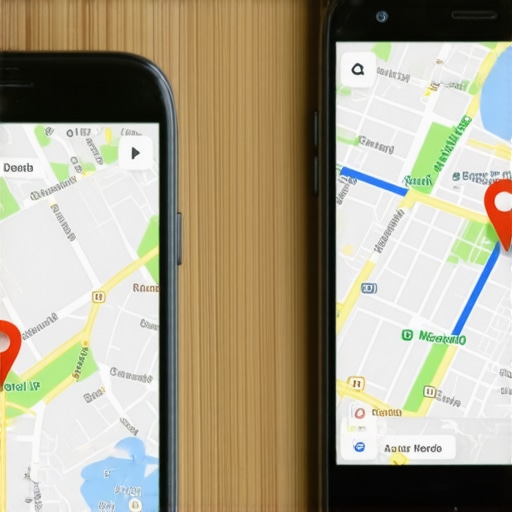
I was sitting in my truck outside the local coffee shop, beaming with pride as I looked at my iPhone screen. My business was sitting pretty at the top of the local pack. Then, my buddy Dave hopped in with his Samsung Galaxy, typed in the exact same search, and I was completely gone—not even in the top five. I felt like I’d been punched in the gut. How could my mappack listing secrets fail me the second a different brand of phone entered the equation? I realized then that I had a massive blind spot in my strategy.
Your Phone’s Operating System is Messing with Your Visibility
If you’ve ever wondered why your map pack placement is different on desktop and mobile, or even between two different phones, you aren’t crazy. I used to make the rookie mistake of assuming that a rank was a static, universal truth. It isn’t. Google tailors results based on the tight integration between the OS and the search app. For instance, according to data from Statcounter, Android owns a massive portion of the market, and the way the Google Maps app interacts with Android’s location services differs slightly from how it hooks into iOS. Today, I’m going to show you exactly why this happens and how you can rank business maps for mobile users on the move, regardless of whether they carry an iPhone or an Android.
Is it even possible to stay consistent across devices?
You might be worried that you have to optimize twice, but that’s not quite it. Early in my career, I wasted months trying to build separate citations for different platforms—a total disaster that led to messy mappack listing duplicates. The real secret lies in understanding the underlying data layers that Google uses to fill a local pack entry. Have you ever checked your own ranking on a friend’s phone and seen something completely different than what your tracking tools tell you? It’s a frustrating reality for any business owner trying to rank business maps effectively. We are going to dive into the technical reasons—from app cache to hardware-level location accuracy—that cause these discrepancies so you can stop chasing ghosts and start seeing real results.
Stop Trusting Your Own Smartphone Screen
The most dangerous data you have is the screen in your pocket. I learned this the hard way when I realized I’d been clicking my own listing for months. By doing that, I was essentially training Google’s algorithm to show me what I wanted to see. Google’s personalized search history is so refined that it creates a ‘bubble.’ If you want to see your real map pack placement, you have to break that bubble. I once spent three weeks frantically tweaking my categories because my iPhone showed me at #1, while a tablet at my shop showed me at #12. The culprit? The shop’s Wi-Fi was tethered to a static IP in a city forty miles away. This is why your business map pack rank drops every time you leave the office or switch networks. To fix this, you must use ‘incognito’ mode, but even that isn’t enough because your device ID and IP address still leak. Instead, use 7 local SEO tools resources that actually show your real ranking by simulating precise coordinates and device types. 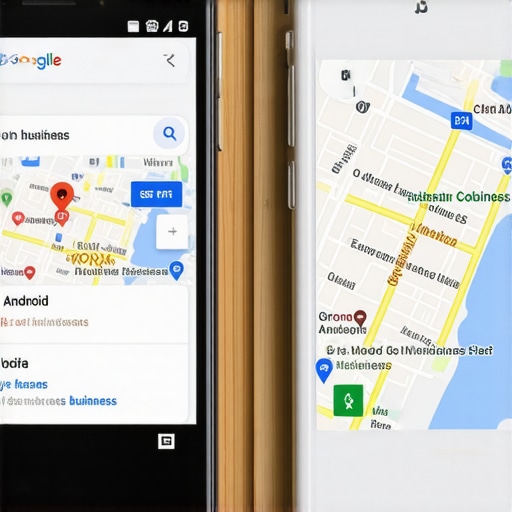
Why Your Website Speed is Actually a Local Signal
You might think your website is separate from your mappack listing, but they are tightly coiled together. Android devices, in particular, are integrated with Chrome, which is ruthless about performance metrics. If your site takes four seconds to load on a 4G connection, Google’s mobile crawler might de-prioritize your local pack entry in favor of a competitor whose site is lightning fast. I’ve seen businesses jump two spots just by optimizing their image sizes. It’s a technical reality: why your local pack entry depends on your websites loading speed is because Google doesn’t want to recommend a business that provides a frustrating user experience the moment a customer clicks ‘Website.’
Kill the Cache and Sync the Data
To rank business maps effectively across different operating systems, you have to account for how apps store location data. Android keeps a deep cache of your ‘frequently visited’ spots, while iOS tends to refresh location permissions more aggressively. This discrepancy is why most local SEO tools fail to track true map pack placement. They often use a desktop-based emulator that doesn’t account for the hardware-level GPS pings that a real phone sends.
The Ground-Level Photo Trick That iOS Users Love
When I was struggling to get my business map pack profile to show up for iPhone users, I discovered that Apple’s integration with high-resolution imagery actually influenced how Google displayed my profile on iOS devices. I started uploading photos taken specifically from the street corner, showing the building in relation to the sidewalk. This verified my physical location to the algorithm in a way that standard interior shots couldn’t. It turns out that why your mappack listing needs ground-level exterior photos is because it provides a ‘visual anchor’ for mobile users who are literally walking or driving toward you. Don’t just post photos of your product; post photos of the world around your front door.
Let’s dig deeper into the mechanics that differentiate a hobbyist from a pro when it comes to local search. Most of the advice you find online revolves around the same tired ‘NAP’ (Name, Address, Phone number) consistency checklist. While that was the gold standard in 2015, today it’s just the bare minimum for entry. If you really want to rank business maps in a competitive market, you have to look at ‘entity’ data and behavioral signals. I’ve seen businesses with perfect citations get crushed by competitors with messy data simply because the latter had higher engagement. In fact, why your citations alone wont improve your map pack placement is because Google’s AI, particularly the ‘Neural Matching’ algorithm, cares more about how users interact with your brand than what a directory says about you.
Why Do Local Mom-and-Pops Often Beat National Chains?
It feels counterintuitive, doesn’t it? You’d think a massive corporation with a million-dollar budget would own every local pack entry in the country. But they don’t. The reason is proximity and ‘hyper-local’ relevance. According to the Whitespark Local Search Ranking Factors study, ‘proximity of address to the searcher’ remains a top signal, but it is increasingly balanced by ‘relevancy’ signals that big brands struggle to automate. This is exactly how to outrank national brands for a local pack entry: you lean into the local nuance they can’t touch. I’m talking about local-specific landing pages and neighborhood-level content that proves you are a fixture in the community, not just a satellite office.

One of the biggest ‘oops’ factors I see experts make is over-optimizing the business name. It’s a classic trap. You see a competitor include ‘Best Plumber in Chicago’ in their title and think you should do the same. Don’t fall for it. While it might give you a temporary boost, why your mappack listing needs more than just a keyword rich name is that Google is getting incredibly aggressive with ‘ghosting’ listings. You won’t get a formal suspension; you’ll just notice why your recent local pack entry disappeared without a manual action. Your visibility simply evaporates because the algorithm flagged your title as unnatural. It’s much safer—and more effective long-term—to build authority through the link between website backlinks and local pack entry than to risk your entire digital footprint on a naming gimmick.
Is Your Technical Foundation Actually Helping Your Map Rank?
You’d be surprised how many people ignore the ‘invisible’ side of their business map pack profile. I’m talking about the structured data on your website. If your site’s JSON-LD schema doesn’t perfectly mirror your Google profile, you’re creating friction. I’ve found that how to rank business maps using advanced schema markup is the secret sauce for breaking out of a plateau. It’s about telling the crawler exactly which ‘entity’ you are, linking your social profiles, your physical location, and your services in a language it speaks fluently. Essentially, why ranking business maps requires more than just standard seo is because you are managing a database entry, not just a website. Have you ever fallen into the trap of focusing only on your site and ignoring these ‘real-world’ signals? Let me know in the comments below.
I used to think that once you hit the top three, you could just sit back and watch the leads roll in. Boy, was I wrong. The local algorithm is like a living organism; it is constantly shifting. If you aren’t feeding it fresh data, your mappack listing will start to decay. I have seen it happen time and again: a business hits #1, stops their outreach, and within three months, they have slipped into the dreaded second-page oblivion. This is exactly why your map pack placement drops after you stop posting updates. You need a rhythm, not just a one-off effort.
How can I keep my map rankings from tanking next month?
The secret isn’t a one-time hack. It is about consistent signals. I personally spend twenty minutes every Monday morning doing three specific things. First, I check for any suggested edits from users. Google allows anyone to suggest changes to your hours or services, and if you do not catch them, a competitor can essentially hijack your local pack entry. Second, I respond to every single review—even the ones without text. Joy Hawkins, a leading expert in local search from Sterling Sky, has frequently highlighted that engagement signals like review responses and photo updates are becoming increasingly weighted in the algorithm’s eyes. Finally, I use the simple tool that checks your mappack listing health to ensure there are no data conflicts appearing in the wild.
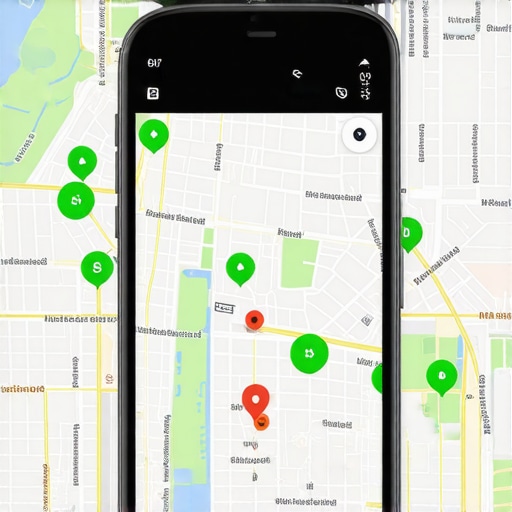
Looking ahead toward 2026, the trend is moving toward visual search and AI-driven recommendations. Google’s Gemini is already starting to pull data from your photos to answer hyper-specific user queries. This means your business map pack won’t just be about where you are, but what you look like and the specific vibe of your establishment. This is the way to win a local pack entry in 2026 without ad spend: start treating your profile like a visual social media platform rather than a static directory listing. If you are feeling stuck in the middle of the pack, you don’t need a total overhaul; you likely just need better monitoring. You can actually learn how to monitor map pack placement without expensive software by using a simple manual grid check. Go to three different physical locations around your shop and do a search. If you see yourself dropping off as you move a mile away, you know you have a proximity issue to solve. My challenge for you this week: upload one video of your storefront—not a professional one, just a raw clip from your phone. It is the easiest way to boost your business map rank with these expert tips and prove to the algorithm you are still very much active.
What Finally Clicked After Years of Ranking Failures
I used to think that a solid mappack listing was built on a spreadsheet, but it’s actually built on the street. The biggest lesson I learned is that Google cares more about how a real human moves through the physical world than how many directories you’ve signed up for. If your data doesn’t feel ‘lived in,’ the algorithm treats you like a ghost. This is precisely why you should ignore most map pack placement techniques you see online that focus purely on technical volume rather than local relevance. I also realized that ‘set it and forget it’ is a recipe for disaster. You have to treat your business map pack like a social media feed—constant, fresh, and engaging.
My Daily Survival Kit for Map Dominance
You don’t need a massive budget to win, but you do need the right lens to see the world. To get an honest look at your status, I recommend starting with the best way to audit your business map pack profile without expensive tools to see what the neighbors are seeing. For ongoing maintenance, I swear by the simple tool that checks your mappack listing health to catch those sneaky ‘suggested edits’ before they ruin your week. And finally, keep resources like the Whitespark factor study in your arsenal; their data is one of the few sources I trust to steer long-term strategy.
Claim Your Spot at the Top Today
Local SEO isn’t a dark art; it’s a game of consistency. Whether your customers are on an iPhone or an Android, the goal is to be the most helpful answer to their problem at that exact moment. Don’t let the technical jargon intimidate you—just start with one photo and one review response. By implementing proven tactics to boost your map pack visibility today, you are building a digital asset that works for you 24/7. Your map pack placement is the first thing your customers see, so make it count. Have you ever noticed your ranking change just by walking to the other side of your building? Let me know your experience in the comments below!